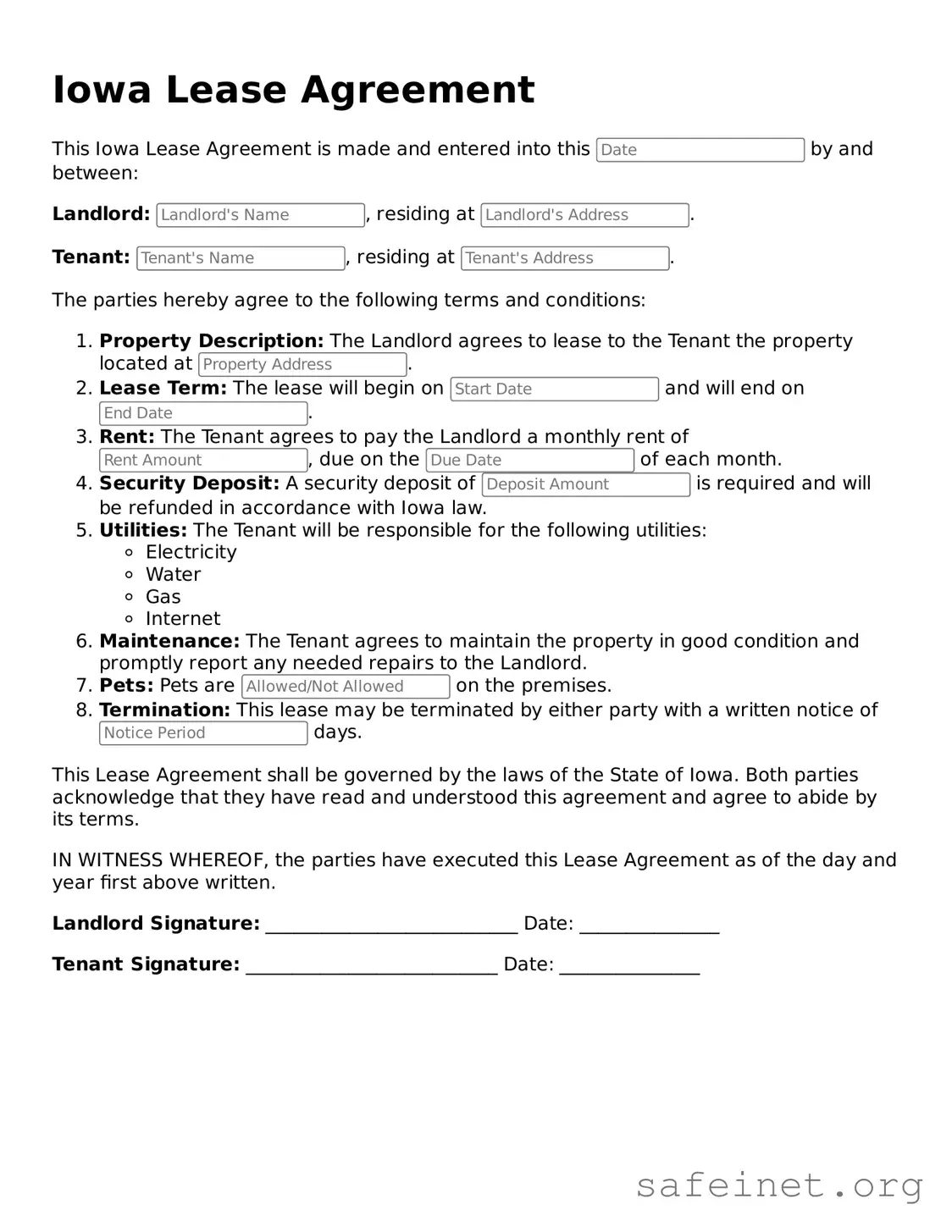
The Iowa Lease Agreement form serves as a crucial document for both landlords and tenants, providing a clear framework for the rental relationship. This agreement outlines essential terms such as the duration of the lease, rental payment details, and the responsibilities of both parties. It addresses important aspects like security deposits, maintenance obligations, and rules regarding property use. By setting these parameters, the form helps to prevent misunderstandings and disputes, fostering a respectful and cooperative environment. Additionally, it includes provisions for terminating the lease, ensuring that both parties understand their rights and obligations should circumstances change. Overall, the Iowa Lease Agreement is designed to protect the interests of everyone involved while promoting a smooth rental experience.
Iowa Lease Agreement
This Iowa Lease Agreement is made and entered into this by and between:
Landlord: , residing at .
Tenant: , residing at .
The parties hereby agree to the following terms and conditions:
This Lease Agreement shall be governed by the laws of the State of Iowa. Both parties acknowledge that they have read and understood this agreement and agree to abide by its terms.
IN WITNESS WHEREOF, the parties have executed this Lease Agreement as of the day and year first above written.
Landlord Signature: ___________________________ Date: _______________
Tenant Signature: ___________________________ Date: _______________
| Fact Name | Detail |
|---|---|
| Governing Law | The Iowa Lease Agreement is governed by Iowa Code Chapter 562. |
| Types of Leases | Residential, commercial, and agricultural leases are covered under Iowa law. |
| Written vs. Oral | While oral leases are valid, written agreements are strongly recommended for clarity. |
| Security Deposits | Iowa law limits security deposits to a maximum of two months' rent for residential leases. |
| Notice Requirements | Landlords must provide at least 30 days' notice for lease termination in most cases. |
| Repairs and Maintenance | Landlords are generally responsible for maintaining safe and habitable premises. |
| Rent Increases | Landlords can increase rent, but must provide proper notice as outlined in the lease. |
| Tenant Rights | Tenants have rights to privacy and must be given notice before landlords enter the property. |
| Eviction Process | Eviction requires a court order, and tenants have the right to contest the eviction. |
| Lease Duration | Leases can be for a fixed term or month-to-month, as agreed upon by both parties. |
Completing the Iowa Lease Agreement form is an important step in establishing a rental relationship. By accurately filling out this form, both the landlord and tenant can ensure that their rights and responsibilities are clearly defined. Below are the steps to guide you through the process.
What is an Iowa Lease Agreement form?
An Iowa Lease Agreement form is a legal document that outlines the terms and conditions between a landlord and a tenant for renting residential or commercial property in Iowa. This agreement typically includes details such as the rental amount, duration of the lease, responsibilities of both parties, and rules regarding the property. It serves to protect the rights of both landlords and tenants, ensuring clarity and reducing potential disputes.
What key elements should be included in an Iowa Lease Agreement?
Essential elements of an Iowa Lease Agreement include the names of the landlord and tenant, the rental property's address, the lease term (whether it's month-to-month or for a fixed period), the amount of rent due and payment methods, security deposit details, maintenance responsibilities, and any specific rules or restrictions regarding the property. Including these details helps ensure that both parties understand their obligations and rights under the lease.
How can a tenant terminate an Iowa Lease Agreement?
Terminating an Iowa Lease Agreement typically requires providing written notice to the landlord. The notice period can vary depending on the lease terms. For month-to-month leases, tenants usually must give 30 days' notice. For fixed-term leases, tenants may need to fulfill the entire lease term unless otherwise specified in the agreement. It’s important for tenants to check their lease for specific termination clauses to avoid penalties.
Are there any specific tenant rights in Iowa?
Yes, Iowa law provides tenants with several important rights. Tenants have the right to a habitable living environment, meaning the property must meet basic health and safety standards. They also have the right to privacy, which means landlords cannot enter the rental unit without proper notice. Additionally, tenants have the right to be free from discrimination and retaliation for exercising their legal rights, such as reporting unsafe conditions.
What should I do if I have a dispute with my landlord?
If a dispute arises between a tenant and a landlord, the first step is to communicate directly and attempt to resolve the issue amicably. If that fails, tenants can seek assistance from local housing authorities or tenant advocacy groups. Mediation services may also be available to help both parties reach an agreement. If necessary, legal action can be pursued, but it’s often best to explore all other options first to save time and resources.
Incomplete Information: One common mistake is failing to fill out all required fields. Each section of the lease agreement is important, and missing information can lead to confusion or disputes later on.
Incorrect Dates: It's crucial to enter the correct start and end dates of the lease. An incorrect date can create misunderstandings about the duration of the tenancy.
Neglecting to Specify Rent Details: Clearly stating the amount of rent, due dates, and acceptable payment methods is essential. Omitting these details can lead to payment issues.
Ignoring Terms and Conditions: Each lease agreement includes specific terms and conditions. Failing to read and understand these can result in unintentional violations.
Not Including Maintenance Responsibilities: It's important to outline who is responsible for maintenance and repairs. This clarity helps prevent disputes over property upkeep.
Forgetting Signatures: A lease agreement is not legally binding without the signatures of both parties. Ensure that both the landlord and tenant sign and date the document.
Overlooking Additional Clauses: Many lease agreements have additional clauses regarding pets, subletting, or alterations. Ignoring these can lead to issues down the line.
Not Keeping a Copy: After signing, it’s vital to keep a copy of the lease agreement. This document serves as a reference for both parties throughout the lease term.
When entering into a rental agreement in Iowa, several additional forms and documents may accompany the Iowa Lease Agreement. These documents help clarify terms, protect both parties, and ensure compliance with local laws. Below are some commonly used forms that landlords and tenants should consider.
Using these documents in conjunction with the Iowa Lease Agreement can provide clarity and protection for both landlords and tenants. Each form plays a vital role in establishing a clear understanding of the rights and responsibilities involved in the rental relationship.
The Iowa Lease Agreement form shares similarities with the Residential Lease Agreement. Both documents outline the terms and conditions for renting a residential property. They typically include details such as the duration of the lease, the amount of rent due, and the responsibilities of both the landlord and tenant. In essence, both agreements serve to protect the rights of both parties while providing a clear framework for the rental relationship.
Another document similar to the Iowa Lease Agreement is the Commercial Lease Agreement. This type of lease is specifically designed for businesses renting commercial space. Like the Iowa Lease Agreement, it includes terms regarding rent, duration, and maintenance responsibilities. However, commercial leases often contain additional clauses that address business-specific needs, such as permitted use of the space and modifications to the property.
The Rental Application form also bears resemblance to the Iowa Lease Agreement. While the lease agreement finalizes the rental terms, the rental application is a preliminary document used by landlords to screen potential tenants. It collects information about the applicant's background, rental history, and financial status. Both documents aim to ensure a good fit between the tenant and the rental property.
Another comparable document is the Month-to-Month Rental Agreement. This agreement allows for more flexibility than a traditional lease. Similar to the Iowa Lease Agreement, it outlines rent and responsibilities but typically does not lock the tenant into a long-term commitment. Both agreements can be used to clarify expectations and protect the interests of both landlords and tenants.
The Sublease Agreement is another document that shares characteristics with the Iowa Lease Agreement. A sublease allows a tenant to rent out their leased space to another individual. Both agreements outline the terms of occupancy and responsibilities, ensuring that all parties understand their rights. The original tenant remains responsible to the landlord, similar to how a primary tenant is accountable under the Iowa Lease Agreement.
The Lease Addendum is also similar, as it serves to modify or add specific terms to an existing lease agreement. This document can clarify additional rules or conditions that were not included in the original Iowa Lease Agreement. Both documents work together to ensure that all parties are aware of any changes or additional responsibilities.
The Roommate Agreement is another document that aligns with the Iowa Lease Agreement. This agreement is often used among individuals sharing a rental space. It details how the rent and utilities will be split, as well as house rules. Both agreements aim to create a harmonious living situation while protecting each party's rights and responsibilities.
A Lease Termination Agreement is similar in that it outlines the process for ending a lease. While the Iowa Lease Agreement specifies the duration of the lease, the termination agreement provides the terms under which either party can end the rental relationship. Both documents are essential for ensuring that the exit process is clear and legally binding.
The Eviction Notice also shares similarities with the Iowa Lease Agreement. While the lease outlines the terms of tenancy, the eviction notice is used when a landlord needs to terminate the lease due to violations. Both documents are crucial for understanding the rights and responsibilities of landlords and tenants, particularly in situations where disputes arise.
Finally, the Lease Renewal Agreement is comparable to the Iowa Lease Agreement. This document is used when both parties agree to extend the lease for an additional term. It typically reiterates the original terms while allowing for any necessary updates. Both agreements ensure that the rental relationship continues smoothly and that all parties are aware of their obligations.
When filling out the Iowa Lease Agreement form, it is essential to approach the task with care. Below is a list of important do's and don'ts to ensure a smooth process.
The Iowa Lease Agreement form is a crucial document for both landlords and tenants, yet several misconceptions surround its use and implications. Understanding these misconceptions can help both parties navigate their rights and responsibilities more effectively.
Many believe that the Iowa Lease Agreement is uniform for all rental situations. In reality, each lease can be tailored to fit specific needs, including terms related to pets, maintenance responsibilities, and payment schedules.
Some tenants think that a verbal agreement with their landlord is enough to establish rental terms. However, without a written lease, it becomes challenging to enforce any agreements made, leading to potential disputes down the line.
Tenants may assume that their lease will automatically renew at the end of the term. In Iowa, many leases require explicit action or notice for renewal, so it’s essential to check the lease terms to avoid unintended consequences.
Some believe landlords have unrestricted access to their rental property. However, Iowa law requires landlords to provide reasonable notice before entering, except in emergencies, ensuring tenants’ right to privacy is respected.
There is a common belief that security deposits are always non-refundable. In Iowa, landlords must return the deposit, minus any legitimate deductions for damages or unpaid rent, within a specified timeframe after the lease ends.
Some tenants think landlords can modify lease terms unilaterally. However, any changes to the lease must be agreed upon by both parties and documented in writing to be enforceable.
When filling out and using the Iowa Lease Agreement form, there are several important aspects to keep in mind. Understanding these key points can help ensure that both landlords and tenants are protected and informed throughout the leasing process.
By paying attention to these key takeaways, both landlords and tenants can create a clear and effective lease agreement that serves their needs and protects their rights.