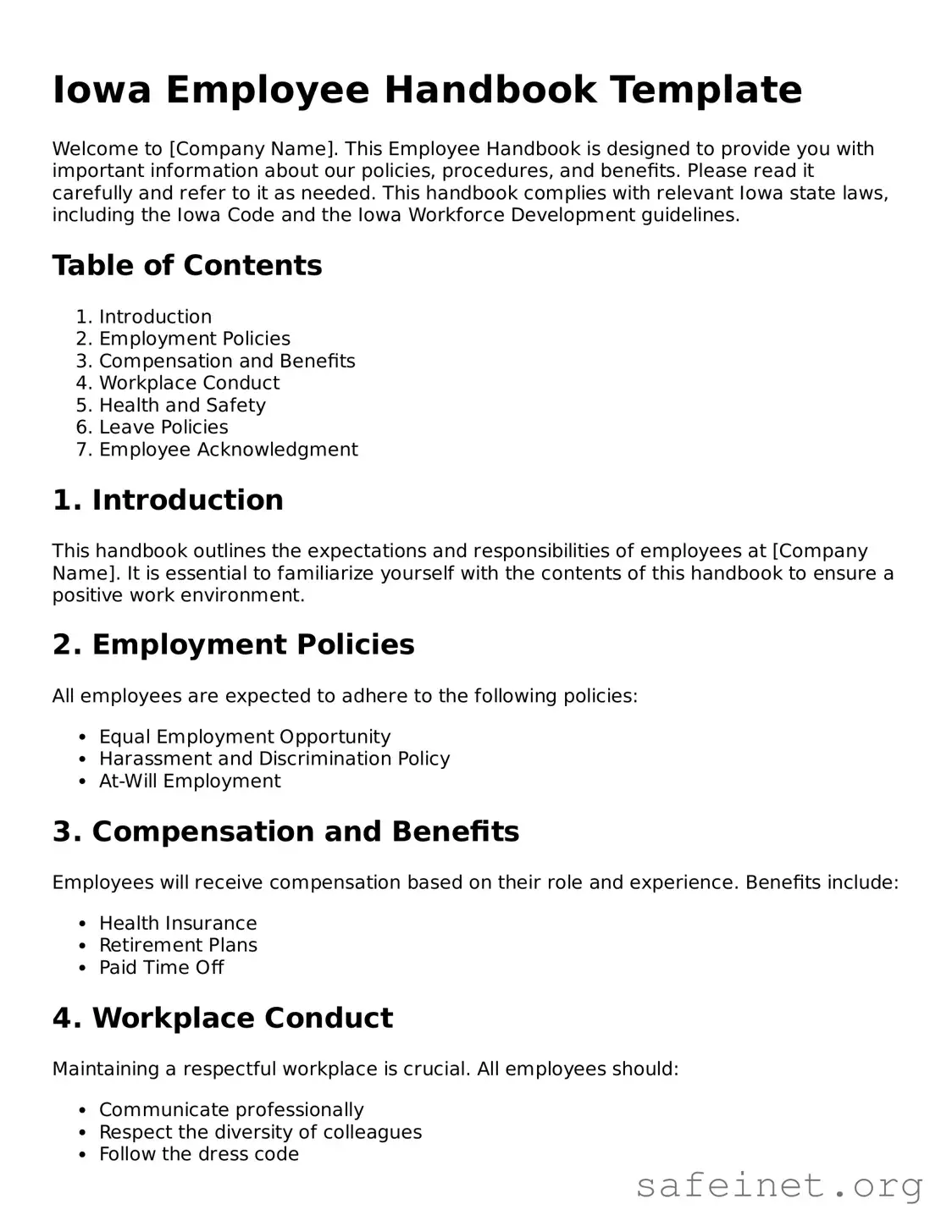
Creating a comprehensive employee handbook is an essential step for any business in Iowa. This document serves as a vital resource for both employers and employees, outlining workplace policies, expectations, and benefits. It typically includes sections on company culture, code of conduct, attendance policies, and procedures for addressing grievances. Additionally, the handbook may cover important topics such as anti-discrimination policies, workplace safety, and employee rights. By clearly communicating these elements, the handbook helps foster a positive work environment and ensures that everyone is on the same page. Having a well-structured employee handbook can also protect businesses from potential legal issues, making it an invaluable tool in today’s workplace. Whether you're starting a new business or updating an existing handbook, understanding the key components of the Iowa Employee Handbook form is crucial for compliance and effective management.
Iowa Employee Handbook Template
Welcome to [Company Name]. This Employee Handbook is designed to provide you with important information about our policies, procedures, and benefits. Please read it carefully and refer to it as needed. This handbook complies with relevant Iowa state laws, including the Iowa Code and the Iowa Workforce Development guidelines.
Table of Contents
1. Introduction
This handbook outlines the expectations and responsibilities of employees at [Company Name]. It is essential to familiarize yourself with the contents of this handbook to ensure a positive work environment.
2. Employment Policies
All employees are expected to adhere to the following policies:
3. Compensation and Benefits
Employees will receive compensation based on their role and experience. Benefits include:
4. Workplace Conduct
Maintaining a respectful workplace is crucial. All employees should:
5. Health and Safety
Safety is a top priority. Employees must:
6. Leave Policies
[Company Name] offers various leave options, including:
7. Employee Acknowledgment
By signing below, you acknowledge that you have received and read the Employee Handbook and agree to abide by its policies.
Employee Name: ____________________________
Date: ____________________________
Thank you for being a part of [Company Name]. We look forward to working together to create a productive and enjoyable workplace.
| Fact Name | Description |
|---|---|
| Purpose | The Iowa Employee Handbook serves as a guide for employees, outlining company policies, procedures, and expectations. |
| Governing Law | The handbook is governed by Iowa Code Chapter 91A, which addresses wage payment and employment practices. |
| Contents | Typical contents include workplace conduct, attendance policies, and benefits information. |
| Distribution | Employers are encouraged to provide the handbook to all new employees during onboarding. |
| Updates | Employers should regularly review and update the handbook to reflect changes in laws and company policies. |
| Acknowledgment | Employees often sign an acknowledgment form confirming they received and understood the handbook. |
| Compliance | The handbook helps ensure compliance with state and federal labor laws. |
| Confidentiality | Sections regarding confidentiality and non-disclosure are common to protect company information. |
| Non-Discrimination | Employers must include policies that prohibit discrimination and harassment in the workplace. |
Completing the Iowa Employee Handbook form is an important step in ensuring that both employers and employees understand their rights and responsibilities. It lays the groundwork for a clear and effective workplace environment. Follow these steps carefully to ensure the form is filled out correctly.
What is the purpose of the Iowa Employee Handbook form?
The Iowa Employee Handbook form serves as a comprehensive guide for employees and employers alike. It outlines the company’s policies, procedures, and expectations in the workplace. This document helps ensure that all employees are aware of their rights and responsibilities, as well as the benefits and resources available to them. By having a clear handbook, employers can promote a positive work environment and minimize misunderstandings regarding workplace rules.
Who is required to have an Employee Handbook in Iowa?
While not every employer is legally required to have an employee handbook, it is highly recommended for businesses of all sizes. Having a handbook can protect employers by clearly stating policies and procedures. This can be particularly important in cases of disputes or misunderstandings. Employers who have a structured workforce, such as those with multiple employees or those in regulated industries, will benefit greatly from having a formal handbook in place.
What should be included in the Iowa Employee Handbook?
An effective Iowa Employee Handbook should cover a variety of topics. Key sections might include company policies on attendance, dress code, workplace behavior, and harassment prevention. It should also outline benefits such as leave policies, health insurance options, and retirement plans. Additionally, it’s crucial to include information on how employees can voice concerns or report issues. By addressing these topics, the handbook can serve as a valuable resource for employees.
How often should the Employee Handbook be updated?
Incomplete Personal Information: Many individuals fail to provide all necessary personal details, such as their full name, address, or contact information. This can lead to delays in processing their forms and may cause issues with communication.
Neglecting to Read the Handbook: Some employees skip over the actual handbook before filling out the form. This can result in misunderstandings about company policies and expectations, which could have been clarified by reviewing the material.
Ignoring Signature Requirements: A common oversight is not signing the form. Without a signature, the document may be considered incomplete, and the employee may not be officially acknowledged as having received the handbook.
Failure to Update Information: Employees sometimes forget to update their information when changes occur, such as a new address or a change in emergency contacts. This can create complications in emergencies or when sending important documents.
Misunderstanding Acknowledgment Sections: Some individuals do not fully grasp the acknowledgment section, which states that they understand and agree to the policies outlined in the handbook. Misinterpretations here can lead to future disputes regarding compliance.
Submitting the Form Late: Timing is crucial. Employees often miss deadlines for submitting their forms, which can result in them not receiving essential benefits or information in a timely manner.
When establishing a comprehensive workplace environment in Iowa, several forms and documents complement the Employee Handbook. These documents serve to clarify policies, outline procedures, and ensure compliance with state and federal regulations. Below is a list of essential forms that are often used alongside the Iowa Employee Handbook.
Incorporating these documents into your HR practices not only enhances organizational effectiveness but also fosters a transparent and supportive workplace culture. Ensuring that all employees have access to these forms will help create a more informed and engaged workforce.
The Iowa Employee Handbook form shares similarities with the Employee Manual commonly used in many workplaces. Both documents serve as a comprehensive guide for employees, outlining company policies, procedures, and expectations. They typically cover topics such as workplace conduct, attendance policies, and employee benefits. The Employee Manual is often tailored to reflect the specific culture and values of the organization, just like the Iowa Employee Handbook aims to do for Iowa-based employers.
Another document that resembles the Iowa Employee Handbook is the Workplace Policy Guide. This guide provides a detailed overview of various workplace policies, including anti-discrimination policies, harassment policies, and safety protocols. Like the Employee Handbook, the Workplace Policy Guide is designed to inform employees of their rights and responsibilities while fostering a safe and respectful work environment.
The Orientation Packet is similar to the Iowa Employee Handbook in that it is typically provided to new employees during their onboarding process. This packet often includes essential information about the company, its mission, and its policies. While the Employee Handbook may serve as a more comprehensive resource, the Orientation Packet is usually more concise, focusing on immediate needs for new hires.
The Code of Conduct document aligns closely with the Iowa Employee Handbook as it outlines expected behaviors and ethical standards within the workplace. Both documents emphasize the importance of maintaining professionalism and integrity. The Code of Conduct may provide specific examples of acceptable and unacceptable behavior, which can complement the broader policies outlined in the Employee Handbook.
The Benefits Guide is another document that shares similarities with the Iowa Employee Handbook. This guide typically details employee benefits, such as health insurance, retirement plans, and leave policies. While the Employee Handbook may touch on these topics, the Benefits Guide often provides a more in-depth look at the options available to employees, helping them understand their entitlements.
The Employee Rights and Responsibilities document is akin to the Iowa Employee Handbook in that it outlines the legal rights of employees as well as their obligations to the employer. This document serves as a reminder of both parties' responsibilities and helps ensure that employees are aware of their rights in the workplace, similar to the comprehensive nature of the Employee Handbook.
Performance Review Guidelines can be compared to the Iowa Employee Handbook as they provide a framework for evaluating employee performance. These guidelines typically outline the criteria for assessments, feedback processes, and potential outcomes. Like the Employee Handbook, they aim to create transparency in how performance is measured and managed within the organization.
The Safety Manual is similar to the Iowa Employee Handbook in that it focuses on workplace safety and health regulations. This document often details procedures for reporting hazards, emergency protocols, and safety training requirements. Both documents emphasize the importance of a safe working environment and ensure that employees are informed about their roles in maintaining safety.
The Training and Development Policy document aligns with the Iowa Employee Handbook by addressing employee growth and learning opportunities. This policy outlines available training programs, professional development resources, and expectations for employee participation. Both documents aim to promote a culture of continuous improvement and skill enhancement within the organization.
Finally, the Grievance Procedure document is similar to the Iowa Employee Handbook as it outlines the process for employees to voice concerns or complaints. This document provides a structured approach to addressing workplace issues, ensuring that employees understand how to seek resolution. Like the Employee Handbook, it aims to foster an environment where employees feel heard and supported.
When filling out the Iowa Employee Handbook form, it is important to approach the task with care. Here are some guidelines to follow:
Understanding the Iowa Employee Handbook form is crucial for both employers and employees. However, several misconceptions can lead to confusion. Here are four common misconceptions:
Many believe that the employee handbook is just a formality that does not require serious attention. In reality, it serves as a vital document outlining workplace policies, employee rights, and responsibilities. It is essential for setting clear expectations.
Some assume that all employee handbooks are identical and can be copied from other companies. However, each handbook should reflect the specific policies, culture, and legal requirements of the organization. Customization is key to ensuring relevance and compliance.
There is a misconception that once an employee handbook is created, it cannot be changed. In fact, handbooks should be reviewed and updated regularly to reflect changes in laws, company policies, or workplace dynamics. Regular updates help maintain accuracy and relevance.
Some employees may think that reading the handbook is unnecessary. However, familiarizing themselves with the handbook is important for understanding their rights and obligations. It can also provide guidance on how to address workplace issues effectively.
Addressing these misconceptions can lead to a better understanding of the Iowa Employee Handbook form and its significance in the workplace.
When filling out and utilizing the Iowa Employee Handbook form, there are several important points to keep in mind. Below are key takeaways that can help ensure the process is smooth and effective.
By focusing on these key aspects, employers can create a valuable resource that supports both the organization and its employees.