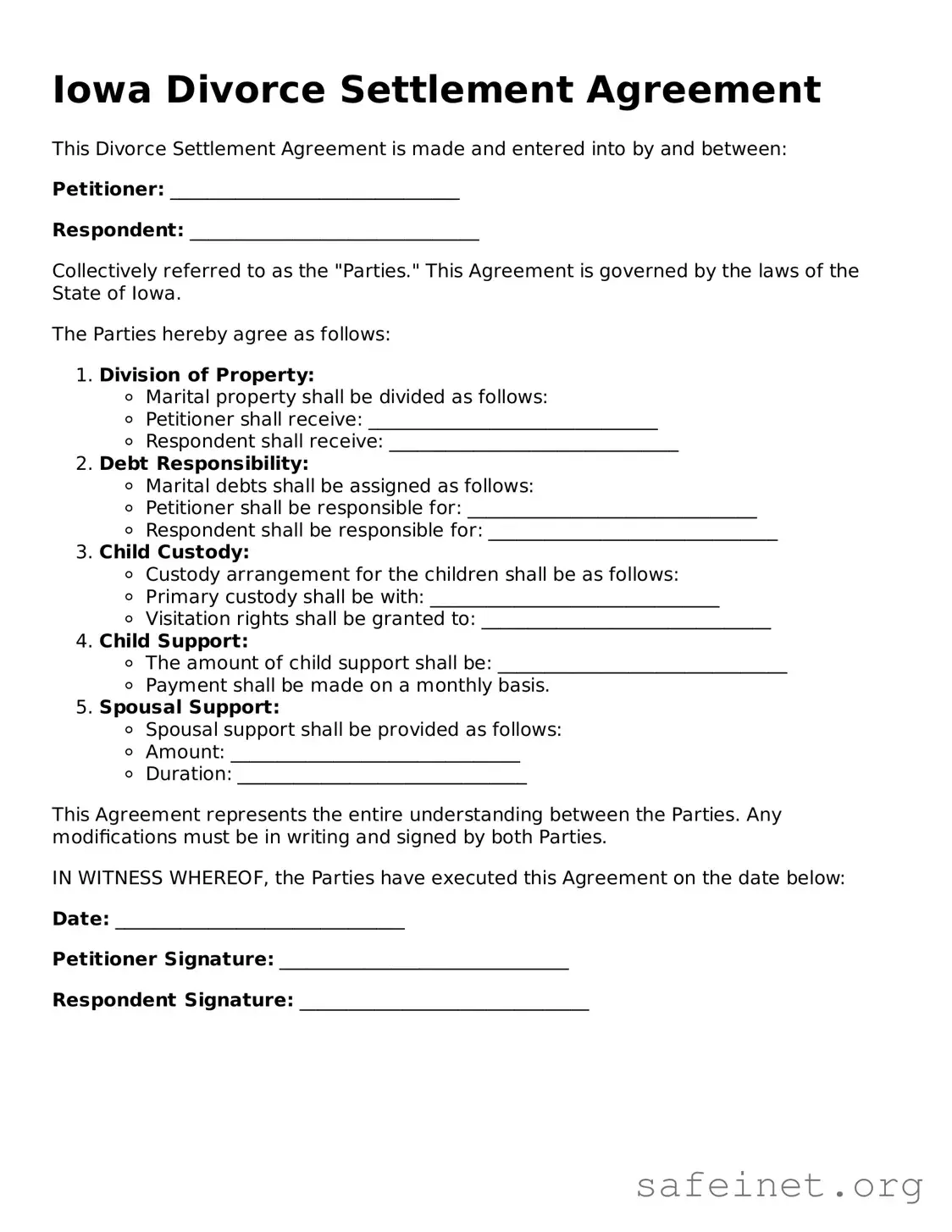
The Iowa Divorce Settlement Agreement form plays a crucial role in the divorce process, serving as a written contract between spouses to outline the terms of their separation. This document addresses several key aspects of the divorce, including the division of property, allocation of debts, child custody arrangements, and support obligations. By clearly detailing how assets and liabilities will be divided, the form helps to prevent future disputes and provides a sense of closure for both parties. Additionally, it ensures that any agreements regarding the care and financial support of children are formally recognized, which is essential for their well-being. Completing this form accurately is vital, as it becomes a part of the court record and can influence the final judgment in the divorce proceedings. Understanding the components of the form and the implications of each section is important for individuals navigating this challenging time.
Iowa Divorce Settlement Agreement
This Divorce Settlement Agreement is made and entered into by and between:
Petitioner: _______________________________
Respondent: _______________________________
Collectively referred to as the "Parties." This Agreement is governed by the laws of the State of Iowa.
The Parties hereby agree as follows:
This Agreement represents the entire understanding between the Parties. Any modifications must be in writing and signed by both Parties.
IN WITNESS WHEREOF, the Parties have executed this Agreement on the date below:
Date: _______________________________
Petitioner Signature: _______________________________
Respondent Signature: _______________________________
| Fact Name | Description |
|---|---|
| Governing Law | The Iowa Divorce Settlement Agreement is governed by Iowa Code Chapter 598, which outlines divorce procedures and requirements. |
| Purpose | This form is used to outline the terms of a divorce settlement, including asset division, child custody, and support obligations. |
| Mutual Agreement | Both parties must agree to the terms specified in the settlement agreement for it to be valid. |
| Filing Requirement | The completed agreement must be filed with the court as part of the divorce proceedings. |
| Modification | Once approved by the court, the terms can only be modified under specific circumstances, such as a significant change in financial situation. |
| Child Support Guidelines | Iowa has specific guidelines for calculating child support, which must be adhered to in the agreement. |
| Property Division | The agreement should clearly outline how marital property and debts will be divided between the parties. |
| Legal Representation | While not required, it is highly recommended that each party consult with an attorney before signing the agreement. |
| Enforceability | Once the court approves the agreement, it becomes legally binding and enforceable by law. |
| Confidentiality | The terms of the agreement can be kept confidential, but they may be disclosed in certain legal contexts. |
After obtaining the Iowa Divorce Settlement Agreement form, the next step involves carefully filling it out. This form is essential for outlining the terms of the divorce, including asset division, child custody, and support arrangements. Completing it accurately is crucial for a smooth divorce process.
What is a Divorce Settlement Agreement in Iowa?
A Divorce Settlement Agreement is a legal document that outlines the terms and conditions agreed upon by both spouses during a divorce. It covers various aspects such as property division, child custody, visitation rights, and spousal support. This agreement is essential for ensuring that both parties have a clear understanding of their rights and responsibilities after the divorce is finalized.
How do I create a Divorce Settlement Agreement?
To create a Divorce Settlement Agreement, both spouses should discuss and negotiate the terms they wish to include. It is advisable to consider factors such as asset division, debt responsibilities, and child-related matters. Once an agreement is reached, it should be documented in writing and signed by both parties. Legal advice can be beneficial to ensure that the agreement complies with Iowa laws.
Is the Divorce Settlement Agreement legally binding?
Yes, once both parties sign the Divorce Settlement Agreement and it is submitted to the court, it becomes legally binding. This means that both spouses must adhere to the terms outlined in the agreement. If one party fails to comply, the other party can seek enforcement through the court.
What happens if we cannot agree on the terms?
If both spouses cannot reach an agreement, they may need to consider mediation or other dispute resolution methods. Mediation involves a neutral third party who helps facilitate discussions and negotiations. If mediation fails, the case may proceed to court, where a judge will make the final decisions regarding the divorce terms.
Can I modify the Divorce Settlement Agreement later?
Yes, modifications can be made to the Divorce Settlement Agreement after it has been finalized. However, both parties must agree to the changes, and the modified agreement should be documented and submitted to the court for approval. It is important to note that modifications typically require a valid reason, such as a change in financial circumstances or relocation.
Do I need an attorney to draft the Divorce Settlement Agreement?
While it is not legally required to have an attorney draft the Divorce Settlement Agreement, it is highly recommended. An attorney can provide valuable guidance, ensure that the agreement is fair, and help navigate any complex legal issues. Having professional assistance can prevent future disputes and ensure that your rights are protected.
What if I have children? How does that affect the agreement?
When children are involved, the Divorce Settlement Agreement must address child custody, visitation schedules, and child support. Both parents should prioritize the best interests of the children when negotiating these terms. The court will review the agreement to ensure that it meets the needs of the children and complies with Iowa law.
How long does it take to finalize a Divorce Settlement Agreement?
The time it takes to finalize a Divorce Settlement Agreement can vary significantly based on the complexity of the issues and the willingness of both parties to negotiate. If both spouses can agree on the terms quickly, the process may take a few weeks. However, if disputes arise, it could take several months or longer to reach a resolution.
Where do I file the Divorce Settlement Agreement?
The Divorce Settlement Agreement should be filed with the court that is handling your divorce case. This is typically the district court in the county where you or your spouse resides. Ensure that you keep a copy for your records and follow any specific filing procedures required by the court.
Missing Information: One common mistake is leaving out important details. Every section of the form must be filled out completely. Omitting information can lead to delays or complications.
Incorrect Financial Disclosures: People sometimes misreport their income or assets. It’s crucial to provide accurate financial information. Failing to do so can affect the division of property and support payments.
Not Understanding Legal Terms: Some individuals may not fully grasp the legal terms used in the agreement. It’s important to read and understand each term to avoid confusion later on.
Overlooking Child Support Guidelines: When children are involved, parents might forget to follow Iowa's child support guidelines. Make sure to calculate support payments based on the correct formulas to ensure fairness.
Failing to Review the Agreement: Before submitting the form, it’s vital to review the entire agreement. Skimming through can lead to missed errors or inconsistencies that could cause problems down the line.
Not Seeking Legal Advice: Many people think they can handle the process without help. Consulting a legal professional can provide clarity and ensure that all aspects of the agreement are covered.
When navigating the divorce process in Iowa, several key documents often accompany the Divorce Settlement Agreement. Each of these forms serves a specific purpose and helps ensure that all aspects of the divorce are addressed comprehensively.
Understanding these documents can help streamline the divorce process. Each form plays a vital role in ensuring that the divorce is resolved fairly and efficiently.
The Iowa Child Custody Agreement is a document that outlines the arrangements for the care and custody of children following a divorce. Like the Divorce Settlement Agreement, it focuses on the best interests of the children involved. This agreement specifies physical and legal custody, visitation schedules, and decision-making responsibilities. Both documents aim to provide clarity and stability for families during a challenging transition.
The Iowa Child Support Guidelines form is another important document that works in tandem with the Divorce Settlement Agreement. This form calculates the financial support one parent must provide to the other for the upbringing of their children. It takes into account various factors, such as income and expenses. While the Divorce Settlement Agreement may address child support, the guidelines provide a structured way to determine the appropriate amount, ensuring fairness for both parties.
The Iowa Spousal Support Agreement outlines the financial support one spouse may provide to the other after a divorce. Similar to the Divorce Settlement Agreement, it is designed to address the financial implications of the divorce. This document can specify the amount, duration, and conditions of spousal support, helping to ensure that both parties are supported during the transition to single living.
The Iowa Property Settlement Agreement is closely related to the Divorce Settlement Agreement, as it deals specifically with the division of marital assets and debts. This document details how property will be divided, including real estate, bank accounts, and personal belongings. Both agreements aim to provide a fair resolution for both parties, ensuring that each person understands their rights and responsibilities regarding shared property.
The Iowa Parenting Plan is a comprehensive document that outlines how parents will raise their children after separation or divorce. Similar to the Divorce Settlement Agreement, it addresses custody arrangements, visitation, and communication between parents. This plan helps to create a framework for co-parenting, ensuring that both parents remain involved in their children's lives while minimizing conflict.
The Iowa Marital Settlement Agreement is another document that closely resembles the Divorce Settlement Agreement. This document outlines the terms of the divorce, including asset division, child custody, and support obligations. It serves as a formal record of the agreements made between spouses and can be submitted to the court for approval, ensuring that both parties are legally bound to the terms agreed upon.
The Iowa Quit Claim Deed is relevant in the context of property division during a divorce. This document allows one spouse to transfer their interest in a property to the other. While the Divorce Settlement Agreement may specify how property is divided, the Quit Claim Deed formalizes that transfer, ensuring that ownership is clear and legally recognized.
The Iowa Debt Settlement Agreement is similar in purpose to the Divorce Settlement Agreement, as it addresses the division of debts incurred during the marriage. This document outlines which spouse is responsible for specific debts and how they will be paid. It helps to clarify financial responsibilities post-divorce, reducing potential disputes over outstanding obligations.
The Iowa Financial Affidavit is a document that provides a detailed overview of each spouse's financial situation. It is often used in divorce proceedings to ensure transparency regarding income, expenses, assets, and debts. Like the Divorce Settlement Agreement, it plays a crucial role in determining fair outcomes for child support, spousal support, and property division, as both parties need to understand their financial standing.
When filling out the Iowa Divorce Settlement Agreement form, there are some important guidelines to keep in mind. Here’s a list of things you should and shouldn’t do:
Following these guidelines can help ensure that your form is filled out correctly and efficiently.
When it comes to the Iowa Divorce Settlement Agreement form, several misconceptions can lead to confusion. Understanding the truth behind these myths can help individuals navigate the divorce process more smoothly.
This is not true. Even if there are no children, a Divorce Settlement Agreement is essential for dividing assets, debts, and other matters. It ensures that both parties have a clear understanding of their rights and responsibilities.
While the agreement is legally binding once signed, it can be modified if both parties agree. Changes may be necessary due to evolving circumstances, so it’s important to keep communication open.
Although having legal assistance can be beneficial, it is not mandatory. Many individuals successfully complete the form on their own. However, understanding the implications of each section is crucial.
The form itself does not ensure fairness. It reflects the agreements made by both parties. Open dialogue and negotiation are key to achieving a fair outcome.
This is misleading. While the agreement is submitted to the court, parties can request modifications later if circumstances change. Flexibility is an important aspect of the process.
When filling out and using the Iowa Divorce Settlement Agreement form, it's essential to keep several key points in mind. This document plays a crucial role in outlining the terms of your divorce, so attention to detail is vital. Below are some important takeaways to consider:
Taking these steps can help ensure a smoother divorce process and protect your interests moving forward.