The Iowa Deed form is an essential document used in real estate transactions within the state of Iowa. It serves as the legal instrument to transfer property ownership from one party to another. This form includes important details such as the names of the grantor and grantee, a description of the property being transferred, and the date of the transaction. Additionally, it may specify any conditions or restrictions related to the property. Understanding the various types of deeds available, such as warranty deeds and quitclaim deeds, is crucial for ensuring the appropriate form is used for each unique situation. Properly completing and recording the Iowa Deed form can help protect the rights of both the seller and the buyer, making it a vital step in any property transaction.
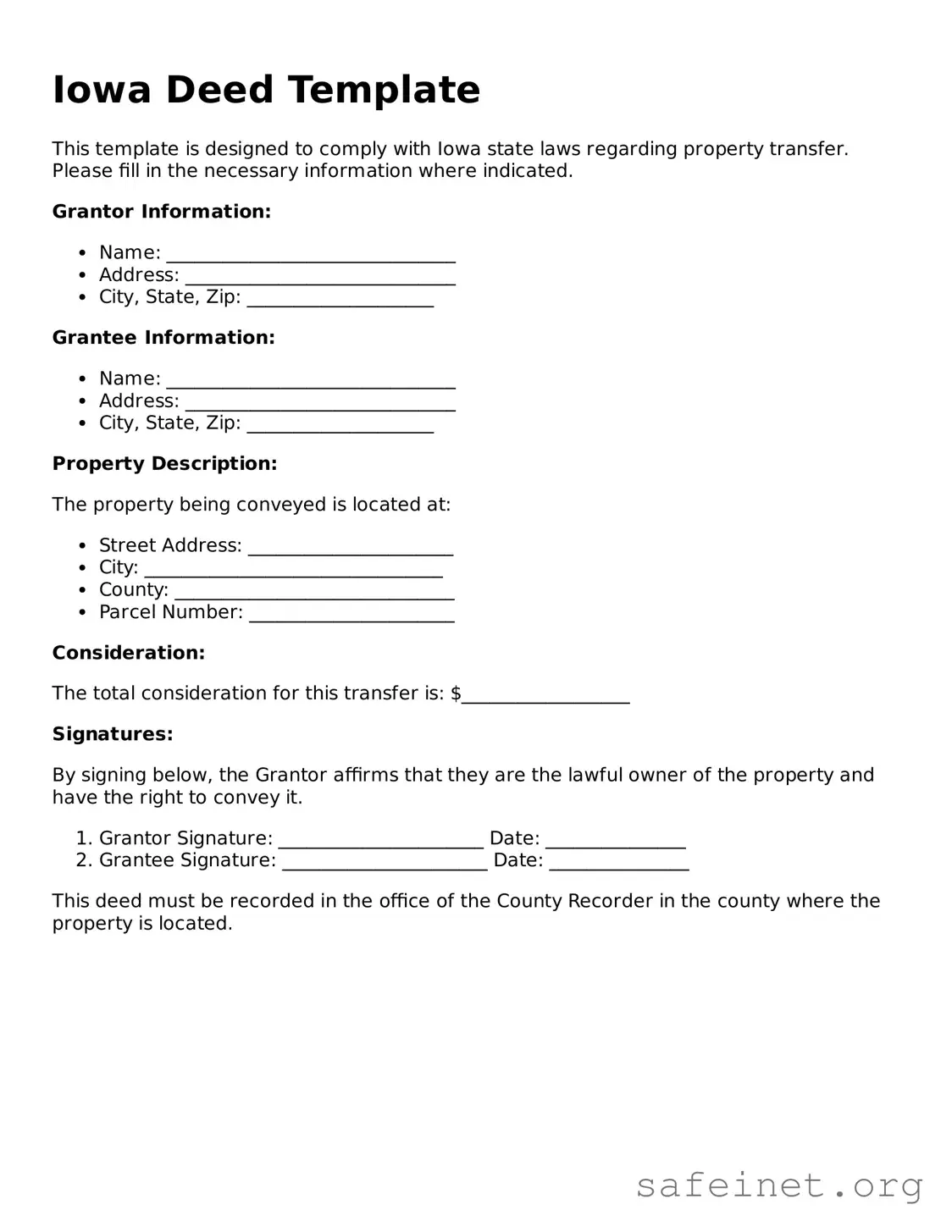
Iowa Deed Template
This template is designed to comply with Iowa state laws regarding property transfer. Please fill in the necessary information where indicated.
Grantor Information:
Grantee Information:
Property Description:
The property being conveyed is located at:
Consideration:
The total consideration for this transfer is: $__________________
Signatures:
By signing below, the Grantor affirms that they are the lawful owner of the property and have the right to convey it.
This deed must be recorded in the office of the County Recorder in the county where the property is located.
| Fact Name | Description |
|---|---|
| Governing Law | The Iowa Deed form is governed by the Iowa Code, specifically Chapter 557. |
| Types of Deeds | Iowa recognizes various types of deeds, including warranty deeds, quitclaim deeds, and special warranty deeds. |
| Property Description | A clear and accurate legal description of the property must be included in the deed. |
| Signatures Required | The deed must be signed by the grantor (the person transferring the property) to be valid. |
| Notarization | In Iowa, a deed must be notarized to ensure its authenticity and to be recorded. |
| Recording the Deed | After execution, the deed should be recorded with the county recorder's office to provide public notice of the property transfer. |
After you have completed the Iowa Deed form, the next step is to ensure that it is properly signed and notarized. This is crucial for the deed to be legally valid and enforceable. Once notarized, you will need to file the deed with the appropriate county recorder's office.
What is an Iowa Deed form?
The Iowa Deed form is a legal document used to transfer ownership of real property from one party to another within the state of Iowa. This form serves as a formal record of the transaction and outlines the details of the property being transferred, as well as the parties involved in the transfer. It is essential for ensuring that the new owner has clear and legal title to the property.
What types of deeds are available in Iowa?
Iowa recognizes several types of deeds, including warranty deeds, quitclaim deeds, and special warranty deeds. A warranty deed provides the highest level of protection to the buyer, guaranteeing that the seller holds clear title to the property. A quitclaim deed, on the other hand, transfers whatever interest the seller may have in the property without any guarantees. Special warranty deeds offer limited warranties, typically only covering the period during which the seller owned the property.
Who can prepare an Iowa Deed form?
What information is required on an Iowa Deed form?
An Iowa Deed form must include several key pieces of information. This includes the names and addresses of both the grantor (the seller) and the grantee (the buyer), a legal description of the property being transferred, and the date of the transaction. Additionally, the deed should state the consideration, or payment, involved in the transfer, even if it is a nominal amount.
How do I record an Iowa Deed?
To officially record an Iowa Deed, the completed form must be submitted to the county recorder's office in the county where the property is located. There may be a small fee for recording the deed. Once recorded, the deed becomes part of the public record, providing legal notice of the ownership transfer.
Is there a fee associated with filing an Iowa Deed?
Yes, there is typically a fee for filing an Iowa Deed. The exact amount can vary by county, so it is advisable to check with the local county recorder's office for specific fee information. Additionally, there may be other costs associated with the transfer, such as title insurance or transfer taxes, which should be considered during the transaction.
Can a deed be contested after it has been recorded?
Yes, a deed can be contested after it has been recorded. If someone believes that the deed was executed under false pretenses, coercion, or fraud, they may have grounds to challenge the validity of the deed in court. It is crucial for all parties involved to ensure that the transaction is conducted transparently and legally to minimize the risk of disputes.
What happens if the Iowa Deed is not recorded?
If an Iowa Deed is not recorded, the transfer of property ownership may not be legally recognized. This can lead to complications, especially if the seller attempts to sell the property again or if there are disputes over ownership. Recording the deed protects the buyer's rights and provides public notice of the ownership change.
How can I obtain a copy of an Iowa Deed?
To obtain a copy of an Iowa Deed, you can contact the county recorder's office where the deed was recorded. Most offices allow you to request copies in person, by mail, or sometimes online. There may be a small fee for obtaining a copy, and having the deed number or other identifying information can expedite the process.
Incorrect Names: One common mistake is not using the full legal names of all parties involved. It is essential to ensure that names match exactly as they appear on legal documents.
Missing Signatures: All required signatures must be present. Failing to have the necessary signatures can render the deed invalid.
Improper Notarization: The deed must be notarized correctly. A missing or improperly completed notarization can lead to complications.
Incorrect Property Description: Providing an inaccurate or incomplete description of the property can cause issues. It is crucial to include the correct legal description to avoid future disputes.
Failure to Record: After completing the deed, it must be recorded with the appropriate county office. Neglecting this step may result in the deed not being recognized legally.
When transferring property in Iowa, the deed form is just one part of the process. Several other documents often accompany the deed to ensure a smooth transaction and to comply with state regulations. Understanding these documents can help facilitate a clearer transfer of ownership.
By familiarizing yourself with these essential documents, you can navigate the property transfer process with greater confidence. Each document plays a crucial role in ensuring that both parties are protected and that the transaction proceeds smoothly.
The Warranty Deed is a document that conveys real property from one party to another, ensuring that the grantor has clear title to the property and the right to sell it. It provides a guarantee that the property is free from any encumbrances, except those explicitly stated in the deed. This form is similar to the Iowa Deed in that both serve the purpose of transferring ownership, but the Warranty Deed offers additional protection to the grantee by assuring them of the grantor's legal ownership and the absence of undisclosed claims against the property.
The Quitclaim Deed allows a property owner to transfer their interest in a property without making any guarantees about the title. Unlike the Warranty Deed, it does not assure the grantee of clear title. The Quitclaim Deed is similar to the Iowa Deed in that it facilitates the transfer of property ownership. However, it is often used in situations where the parties know each other, such as between family members, where the grantor does not want to be liable for any title issues.
The Special Warranty Deed is a hybrid of the Warranty Deed and the Quitclaim Deed. It guarantees that the grantor has not encumbered the property during their ownership but does not guarantee against claims from prior owners. This type of deed shares similarities with the Iowa Deed in its function of transferring property, but it limits the grantor's liability regarding the title to only the period of their ownership.
The Bargain and Sale Deed conveys property without any warranties against encumbrances. It implies that the grantor has the right to sell the property but does not guarantee that the title is clear. This deed is similar to the Iowa Deed in that it serves to transfer ownership, but it does not provide the same level of assurance about the title as a Warranty Deed would.
The Grant Deed is a type of deed used in some states that guarantees that the grantor has not sold the property to anyone else and that the property is free from encumbrances made during their ownership. It is similar to the Iowa Deed in that both documents facilitate the transfer of property. However, the Grant Deed offers more protection to the grantee than a Quitclaim Deed but less than a Warranty Deed.
The Deed of Trust is a security instrument used in real estate transactions, where the borrower conveys legal title to a trustee as security for a loan. While it serves a different purpose than the Iowa Deed, both documents involve the transfer of property interests. The Deed of Trust is similar in that it requires the involvement of multiple parties, including a borrower, lender, and trustee.
The Mortgage is a document that secures a loan by creating a lien on the property. It allows the lender to take possession of the property if the borrower defaults on the loan. Similar to the Iowa Deed, the Mortgage involves the transfer of property rights, but its primary function is to secure a financial interest rather than to transfer ownership outright.
The Lease Agreement is a contract that allows one party to use another party's property for a specified period in exchange for rent. While it does not transfer ownership, it grants certain rights to the lessee. The Lease Agreement is similar to the Iowa Deed in that both documents involve property rights, but they serve different purposes regarding ownership and use.
The Affidavit of Title is a sworn statement by the seller regarding the condition of the title to the property being sold. It is similar to the Iowa Deed in that it relates to the transfer of property ownership. However, the Affidavit of Title serves as a disclosure tool to provide assurance to the buyer about the title's status rather than facilitating the transfer itself.
When filling out the Iowa Deed form, it is important to follow certain guidelines to ensure accuracy and compliance. Below is a list of things to do and avoid.
Understanding the Iowa Deed form is crucial for anyone involved in real estate transactions in the state. However, several misconceptions can lead to confusion. Here are seven common misconceptions:
Many people believe that all deed forms are interchangeable. In reality, different types of deeds serve different purposes, such as warranty deeds, quitclaim deeds, and special purpose deeds.
While notarization is highly recommended for the Iowa Deed form, it is not strictly required for the deed to be valid. However, notarization can help prevent disputes later on.
Some assume that only the seller's signature is necessary. In fact, both the grantor (seller) and grantee (buyer) should review and sign the deed to ensure clarity and mutual agreement.
Recording the deed with the county recorder is essential for establishing public notice of ownership. Failure to record may lead to complications in proving ownership in the future.
This is not true. In certain cases, such as transfers between spouses or to a trust, existing deeds may suffice without needing a new one.
People often think that the Iowa Deed form applies only to residential real estate. However, it can also be used for commercial properties, agricultural land, and other types of real estate.
While it is true that a deed is a legal document, it can be amended or revoked under certain conditions, provided that the correct legal procedures are followed.
When dealing with the Iowa Deed form, it's essential to understand its purpose and how to fill it out correctly. Here are some key takeaways to keep in mind:
By following these guidelines, you can ensure a smoother process when filling out and using the Iowa Deed form.