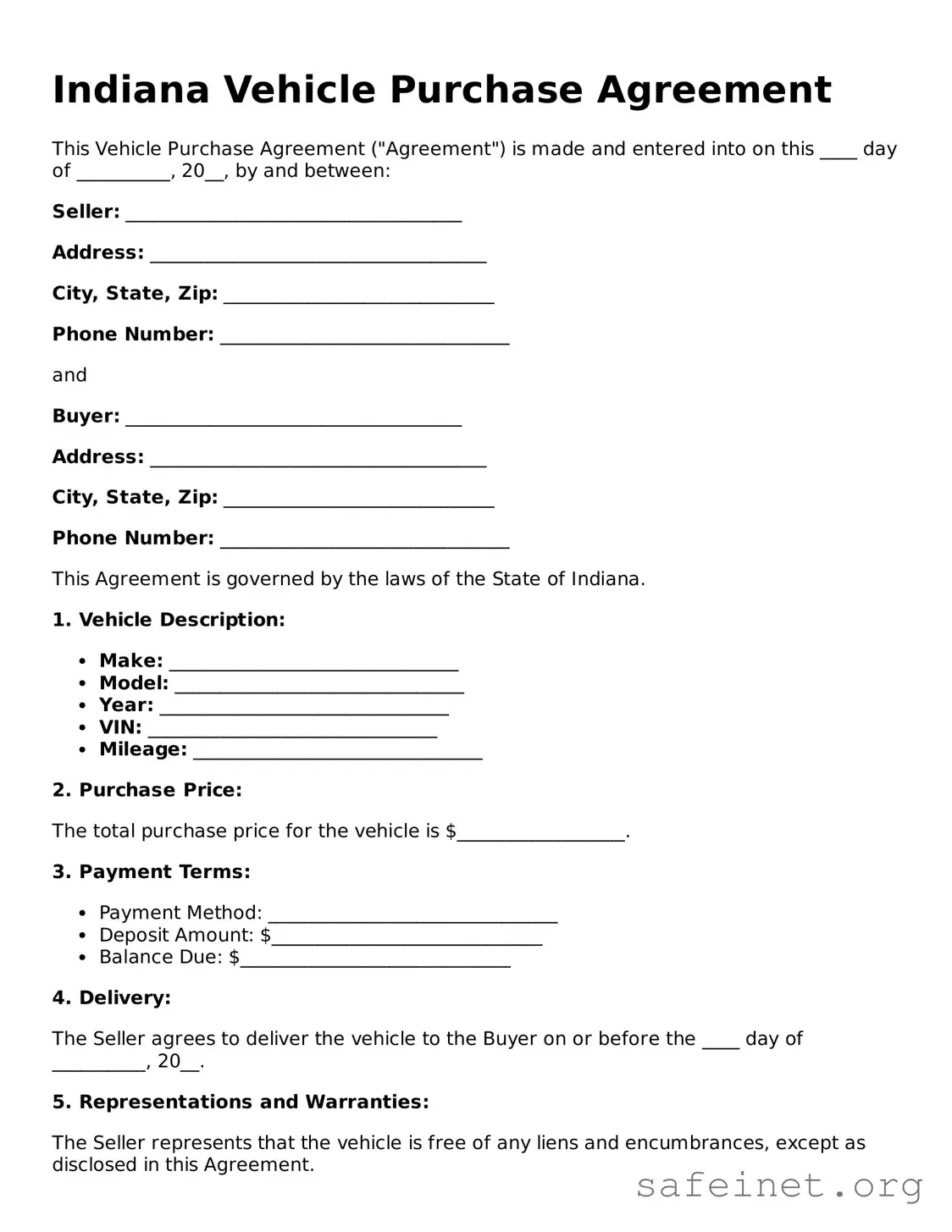
When buying or selling a vehicle in Indiana, having a Vehicle Purchase Agreement form is essential for both parties involved in the transaction. This document serves as a written record of the sale, outlining key details such as the buyer's and seller's information, vehicle identification number (VIN), make, model, year, and purchase price. It also includes important terms and conditions that govern the sale, ensuring that both parties understand their rights and responsibilities. Additionally, the agreement may address aspects like warranties, payment methods, and the delivery of the vehicle. By clearly documenting the transaction, this form helps prevent misunderstandings and provides legal protection should any disputes arise in the future. Understanding the importance and components of the Indiana Vehicle Purchase Agreement form can streamline the buying or selling process, making it a smoother experience for everyone involved.
Indiana Vehicle Purchase Agreement
This Vehicle Purchase Agreement ("Agreement") is made and entered into on this ____ day of __________, 20__, by and between:
Seller: ____________________________________
Address: ____________________________________
City, State, Zip: _____________________________
Phone Number: _______________________________
and
Buyer: ____________________________________
Address: ____________________________________
City, State, Zip: _____________________________
Phone Number: _______________________________
This Agreement is governed by the laws of the State of Indiana.
1. Vehicle Description:
2. Purchase Price:
The total purchase price for the vehicle is $__________________.
3. Payment Terms:
4. Delivery:
The Seller agrees to deliver the vehicle to the Buyer on or before the ____ day of __________, 20__.
5. Representations and Warranties:
The Seller represents that the vehicle is free of any liens and encumbrances, except as disclosed in this Agreement.
6. Signatures:
By signing below, both parties agree to the terms of this Vehicle Purchase Agreement.
Seller's Signature: ____________________________ Date: ___________
Buyer's Signature: ____________________________ Date: ___________
This Agreement constitutes the entire understanding between the parties and supersedes all prior agreements, whether written or oral.
| Fact Name | Description |
|---|---|
| Purpose | The Indiana Vehicle Purchase Agreement form is used to document the sale of a vehicle between a buyer and a seller. |
| Governing Law | This agreement is governed by Indiana state law, specifically the Indiana Code Title 9. |
| Parties Involved | The form includes sections for both the buyer and the seller to provide their names and contact information. |
| Vehicle Information | Details about the vehicle, such as make, model, year, and VIN, are required to ensure clarity in the transaction. |
| Purchase Price | The total purchase price must be clearly stated, including any applicable taxes and fees. |
| Payment Terms | Information regarding how the payment will be made—whether in full or through financing—should be included. |
| Condition of Vehicle | The agreement typically includes a section where the seller discloses the condition of the vehicle, including any known issues. |
| Signatures | Both parties must sign the agreement to make it legally binding, indicating their acceptance of the terms. |
| Copy Retention | It is advisable for both the buyer and seller to keep a signed copy of the agreement for their records. |
Completing the Indiana Vehicle Purchase Agreement form is a crucial step in finalizing your vehicle purchase. Ensuring all information is accurate will help facilitate a smooth transaction. Follow these steps carefully to fill out the form correctly.
After filling out the form, it is advisable to make copies for both the buyer and seller. This ensures that both parties have a record of the agreement. Keep the signed document in a safe place, as it may be needed for future reference or registration purposes.
What is the Indiana Vehicle Purchase Agreement form?
The Indiana Vehicle Purchase Agreement form is a legal document that outlines the terms and conditions of the sale of a vehicle in the state of Indiana. It serves to protect both the buyer and the seller by clearly stating the details of the transaction, including the purchase price, vehicle description, and any warranties or conditions associated with the sale.
Who needs to use the Vehicle Purchase Agreement form?
This form is essential for anyone involved in the sale or purchase of a vehicle in Indiana. Whether you are a private seller or a buyer, using this agreement helps ensure that both parties understand their rights and obligations. It is particularly useful in private sales, where formal documentation may not typically be provided.
What information is required on the form?
The form typically requires details such as the names and addresses of both the buyer and seller, the vehicle identification number (VIN), make and model of the vehicle, the purchase price, and any terms of the sale. Additionally, it may include information regarding any financing arrangements or warranties associated with the vehicle.
Is the Vehicle Purchase Agreement form legally binding?
Yes, once both parties have signed the Vehicle Purchase Agreement, it becomes a legally binding contract. This means that both the buyer and seller are obligated to adhere to the terms outlined in the agreement. It is important for both parties to read and understand the document fully before signing.
Can the Vehicle Purchase Agreement be modified after signing?
Modifications to the Vehicle Purchase Agreement after it has been signed can be complicated. Generally, any changes should be made in writing and agreed upon by both parties. It is advisable to document any modifications to ensure clarity and avoid future disputes.
What should I do if there are disputes after the sale?
If disputes arise after the sale, the Vehicle Purchase Agreement serves as a reference point for resolving issues. Both parties should first attempt to communicate and reach an amicable resolution. If that fails, legal advice may be necessary, and the agreement can be used in any potential legal proceedings.
Is there a fee associated with using the Vehicle Purchase Agreement form?
There is no specific fee for using the Vehicle Purchase Agreement form itself, as it is generally available for free through various online resources or local government offices. However, if legal advice is sought for drafting or reviewing the agreement, there may be associated costs.
Where can I obtain the Indiana Vehicle Purchase Agreement form?
The Indiana Vehicle Purchase Agreement form can be obtained through several sources, including the Indiana Bureau of Motor Vehicles (BMV) website, legal document websites, or local legal offices. It is important to ensure that the form is up to date and complies with current Indiana laws.
Not Reading the Entire Form
Many people rush through the Vehicle Purchase Agreement form. Skipping important sections can lead to misunderstandings about the terms of the sale. Take the time to read everything carefully.
Incorrect Vehicle Information
It's crucial to provide accurate details about the vehicle. Mistakes in the vehicle identification number (VIN), make, model, or year can create problems later. Double-check this information before submitting the form.
Missing Signatures
For the agreement to be valid, all required signatures must be present. Forgetting to sign or having the wrong person sign can invalidate the agreement. Ensure that all parties involved sign where necessary.
Overlooking Payment Details
Clearly outlining the payment method and amount is vital. Some people forget to specify whether they are paying in cash, through financing, or by another method. This can lead to confusion and disputes later on.
When purchasing a vehicle in Indiana, several important documents are typically involved alongside the Indiana Vehicle Purchase Agreement. Each of these documents serves a specific purpose in ensuring a smooth transaction and proper documentation of the vehicle transfer. Here’s a brief overview of some commonly used forms and documents:
Having these documents prepared and organized can make the vehicle purchasing process more efficient and ensure that all legal requirements are met. It is always a good idea to consult with a professional if there are any questions or uncertainties regarding the paperwork involved.
The Indiana Vehicle Purchase Agreement form is similar to the Bill of Sale, which is a document that transfers ownership of a vehicle from the seller to the buyer. Both documents outline the details of the transaction, including the vehicle’s identification number (VIN), make, model, and sale price. The Bill of Sale serves as proof of purchase and is often required for registration purposes, making it a crucial document in the vehicle buying process.
Another document that resembles the Vehicle Purchase Agreement is the Purchase Agreement for Real Estate. While this document pertains to real estate transactions, it shares the same fundamental purpose of outlining the terms of a sale. Both agreements detail the parties involved, the property being sold, and the agreed-upon price. They also include contingencies and conditions that must be met before the sale can be finalized.
The Lease Agreement is another document that has similarities to the Vehicle Purchase Agreement. While a lease typically pertains to rental arrangements, both documents specify terms and conditions related to the use of a property or vehicle. They outline responsibilities of both parties, including payment schedules and maintenance obligations, and serve to protect the rights of both the lessor and lessee.
The Sales Contract is akin to the Vehicle Purchase Agreement in that it formalizes the terms of a sale between a buyer and a seller. This document includes specifics about the item being sold, payment methods, and delivery terms. Like the Vehicle Purchase Agreement, it serves as a legally binding agreement that can be enforced in court if necessary.
The Financing Agreement also shares characteristics with the Vehicle Purchase Agreement. This document outlines the terms of financing for the purchase of a vehicle, including interest rates, payment schedules, and penalties for late payments. Both documents are essential in the vehicle purchasing process, especially for buyers who require financing to complete their purchase.
The Odometer Disclosure Statement is another important document that parallels the Vehicle Purchase Agreement. This statement is typically required by law and certifies the vehicle’s mileage at the time of sale. It protects buyers from odometer fraud and ensures that the information provided in the Vehicle Purchase Agreement is accurate and transparent.
The Title Transfer form is closely related to the Vehicle Purchase Agreement as it facilitates the legal transfer of ownership from the seller to the buyer. This document must be completed and submitted to the appropriate state agency to officially register the new owner. Both documents work together to ensure a smooth transition of ownership and compliance with state laws.
The Warranty Deed is similar in that it serves as a guarantee of ownership, though it pertains to real estate. Like the Vehicle Purchase Agreement, it provides assurance that the seller has the right to sell the property and that the buyer will receive clear title. Both documents are vital for protecting the interests of the buyer in their respective transactions.
Lastly, the Affidavit of Title is akin to the Vehicle Purchase Agreement in that it provides a sworn statement regarding the ownership and condition of the vehicle. This document may be required in certain situations to clarify the legitimacy of the sale and ensure that the buyer is aware of any liens or claims against the vehicle, similar to the protections offered in the Vehicle Purchase Agreement.
When filling out the Indiana Vehicle Purchase Agreement form, it is important to follow certain guidelines to ensure that the process goes smoothly. Below are some key do's and don'ts to keep in mind.
Understanding the Indiana Vehicle Purchase Agreement form is crucial for anyone involved in buying or selling a vehicle in the state. However, several misconceptions persist regarding this document. Below are five common misconceptions, along with clarifications.
By addressing these misconceptions, individuals can approach the vehicle purchasing process with a clearer understanding of their rights and responsibilities.
When filling out and using the Indiana Vehicle Purchase Agreement form, there are several important points to keep in mind. This form serves as a crucial document in the vehicle buying process. Below are key takeaways to consider:
By following these key points, both buyers and sellers can navigate the vehicle purchase process more smoothly and ensure that their agreement is clear and legally sound.