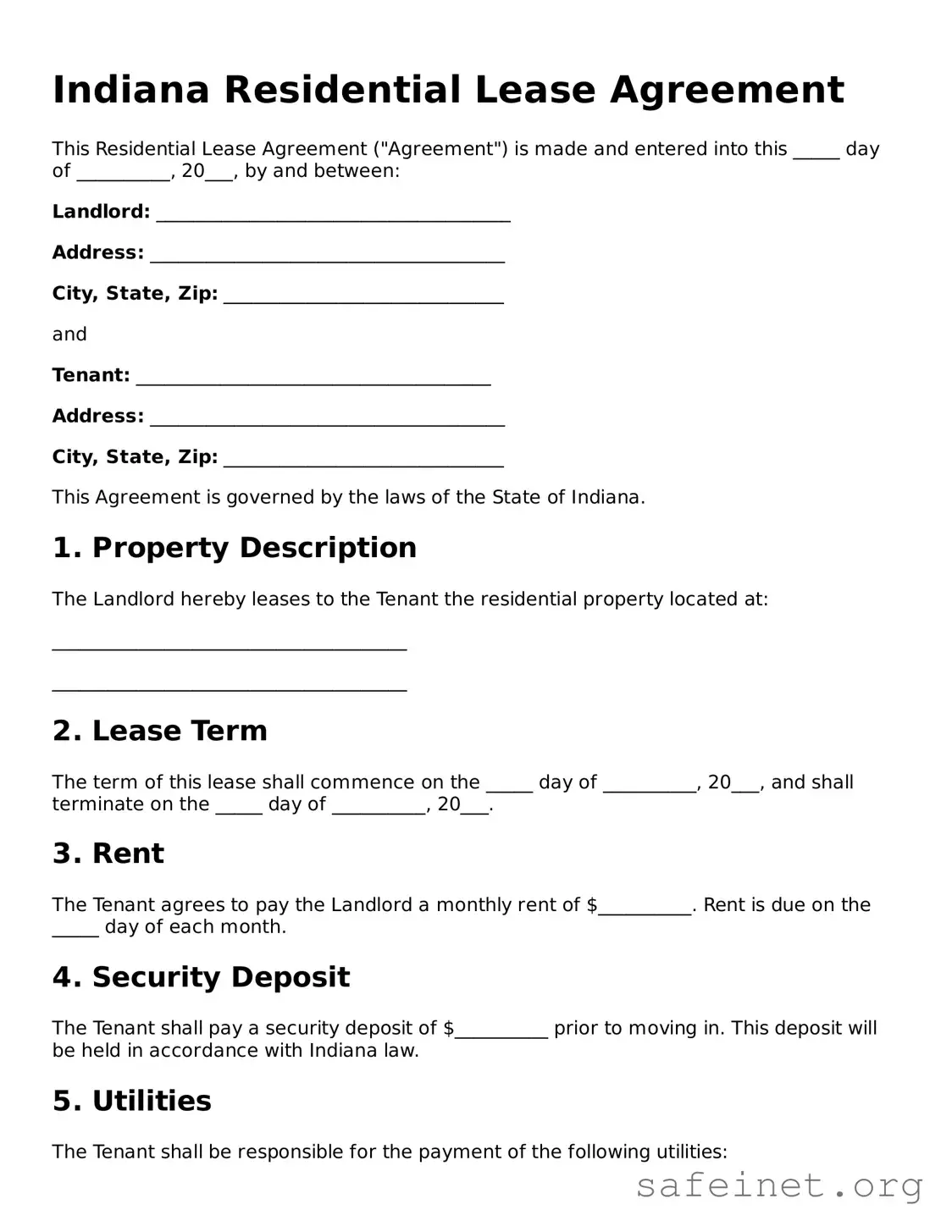
When renting a home in Indiana, understanding the Residential Lease Agreement form is essential for both landlords and tenants. This legally binding document outlines the terms and conditions of the rental arrangement, ensuring that both parties are clear on their rights and responsibilities. Key aspects of the agreement include the duration of the lease, monthly rent amount, security deposit requirements, and maintenance responsibilities. Additionally, it addresses policies regarding pets, utilities, and the process for terminating the lease. By carefully reviewing and completing this form, individuals can protect their interests and foster a positive rental experience. Whether you are a seasoned landlord or a first-time renter, familiarity with the Indiana Residential Lease Agreement form will empower you to navigate the rental landscape with confidence.
Indiana Residential Lease Agreement
This Residential Lease Agreement ("Agreement") is made and entered into this _____ day of __________, 20___, by and between:
Landlord: ______________________________________
Address: ______________________________________
City, State, Zip: ______________________________
and
Tenant: ______________________________________
Address: ______________________________________
City, State, Zip: ______________________________
This Agreement is governed by the laws of the State of Indiana.
1. Property Description
The Landlord hereby leases to the Tenant the residential property located at:
______________________________________
______________________________________
2. Lease Term
The term of this lease shall commence on the _____ day of __________, 20___, and shall terminate on the _____ day of __________, 20___.
3. Rent
The Tenant agrees to pay the Landlord a monthly rent of $__________. Rent is due on the _____ day of each month.
4. Security Deposit
The Tenant shall pay a security deposit of $__________ prior to moving in. This deposit will be held in accordance with Indiana law.
5. Utilities
The Tenant shall be responsible for the payment of the following utilities:
6. Maintenance and Repairs
The Tenant agrees to keep the property in good condition and notify the Landlord of any necessary repairs.
7. Use of Property
The property shall be used solely for residential purposes. The Tenant shall not engage in any illegal activities on the premises.
8. Termination
Either party may terminate this Agreement by providing written notice at least _____ days prior to the desired termination date.
9. Governing Law
This Agreement shall be governed by the laws of the State of Indiana. Any disputes arising under this Agreement shall be resolved in accordance with Indiana law.
10. Signatures
By signing below, both parties agree to the terms outlined in this Residential Lease Agreement.
Landlord Signature: ____________________________ Date: ____________
Tenant Signature: _____________________________ Date: ____________
| Fact Name | Details |
|---|---|
| Governing Law | The Indiana Residential Lease Agreement is governed by Indiana Code Title 32, Article 31. |
| Parties Involved | The lease agreement involves at least two parties: the landlord and the tenant. |
| Duration of Lease | Leases can be for a fixed term or month-to-month, depending on the agreement between parties. |
| Security Deposit | Indiana law allows landlords to collect a security deposit, typically not exceeding one month's rent. |
| Rent Payment | The lease must specify the amount of rent due, the due date, and acceptable payment methods. |
| Maintenance Responsibilities | Both landlords and tenants have defined responsibilities for property maintenance and repairs. |
| Termination Notice | Indiana law requires landlords to provide at least 30 days' notice for lease termination in month-to-month agreements. |
| Discrimination Laws | Landlords must comply with federal and state fair housing laws, prohibiting discrimination based on protected classes. |
| Subleasing | The lease agreement should clarify whether subleasing is permitted and under what conditions. |
| Disclosure Requirements | Landlords are required to disclose certain information, such as lead-based paint hazards, if applicable. |
Completing the Indiana Residential Lease Agreement form is a straightforward process that requires attention to detail. By following the steps outlined below, you can ensure that all necessary information is accurately provided, setting the stage for a smooth rental experience.
After completing the form, it is essential to keep copies for both the landlord and tenant. This ensures that everyone has access to the same information and can refer back to the agreement if necessary.
What is an Indiana Residential Lease Agreement?
An Indiana Residential Lease Agreement is a legal document that outlines the terms and conditions under which a landlord rents property to a tenant. This agreement covers various aspects such as rent amount, payment due dates, security deposits, maintenance responsibilities, and the duration of the lease. It serves to protect both parties by clearly defining their rights and obligations during the rental period.
What should be included in the lease agreement?
A comprehensive Indiana Residential Lease Agreement typically includes the names of the landlord and tenant, the property address, lease duration, rental payment details, security deposit information, and maintenance responsibilities. Additionally, it should specify rules regarding pets, smoking, and any other property-specific policies. Including a section on dispute resolution can also be beneficial, providing a clear process for addressing any conflicts that may arise.
How long is a typical lease agreement in Indiana?
Lease agreements in Indiana can vary in length, but the most common duration is one year. However, shorter leases, such as month-to-month agreements, are also prevalent. The duration should be clearly stated in the lease, allowing both parties to understand the commitment involved. If either party wishes to terminate the lease, they must follow the terms outlined in the agreement, which often requires notice a certain number of days in advance.
What are the tenant's rights under an Indiana lease?
Tenants in Indiana have several rights protected by law. They have the right to a habitable living space, meaning the property must meet basic health and safety standards. Tenants also have the right to privacy, which means landlords cannot enter the rental unit without proper notice unless it is an emergency. Additionally, tenants are entitled to receive their security deposit back within a specified timeframe after moving out, provided they have fulfilled their lease obligations.
Can a landlord evict a tenant in Indiana?
Yes, a landlord can evict a tenant in Indiana, but only under specific circumstances. Common reasons for eviction include non-payment of rent, violation of lease terms, or illegal activity on the property. The landlord must follow legal procedures, which typically involve providing written notice to the tenant and filing an eviction lawsuit if the issue is not resolved. It’s important for both landlords and tenants to understand their rights and responsibilities during this process.
Failing to include the full names of all tenants. Each tenant should be clearly identified to avoid confusion.
Not specifying the lease term. It is important to indicate whether the lease is for a fixed period or month-to-month.
Leaving out the rent amount. Clearly state how much rent is due and the due date each month.
Omitting details about security deposits. Include the amount, purpose, and conditions for return.
Not addressing utilities. Specify which utilities are included in the rent and which are the tenant's responsibility.
Failing to outline maintenance responsibilities. Clarify who is responsible for repairs and maintenance of the property.
Not including pet policies. If pets are allowed or not, this should be clearly stated in the lease.
Leaving out information about termination procedures. Explain how either party can terminate the lease.
Not providing contact information for both landlord and tenants. This ensures easy communication throughout the lease.
Failing to review the lease for errors. Always double-check for typos or missing information before signing.
When entering into a rental agreement in Indiana, several other forms and documents can complement the Residential Lease Agreement. These documents help clarify the terms of the lease and protect the rights of both landlords and tenants. Below is a list of common forms that are often used alongside the Indiana Residential Lease Agreement.
Having these documents prepared and organized can streamline the rental process and foster a positive relationship between landlords and tenants. Clear communication and documentation are key to avoiding misunderstandings and ensuring a smooth rental experience.
The Indiana Residential Lease Agreement form shares similarities with the standard lease agreement commonly used across the United States. Both documents outline the terms and conditions under which a tenant may occupy a rental property. They typically include details such as the duration of the lease, rental amount, security deposit, and responsibilities of both the landlord and tenant. While the Indiana form may have specific state requirements, the core elements remain consistent with standard lease agreements, ensuring clarity and legal protection for both parties involved.
Another document that aligns closely with the Indiana Residential Lease Agreement is the month-to-month rental agreement. This type of lease provides flexibility for both landlords and tenants, allowing either party to terminate the agreement with proper notice. Like the Indiana lease, it outlines rental terms, payment schedules, and maintenance responsibilities. The month-to-month format caters to those who may not wish to commit to a long-term lease, yet still requires clear communication of expectations.
The sublease agreement is also similar to the Indiana Residential Lease Agreement. This document allows a tenant to rent out their leased property to another individual, often referred to as the subtenant. Both agreements detail the terms of occupancy, payment, and responsibilities. While the original tenant remains responsible to the landlord, the sublease agreement ensures that all parties understand their rights and obligations, mirroring the structure found in the Indiana lease.
A rental application form is another document that complements the Indiana Residential Lease Agreement. This form is typically filled out by prospective tenants to provide information about their background, employment, and rental history. The rental application serves as a preliminary step before the lease is signed, allowing landlords to assess potential tenants. While it does not govern the lease terms, it sets the stage for a successful rental relationship, much like the lease agreement itself.
The eviction notice shares a connection with the Indiana Residential Lease Agreement as well. This document is issued by landlords when tenants fail to comply with lease terms, such as non-payment of rent. While the lease agreement establishes the rules, the eviction notice serves as a formal warning and outlines the steps a landlord may take to reclaim the property. Both documents are critical in maintaining the legal rights of landlords and tenants within the rental framework.
In addition, the property management agreement is akin to the Indiana Residential Lease Agreement. This document is used when a property owner hires a management company to oversee the rental property. It includes terms regarding maintenance, tenant relations, and financial management. Similar to the lease agreement, it defines roles and responsibilities, ensuring that both the property owner and management company understand their obligations.
The lease termination letter is another relevant document. This letter is used by either party to formally communicate the intent to end the lease agreement. It outlines the reasons for termination and adheres to the notice requirements specified in the lease. Like the Indiana Residential Lease Agreement, the termination letter is essential for ensuring that both parties are aware of their rights and the procedures for concluding the rental relationship.
Finally, the rental receipt is similar to the Indiana Residential Lease Agreement in that it documents payment transactions between landlords and tenants. This document serves as proof of rent payment and may include details such as the amount paid, the date, and the rental period covered. While it is more transactional in nature, the rental receipt supports the lease agreement by providing a record of compliance with payment obligations, thereby reinforcing the terms established in the lease.
When completing the Indiana Residential Lease Agreement form, it’s essential to approach the task with care. Here are four important do's and don'ts to keep in mind:
Many people have misunderstandings about the Indiana Residential Lease Agreement form. Here are six common misconceptions:
Each lease agreement can vary significantly. The Indiana Residential Lease Agreement is tailored to comply with state laws and includes specific terms that may not be found in leases from other states.
While verbal agreements can be made, they are not legally binding. A written lease agreement provides clear documentation of the terms and protects both the landlord and tenant.
Tenants also gain protections from a lease agreement. It outlines the rights and responsibilities of both parties, ensuring a fair living arrangement.
While many security deposits are refundable, conditions apply. The lease will specify the circumstances under which a deposit may be withheld, such as damages or unpaid rent.
Once a lease is signed, the terms are generally set for the duration of the lease. Any changes must be agreed upon by both the landlord and tenant, usually in writing.
Breaking a lease can lead to legal consequences. Tenants may be responsible for paying rent until the lease ends or until a new tenant is found, depending on the lease terms.
Understanding these misconceptions can help both landlords and tenants navigate their agreements more effectively.
Filling out and using the Indiana Residential Lease Agreement form is an important process for both landlords and tenants. Understanding the key elements of this document can help ensure a smooth rental experience. Here are some essential takeaways:
By paying attention to these key aspects, both landlords and tenants can navigate the leasing process more effectively and reduce potential conflicts.