The Indiana Rental Application form is an essential tool for both landlords and prospective tenants in the rental process. This document serves to gather vital information about the applicant, ensuring that landlords can make informed decisions while providing tenants with a transparent application experience. Key sections of the form typically include personal details such as name, contact information, and social security number, which help verify the identity of the applicant. Employment history and income details are also crucial, as they provide insight into the applicant's ability to meet rental obligations. Additionally, rental history, including previous addresses and landlord references, offers a glimpse into the applicant's reliability as a tenant. The form may also require consent for background and credit checks, which are important for assessing financial responsibility. By understanding these major aspects, both parties can navigate the rental process more smoothly and establish a foundation for a successful landlord-tenant relationship.
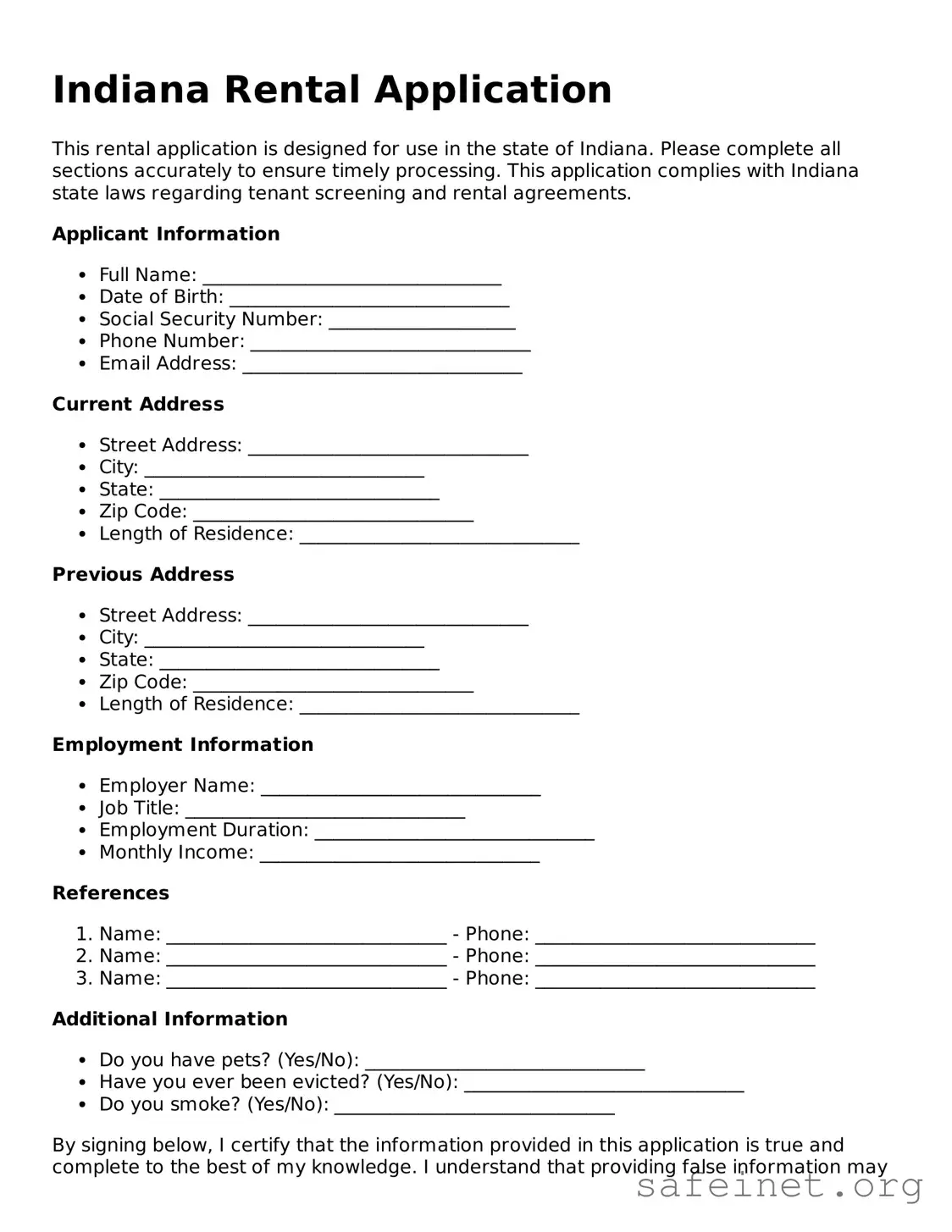
Indiana Rental Application
This rental application is designed for use in the state of Indiana. Please complete all sections accurately to ensure timely processing. This application complies with Indiana state laws regarding tenant screening and rental agreements.
Applicant Information
Current Address
Previous Address
Employment Information
References
Additional Information
By signing below, I certify that the information provided in this application is true and complete to the best of my knowledge. I understand that providing false information may result in denial of my application.
Signature: ______________________________ Date: ______________________________
| Fact Name | Description |
|---|---|
| Purpose | The Indiana Rental Application form is used by landlords to screen potential tenants for rental properties. |
| Required Information | Applicants must provide personal details, including their name, contact information, and rental history. |
| Background Check | The form typically allows landlords to conduct background checks, which may include credit history and criminal records. |
| Application Fee | Landlords may charge an application fee, which is often non-refundable, to cover the costs of processing the application. |
| Fair Housing Compliance | Landlords must comply with the Fair Housing Act, ensuring they do not discriminate against applicants based on protected characteristics. |
| Governing Law | The Indiana Rental Application form is governed by Indiana state laws, including the Indiana Code Title 32. |
| Signature Requirement | Applicants must sign the form, indicating that the information provided is accurate and that they consent to background checks. |
| Privacy Considerations | Landlords are required to protect the personal information of applicants and must handle it in accordance with privacy laws. |
Completing the Indiana Rental Application form is an important step in securing a rental property. After filling out the form, it will typically be submitted to the landlord or property manager for review. They will use the information provided to assess your suitability as a tenant.
What is the Indiana Rental Application form?
The Indiana Rental Application form is a document that potential tenants fill out to apply for a rental property. It collects essential information about the applicant, including their personal details, rental history, employment status, and financial background. This helps landlords assess whether the applicant is a suitable tenant for their property.
What information do I need to provide on the application?
When completing the Indiana Rental Application, you will typically need to provide your full name, contact information, Social Security number, employment details, income information, and references. You may also need to disclose your rental history, including previous addresses and landlord contact information.
Is there an application fee?
Many landlords charge an application fee to cover the costs of processing your application, such as background checks and credit reports. This fee can vary widely, so it's important to ask the landlord or property manager about the specific amount before submitting your application.
How long does the application process take?
The application process duration can vary. Typically, landlords may take anywhere from a few days to a week to review applications. Factors that can affect this timeframe include the number of applications received and how quickly references and background checks are processed.
What happens if my application is denied?
If your application is denied, the landlord is generally required to provide you with a reason. Common reasons for denial include poor credit history, insufficient income, or negative rental history. You have the right to request a copy of the background check or credit report that led to the decision.
Can I apply for multiple properties at once?
Yes, you can apply for multiple rental properties simultaneously. However, each application may require a separate fee and documentation. Keep in mind that applying to multiple places can lead to multiple credit checks, which might impact your credit score.
Do I need to provide references?
Yes, most landlords will ask for personal or professional references. These references can help verify your character and reliability as a tenant. It’s a good idea to ask your references for permission before listing them on your application.
What should I do if I have a poor credit history?
If you have a poor credit history, it’s best to be upfront about it. You can explain the circumstances that led to your credit issues in your application. Additionally, providing proof of steady income or a larger security deposit may help reassure landlords of your ability to pay rent on time.
Failing to provide complete personal information. Ensure that all fields, such as your full name, current address, and contact number, are filled out accurately.
Omitting employment details. Include your current employer's name, address, and your position. This information helps landlords verify your income.
Not disclosing rental history. Be honest about your previous residences. Missing this information can raise red flags for landlords.
Providing inaccurate income information. Always list your actual income. Inflating your earnings can lead to issues later on.
Skipping the references section. Include personal and professional references who can vouch for your character and reliability.
Neglecting to read the application thoroughly. Review the entire form before submission to avoid missing important details.
Not signing the application. A signature is often required to validate the application. Ensure you sign and date it.
Forgetting to include the application fee. Many landlords require a fee to process the application. Be prepared to submit this payment along with your form.
When applying for a rental property in Indiana, several forms and documents often accompany the rental application. These additional documents help landlords assess potential tenants more thoroughly. Below is a list of commonly used forms that can enhance the application process.
Having these documents ready can streamline the rental application process. They not only support the application but also build trust between landlords and potential tenants.
The Indiana Rental Application form shares similarities with the Tenant Screening Report. Both documents serve to evaluate potential tenants by gathering essential information. While the rental application focuses on personal details, rental history, and financial background, the screening report compiles data from various sources, such as credit checks and eviction records. Together, they provide landlords with a comprehensive view of a tenant's reliability and suitability for renting a property.
Another document akin to the Indiana Rental Application is the Lease Agreement. This legal contract outlines the terms and conditions of renting a property. While the rental application is primarily used to assess applicants, the lease agreement formalizes the relationship once a tenant is selected. Both documents require personal and financial information, ensuring that both parties understand their responsibilities and rights throughout the rental period.
The Rental Reference Form also resembles the Indiana Rental Application. This form is typically used to gather feedback from previous landlords or references about a potential tenant's behavior and reliability. Like the rental application, it aims to provide landlords with insights into the applicant's rental history. Together, these documents help landlords make informed decisions based on past experiences with the tenant.
Finally, the Employment Verification Form is another document similar to the Indiana Rental Application. This form verifies a tenant's employment status and income, which are crucial factors in determining their ability to pay rent. While the rental application collects this information directly from the applicant, the employment verification form confirms it through the employer. Both documents work together to ensure that the tenant can fulfill their financial obligations under the lease.
When filling out the Indiana Rental Application form, attention to detail is essential. Here are seven important do's and don'ts to keep in mind:
By following these guidelines, you can improve your chances of securing the rental you desire.
When it comes to the Indiana Rental Application form, several misconceptions often arise. Understanding these can help both landlords and tenants navigate the rental process more smoothly.
Many believe that once an application fee is paid, it cannot be recovered. However, in some cases, landlords may refund the fee if they do not process the application.
While landlords have the right to screen applicants, they cannot deny an application based on discriminatory reasons such as race, gender, or religion.
Each rental application can vary significantly. Landlords may include different questions or requirements based on their specific criteria or property type.
Applicants often think they can skip personal details. However, landlords require this information to verify identity and assess creditworthiness.
While credit history is important, landlords may consider other factors such as income, rental history, and references before making a decision.
Even current tenants may need to fill out a rental application if they are renewing their lease or if there are changes in their rental terms.
When filling out and using the Indiana Rental Application form, consider the following key takeaways: