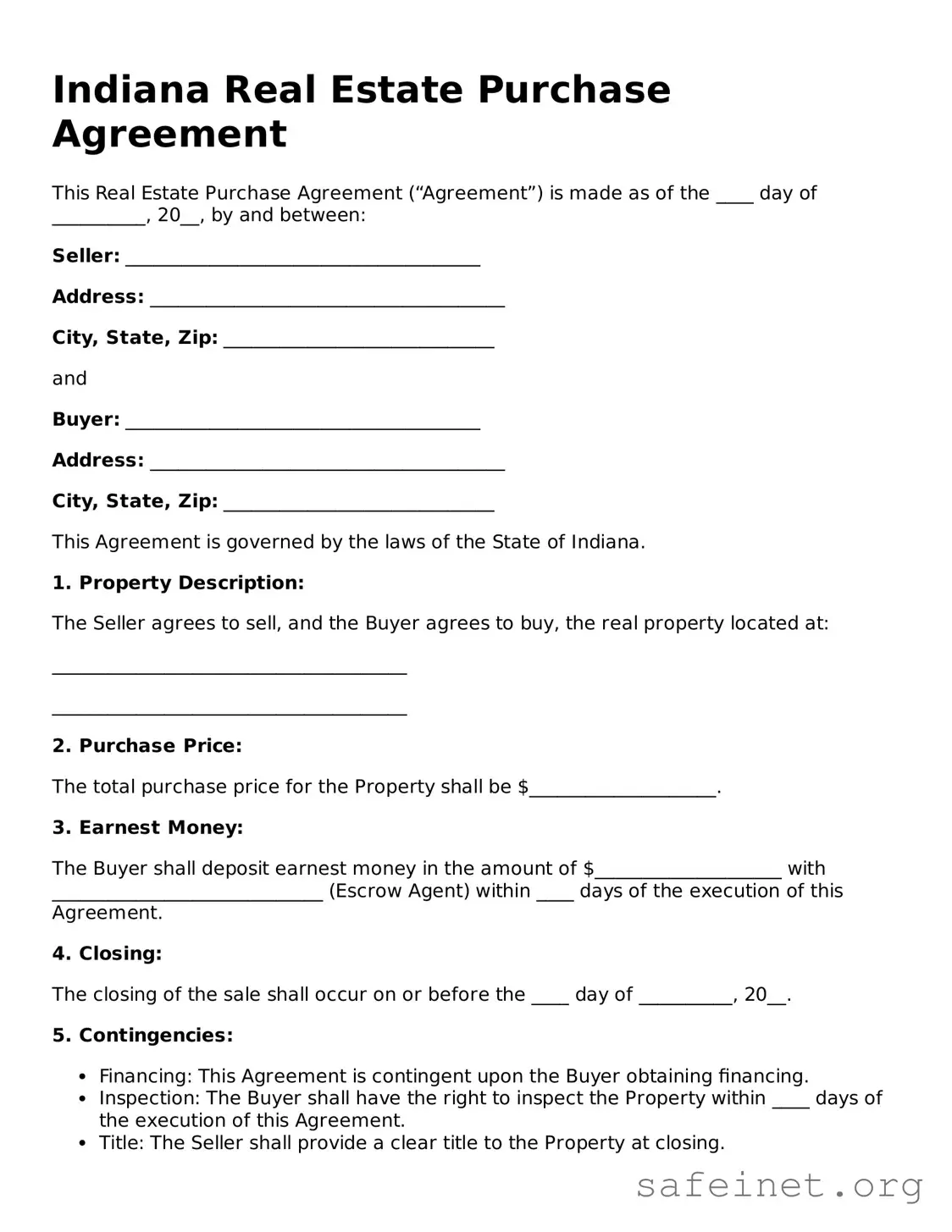
The Indiana Real Estate Purchase Agreement form serves as a crucial document in the home-buying process, outlining the essential terms and conditions agreed upon by both the buyer and seller. This comprehensive agreement typically includes details such as the purchase price, financing arrangements, and the closing date, ensuring that both parties have a clear understanding of their obligations. Additionally, it addresses contingencies that may affect the sale, such as home inspections or financing approvals, providing a safety net for buyers. The form also includes provisions for earnest money, which shows the buyer's serious intent to purchase the property. By detailing the responsibilities of each party, the Indiana Real Estate Purchase Agreement fosters transparency and helps prevent disputes, making it an indispensable tool for anyone navigating the real estate market in Indiana.
Indiana Real Estate Purchase Agreement
This Real Estate Purchase Agreement (“Agreement”) is made as of the ____ day of __________, 20__, by and between:
Seller: ______________________________________
Address: ______________________________________
City, State, Zip: _____________________________
and
Buyer: ______________________________________
Address: ______________________________________
City, State, Zip: _____________________________
This Agreement is governed by the laws of the State of Indiana.
1. Property Description:
The Seller agrees to sell, and the Buyer agrees to buy, the real property located at:
______________________________________
______________________________________
2. Purchase Price:
The total purchase price for the Property shall be $____________________.
3. Earnest Money:
The Buyer shall deposit earnest money in the amount of $____________________ with _____________________________ (Escrow Agent) within ____ days of the execution of this Agreement.
4. Closing:
The closing of the sale shall occur on or before the ____ day of __________, 20__.
5. Contingencies:
6. Additional Terms:
____________________________________________________________________
____________________________________________________________________
7. Signatures:
IN WITNESS WHEREOF, the parties have executed this Agreement as of the date first above written.
Seller's Signature: ___________________________ Date: ____________
Buyer's Signature: ___________________________ Date: ____________
| Fact Name | Description |
|---|---|
| Governing Law | The Indiana Real Estate Purchase Agreement is governed by Indiana state law. |
| Purpose | This form outlines the terms and conditions for the sale of real estate in Indiana. |
| Parties Involved | The agreement typically involves a buyer and a seller, both of whom must sign the document. |
| Key Components | Important elements include purchase price, closing date, and property description. |
| Legal Requirements | Indiana law requires that the agreement be in writing to be enforceable. |
After obtaining the Indiana Real Estate Purchase Agreement form, you will need to fill it out accurately to facilitate the transaction. Follow these steps carefully to ensure all necessary information is provided.
Once the form is completed, review it carefully for accuracy. Make sure all parties have copies for their records. This step is crucial for a smooth transaction process.
What is the Indiana Real Estate Purchase Agreement?
The Indiana Real Estate Purchase Agreement is a legally binding document used in the state of Indiana to outline the terms and conditions under which a property is bought and sold. This form serves to protect both the buyer and the seller by clearly detailing the obligations of each party, including the purchase price, financing details, and contingencies that may apply.
What key elements should be included in the agreement?
Essential components of the Indiana Real Estate Purchase Agreement include the names of the buyer and seller, a description of the property, the purchase price, earnest money deposit details, and the closing date. Additionally, any contingencies, such as financing or inspection requirements, should be clearly stated to ensure both parties understand their responsibilities.
How does the earnest money deposit work?
The earnest money deposit is a sum of money provided by the buyer to demonstrate their serious intent to purchase the property. Typically, this amount is held in escrow until the transaction is finalized. If the deal goes through, the earnest money is usually applied toward the buyer's closing costs. However, if the buyer backs out without a valid reason outlined in the agreement, they may forfeit this deposit.
Can the agreement be modified after it has been signed?
Yes, the Indiana Real Estate Purchase Agreement can be modified after it has been signed, but both parties must agree to any changes. Amendments should be documented in writing and signed by both the buyer and seller to ensure that the modifications are legally enforceable. Verbal agreements or informal changes may not hold up in a legal context.
What happens if the seller fails to fulfill their obligations?
If the seller fails to meet their obligations as outlined in the agreement, the buyer has several options. They may choose to seek specific performance, meaning they can compel the seller to complete the sale as agreed. Alternatively, the buyer may opt to terminate the agreement and seek damages, which could include the return of the earnest money deposit and any other incurred costs.
Is it advisable to have a real estate attorney review the agreement?
While it is not legally required, having a real estate attorney review the Indiana Real Estate Purchase Agreement is highly advisable. An attorney can help identify potential issues, ensure compliance with state laws, and protect the interests of the buyer or seller. Their expertise can provide peace of mind and help avoid costly mistakes during the transaction process.
Failing to include all necessary parties. It is important to list all buyers and sellers involved in the transaction. Missing a party can lead to complications later.
Not specifying the purchase price clearly. Ensure that the price is written in both numbers and words to avoid any confusion.
Overlooking the property description. A complete and accurate description of the property is essential. This includes the address and any legal descriptions.
Ignoring the contingencies section. Buyers should clearly outline any conditions that must be met before the sale can proceed, such as financing or inspections.
Neglecting to include deadlines. Timelines for inspections, financing, and closing should be clearly stated to keep the process on track.
Not signing and dating the agreement. All parties must sign and date the document for it to be valid. An unsigned agreement may not be enforceable.
When engaging in a real estate transaction in Indiana, several important documents accompany the Real Estate Purchase Agreement. These forms help clarify the terms of the sale, protect the interests of all parties involved, and ensure a smooth transaction process. Below is a list of commonly used documents that you may encounter.
Understanding these documents is crucial for anyone involved in a real estate transaction. Each form plays a vital role in protecting the rights of buyers and sellers alike, ensuring a transparent and efficient process. Always consult with a qualified professional to navigate these documents effectively.
The Indiana Real Estate Purchase Agreement is similar to the Residential Purchase Agreement used in many states. Both documents outline the terms of a real estate transaction, including the purchase price, closing date, and any contingencies. They serve as a binding contract between the buyer and seller, ensuring that both parties understand their obligations and rights during the sale process.
Another comparable document is the Commercial Purchase Agreement. While it is tailored for commercial properties, it shares many features with the Indiana Real Estate Purchase Agreement. Both contracts detail the terms of sale, including financing conditions and property descriptions, but the commercial version often includes additional clauses related to zoning laws and business operations.
The Offer to Purchase is also similar. This document is typically the first step in a real estate transaction. It allows the buyer to formally express interest in a property. Like the Indiana Real Estate Purchase Agreement, it outlines key details such as price and contingencies, but it may not be as comprehensive as the final purchase agreement.
The Lease Purchase Agreement has similarities as well. This document allows a tenant to rent a property with the option to buy it later. Both agreements include terms related to price and timelines, but the Lease Purchase Agreement focuses on rental terms while incorporating a purchase option, making it unique in its structure.
The Counteroffer document is another related form. When a seller receives an offer that they want to negotiate, they may issue a counteroffer. This document, like the Indiana Real Estate Purchase Agreement, specifies terms such as price and contingencies, but it serves as a response rather than a standalone agreement.
The Exclusive Right to Sell Agreement is similar in that it establishes a relationship between a seller and a real estate agent. This contract outlines the agent’s commission and responsibilities. While it doesn’t directly involve the buyer, it sets the groundwork for a sale, much like the Indiana Real Estate Purchase Agreement does for the buyer and seller.
The Seller’s Disclosure Statement is another document that complements the purchase agreement. It requires sellers to disclose known issues with the property. While the Indiana Real Estate Purchase Agreement includes terms of sale, the Seller’s Disclosure Statement focuses on transparency and protecting the buyer from unforeseen problems.
The Title Commitment is also related. It ensures that the property title is clear and free of liens. While the Indiana Real Estate Purchase Agreement outlines the transaction, the Title Commitment provides assurance that the buyer will receive a valid title upon closing, making it an essential part of the overall process.
The Closing Statement is another key document. This outlines the final financial details of the transaction, including closing costs and any adjustments. It complements the Indiana Real Estate Purchase Agreement by summarizing all financial obligations, ensuring that both parties are aware of what is due at closing.
Lastly, the Home Inspection Agreement is similar in that it addresses the condition of the property. This document allows buyers to have the property inspected before finalizing the sale. While the Indiana Real Estate Purchase Agreement includes contingencies based on inspection results, the Home Inspection Agreement focuses specifically on the inspection process itself.
When filling out the Indiana Real Estate Purchase Agreement form, it is crucial to approach the task with care and attention to detail. Here is a list of dos and don'ts to guide you through the process:
When dealing with the Indiana Real Estate Purchase Agreement form, it's easy to encounter some common misconceptions. Understanding these can help buyers and sellers navigate the process more smoothly. Here are seven prevalent myths:
By dispelling these misconceptions, both buyers and sellers can approach the Indiana Real Estate Purchase Agreement with greater confidence and clarity.
Understand the purpose of the Indiana Real Estate Purchase Agreement. It serves as a legally binding contract between the buyer and seller.
Ensure all parties involved are clearly identified. Include full names and contact information for both the buyer and seller.
Specify the property details accurately. This includes the address, legal description, and any relevant parcel numbers.
Determine the purchase price and payment terms. Clearly outline the total amount, deposit, and financing arrangements.
Include contingencies. Common contingencies might involve financing, inspections, or the sale of another property.
Set a timeline for the transaction. Include important dates such as the closing date and deadlines for contingencies.
Address any personal property included in the sale. Specify if appliances, fixtures, or furniture are part of the agreement.
Review the closing costs. Clarify which party is responsible for various fees associated with the closing process.
Ensure the agreement complies with Indiana state laws. Familiarize yourself with any specific requirements that may apply.
Sign and date the agreement. All parties must sign to make the contract legally binding.