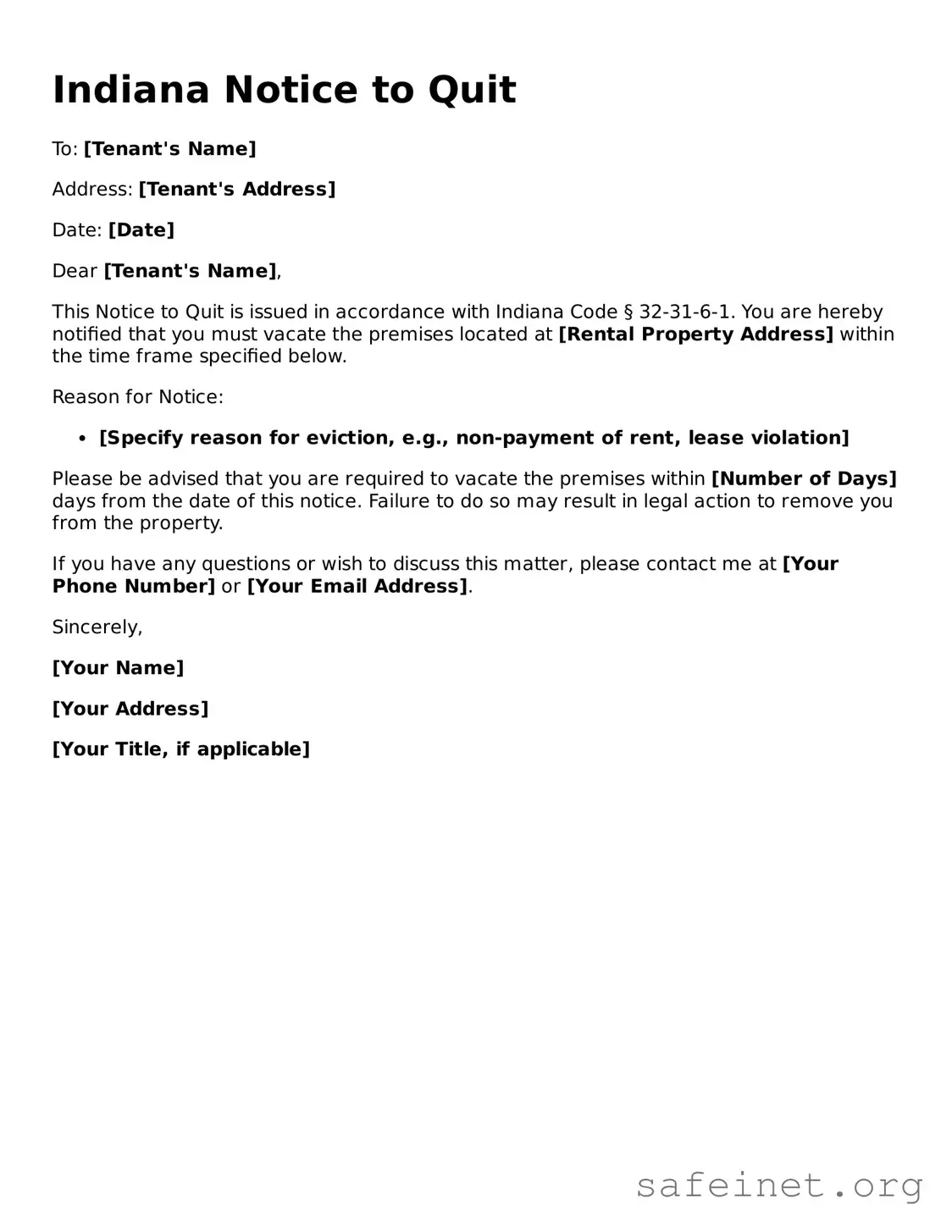
In Indiana, the Notice to Quit form plays a crucial role in the landlord-tenant relationship, particularly when it comes to addressing issues like non-payment of rent or lease violations. This document serves as a formal communication tool, signaling to tenants that they must vacate the property within a specified timeframe. Understanding the contents and requirements of this form is essential for both landlords and tenants. For landlords, it provides a necessary step in the eviction process, ensuring that they comply with state laws before taking further legal action. Tenants, on the other hand, must recognize the implications of receiving such a notice, as it outlines their rights and responsibilities. The Notice to Quit form must include specific information, such as the reason for the notice, the deadline for vacating, and any applicable state statutes. By grasping the nuances of this form, both parties can navigate the complexities of rental agreements more effectively, fostering clearer communication and minimizing potential conflicts.
Indiana Notice to Quit
To: [Tenant's Name]
Address: [Tenant's Address]
Date: [Date]
Dear [Tenant's Name],
This Notice to Quit is issued in accordance with Indiana Code § 32-31-6-1. You are hereby notified that you must vacate the premises located at [Rental Property Address] within the time frame specified below.
Reason for Notice:
Please be advised that you are required to vacate the premises within [Number of Days] days from the date of this notice. Failure to do so may result in legal action to remove you from the property.
If you have any questions or wish to discuss this matter, please contact me at [Your Phone Number] or [Your Email Address].
Sincerely,
[Your Name]
[Your Address]
[Your Title, if applicable]
| Fact Name | Details |
|---|---|
| Purpose | The Indiana Notice to Quit form is used by landlords to notify tenants of the termination of their lease agreement. |
| Governing Law | This form is governed by Indiana Code § 32-31-6-1 through § 32-31-6-7. |
| Notice Period | Landlords must provide a notice period of at least 10 days for non-payment of rent and 30 days for lease violations. |
| Delivery Methods | The notice can be delivered in person, via certified mail, or posted on the tenant's door. |
| Contents Required | The notice must include the reason for termination, the date by which the tenant must vacate, and the landlord's contact information. |
| Tenant Rights | Tenants have the right to contest the notice in court if they believe it was issued improperly. |
| Form Availability | The Indiana Notice to Quit form is available through various legal aid organizations and online legal resources. |
| Impact of Non-Compliance | If a tenant does not comply with the notice, the landlord may proceed with eviction proceedings. |
| Modification of Terms | Landlords may modify the terms of the lease after providing the notice, but such modifications must be documented. |
Filling out the Indiana Notice to Quit form is a straightforward process. After completing the form, you will need to serve it to the tenant. This is an important step in the eviction process, as it formally notifies the tenant of the need to vacate the premises.
What is the Indiana Notice to Quit form?
The Indiana Notice to Quit form is a legal document used by landlords to inform tenants that they must vacate the rental property. This notice is typically issued when a tenant has violated the terms of their lease agreement or has failed to pay rent. The form serves as a formal request for the tenant to leave the premises within a specified timeframe.
When should a landlord use the Notice to Quit?
A landlord should use the Notice to Quit when a tenant has not complied with the lease terms. Common reasons include non-payment of rent, lease violations, or the expiration of a rental agreement. It's essential to follow the proper procedures to ensure the notice is valid and enforceable.
How much notice must be given to the tenant?
The amount of notice required can vary based on the reason for the eviction. Generally, landlords must provide a 10-day notice for non-payment of rent and a 30-day notice for lease violations. Always check the specific circumstances and local laws to ensure compliance with the required notice period.
Can a tenant contest a Notice to Quit?
Yes, a tenant can contest a Notice to Quit. If they believe the notice is unjust or incorrect, they may choose to respond or take legal action. Tenants should document their communications with the landlord and seek legal advice if they plan to contest the notice.
What happens if the tenant does not leave after receiving the Notice to Quit?
If the tenant does not vacate the property by the deadline stated in the Notice to Quit, the landlord may proceed with legal action to initiate eviction proceedings. This typically involves filing a lawsuit in the appropriate court. It is crucial for landlords to follow the legal process to avoid complications.
Is the Notice to Quit form available online?
Yes, the Indiana Notice to Quit form can often be found online through legal aid websites or state government resources. It is advisable to use a template that complies with Indiana law to ensure the notice is properly formatted and legally binding.
Incorrect Tenant Information: Many individuals fail to provide accurate names and addresses of the tenants. This can lead to delays or complications in the eviction process.
Missing Signature: Some people forget to sign the form. A missing signature renders the document invalid, making it impossible to proceed with the eviction.
Improper Notice Period: The required notice period may not be adhered to. Different situations require different lengths of notice, and failing to comply can result in the notice being dismissed.
Failure to Include Specific Reasons: Not specifying the reason for the eviction can lead to confusion. It is essential to clearly outline the grounds for the notice to ensure compliance with Indiana law.
When dealing with rental agreements and evictions in Indiana, the Notice to Quit form is often accompanied by other important documents. These documents serve various purposes, from formalizing the eviction process to ensuring compliance with state laws. Below are some commonly used forms that complement the Indiana Notice to Quit.
Understanding these documents is crucial for both landlords and tenants. Each plays a significant role in the rental process and ensures that both parties are aware of their rights and responsibilities. Proper use of these forms can help facilitate a smoother resolution in disputes.
The Indiana Notice to Quit form shares similarities with the Eviction Notice, commonly used in many states. Both documents serve as formal notifications to tenants, indicating that they must vacate the rental property. The Eviction Notice typically outlines the reasons for the eviction, such as non-payment of rent or lease violations. Like the Notice to Quit, it sets a deadline by which the tenant must leave, helping landlords initiate the legal process if necessary. This document is crucial for landlords who wish to follow legal protocols before pursuing eviction through the courts.
Another document that resembles the Indiana Notice to Quit is the Lease Termination Letter. This letter is often used by landlords or tenants to formally end a lease agreement. While the Notice to Quit is primarily aimed at evicting tenants for specific reasons, the Lease Termination Letter can be used by either party to terminate the lease upon its expiration or due to mutual agreement. Both documents communicate the intent to end the tenancy, but the Lease Termination Letter may not necessarily imply wrongdoing on the part of the tenant.
The 3-Day Notice to Pay Rent or Quit is another document that aligns closely with the Indiana Notice to Quit. This notice is specifically designed for situations where a tenant has failed to pay rent. It provides a clear deadline—usually three days—for the tenant to either pay the overdue rent or vacate the property. Like the Notice to Quit, it serves as a warning that legal action may follow if the tenant does not comply. This document is particularly useful for landlords who want to address rent issues promptly and legally.
Lastly, the Notice of Non-Renewal is similar to the Indiana Notice to Quit in that it communicates the end of a rental agreement. This notice is typically given by landlords to inform tenants that their lease will not be renewed at the end of the term. While the Notice to Quit focuses on evicting tenants for specific reasons, the Notice of Non-Renewal is more about the landlord's decision not to continue the lease. Both documents serve to clarify the status of the tenancy, but the Notice of Non-Renewal does not imply any fault on the tenant's part.
When filling out the Indiana Notice to Quit form, it’s important to follow some guidelines to ensure the process goes smoothly. Here are five things you should and shouldn’t do:
By following these tips, you can help ensure that your Notice to Quit is effective and legally sound.
Understanding the Indiana Notice to Quit form is essential for both landlords and tenants. However, several misconceptions can lead to confusion. Here are ten common misunderstandings about this important document:
By clarifying these misconceptions, both landlords and tenants can navigate the rental process more effectively and understand their rights and responsibilities better.
The Indiana Notice to Quit form is an important document for landlords and tenants. Understanding how to fill it out and use it correctly can help avoid disputes. Here are key takeaways to keep in mind:
By following these guidelines, landlords can ensure they are compliant with Indiana law when issuing a Notice to Quit.