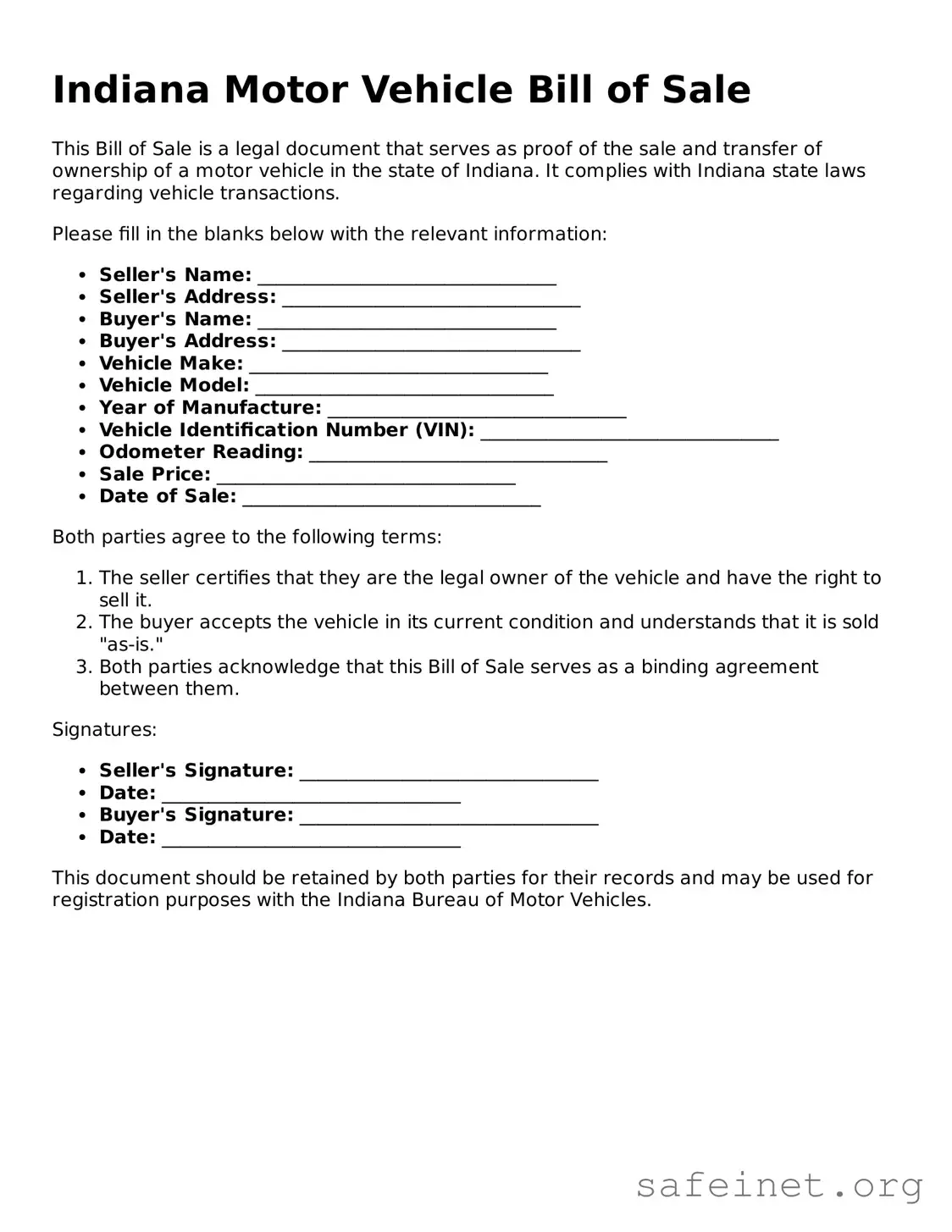
When it comes to buying or selling a vehicle in Indiana, having the right documentation is crucial. One of the key pieces of paperwork involved in this process is the Indiana Motor Vehicle Bill of Sale form. This form serves as a legal record of the transaction, providing essential details such as the vehicle's make, model, year, and Vehicle Identification Number (VIN). Additionally, it captures the names and addresses of both the buyer and seller, ensuring that both parties are clearly identified in the agreement. The form also typically includes the sale price and the date of the transaction, which can be important for tax purposes and future reference. By completing this document, both the buyer and seller can protect their interests and clarify the terms of the sale, making it a vital step in the vehicle transfer process. Understanding the components and significance of this form can help facilitate a smooth and legally sound transaction.
Indiana Motor Vehicle Bill of Sale
This Bill of Sale is a legal document that serves as proof of the sale and transfer of ownership of a motor vehicle in the state of Indiana. It complies with Indiana state laws regarding vehicle transactions.
Please fill in the blanks below with the relevant information:
Both parties agree to the following terms:
Signatures:
This document should be retained by both parties for their records and may be used for registration purposes with the Indiana Bureau of Motor Vehicles.
| Fact Name | Description |
|---|---|
| Purpose | The Indiana Motor Vehicle Bill of Sale form is used to document the sale of a vehicle between a buyer and a seller. |
| Governing Law | This form is governed by Indiana Code Title 9, Article 17, which covers motor vehicle sales and transfers. |
| Required Information | The form requires details such as the vehicle identification number (VIN), make, model, year, and sale price. |
| Signatures | Both the buyer and the seller must sign the form to validate the transaction. |
| Notarization | Notarization is not required for the Bill of Sale in Indiana, but it can provide additional protection. |
| Use for Title Transfer | The Bill of Sale is often used in conjunction with the vehicle title transfer process to prove ownership. |
After you have obtained the Indiana Motor Vehicle Bill of Sale form, you will need to fill it out accurately to ensure that the sale of the vehicle is properly documented. This form serves as a legal record of the transaction between the buyer and the seller. Follow these steps to complete the form correctly.
What is a Motor Vehicle Bill of Sale in Indiana?
A Motor Vehicle Bill of Sale in Indiana is a legal document that records the transfer of ownership of a motor vehicle from one party to another. It serves as proof of the sale and includes essential information about the vehicle, the seller, and the buyer. This document is important for both parties to ensure a clear record of the transaction and can be used for registration and title transfer purposes.
Is a Bill of Sale required in Indiana when selling a vehicle?
While a Bill of Sale is not legally required in Indiana, it is highly recommended. Having a Bill of Sale protects both the seller and the buyer by providing a written record of the transaction. It can help resolve disputes that may arise in the future and is often required by the Indiana Bureau of Motor Vehicles (BMV) when transferring the title of the vehicle.
What information should be included in the Indiana Motor Vehicle Bill of Sale?
The Bill of Sale should include several key pieces of information. This includes the names and addresses of both the seller and the buyer, the vehicle identification number (VIN), the make, model, and year of the vehicle, the sale price, and the date of the transaction. Additionally, both parties should sign the document to validate the agreement.
Can I create my own Bill of Sale for my vehicle in Indiana?
Yes, you can create your own Bill of Sale in Indiana. There is no specific format required by law, but it must contain the necessary information mentioned earlier. Many templates are available online to help you draft a Bill of Sale that meets your needs. Just ensure that it is clear and contains all relevant details to avoid any issues later on.
Do I need to notarize the Bill of Sale in Indiana?
Notarization of the Bill of Sale is not a requirement in Indiana. However, having the document notarized can add an extra layer of protection for both parties by confirming the identities of those involved in the transaction. It can also be helpful if any disputes arise regarding the sale.
How do I use the Bill of Sale to transfer the title of the vehicle?
To transfer the title of the vehicle in Indiana, both the seller and the buyer must complete the title transfer section on the vehicle title. The seller should provide the buyer with the signed title and the Bill of Sale. The buyer then takes these documents to the Indiana Bureau of Motor Vehicles (BMV) to complete the registration and title transfer process. It is important to do this promptly to avoid any penalties.
What if the vehicle has a lien on it?
If the vehicle has a lien, the seller must disclose this information to the buyer. The lien must be paid off before the title can be transferred. Once the lien is satisfied, the seller should provide the buyer with a lien release document along with the Bill of Sale and the title. This ensures that the buyer receives clear ownership of the vehicle.
Can I sell a vehicle without a title in Indiana?
In Indiana, selling a vehicle without a title can be complicated. Generally, a title is required to transfer ownership legally. However, if the title is lost, the seller can apply for a duplicate title through the BMV. The buyer may also need to be cautious when purchasing a vehicle without a title, as this can lead to potential legal issues down the road.
What should I do if I encounter problems after the sale?
If issues arise after the sale, such as disputes over payment or the condition of the vehicle, the Bill of Sale can serve as a crucial piece of evidence. Both parties should first attempt to resolve the matter amicably. If that fails, they may need to seek legal advice or mediation. Having a well-documented Bill of Sale can significantly help in these situations.
Not including all required information: It's essential to fill in every section of the form, including the names and addresses of both the buyer and seller, vehicle details, and the sale price.
Using incorrect vehicle identification number (VIN): Double-check the VIN for accuracy. A single mistake can lead to issues with registration.
Failing to sign the document: Both the buyer and seller must sign the bill of sale. Without signatures, the document is not legally binding.
Not dating the form: Always include the date of the transaction. This helps establish when the sale took place.
Leaving out odometer readings: It's crucial to record the vehicle's mileage at the time of sale. This protects both parties in case of future disputes.
Not providing a fair sale price: The sale price should reflect the actual transaction. Understating it could raise red flags during registration.
Ignoring local requirements: Different counties may have specific requirements for the bill of sale. Always check local regulations to ensure compliance.
Not keeping a copy: After completing the form, both parties should retain a copy for their records. This can be helpful for future reference.
When completing a vehicle transaction in Indiana, several important documents accompany the Motor Vehicle Bill of Sale. Each of these forms serves a unique purpose, ensuring that both the buyer and seller are protected and that the transaction is legally binding. Below is a list of commonly used documents that you may need.
Having these documents ready can streamline the process of buying or selling a vehicle in Indiana. Always double-check that each form is completed correctly to avoid any delays or issues in the future.
The Vehicle Title Transfer form is similar to the Indiana Motor Vehicle Bill of Sale as both documents serve the purpose of transferring ownership of a vehicle. When a buyer purchases a vehicle, the seller must complete the title transfer to officially document the change in ownership. This form typically includes information about the vehicle, such as its VIN, make, model, and the names of both the buyer and seller. Like the bill of sale, it is essential for legal ownership and may be required for registration purposes.
The Odometer Disclosure Statement is another document that shares similarities with the Indiana Motor Vehicle Bill of Sale. This statement is often required during the sale of a vehicle to disclose the vehicle's mileage at the time of sale. It helps prevent odometer fraud and ensures that the buyer is aware of the vehicle's condition. This document is usually included as part of the bill of sale or may be a separate form that needs to be signed by both parties.
The Application for Title form also resembles the Indiana Motor Vehicle Bill of Sale. This document is used to apply for a new title after purchasing a vehicle. It requires information about the buyer, seller, and vehicle, similar to the bill of sale. The application for title is essential for obtaining legal ownership and must be submitted to the appropriate state agency, often alongside the bill of sale.
A Vehicle Registration form is closely related to the Indiana Motor Vehicle Bill of Sale in that it is often completed after the sale of a vehicle. Once ownership is transferred, the new owner must register the vehicle with the state. This form includes details about the vehicle and the new owner. It serves as official documentation that the vehicle is now registered in the buyer's name, which is necessary for legal driving on public roads.
The Release of Liability form is another document that is often associated with the Indiana Motor Vehicle Bill of Sale. This form protects the seller from any future liabilities related to the vehicle after it has been sold. By completing this document, the seller informs the state that they are no longer responsible for the vehicle. This step is crucial for both parties to ensure that the seller's obligations end with the sale.
The Affidavit of Inheritance is similar in function to the Indiana Motor Vehicle Bill of Sale when a vehicle is transferred as part of an estate. This document is used to prove that the inheritor has the right to claim the vehicle after the owner's death. It provides legal evidence of ownership transfer without the need for a traditional sale, thus facilitating the process for heirs.
The Bill of Sale for Personal Property is another document that serves a similar purpose. While it is not specific to vehicles, it can be used to transfer ownership of any personal property, including cars. This document includes the details of the transaction, such as the sale price and a description of the item. Like the motor vehicle bill of sale, it serves as proof of ownership transfer and can be used in various contexts.
Lastly, the Power of Attorney form can be related to the Indiana Motor Vehicle Bill of Sale when an individual authorizes another person to handle the sale or transfer of a vehicle on their behalf. This document grants specific legal authority to the designated individual, allowing them to sign the bill of sale and other necessary documents. It is important for ensuring that the transaction can be completed smoothly, especially if the owner is unable to be present.
When filling out the Indiana Motor Vehicle Bill of Sale form, it is important to ensure that all information is accurate and complete. Below is a list of things you should and shouldn't do during this process.
Things You Should Do:
Things You Shouldn't Do:
When it comes to the Indiana Motor Vehicle Bill of Sale form, there are several misconceptions that can lead to confusion. Here’s a look at eight common misunderstandings:
Understanding these misconceptions can help ensure a smoother transaction when buying or selling a vehicle in Indiana.
Filling out and using the Indiana Motor Vehicle Bill of Sale form is an important step in the process of buying or selling a vehicle. Here are some key takeaways to consider: