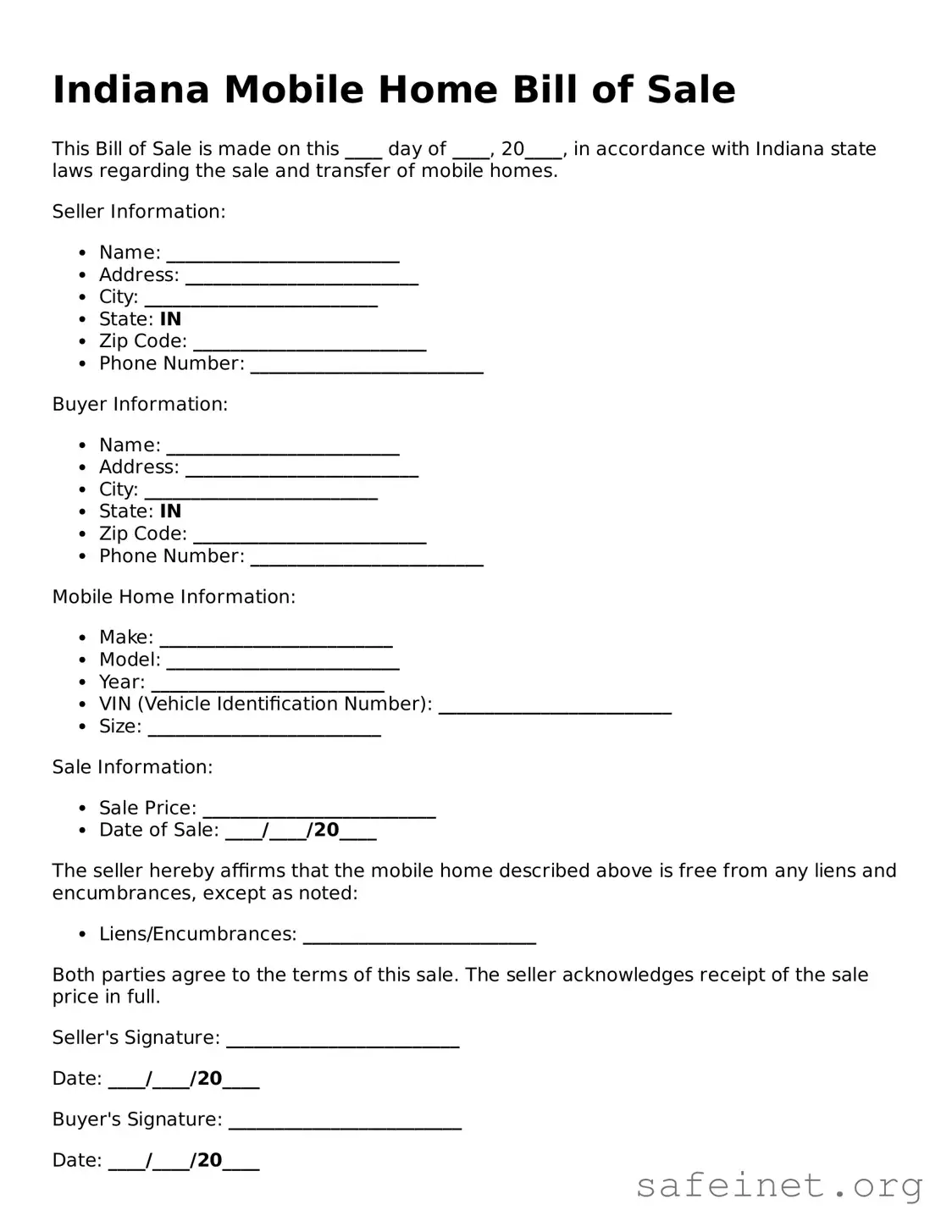
The Indiana Mobile Home Bill of Sale form is an essential document for anyone involved in the buying or selling of a mobile home in Indiana. This form serves as proof of the transaction, detailing important information about the mobile home, such as its make, model, year, and Vehicle Identification Number (VIN). Additionally, it includes the names and addresses of both the seller and buyer, ensuring that both parties are clearly identified. The form also outlines the purchase price, providing a clear record of the financial aspect of the sale. By signing this document, both parties agree to the terms of the sale, which helps protect their interests and provides a legal framework for the transaction. Whether you are a seasoned mobile home dealer or a first-time buyer, understanding this form is crucial for a smooth and compliant transfer of ownership.
Indiana Mobile Home Bill of Sale
This Bill of Sale is made on this ____ day of ____, 20____, in accordance with Indiana state laws regarding the sale and transfer of mobile homes.
Seller Information:
Buyer Information:
Mobile Home Information:
Sale Information:
The seller hereby affirms that the mobile home described above is free from any liens and encumbrances, except as noted:
Both parties agree to the terms of this sale. The seller acknowledges receipt of the sale price in full.
Seller's Signature: _________________________
Date: ____/____/20____
Buyer's Signature: _________________________
Date: ____/____/20____
This document serves as a legal record of the sale of the mobile home and should be kept for future reference.
| Fact Name | Description |
|---|---|
| Purpose | The Indiana Mobile Home Bill of Sale form is used to document the sale of a mobile home between a seller and a buyer. |
| Legal Requirement | This form is required under Indiana law to transfer ownership of a mobile home. |
| Governing Laws | The relevant laws governing mobile home sales in Indiana include Indiana Code Title 32, Article 31. |
| Information Included | The form typically includes details about the mobile home, such as make, model, year, and identification number. |
| Seller's Information | The seller must provide their name, address, and contact information on the form. |
| Buyer's Information | The buyer's name, address, and contact information are also required to complete the transaction. |
| Sale Price | The sale price of the mobile home must be clearly stated on the form. |
| Signatures | Both the seller and buyer must sign the form to validate the sale. |
| Notarization | While notarization is not always required, it can add an extra layer of authenticity to the transaction. |
| Record Keeping | It is advisable for both parties to keep a copy of the completed Bill of Sale for their records. |
Once you have the Indiana Mobile Home Bill of Sale form in hand, you are ready to begin the process of completing it. This form will require specific information about both the seller and the buyer, as well as details about the mobile home being sold. Ensuring accuracy in this document is crucial for a smooth transaction.
What is an Indiana Mobile Home Bill of Sale?
The Indiana Mobile Home Bill of Sale is a legal document that facilitates the transfer of ownership of a mobile home from one party to another. It serves as proof that the seller has sold the mobile home to the buyer. This document typically includes details such as the names of the buyer and seller, the description of the mobile home, and the sale price. Having a Bill of Sale is essential for both parties to ensure a clear and documented transaction.
Why is a Bill of Sale important for mobile home transactions?
A Bill of Sale is crucial for several reasons. First, it provides legal protection for both the buyer and the seller. For the buyer, it confirms their ownership of the mobile home and can be used to register the home with local authorities. For the seller, it acts as evidence that they have transferred ownership and are no longer responsible for the property. Additionally, it can help prevent disputes over ownership in the future.
What information should be included in the Bill of Sale?
When completing an Indiana Mobile Home Bill of Sale, certain key information must be included. This includes the full names and addresses of both the buyer and seller, the mobile home’s make, model, year, and Vehicle Identification Number (VIN). The sale price should also be clearly stated. It's advisable to include the date of the transaction and any terms related to the sale, such as whether it is sold "as is" or if any warranties are provided.
Do I need to have the Bill of Sale notarized?
While notarization is not strictly required for a Bill of Sale in Indiana, it is highly recommended. Having the document notarized adds an extra layer of authenticity and can help prevent potential disputes. A notary public verifies the identities of the parties involved and confirms that they willingly signed the document. This can be particularly useful if any legal issues arise later regarding the sale.
Can I use a generic Bill of Sale form for my mobile home?
While it is possible to use a generic Bill of Sale form, it is advisable to use a specific form designed for mobile home transactions. Mobile homes have unique requirements and regulations that a generic form may not address adequately. Using a tailored form ensures that all necessary information is captured and complies with Indiana state laws, making the transaction smoother and more secure for both parties.
Incomplete Information: One of the most common mistakes is failing to fill out all required fields. Ensure that every section is complete, including names, addresses, and details about the mobile home.
Incorrect Identification: Buyers and sellers often mix up their identification numbers. Make sure to use the correct driver's license or state ID numbers to avoid confusion.
Omitting Signatures: Both the buyer and seller must sign the document. Neglecting to obtain a signature can lead to disputes about the sale.
Failure to Date the Document: Not including the date of the transaction can complicate matters later. Always write the date clearly to establish when the sale occurred.
Not Providing a Bill of Sale Copy: It’s essential to provide a copy of the bill of sale to both parties. This ensures that everyone has proof of the transaction.
Misstating the Mobile Home Details: Incorrectly listing the make, model, or year of the mobile home can cause issues. Double-check these details to ensure accuracy.
Ignoring Local Regulations: Some buyers and sellers overlook local laws regarding mobile home sales. Research any specific requirements in your area to ensure compliance.
When completing a transaction involving a mobile home in Indiana, several other forms and documents may be necessary to ensure everything is in order. Below is a list of commonly used documents that accompany the Indiana Mobile Home Bill of Sale form.
Having these documents prepared and organized can facilitate a smoother transaction process. Always ensure that all forms are completed accurately to avoid any complications in the future.
The Indiana Vehicle Bill of Sale is a document used to transfer ownership of a motor vehicle. Similar to the Mobile Home Bill of Sale, it includes essential details such as the buyer's and seller's information, vehicle identification number, and sale price. Both forms serve as proof of the transaction and can be used for registration purposes. Ensuring accuracy in both documents is crucial to avoid potential disputes in the future.
The Indiana Boat Bill of Sale serves a similar purpose for watercraft. This document outlines the transfer of ownership from one party to another. Like the Mobile Home Bill of Sale, it requires information about the buyer and seller, as well as specifics about the boat, such as its hull identification number. Both documents protect the interests of the parties involved and provide a record of the transaction.
The Indiana Trailer Bill of Sale is another document that mirrors the Mobile Home Bill of Sale. It facilitates the transfer of ownership for trailers. This form includes details about the buyer, seller, and the trailer itself, including its identification number. Both documents are vital for establishing legal ownership and can be used for registration with the state.
The Indiana Manufactured Home Affidavit of Affixation is closely related to the Mobile Home Bill of Sale. This document is used when a mobile home is permanently affixed to land, transitioning it from personal property to real property. It provides a clear record of ownership and ensures that the mobile home is recognized as part of the real estate. Both documents play a role in the ownership transfer process, albeit in different contexts.
The Indiana Lease Agreement for mobile homes is another relevant document. While it primarily governs the rental terms between a landlord and tenant, it can be used in conjunction with a Mobile Home Bill of Sale when a mobile home is being rented with an option to purchase. Both documents outline rights and responsibilities, ensuring that all parties understand their obligations.
The Indiana Property Transfer Disclosure Statement is similar in that it provides important information about the condition of a property being sold, including mobile homes. This document helps buyers make informed decisions. While the Mobile Home Bill of Sale focuses on the transaction itself, the disclosure statement provides additional context about the property, enhancing transparency in the sale process.
When filling out the Indiana Mobile Home Bill of Sale form, there are important guidelines to follow. Adhering to these can help ensure the process goes smoothly.
Things You Should Do:
Things You Shouldn't Do:
Understanding the Indiana Mobile Home Bill of Sale form is essential for anyone involved in buying or selling a mobile home in the state. However, several misconceptions can lead to confusion. Below is a list of common misunderstandings regarding this form:
This is incorrect. The Bill of Sale is required for both new and used mobile homes to document the transfer of ownership.
While notarization can add an extra layer of authenticity, it is not a legal requirement for the Bill of Sale in Indiana.
The Bill of Sale is a separate document from the title transfer. It serves to record the sale but does not transfer the title on its own.
Both the buyer and seller should sign the Bill of Sale to validate the transaction and acknowledge the agreement.
It is essential to include the purchase price on the Bill of Sale, as this information is crucial for tax purposes and clarity in the transaction.
While a simple written agreement may suffice, using the official Indiana Mobile Home Bill of Sale form is recommended to ensure all necessary information is included.
Although the Bill of Sale is a legal document, amendments can be made if both parties agree and sign the updated version.
This form can be used for both private sales and transactions involving dealerships or brokers.
This is a misconception. The Bill of Sale serves as proof of purchase and may be required when calculating taxes or applying for permits.
After completing the Bill of Sale, the buyer must ensure that the title is transferred at the local Bureau of Motor Vehicles (BMV) office.
By addressing these misconceptions, individuals can better navigate the process of buying or selling a mobile home in Indiana. Understanding the importance of the Bill of Sale is crucial for a smooth transaction.
When filling out and using the Indiana Mobile Home Bill of Sale form, there are several important aspects to consider. Below are key takeaways to ensure a smooth transaction.
By following these key points, individuals can navigate the process of buying or selling a mobile home in Indiana more effectively.