In the state of Indiana, couples facing the prospect of separation often find it beneficial to utilize a Marital Separation Agreement form. This document serves as a crucial tool for outlining the rights and responsibilities of each spouse during the separation period. It addresses key aspects such as the division of property, spousal support, and child custody arrangements. By clearly defining these terms, the agreement helps to minimize conflict and provides a framework for both parties to follow. Furthermore, it can serve as a foundation for future legal proceedings, should the couple decide to pursue divorce. Understanding the components of this form is essential for anyone navigating the separation process, as it ensures that both individuals are on the same page regarding their obligations and entitlements. As a result, the Marital Separation Agreement not only aids in maintaining clarity and order during a tumultuous time but also paves the way for a more amicable resolution in the future.
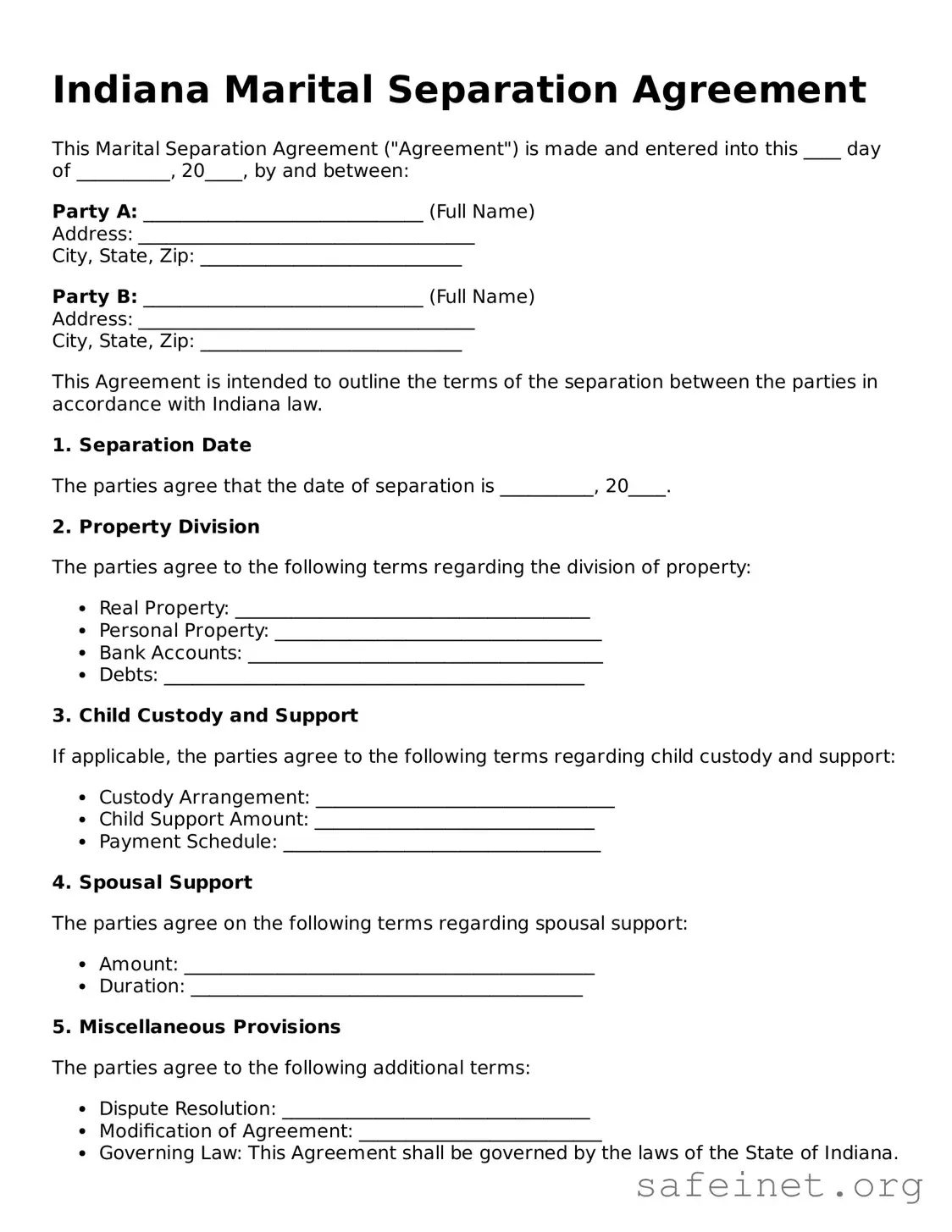
Indiana Marital Separation Agreement
This Marital Separation Agreement ("Agreement") is made and entered into this ____ day of __________, 20____, by and between:
Party A: ______________________________ (Full Name)
Address: ____________________________________
City, State, Zip: ____________________________
Party B: ______________________________ (Full Name)
Address: ____________________________________
City, State, Zip: ____________________________
This Agreement is intended to outline the terms of the separation between the parties in accordance with Indiana law.
1. Separation Date
The parties agree that the date of separation is __________, 20____.
2. Property Division
The parties agree to the following terms regarding the division of property:
3. Child Custody and Support
If applicable, the parties agree to the following terms regarding child custody and support:
4. Spousal Support
The parties agree on the following terms regarding spousal support:
5. Miscellaneous Provisions
The parties agree to the following additional terms:
IN WITNESS WHEREOF, the parties have executed this Marital Separation Agreement as of the date first above written.
Party A Signature: ____________________________
Date: ____________________________________________
Party B Signature: ____________________________
Date: ____________________________________________
Witness Signature: ____________________________
Date: ____________________________________________
| Fact Name | Description |
|---|---|
| Purpose | The Indiana Marital Separation Agreement is designed to outline the terms of separation between spouses, including asset division, child custody, and support obligations. |
| Governing Law | This form is governed by Indiana state law, specifically under Indiana Code Title 31, Article 15. |
| Voluntary Agreement | Both parties must voluntarily agree to the terms outlined in the separation agreement. Coercion or duress can invalidate the agreement. |
| Legal Effect | The agreement can serve as a binding contract between the parties, enforceable in court if properly executed. |
| Modification | Terms of the separation agreement can be modified if both parties consent to the changes in writing. |
After obtaining the Indiana Marital Separation Agreement form, you will need to fill it out carefully. This document will require specific information about your marriage and agreements made between you and your spouse. Make sure to have all necessary information at hand before you begin.
Once the form is completed, it will need to be filed with the appropriate court. This will initiate the legal process of separation and ensure that your agreements are recognized under Indiana law.
What is a Marital Separation Agreement in Indiana?
A Marital Separation Agreement is a legal document that outlines the terms of a couple's separation. It details how assets, debts, child custody, and support will be handled while the couple is living apart. This agreement helps clarify each party's rights and responsibilities during the separation period.
Is a Marital Separation Agreement legally binding in Indiana?
Yes, once both parties sign the Marital Separation Agreement, it becomes legally binding. This means that both individuals are obligated to follow the terms outlined in the document. However, it is advisable to have the agreement reviewed by an attorney to ensure that it meets legal standards and protects your interests.
Can a Marital Separation Agreement be modified?
Yes, a Marital Separation Agreement can be modified if both parties agree to the changes. It is important to document any modifications in writing and have both parties sign the updated agreement. This helps maintain clarity and prevents misunderstandings in the future.
Do I need a lawyer to create a Marital Separation Agreement?
While it is not legally required to have a lawyer draft a Marital Separation Agreement, consulting with one is highly recommended. An attorney can help ensure that the agreement is fair, comprehensive, and compliant with Indiana law. They can also provide guidance tailored to your specific situation.
What should be included in a Marital Separation Agreement?
A comprehensive Marital Separation Agreement should include details about property division, debt responsibilities, child custody arrangements, visitation schedules, and child or spousal support. It may also cover other relevant issues, such as health insurance and tax considerations. The more thorough the agreement, the better it can serve both parties during the separation.
How long does it take to create a Marital Separation Agreement?
The time it takes to create a Marital Separation Agreement varies based on the complexity of the couple's situation and how quickly both parties can agree on the terms. Simple agreements can be drafted in a matter of days, while more complicated cases may take weeks or longer. Open communication can expedite the process.
What happens if one party does not follow the Marital Separation Agreement?
If one party fails to adhere to the terms of the Marital Separation Agreement, the other party may seek legal recourse. This could involve filing a motion in court to enforce the agreement. It is crucial to keep a copy of the signed agreement and any relevant documentation to support your case if enforcement becomes necessary.
Failing to include all necessary personal information. Ensure that both parties' names, addresses, and contact information are clearly stated.
Not specifying the date of separation. This date is crucial for legal purposes and should be clearly indicated.
Overlooking the division of assets. List all marital property and specify how it will be divided.
Ignoring debts. Clearly outline who is responsible for existing debts to avoid future disputes.
Neglecting to address child custody and support. If children are involved, detail custody arrangements and financial support obligations.
Using vague language. Be specific about terms and conditions to prevent misunderstandings.
Not having the agreement notarized. A notarized signature adds an extra layer of validity to the document.
Failing to review state laws. Ensure compliance with Indiana state laws regarding separation agreements.
Not seeking legal advice. Consulting a lawyer can help clarify complex issues and protect your rights.
Rushing the process. Take the time to review and understand each section of the agreement before submission.
When navigating a marital separation in Indiana, several documents may accompany the Marital Separation Agreement. Each of these forms serves a specific purpose and can help clarify the terms of separation, ensuring both parties understand their rights and responsibilities. Here is a list of commonly used forms and documents:
Understanding these forms and their purposes can help ensure a smoother separation process. It is crucial to be well-informed and prepared to address all aspects of the situation, as each document plays a vital role in protecting your rights and interests during this challenging time.
The Indiana Marital Separation Agreement form shares similarities with a Divorce Settlement Agreement. Both documents outline the terms of separation between spouses, including property division, debt allocation, and child custody arrangements. While a Marital Separation Agreement is used when couples choose to live apart without officially divorcing, a Divorce Settlement Agreement finalizes the dissolution of marriage. Both documents aim to provide clarity and structure to the separation process, ensuring that both parties understand their rights and responsibilities.
Another document that resembles the Indiana Marital Separation Agreement is the Child Custody Agreement. This document specifically focuses on the arrangements regarding the care and custody of children. Like the Marital Separation Agreement, it addresses important issues such as visitation rights and decision-making responsibilities. Both agreements are crucial for establishing a clear framework for co-parenting and ensuring the well-being of children during and after separation.
The Indiana Cohabitation Agreement is also comparable to the Marital Separation Agreement. This type of document is used by unmarried couples who live together and wish to outline their rights and responsibilities regarding property and finances. Similar to a Marital Separation Agreement, it helps clarify expectations and protect each party's interests. While the contexts may differ, both agreements aim to prevent future disputes by establishing clear terms upfront.
Lastly, the Property Settlement Agreement bears resemblance to the Indiana Marital Separation Agreement. This document is often used during divorce proceedings to divide marital property and debts. Like the Marital Separation Agreement, it provides a detailed account of how assets will be distributed. Both documents serve to minimize conflict by clearly stating how property and financial responsibilities will be handled, whether during separation or after a divorce.
Filling out the Indiana Marital Separation Agreement form is a critical step in navigating a separation. To ensure that the process goes smoothly and that all necessary details are accurately captured, here are ten essential do's and don'ts to consider.
By following these guidelines, you can help ensure that your Indiana Marital Separation Agreement is completed correctly and serves its intended purpose effectively.
Understanding the Indiana Marital Separation Agreement form can be challenging due to various misconceptions. Here are ten common misunderstandings that people may have:
Clarifying these misconceptions can help individuals make informed decisions about their separation process and ensure that their rights and responsibilities are understood.
The Indiana Marital Separation Agreement is a crucial document for couples who decide to separate but not divorce. Here are some key takeaways to consider when filling out and using this form:
Filling out the Indiana Marital Separation Agreement form accurately and thoughtfully can significantly ease the separation process.