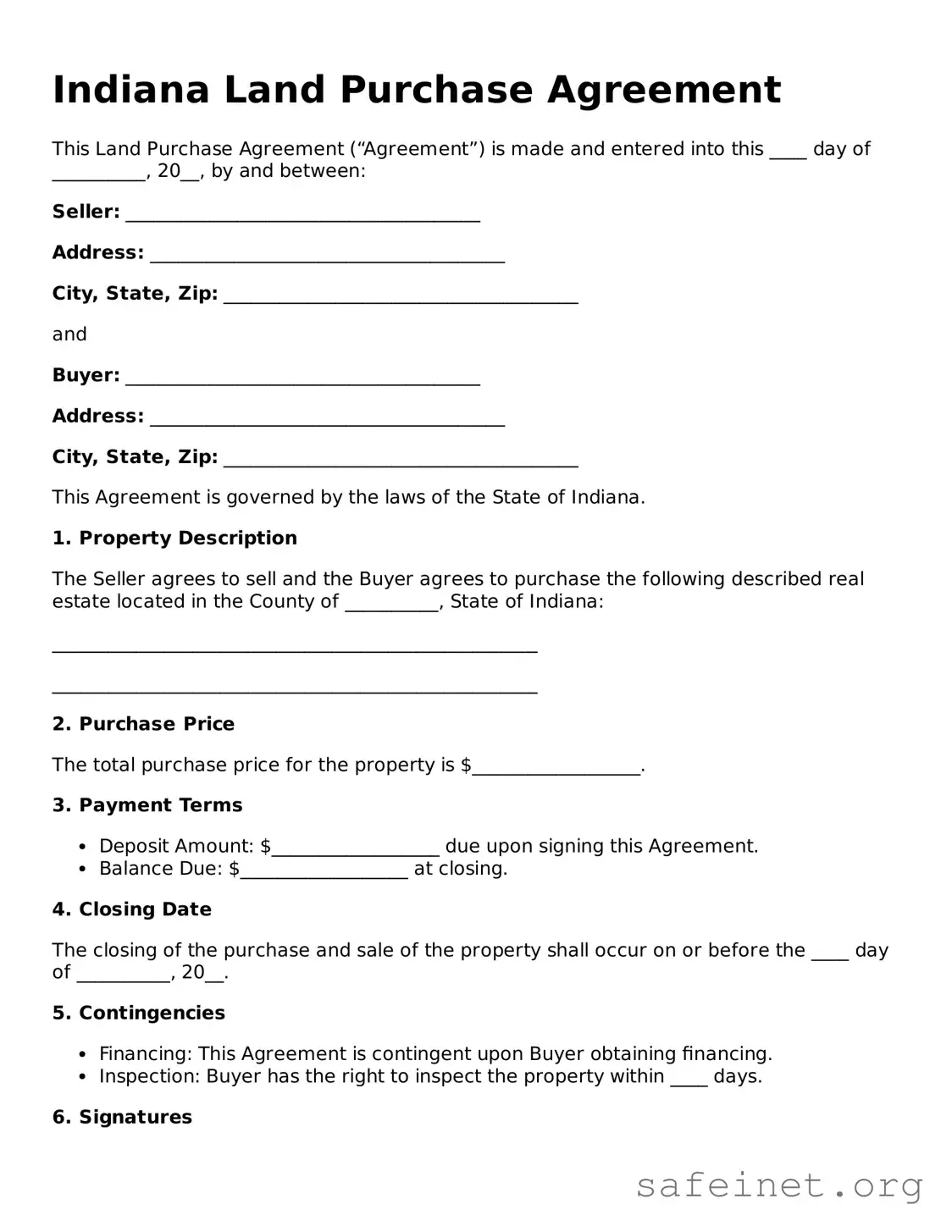
When it comes to buying or selling land in Indiana, having a solid understanding of the Indiana Land Purchase Agreement form is essential for both parties involved in the transaction. This document serves as a legally binding contract that outlines the terms and conditions under which the sale of real estate will occur. Key components of the agreement include the purchase price, a detailed description of the property, and the closing date, which is the moment ownership officially transfers from the seller to the buyer. Additionally, the form addresses contingencies, such as financing or inspections, that must be satisfied before the sale can proceed. Both parties will find provisions regarding earnest money, which demonstrates the buyer's commitment to the purchase, as well as any disclosures required by law, ensuring transparency and protection for all involved. Understanding these aspects not only facilitates a smoother transaction but also helps to prevent potential disputes down the road.
Indiana Land Purchase Agreement
This Land Purchase Agreement (“Agreement”) is made and entered into this ____ day of __________, 20__, by and between:
Seller: ______________________________________
Address: ______________________________________
City, State, Zip: ______________________________________
and
Buyer: ______________________________________
Address: ______________________________________
City, State, Zip: ______________________________________
This Agreement is governed by the laws of the State of Indiana.
1. Property Description
The Seller agrees to sell and the Buyer agrees to purchase the following described real estate located in the County of __________, State of Indiana:
____________________________________________________
____________________________________________________
2. Purchase Price
The total purchase price for the property is $__________________.
3. Payment Terms
4. Closing Date
The closing of the purchase and sale of the property shall occur on or before the ____ day of __________, 20__.
5. Contingencies
6. Signatures
IN WITNESS WHEREOF, the parties hereto have executed this Agreement as of the date first above written.
Seller Signature: ____________________________
Date: ____________________________
Buyer Signature: ____________________________
Date: ____________________________
This Agreement is intended to be a legally binding document. Both parties should seek legal counsel before signing.
| Fact Name | Description |
|---|---|
| Purpose | The Indiana Land Purchase Agreement form is used to outline the terms and conditions of a real estate transaction between a buyer and a seller. |
| Governing Laws | This agreement is governed by Indiana state laws, including the Indiana Code Title 32, which pertains to property law. |
| Key Components | The form typically includes sections on property description, purchase price, payment terms, and contingencies. |
| Signatures Required | Both the buyer and seller must sign the agreement to make it legally binding. |
| Modification | Any changes to the agreement must be made in writing and signed by both parties to be enforceable. |
Filling out the Indiana Land Purchase Agreement form is a straightforward process that requires attention to detail. Once completed, the form will serve as a binding agreement between the buyer and seller, outlining the terms of the land transaction. It's essential to ensure that all information is accurate and clearly stated to avoid any misunderstandings.
After completing the form, ensure that both parties retain copies for their records. It may also be beneficial to consult with a legal professional to review the agreement before proceeding with the transaction.
What is an Indiana Land Purchase Agreement?
An Indiana Land Purchase Agreement is a legal document that outlines the terms and conditions for the sale of real estate in Indiana. It serves as a binding contract between the buyer and the seller, detailing the property being sold, the purchase price, and any contingencies that must be met before the sale can be finalized.
What are the essential components of this agreement?
The agreement typically includes the names of the parties involved, a description of the property, the purchase price, payment terms, and any contingencies such as inspections or financing. Additionally, it may outline the closing date and any obligations of both parties leading up to the sale.
Do I need a lawyer to complete an Indiana Land Purchase Agreement?
Can I use a template for the agreement?
What happens if either party breaches the agreement?
Is the agreement legally binding?
What contingencies can be included in the agreement?
How is the closing process handled?
Can the agreement be modified after it is signed?
Failing to include all parties involved in the transaction. Every buyer and seller must be clearly identified.
Not providing accurate property descriptions. Ensure the legal description of the property is complete and precise.
Leaving out important dates. Key dates, such as the closing date and offer expiration, should always be included.
Neglecting to specify the purchase price. This is a critical component of the agreement and must be clearly stated.
Overlooking contingencies. Buyers should include any conditions that must be met before the sale is finalized.
Using vague language. Clarity is essential; avoid ambiguous terms that could lead to misunderstandings.
Forgetting to sign the agreement. All parties must sign and date the document for it to be valid.
Not providing necessary attachments. Any relevant documents, such as surveys or disclosures, should be included.
Ignoring local laws and regulations. Familiarize yourself with Indiana-specific requirements to ensure compliance.
Failing to consult a professional. Seeking advice from a real estate attorney or agent can prevent costly mistakes.
When entering into a land purchase agreement in Indiana, it's crucial to be aware of other documents that often accompany the main contract. These forms help clarify the terms of the transaction and protect the interests of both the buyer and the seller. Here’s a list of essential documents that you may need to consider.
Understanding these documents is vital for a smooth transaction. Each plays a unique role in ensuring that both parties are protected and that the sale proceeds without complications. Take the time to familiarize yourself with these forms to navigate the purchasing process effectively.
The Indiana Land Purchase Agreement form shares similarities with the Residential Purchase Agreement. Both documents serve as contracts between a buyer and seller for real estate transactions. They outline the terms of the sale, including purchase price, contingencies, and timelines. The Residential Purchase Agreement is often used in residential property transactions, making it a common choice for homebuyers and sellers. In essence, both agreements aim to protect the interests of both parties involved in the transaction.
Another document akin to the Indiana Land Purchase Agreement is the Commercial Purchase Agreement. This form is specifically designed for the purchase of commercial properties, such as office buildings or retail spaces. Like the Indiana Land Purchase Agreement, it details the terms of the sale, including financing arrangements and due diligence periods. However, it also addresses unique considerations pertinent to commercial real estate, such as zoning laws and lease agreements, thus catering to a different market segment.
The Option to Purchase Agreement is also similar in nature. This document grants a potential buyer the right to purchase a property within a specified timeframe. It outlines the terms under which the buyer can exercise this option, including the purchase price and duration of the option. While the Indiana Land Purchase Agreement finalizes a sale, the Option to Purchase Agreement creates a preliminary agreement that provides flexibility for the buyer.
Furthermore, the Lease Purchase Agreement bears resemblance to the Indiana Land Purchase Agreement. This document allows a tenant to lease a property with the option to buy it at a later date. It combines elements of both leasing and purchasing, detailing the rental terms and the conditions under which the tenant can purchase the property. This agreement can be particularly beneficial for buyers who may need time to secure financing or improve their credit scores.
The Seller Financing Agreement is another document that aligns with the Indiana Land Purchase Agreement. In this scenario, the seller acts as the lender, allowing the buyer to make payments directly to them instead of a traditional bank. This agreement outlines the terms of the loan, including interest rates, payment schedules, and consequences for default. Both agreements facilitate the transfer of property while addressing the financial aspects of the transaction.
Additionally, the Purchase and Sale Agreement is similar, as it serves as a comprehensive document that outlines the sale of real estate. This agreement includes all pertinent details, such as the purchase price, closing date, and any contingencies. It is often used in various real estate transactions, making it versatile. Like the Indiana Land Purchase Agreement, it aims to protect both parties and ensure a smooth transaction process.
The Quitclaim Deed is another related document, albeit with a different function. While the Indiana Land Purchase Agreement is a contract for the sale of property, a Quitclaim Deed is used to transfer ownership without warranties. It is often utilized to clear up title issues or transfer property between family members. Both documents are essential in the real estate transaction process, but they serve distinct purposes.
The Affidavit of Title also shares a connection with the Indiana Land Purchase Agreement. This document is a sworn statement by the seller affirming their ownership of the property and that there are no liens or encumbrances. It is typically used during the closing process to assure the buyer of clear title. While the Indiana Land Purchase Agreement lays out the terms of the sale, the Affidavit of Title reinforces the seller's claims about the property's status.
Lastly, the Real Estate Purchase Agreement is comparable to the Indiana Land Purchase Agreement. This document outlines the terms of a real estate transaction and is commonly used across various states. It includes essential elements such as the purchase price, property description, and contingencies. Both agreements serve the primary purpose of formalizing the sale and protecting the interests of the involved parties.
When filling out the Indiana Land Purchase Agreement form, it's essential to be thorough and accurate. Here’s a list of things to do and avoid:
Many people have misunderstandings about the Indiana Land Purchase Agreement form. Here are six common misconceptions:
Understanding these misconceptions can help individuals navigate the land purchasing process more effectively.
When filling out and using the Indiana Land Purchase Agreement form, there are several important points to keep in mind. This document serves as a crucial tool for both buyers and sellers in a real estate transaction. Here are some key takeaways: