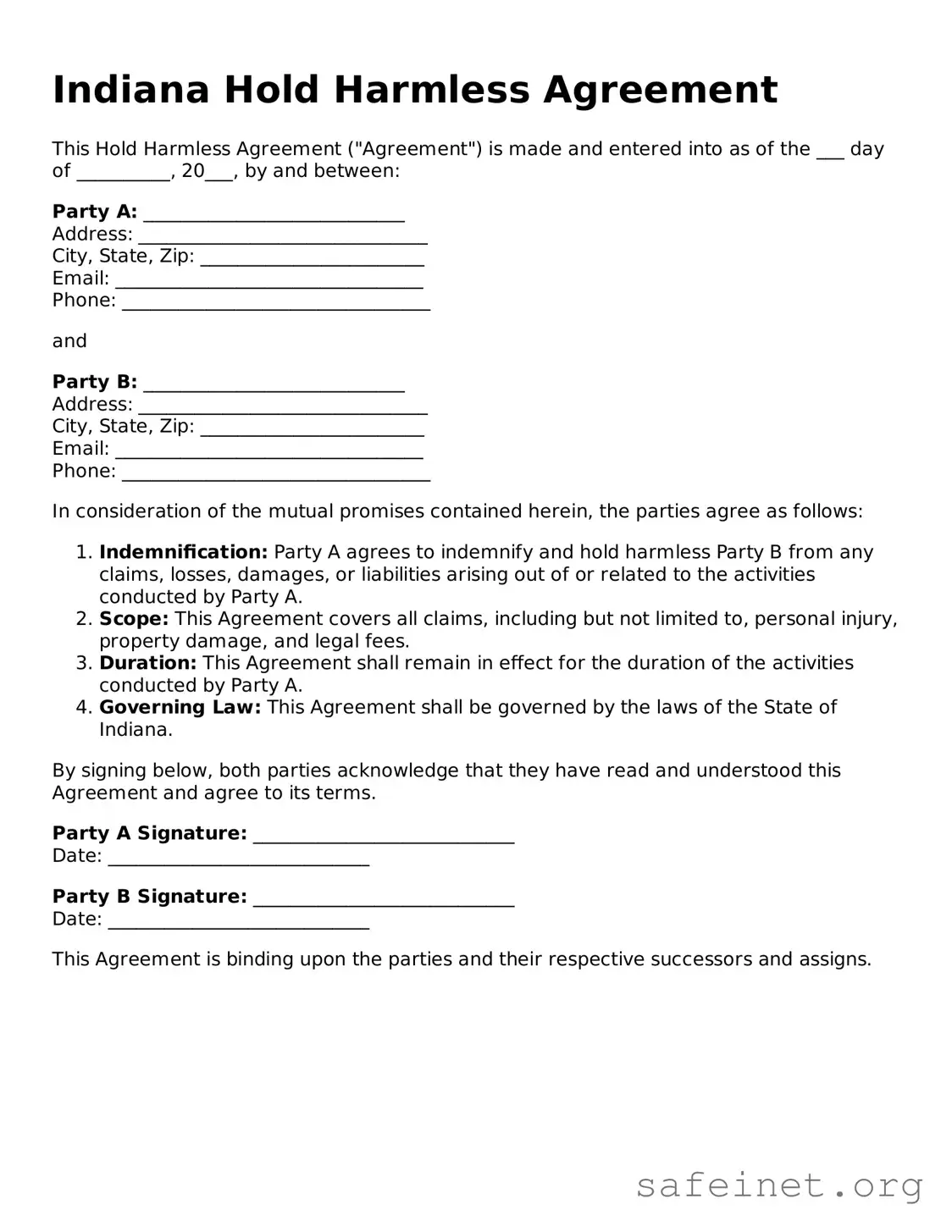
The Indiana Hold Harmless Agreement form is an essential document designed to protect individuals and organizations from liability in various situations. This agreement is often used in contexts such as events, property leases, and construction projects, where one party agrees to take on the risk of potential damages or injuries that may occur. By signing this form, parties acknowledge their understanding of the risks involved and agree not to hold each other responsible for any claims arising from the specified activities. It outlines key elements, including the scope of the agreement, the parties involved, and any specific conditions that may apply. This form serves as a proactive measure, ensuring that all parties are clear about their responsibilities and the extent of their liability. Whether you are hosting a community event or entering into a business contract, having a Hold Harmless Agreement in place can provide peace of mind and foster a sense of security for everyone involved.
Indiana Hold Harmless Agreement
This Hold Harmless Agreement ("Agreement") is made and entered into as of the ___ day of __________, 20___, by and between:
Party A: ____________________________
Address: _______________________________
City, State, Zip: ________________________
Email: _________________________________
Phone: _________________________________
and
Party B: ____________________________
Address: _______________________________
City, State, Zip: ________________________
Email: _________________________________
Phone: _________________________________
In consideration of the mutual promises contained herein, the parties agree as follows:
By signing below, both parties acknowledge that they have read and understood this Agreement and agree to its terms.
Party A Signature: ____________________________
Date: ____________________________
Party B Signature: ____________________________
Date: ____________________________
This Agreement is binding upon the parties and their respective successors and assigns.
| Fact Name | Description |
|---|---|
| Purpose | The Indiana Hold Harmless Agreement protects one party from liability for certain actions or events. |
| Parties Involved | This agreement typically involves two parties: the indemnitor and the indemnitee. |
| Governing Law | Indiana state law governs the Hold Harmless Agreement. |
| Common Uses | It is commonly used in contracts related to events, property use, and construction projects. |
| Enforceability | The agreement is enforceable if it is clear, specific, and voluntarily signed by both parties. |
| Limitations | It may not protect against gross negligence or willful misconduct in Indiana. |
| Legal Advice | Consulting with a legal professional before signing is recommended to ensure understanding and compliance. |
Completing the Indiana Hold Harmless Agreement form is a straightforward process. By following the steps outlined below, you will ensure that all necessary information is accurately provided. This will help facilitate the next steps in your agreement.
What is an Indiana Hold Harmless Agreement?
An Indiana Hold Harmless Agreement is a legal document that protects one party from liability for damages or injuries that may occur during a specific activity or event. By signing this agreement, one party agrees not to hold the other party responsible for any claims that may arise. This type of agreement is commonly used in various situations, including events, construction projects, and rental agreements.
Who typically uses a Hold Harmless Agreement in Indiana?
What are the key components of a Hold Harmless Agreement?
A typical Hold Harmless Agreement includes the names of the parties involved, a description of the activity or event, the specific liabilities being waived, and the signatures of the parties. It should clearly outline the terms and conditions under which one party agrees to hold the other harmless.
Is a Hold Harmless Agreement legally binding in Indiana?
Can a Hold Harmless Agreement protect against all types of liability?
No, a Hold Harmless Agreement cannot protect against all types of liability. While it can shield a party from certain claims, it typically does not cover cases of gross negligence or intentional harm. Courts may also refuse to enforce agreements that are deemed unconscionable or unfair.
How do I create a Hold Harmless Agreement in Indiana?
Do I need a lawyer to draft a Hold Harmless Agreement?
What happens if someone is injured despite the Hold Harmless Agreement?
Can I revoke a Hold Harmless Agreement after signing it?
Are there any specific state laws governing Hold Harmless Agreements in Indiana?
Inaccurate Information: One common mistake is providing incorrect personal details. Double-check names, addresses, and contact information to ensure accuracy.
Missing Signatures: Failing to sign the agreement is a frequent oversight. Remember, both parties must sign to validate the document.
Not Understanding the Terms: Some individuals do not fully comprehend the implications of the agreement. Take the time to read and understand what you are agreeing to before signing.
Omitting Dates: Forgetting to include the date of signing can lead to confusion. Always write the date next to your signature.
Using Incomplete Language: Vague or incomplete descriptions of the activities or situations covered by the agreement can create problems. Be specific about what you are holding harmless.
Not Keeping Copies: Failing to keep a copy of the signed agreement for your records is a mistake that can lead to disputes later. Always retain a copy for your files.
Ignoring Local Laws: Some individuals overlook the importance of understanding local laws related to hold harmless agreements. Research any specific requirements in Indiana to ensure compliance.
When working with the Indiana Hold Harmless Agreement, several other forms and documents may be necessary to ensure comprehensive coverage and clarity in contractual relationships. Below is a list of commonly associated documents that can help facilitate various aspects of agreements and responsibilities.
Incorporating these documents alongside the Indiana Hold Harmless Agreement can enhance clarity and protection for all parties involved. Ensuring that all necessary forms are completed and understood is vital to maintaining a smooth and secure contractual relationship.
The Waiver of Liability form shares similarities with the Indiana Hold Harmless Agreement. Both documents aim to protect one party from legal claims arising from the actions or negligence of another party. A Waiver of Liability typically requires individuals to acknowledge the risks associated with an activity, thereby relinquishing their right to sue for injuries that may occur. Like the Hold Harmless Agreement, it emphasizes the importance of informed consent and personal responsibility, making it a common tool in recreational and sports settings.
The Indemnity Agreement is another document that closely resembles the Hold Harmless Agreement. Both serve the purpose of shifting the financial burden of legal claims from one party to another. In an Indemnity Agreement, one party agrees to compensate the other for any losses or damages incurred, often in relation to a specific event or activity. This agreement can provide additional protection beyond what a Hold Harmless Agreement offers, as it may cover costs associated with legal fees and settlements, ensuring that the indemnifying party takes on more extensive liability.
The Release of Claims form is also akin to the Indiana Hold Harmless Agreement. This document allows individuals to waive their right to pursue legal action against another party for specific incidents or injuries. By signing a Release of Claims, individuals acknowledge the risks involved and agree not to hold the other party responsible. Similar to the Hold Harmless Agreement, this form emphasizes the importance of understanding the risks and accepting personal accountability for one's actions.
The Liability Insurance Policy can be compared to the Hold Harmless Agreement in that both aim to provide protection against potential legal claims. While the Hold Harmless Agreement is a contract between parties, a Liability Insurance Policy is a financial tool that offers coverage for damages or injuries. When an individual or organization is held liable, the insurance can cover legal fees and settlements, effectively serving as a safety net similar to the protections outlined in a Hold Harmless Agreement.
Finally, the Participant Agreement is another document that mirrors the Indiana Hold Harmless Agreement. This agreement is often used in organized activities, such as sports leagues or events, where participants must acknowledge the risks involved. Like the Hold Harmless Agreement, the Participant Agreement typically includes a clause that releases the organizers from liability for injuries sustained during the activity. Both documents emphasize the importance of awareness and acceptance of risks, fostering a culture of safety and responsibility among participants.
When filling out the Indiana Hold Harmless Agreement form, it is essential to approach the process with care. This agreement serves to protect one party from liability for certain risks. Below is a list of what to do and what to avoid during this process.
When it comes to the Indiana Hold Harmless Agreement form, several misconceptions can lead to confusion. Understanding these misconceptions is crucial for anyone considering using this legal document. Here are four common misunderstandings:
Many people believe that signing a Hold Harmless Agreement means they cannot be held responsible for any actions or negligence. However, this is not entirely true. While the agreement can limit liability in certain situations, it does not protect against gross negligence or willful misconduct.
Another misconception is that Hold Harmless Agreements are exclusively for businesses or organizations. In reality, individuals can also use these agreements to protect themselves in various personal situations, such as during events or activities where risks are involved.
Some believe that a Hold Harmless Agreement can be used without any modifications. This is misleading. Each agreement should be tailored to the specific circumstances and parties involved to ensure it is enforceable and effective.
There is a common belief that verbal agreements are sufficient for Hold Harmless Agreements. However, having a written document is essential. A written agreement provides clear evidence of the terms and helps avoid disputes in the future.
Being aware of these misconceptions can help individuals and businesses make informed decisions when considering the use of a Hold Harmless Agreement in Indiana. Always consult with a legal professional to ensure that your agreement meets your specific needs and complies with state laws.
When considering the Indiana Hold Harmless Agreement form, it is essential to understand its purpose and how to fill it out correctly. Here are some key takeaways to keep in mind:
Taking these steps can help ensure that the Hold Harmless Agreement serves its intended purpose and protects all parties involved.