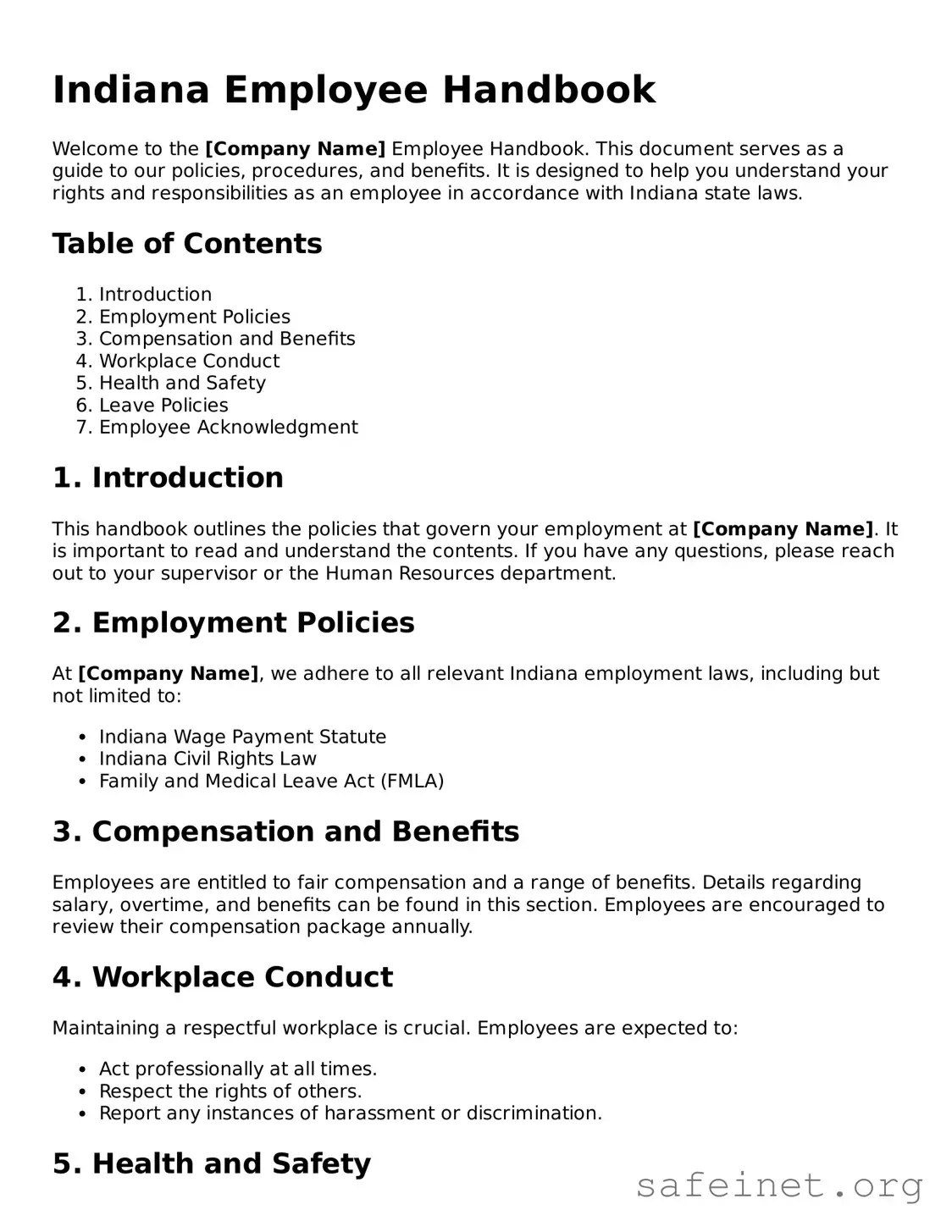
Creating a comprehensive Indiana Employee Handbook is a vital step for any business looking to establish clear guidelines and expectations for its workforce. This essential document serves as a roadmap for employees, outlining company policies, procedures, and benefits. It typically includes sections on workplace conduct, attendance, and dress code, ensuring that all team members understand what is expected of them. Additionally, the handbook addresses important topics such as anti-discrimination policies, harassment prevention, and disciplinary actions, promoting a safe and respectful work environment. By clearly communicating company values and procedures, the Indiana Employee Handbook not only protects the business but also empowers employees to thrive in their roles.
Indiana Employee Handbook
Welcome to the [Company Name] Employee Handbook. This document serves as a guide to our policies, procedures, and benefits. It is designed to help you understand your rights and responsibilities as an employee in accordance with Indiana state laws.
Table of Contents
1. Introduction
This handbook outlines the policies that govern your employment at [Company Name]. It is important to read and understand the contents. If you have any questions, please reach out to your supervisor or the Human Resources department.
2. Employment Policies
At [Company Name], we adhere to all relevant Indiana employment laws, including but not limited to:
3. Compensation and Benefits
Employees are entitled to fair compensation and a range of benefits. Details regarding salary, overtime, and benefits can be found in this section. Employees are encouraged to review their compensation package annually.
4. Workplace Conduct
Maintaining a respectful workplace is crucial. Employees are expected to:
5. Health and Safety
The safety of our employees is a top priority. [Company Name] complies with Indiana Occupational Safety and Health Administration (IOSHA) standards. Employees should:
6. Leave Policies
Employees may be entitled to various types of leave, including:
Specific eligibility criteria and procedures for requesting leave are outlined in this section.
7. Employee Acknowledgment
By signing below, you acknowledge that you have received, read, and understood the [Company Name] Employee Handbook.
Employee Name: [Employee Name]
Signature: [Signature]
Date: [Date]
| Fact Name | Description |
|---|---|
| Purpose | The Indiana Employee Handbook serves to communicate company policies, procedures, and expectations to employees. |
| Governing Law | Indiana Code Title 22, Article 2 governs employment relationships and employee handbooks in the state. |
| Mandatory Policies | Handbooks must include information on anti-discrimination policies, workplace safety, and employee rights. |
| At-Will Employment | Indiana is an at-will employment state, meaning employers can terminate employees for any lawful reason. |
| Updates | Employers should regularly update the handbook to reflect changes in laws and company policies. |
| Employee Acknowledgment | It is advisable for employees to sign an acknowledgment form confirming they have received and understood the handbook. |
Filling out the Indiana Employee Handbook form is a straightforward process. Once you have completed the form, you will be ready to submit it to your employer. This is an important step in ensuring that you understand your rights and responsibilities as an employee.
What is the Indiana Employee Handbook form?
The Indiana Employee Handbook form is a document that outlines the policies, procedures, and expectations for employees within a company. It serves as a guide to help employees understand their rights and responsibilities while working for the organization. This form is crucial for ensuring that both employees and employers are aware of workplace standards and regulations.
Why is an Employee Handbook important?
An Employee Handbook is important because it establishes clear guidelines for behavior and performance. It helps prevent misunderstandings between employees and management. Additionally, it can protect the company from potential legal issues by providing a documented reference for workplace policies.
Who should receive a copy of the Employee Handbook?
All employees should receive a copy of the Employee Handbook, including new hires and existing staff. This ensures that everyone is informed about company policies. Employers may also require employees to sign an acknowledgment form to confirm they have received and understood the handbook.
How often should the Employee Handbook be updated?
The Employee Handbook should be reviewed and updated regularly, at least annually or whenever there are significant changes in company policies or state laws. This helps ensure that the information remains current and relevant. Regular updates also reflect the organization’s commitment to compliance and employee well-being.
What topics are typically covered in the Employee Handbook?
Common topics include workplace conduct, attendance policies, benefits information, safety procedures, and disciplinary actions. The handbook may also address anti-discrimination policies, harassment prevention, and employee leave policies. Each company may tailor its handbook to reflect its unique culture and operational needs.
Can an Employee Handbook be legally binding?
An Employee Handbook may not be legally binding in the same way as a contract, but it can establish expectations and procedures that the employer and employees are expected to follow. Courts may reference the handbook in disputes, so it is important for the content to be clear and consistent with state and federal laws.
What should be done if an employee does not follow the handbook policies?
If an employee does not follow the policies outlined in the Employee Handbook, the employer should follow the disciplinary procedures specified in the handbook. This may involve verbal warnings, written warnings, or more severe actions, depending on the nature of the violation. Consistency in enforcement is key to maintaining fairness and integrity.
How can employees provide feedback on the Employee Handbook?
Employees can provide feedback on the Employee Handbook through designated channels, such as employee surveys, suggestion boxes, or direct communication with management. Encouraging feedback helps ensure that the handbook remains relevant and addresses the needs of the workforce.
Is it necessary to have a lawyer review the Employee Handbook?
While it is not strictly necessary, having a lawyer review the Employee Handbook can be beneficial. Legal professionals can ensure that the handbook complies with applicable laws and regulations, reducing the risk of legal issues in the future. This is particularly important for companies operating in multiple states or industries with specific regulations.
What should employees do if they have questions about the Employee Handbook?
If employees have questions about the Employee Handbook, they should reach out to their supervisor or the human resources department. Open communication is encouraged, as it helps clarify any uncertainties and reinforces the importance of understanding workplace policies.
Failing to read the entire handbook thoroughly. Many individuals skim the document, missing important policies and guidelines.
Not providing accurate personal information. Errors in names, addresses, or contact details can lead to complications down the line.
Overlooking the acknowledgment section. It is crucial to sign and date the acknowledgment, confirming understanding of the handbook's contents.
Ignoring deadlines for submission. Submitting the form late may result in delays in onboarding or even employment status.
Not asking questions about unclear policies. If something is confusing, seeking clarification is essential to avoid misunderstandings.
When creating an Indiana Employee Handbook, there are several other forms and documents that may be beneficial to include. These documents can help clarify policies, procedures, and employee rights within the workplace. Below is a list of commonly used forms that complement the Employee Handbook.
Including these forms and documents alongside the Indiana Employee Handbook can create a comprehensive framework for managing employee relations and ensuring compliance with legal obligations. Each document serves a specific purpose and contributes to a well-organized workplace environment.
The Indiana Employee Handbook form is quite similar to the Employee Manual, which serves as a comprehensive guide for employees regarding company policies and procedures. Both documents outline the expectations for employee behavior, workplace rules, and the rights of employees. While the Employee Handbook often focuses on legal compliance and workplace culture, the Employee Manual may provide more detailed instructions on daily operations and specific job roles.
Another document that shares similarities is the Workplace Safety Policy. This policy focuses specifically on safety regulations and procedures within the workplace. Like the Employee Handbook, it aims to protect employees by informing them of their rights and responsibilities regarding safety. Both documents emphasize the importance of a safe working environment and outline the steps employees should take if they encounter unsafe conditions.
The Code of Conduct is another document that aligns closely with the Employee Handbook. This code establishes the ethical standards and professional behavior expected from employees. Similar to the Handbook, it outlines disciplinary actions for violations and encourages a respectful workplace culture. Both documents work together to foster an environment of integrity and accountability within the organization.
Additionally, the Anti-Harassment Policy is comparable to the Employee Handbook, as it addresses workplace harassment and discrimination. This policy provides clear definitions of unacceptable behavior and outlines the procedures for reporting incidents. Like the Handbook, it aims to create a safe and inclusive work environment, ensuring that all employees understand their rights and the company’s commitment to preventing harassment.
The Family and Medical Leave Act (FMLA) Policy is another document that complements the Employee Handbook. This policy explains employees' rights to take leave for family or medical reasons. While the Handbook covers a broader range of topics, the FMLA Policy specifically details the process for requesting leave, eligibility requirements, and job protection during the leave period. Both documents ensure that employees are aware of their rights regarding time off work.
The Employee Benefits Guide is similar to the Employee Handbook in that it outlines the various benefits available to employees, such as health insurance, retirement plans, and paid time off. While the Handbook may provide a general overview, the Benefits Guide goes into detail about each benefit, eligibility criteria, and enrollment processes. Together, they help employees understand their compensation package and how to take advantage of available resources.
The Performance Review Policy also shares characteristics with the Employee Handbook. This policy outlines the process for evaluating employee performance, including criteria for assessments and feedback mechanisms. Both documents emphasize the importance of performance management in professional development and aim to foster a culture of continuous improvement within the organization.
The Onboarding Checklist is another document that aligns with the Employee Handbook. This checklist provides a step-by-step guide for new employees as they transition into the company. While the Handbook offers a broader overview of company policies, the Onboarding Checklist focuses on the specific tasks and training new hires must complete during their initial days. Both documents work together to ensure that new employees feel welcomed and informed.
Lastly, the Termination Policy is similar to the Employee Handbook in that it outlines the processes and procedures related to employee termination. This document explains the reasons for termination, the steps involved, and the rights of the employee during this process. Like the Handbook, it aims to ensure that terminations are handled fairly and consistently, providing clarity and support for both employees and management.
When filling out the Indiana Employee Handbook form, it’s important to keep a few key points in mind. Here’s a list of things you should and shouldn’t do:
Many believe that having an Employee Handbook is not necessary. However, it serves as a crucial guide for both employers and employees, outlining expectations and policies.
While the Handbook provides clarity for employers, it equally benefits employees by informing them of their rights and responsibilities in the workplace.
Employers must ensure that the policies in the Handbook comply with federal, state, and local laws. Policies that violate these laws can lead to legal issues.
In reality, the Handbook should be reviewed and updated regularly to reflect changes in laws or company policies. This keeps it relevant and effective.
Employees may not fully grasp every policy. It’s important for employers to explain the Handbook during onboarding and be available for questions afterward.
Signing the Handbook acknowledges receipt, not a waiver of rights. Employees still retain their legal rights regardless of the Handbook’s content.
Whether in print or digital form, the Handbook holds the same legal weight. However, employers should ensure employees can easily access and reference the digital version.
When filling out and using the Indiana Employee Handbook form, several important considerations should be kept in mind. The following key takeaways provide a clear understanding of the process and its implications.
By following these guidelines, organizations can create an effective Employee Handbook that serves both the employer and employees well.