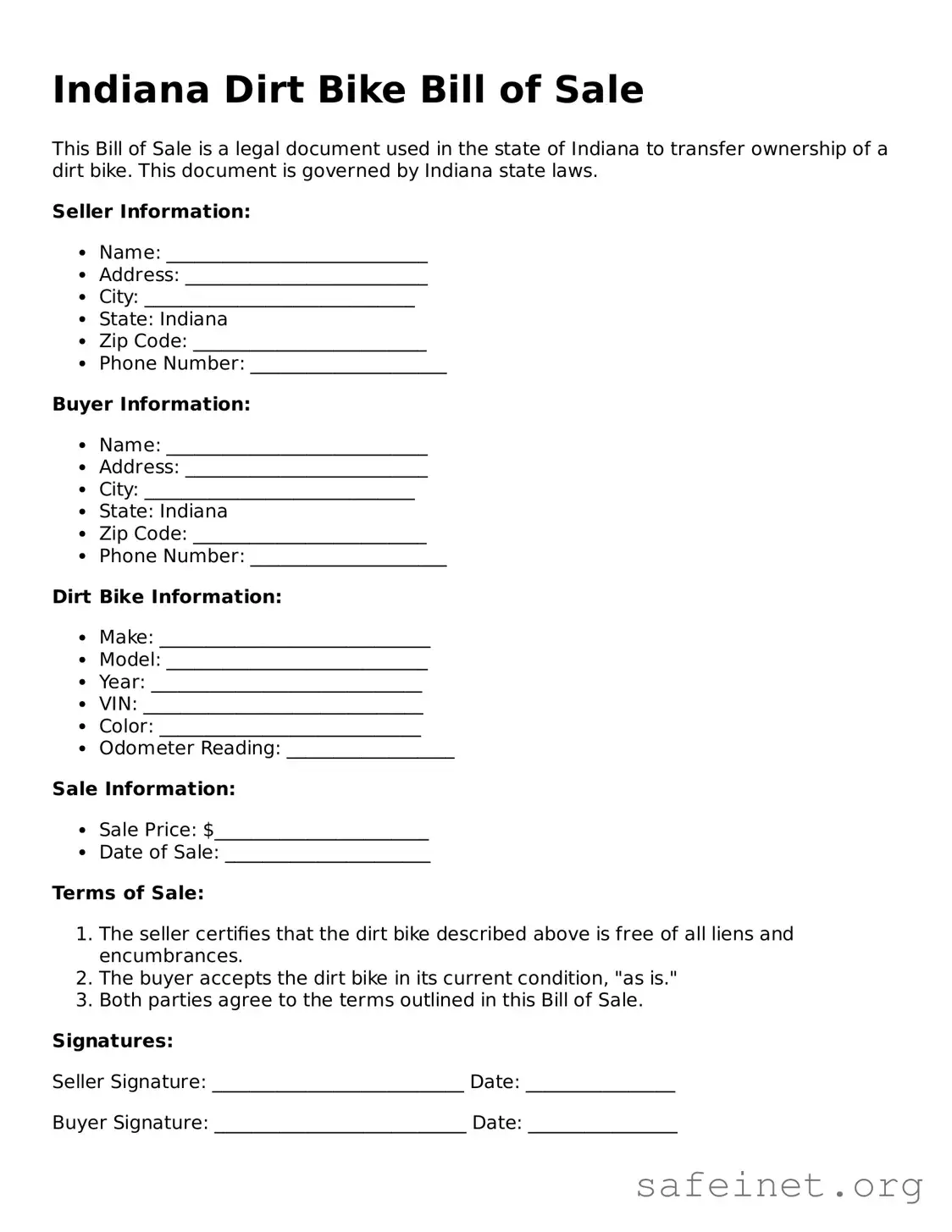
When it comes to buying or selling a dirt bike in Indiana, having the right documentation is essential for a smooth transaction. The Indiana Dirt Bike Bill of Sale form serves as a crucial record, providing both parties with proof of the sale. This document typically includes important details such as the names and addresses of the buyer and seller, the make, model, and VIN (Vehicle Identification Number) of the dirt bike, and the purchase price. Additionally, it may contain information about the condition of the bike and any warranties or guarantees involved in the sale. By filling out this form accurately, you not only protect your interests but also ensure compliance with state regulations. Whether you're a seasoned rider or new to the dirt biking community, understanding the importance of this bill of sale can help facilitate a hassle-free exchange and pave the way for many thrilling adventures ahead.
Indiana Dirt Bike Bill of Sale
This Bill of Sale is a legal document used in the state of Indiana to transfer ownership of a dirt bike. This document is governed by Indiana state laws.
Seller Information:
Buyer Information:
Dirt Bike Information:
Sale Information:
Terms of Sale:
Signatures:
Seller Signature: ___________________________ Date: ________________
Buyer Signature: ___________________________ Date: ________________
This Bill of Sale should be kept for your records. It may be required for registration or title transfer purposes.
| Fact Name | Description |
|---|---|
| Purpose | The Indiana Dirt Bike Bill of Sale form serves as a legal document to record the sale and transfer of ownership of a dirt bike. |
| Governing Law | This form is governed by Indiana Code Title 9, Article 18, which outlines motor vehicle laws in the state. |
| Required Information | Essential details such as the buyer's and seller's names, addresses, and the dirt bike's identification number must be included. |
| Condition of Sale | The form can specify whether the dirt bike is sold "as-is" or if any warranties are provided. |
| Signatures | Both the buyer and seller must sign the form to validate the transaction and confirm the transfer of ownership. |
| Record Keeping | It is advisable for both parties to keep a copy of the completed bill of sale for their records. |
| Notarization | While notarization is not mandatory, having the document notarized can add an extra layer of authenticity to the transaction. |
Once you have the Indiana Dirt Bike Bill of Sale form in hand, you will need to complete it accurately to ensure a smooth transaction. Follow these steps carefully to fill out the form correctly.
After completing the form, ensure that both parties keep a copy for their records. This will help in case any issues arise in the future.
What is the Indiana Dirt Bike Bill of Sale form?
The Indiana Dirt Bike Bill of Sale form is a document used to transfer ownership of a dirt bike from one individual to another. This form serves as proof of the transaction and includes important details about the bike and the parties involved in the sale.
Why do I need a Bill of Sale for a dirt bike?
A Bill of Sale is important for several reasons. It provides legal proof of the transaction, protects both the buyer and seller, and helps establish clear ownership. Additionally, it may be required for registration or titling purposes with the Indiana Bureau of Motor Vehicles (BMV).
What information is typically included in the Bill of Sale?
The Bill of Sale generally includes the names and addresses of both the buyer and seller, a description of the dirt bike (including make, model, year, and Vehicle Identification Number), the sale price, and the date of the transaction. Signatures from both parties are also required.
Is the Bill of Sale form required to register my dirt bike in Indiana?
While not always mandatory, having a Bill of Sale is highly recommended when registering a dirt bike in Indiana. It serves as proof of ownership and may be requested by the BMV during the registration process.
Can I create my own Bill of Sale?
Yes, you can create your own Bill of Sale as long as it includes all necessary information. However, using a standardized form can help ensure that you do not miss any critical details and that the document meets legal requirements.
Do I need to have the Bill of Sale notarized?
In Indiana, notarization is not typically required for a Bill of Sale for a dirt bike. However, having the document notarized can add an extra layer of authenticity and may be beneficial in case of disputes in the future.
What should I do if I lose the Bill of Sale?
If the Bill of Sale is lost, it is advisable to contact the seller to obtain a replacement. If that is not possible, you may need to create a new Bill of Sale, ensuring that it includes all relevant information and is signed by both parties.
How long should I keep a copy of the Bill of Sale?
It is recommended to keep a copy of the Bill of Sale for as long as you own the dirt bike. This document serves as proof of ownership and may be needed for future transactions, such as selling the bike or for insurance purposes.
Where can I obtain a standard Indiana Dirt Bike Bill of Sale form?
Standard forms can often be found online through various legal document websites or at local motorcycle dealerships. Additionally, the Indiana BMV may provide resources or templates to assist in creating a Bill of Sale.
Incomplete Information: One common mistake is leaving out essential details. Buyers and sellers should ensure that all fields are filled in, including the names, addresses, and contact information of both parties.
Incorrect Vehicle Identification Number (VIN): The VIN must be accurate. A small typo can lead to significant issues later. Double-check the VIN on the dirt bike and ensure it matches what is written on the form.
Failure to Sign: Both parties must sign the bill of sale. A signature indicates agreement and acknowledgment of the transaction. Without it, the document may not hold up in future disputes.
Not Including the Sale Price: The sale price is a critical component of the bill of sale. Omitting this information can create confusion and potential legal issues down the road.
Ignoring Local Regulations: Each state may have specific requirements for a bill of sale. Failing to research Indiana's regulations could result in an invalid document. Always check local laws to ensure compliance.
The Indiana Dirt Bike Bill of Sale form is an important document for individuals buying or selling a dirt bike in the state. Along with this form, several other documents may be necessary to ensure a smooth transaction. Below are four commonly used forms and documents that complement the Dirt Bike Bill of Sale.
Having these documents prepared and completed can facilitate a more efficient transaction and help protect the interests of both parties involved in the sale of a dirt bike in Indiana.
The Indiana Dirt Bike Bill of Sale form shares similarities with the general Vehicle Bill of Sale. Both documents serve as proof of transfer of ownership from the seller to the buyer. They typically include essential details such as the names and addresses of both parties, a description of the vehicle or dirt bike, and the sale price. This ensures that both the buyer and seller have a clear record of the transaction, which can be useful for registration or future sales.
Another document akin to the Dirt Bike Bill of Sale is the Motorcycle Bill of Sale. While both pertain to motorized vehicles, the Motorcycle Bill of Sale is specifically tailored for motorcycles. It contains similar components, such as vehicle identification numbers and odometer readings, ensuring that the transaction is documented accurately. Both forms protect the rights of the buyer and seller, providing a legal framework for ownership transfer.
The Boat Bill of Sale is also comparable to the Indiana Dirt Bike Bill of Sale. Like dirt bikes, boats require a formal process for ownership transfer. The Boat Bill of Sale includes information about the vessel, such as its make, model, and hull identification number. Both documents serve to validate the sale and provide proof of ownership, which is crucial for registration with state authorities.
A Snowmobile Bill of Sale shares features with the Dirt Bike Bill of Sale as well. Both documents facilitate the transfer of recreational vehicles. They typically include details about the vehicle's specifications and the terms of the sale. This ensures that both parties are protected in the transaction, similar to how the Dirt Bike Bill of Sale operates.
The ATV Bill of Sale is another document that aligns closely with the Dirt Bike Bill of Sale. All-terrain vehicles, like dirt bikes, require a bill of sale to establish ownership. The ATV Bill of Sale includes pertinent information such as the vehicle's make, model, and VIN. This documentation is essential for registration and can help resolve any disputes regarding ownership in the future.
The Trailer Bill of Sale is similar in function to the Indiana Dirt Bike Bill of Sale. Trailers, whether for transporting dirt bikes or other vehicles, also require proof of ownership transfer. The Trailer Bill of Sale includes details about the trailer's specifications, including its weight and dimensions, ensuring that both parties have a clear understanding of the sale terms. This helps facilitate registration and provides legal protection for both the buyer and seller.
Lastly, the General Bill of Sale can be compared to the Indiana Dirt Bike Bill of Sale. This document is more versatile and can be used for various types of personal property. Like the Dirt Bike Bill of Sale, it includes essential information about the transaction, such as the parties involved and the item being sold. While it may lack the specific details relevant to dirt bikes, it serves the same fundamental purpose of documenting the transfer of ownership.
When filling out the Indiana Dirt Bike Bill of Sale form, it is important to follow certain guidelines to ensure accuracy and legality. Below is a list of things you should and shouldn't do:
When it comes to the Indiana Dirt Bike Bill of Sale form, several misconceptions can lead to confusion. Understanding the facts can help ensure a smooth transaction. Here are seven common misconceptions:
By dispelling these misconceptions, individuals can approach the buying or selling process with greater confidence and clarity.
When completing the Indiana Dirt Bike Bill of Sale form, it is important to keep the following key points in mind: