When engaging in the buying or selling of personal property in Indiana, a Bill of Sale form plays a crucial role in documenting the transaction. This form serves as a legal record that outlines the details of the sale, including the names and addresses of both the buyer and seller, a description of the item being sold, and the purchase price. It also typically includes the date of the transaction, ensuring that all parties have a clear understanding of when the exchange took place. Additionally, the Bill of Sale may contain warranties or disclaimers regarding the condition of the item, providing protection for both the buyer and seller. Having a properly completed Bill of Sale can help prevent disputes and serve as proof of ownership, making it an essential document in any property transaction. Understanding the key components and significance of this form is vital for anyone looking to engage in a sale in Indiana.
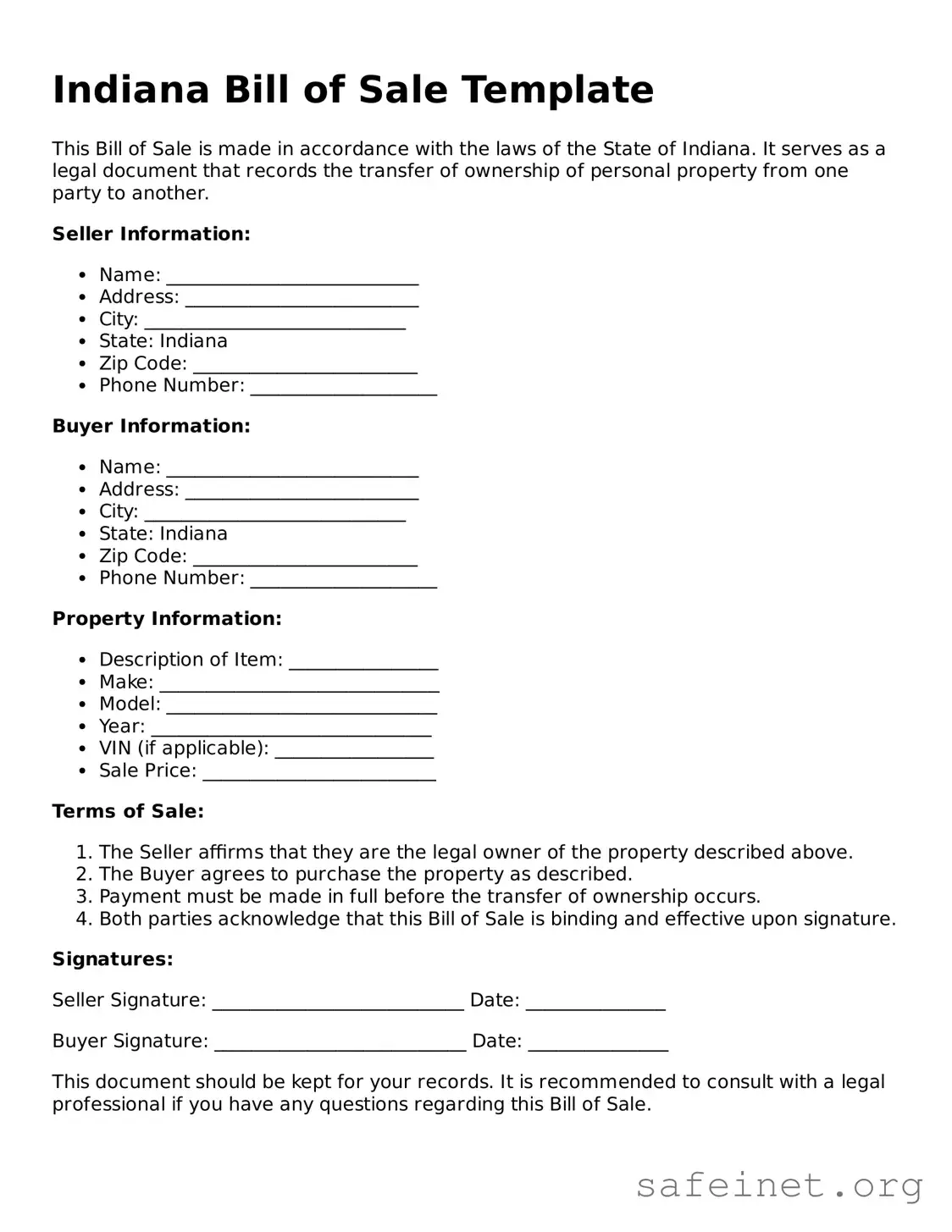
Indiana Bill of Sale Template
This Bill of Sale is made in accordance with the laws of the State of Indiana. It serves as a legal document that records the transfer of ownership of personal property from one party to another.
Seller Information:
Buyer Information:
Property Information:
Terms of Sale:
Signatures:
Seller Signature: ___________________________ Date: _______________
Buyer Signature: ___________________________ Date: _______________
This document should be kept for your records. It is recommended to consult with a legal professional if you have any questions regarding this Bill of Sale.
| Fact Name | Details |
|---|---|
| Definition | The Indiana Bill of Sale is a legal document that records the transfer of ownership of personal property from one party to another. |
| Governing Law | Indiana Code Title 26, Article 2 governs the sale of goods and personal property in Indiana. |
| Types of Property | This form can be used for various types of personal property, including vehicles, boats, and equipment. |
| Notarization | While notarization is not mandatory, it is recommended for added legal protection and verification. |
| Required Information | The form typically requires the names and addresses of both the buyer and seller, a description of the item, and the sale price. |
| As-Is Clause | Many bills of sale include an "as-is" clause, indicating that the buyer accepts the item in its current condition. |
| Record Keeping | Both parties should keep a copy of the completed bill of sale for their records, as it serves as proof of the transaction. |
| Tax Implications | Sales tax may apply to the transaction, and it is the buyer's responsibility to report and pay any applicable taxes. |
| Usage in Vehicle Sales | For vehicle sales, the Indiana Bill of Sale is often required to complete the registration process with the Bureau of Motor Vehicles (BMV). |
Once you have the Indiana Bill of Sale form in hand, you’re ready to proceed with filling it out. This document is essential for recording the sale of personal property, and ensuring that all parties involved have a clear understanding of the transaction. Follow the steps below to complete the form accurately.
What is an Indiana Bill of Sale?
An Indiana Bill of Sale is a legal document that records the transfer of ownership of personal property from one individual to another. This form is particularly important for transactions involving vehicles, boats, and other significant items. It serves as proof of the transaction and can be used to protect both the buyer and seller in case of disputes regarding ownership or condition of the item sold.
What information is typically included in the Indiana Bill of Sale?
The Indiana Bill of Sale usually includes essential details such as the names and addresses of both the buyer and seller, a description of the item being sold (including make, model, and identification numbers if applicable), the purchase price, and the date of the transaction. Additionally, both parties may sign the document to acknowledge the agreement and confirm the transfer of ownership.
Do I need to have the Bill of Sale notarized?
Notarization is not a requirement for an Indiana Bill of Sale, but it can add an extra layer of security and validity to the document. Having a notary public witness the signatures of both parties can help prevent disputes about the authenticity of the transaction. If you are selling a vehicle, you may be required to present the Bill of Sale when registering the vehicle with the Indiana Bureau of Motor Vehicles.
Can I create my own Bill of Sale, or do I need to use a specific form?
You can create your own Bill of Sale in Indiana, as long as it includes all necessary information to document the transaction. However, using a standard form can simplify the process and ensure that you include all required elements. Many online resources offer templates specifically designed for Indiana transactions, which can help you avoid missing important details.
Incomplete Information: Many individuals fail to fill out all required fields. Omitting details such as the buyer's or seller's address can lead to complications later.
Incorrect Dates: Entering the wrong date can create confusion regarding the transaction timeline. Ensure that the date of sale accurately reflects when the transaction occurred.
Failure to Sign: Both parties must sign the document. A bill of sale without signatures lacks legal validity, which can be problematic if disputes arise.
Missing Vehicle Identification Number (VIN): For vehicle sales, neglecting to include the VIN can lead to issues with registration and ownership transfer.
Incorrect Purchase Price: Listing an inaccurate purchase price can lead to tax issues or disputes. Ensure that the amount reflects the agreed-upon price.
Not Notarizing the Document: While notarization is not always required, having the bill of sale notarized can provide an extra layer of protection and legitimacy.
Using Ambiguous Language: Vague descriptions of the item being sold can create misunderstandings. Clearly describe the item, including any relevant details.
Ignoring State-Specific Requirements: Each state may have unique requirements for a bill of sale. Failing to comply with Indiana’s specific rules can render the document ineffective.
Not Retaining a Copy: After completing the bill of sale, both parties should keep a copy for their records. This can be crucial for future reference or in case of disputes.
The Indiana Bill of Sale form is an important document used to transfer ownership of personal property from one party to another. However, there are several other forms and documents that are often used in conjunction with it to ensure a smooth transaction. Here’s a list of common documents that may accompany the Bill of Sale in Indiana.
Using these additional documents alongside the Indiana Bill of Sale can enhance the security and clarity of the transaction. It is advisable to consider each form's relevance based on the specifics of the sale to ensure all legal requirements are met.
The Indiana Bill of Sale form shares similarities with the Vehicle Bill of Sale. This document is specifically used for the sale of motor vehicles. Like the Indiana Bill of Sale, it includes details about the buyer, seller, and the vehicle itself, such as the make, model, and VIN. Both documents serve as proof of ownership transfer and may be required for registration purposes in Indiana.
Another document akin to the Indiana Bill of Sale is the Personal Property Bill of Sale. This form is used for the sale of personal items, such as furniture or electronics. It outlines the transaction's specifics, including the item description and sale price. Both forms ensure that the seller has the right to sell the item and that the buyer is receiving it free of any claims.
The Real Estate Purchase Agreement is also similar in function, though it pertains to real property rather than personal property. This agreement outlines the terms of the sale, including the purchase price and any contingencies. While the Bill of Sale is simpler and often used for less complex transactions, both documents formalize the transfer of ownership and protect the interests of both parties.
The Lease Agreement can be compared to the Indiana Bill of Sale in that it establishes the terms of a rental arrangement. While it does not transfer ownership, it does create a legal obligation between the landlord and tenant. Both documents require clear identification of the parties involved and the terms of the transaction, ensuring that everyone understands their rights and responsibilities.
Similarly, the Gift Receipt can be likened to the Indiana Bill of Sale. A Gift Receipt is used when one person gives an item to another without any exchange of money. It serves as proof of the transfer, similar to how a Bill of Sale documents a sale. Both forms can help clarify ownership and avoid disputes later on.
The Affidavit of Ownership is another document that shares characteristics with the Indiana Bill of Sale. This affidavit is often used when the original title is lost or unavailable. It allows the seller to declare ownership and transfer rights. Both documents aim to provide a clear record of ownership and facilitate a smooth transaction.
The Power of Attorney can also be seen as related to the Indiana Bill of Sale. While it does not directly transfer ownership, it allows one person to act on behalf of another in financial matters, including the sale of property. Both documents require clear identification of the parties involved and serve to protect the interests of those engaged in the transaction.
Lastly, the Warranty Deed is similar in that it is used to transfer ownership of real estate. This document guarantees that the seller has the right to sell the property and that it is free from any encumbrances. While a Bill of Sale is typically for personal property, both documents establish a legal transfer of ownership and protect the rights of the buyer.
When filling out the Indiana Bill of Sale form, it's important to follow certain guidelines to ensure the document is valid and serves its purpose effectively. Here are some key dos and don'ts to keep in mind:
By adhering to these guidelines, you can create a Bill of Sale that is clear, comprehensive, and legally sound.
The Indiana Bill of Sale form serves as a crucial document in the transfer of ownership for personal property. However, several misconceptions surround its use and purpose. Understanding these misconceptions can help individuals navigate the process more effectively.
This is not true. While many people associate a Bill of Sale with vehicle purchases, it is also essential for other personal property transactions, such as the sale of boats, motorcycles, and even household items.
In Indiana, notarization is not a strict requirement for a Bill of Sale. However, having the document notarized can provide an additional layer of authenticity and may be beneficial if disputes arise in the future.
While verbal agreements can be legally binding, they often lead to misunderstandings and disputes. A written Bill of Sale provides clear evidence of the transaction and protects both parties involved.
This is a common misunderstanding. In Indiana, a Bill of Sale does not need to be filed with any state agency. It is primarily a private agreement between the buyer and seller, serving as proof of the transaction.
While most Bills of Sale document monetary transactions, they can also be used for trades or gifts. If ownership is being transferred, regardless of whether money changes hands, a Bill of Sale can be beneficial.
When filling out and using the Indiana Bill of Sale form, there are several important points to keep in mind. This document serves as proof of a transaction between a buyer and a seller. Here are key takeaways to ensure a smooth process:
By following these guidelines, individuals can effectively use the Indiana Bill of Sale form to document their transactions securely and clearly.