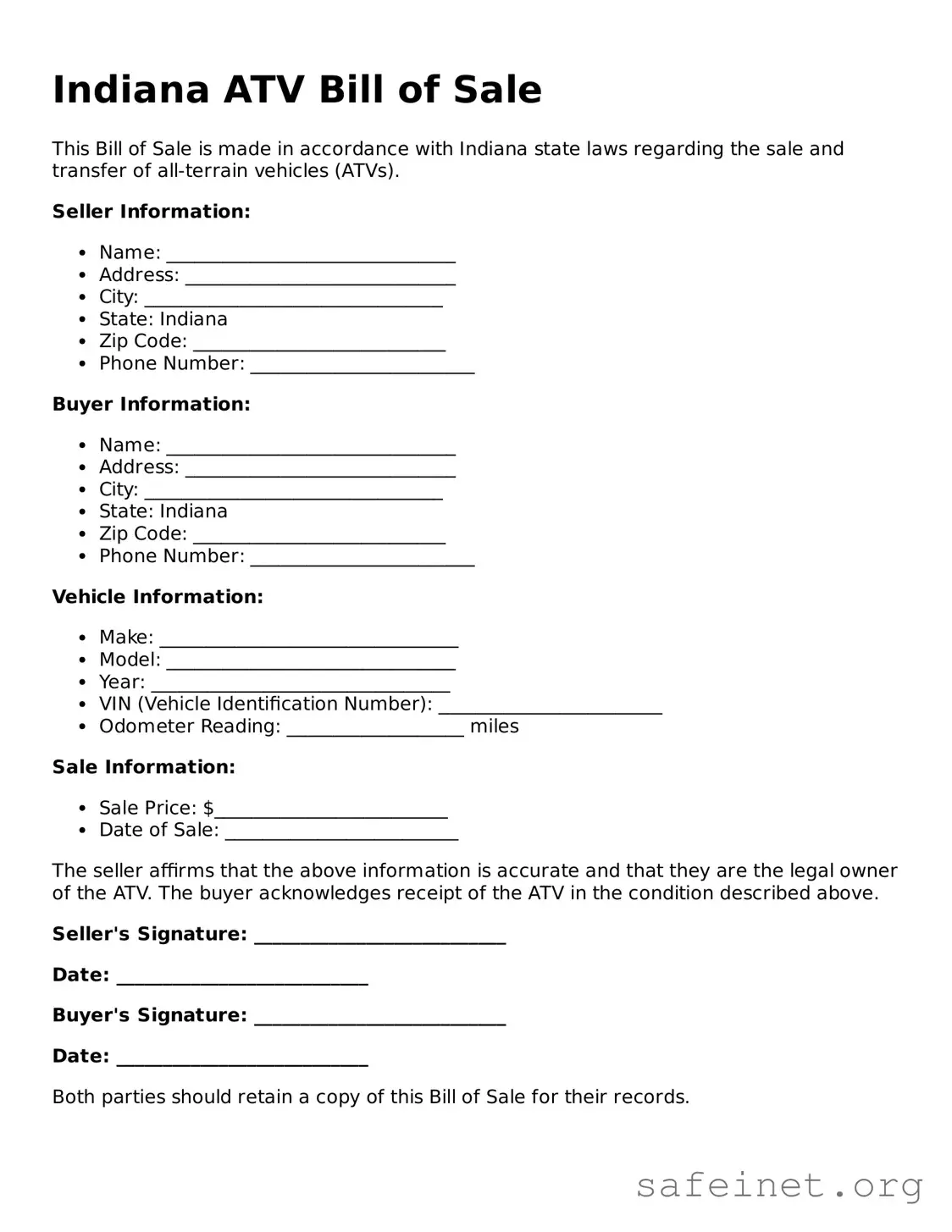
When purchasing or selling an all-terrain vehicle (ATV) in Indiana, having a well-drafted Bill of Sale is crucial to ensure a smooth transaction. This document serves as a formal record of the sale, outlining essential details such as the names and addresses of both the buyer and seller, the description of the ATV, including its make, model, and Vehicle Identification Number (VIN), and the agreed-upon sale price. Additionally, it often includes information about the condition of the ATV at the time of sale, which can protect both parties in case of disputes. The Bill of Sale also provides a space for signatures, affirming that both parties agree to the terms laid out in the document. By utilizing this form, buyers can secure proof of ownership, while sellers can safeguard themselves against future claims regarding the vehicle. Understanding the importance of this document can help facilitate a transparent and efficient transaction, ensuring that both parties leave the deal satisfied.
Indiana ATV Bill of Sale
This Bill of Sale is made in accordance with Indiana state laws regarding the sale and transfer of all-terrain vehicles (ATVs).
Seller Information:
Buyer Information:
Vehicle Information:
Sale Information:
The seller affirms that the above information is accurate and that they are the legal owner of the ATV. The buyer acknowledges receipt of the ATV in the condition described above.
Seller's Signature: ___________________________
Date: ___________________________
Buyer's Signature: ___________________________
Date: ___________________________
Both parties should retain a copy of this Bill of Sale for their records.
| Fact Name | Description |
|---|---|
| Purpose | The Indiana ATV Bill of Sale form serves as a legal document to record the sale and transfer of ownership of an all-terrain vehicle (ATV). |
| Governing Law | The form is governed by Indiana Code § 9-17-2, which outlines the requirements for vehicle sales and transfers. |
| Parties Involved | The document must include information about both the seller and the buyer, including their names and addresses. |
| Vehicle Information | Details about the ATV, such as make, model, year, and Vehicle Identification Number (VIN), must be clearly stated. |
| Sale Price | The agreed-upon sale price of the ATV should be documented in the form to establish the transaction's value. |
| Date of Sale | The date when the transaction takes place must be included to establish the timeline of ownership transfer. |
| Signatures | Both the seller and the buyer are required to sign the form to validate the agreement and transfer of ownership. |
| Record Keeping | It is advisable for both parties to retain a copy of the signed Bill of Sale for future reference and proof of ownership. |
Once you have the Indiana ATV Bill of Sale form in hand, you will need to provide specific information to ensure a smooth transaction. Completing this form accurately is essential for both the buyer and the seller, as it serves as a legal record of the sale.
After completing the form, ensure that both parties retain a copy for their records. This documentation will be important for future reference, especially when registering the ATV with the state.
What is an Indiana ATV Bill of Sale form?
The Indiana ATV Bill of Sale form is a document used to record the sale and transfer of ownership of an all-terrain vehicle (ATV) in the state of Indiana. This form provides important details about the transaction, including the buyer's and seller's information, the vehicle's description, and the sale price. It serves as a legal record of the sale and can be useful for both parties in case of disputes or for registration purposes.
Why is a Bill of Sale necessary for an ATV transaction?
A Bill of Sale is essential because it protects both the buyer and seller during the transaction. For the buyer, it provides proof of ownership and can help in the registration process with the Indiana Bureau of Motor Vehicles. For the seller, it serves as a record that the vehicle has been sold, protecting them from any future liabilities associated with the ATV. Additionally, it can help prevent fraud by ensuring that the transaction is documented.
What information is required on the Indiana ATV Bill of Sale?
The Indiana ATV Bill of Sale typically requires the following information: the names and addresses of both the buyer and seller, the date of the sale, a detailed description of the ATV (including make, model, year, and Vehicle Identification Number), the sale price, and any relevant signatures. This information is crucial for establishing a clear record of the transaction.
Is the Bill of Sale form required to register an ATV in Indiana?
Yes, a Bill of Sale is often required when registering an ATV in Indiana. The Indiana Bureau of Motor Vehicles (BMV) may ask for this document to verify the ownership of the vehicle. It is advisable to keep a copy of the Bill of Sale for your records and to provide it when applying for registration or title transfer.
Can I create my own Bill of Sale for an ATV?
Yes, you can create your own Bill of Sale for an ATV, as long as it includes all the necessary information required by Indiana law. However, using a standardized form can help ensure that you do not miss any important details. Many online resources and templates are available to help you create a compliant Bill of Sale.
Do I need to have the Bill of Sale notarized?
In Indiana, notarization of the Bill of Sale is not typically required for the sale of an ATV. However, having the document notarized can provide an additional layer of security and authenticity to the transaction. It may also be beneficial if either party wishes to have a verified record of the agreement.
Where can I obtain an Indiana ATV Bill of Sale form?
Indiana ATV Bill of Sale forms can be obtained from various sources. Many online platforms offer free or paid templates that can be easily downloaded and filled out. Additionally, local dealerships, the Indiana Bureau of Motor Vehicles, or legal stationery stores may provide printed forms. It is essential to ensure that any form used complies with Indiana state requirements.
Failing to include the date of sale. This is crucial for establishing when the transaction occurred.
Not providing the correct vehicle identification number (VIN). The VIN is essential for identifying the ATV and ensuring that it is registered properly.
Leaving out the buyer and seller information. Both parties must provide their names, addresses, and contact information for the record.
Using incorrect purchase price. The amount should reflect the actual sale price, as it may affect tax obligations.
Not signing the form. Both the buyer and seller must sign the document to validate the transaction.
Overlooking witness signatures if required. Some transactions may need a witness to confirm the sale.
Failing to keep a copy of the completed bill of sale. It is important for both parties to retain a copy for their records.
When purchasing or selling an ATV in Indiana, several documents may accompany the ATV Bill of Sale form. Each of these documents plays a crucial role in ensuring a smooth transaction and proper registration of the vehicle.
Having these documents prepared and organized can facilitate the buying or selling process. Proper documentation protects both parties and ensures compliance with state regulations.
The Indiana Boat Bill of Sale is similar to the ATV Bill of Sale in that both documents serve as proof of transfer of ownership for recreational vehicles. Just as the ATV Bill of Sale outlines the details of the ATV, including make, model, and VIN, the Boat Bill of Sale includes similar information for the boat being sold. Both documents help protect the buyer and seller by providing a record of the transaction, which can be important for registration and legal purposes.
The Indiana Motorcycle Bill of Sale also shares similarities with the ATV Bill of Sale. Each document serves as a legal record of ownership transfer for motorized vehicles. Both forms require essential details such as the vehicle identification number, the names of the buyer and seller, and the sale price. This ensures that both parties have a clear understanding of the transaction and can refer back to it if needed.
When filling out the Indiana ATV Bill of Sale form, it's essential to follow certain guidelines to ensure the process goes smoothly. Here’s a list of things you should and shouldn't do:
The Indiana ATV Bill of Sale form is an important document for anyone buying or selling an all-terrain vehicle (ATV) in Indiana. However, several misconceptions surround its use and requirements. Here are four common misunderstandings:
Many believe that a bill of sale is optional when buying or selling an ATV. In reality, having a written bill of sale protects both the buyer and seller by providing a clear record of the transaction.
Some people think that notarization is required for the ATV bill of sale to be valid. However, Indiana law does not mandate notarization, although it can add an extra layer of security to the document.
Another common belief is that the bill of sale must be submitted to a state agency. In Indiana, the bill of sale is kept by the buyer and seller for their records and does not need to be filed with the state.
Some assume that the bill of sale is only necessary for new ATV purchases. This is incorrect; it is equally important for used ATVs to ensure proper ownership transfer and to document the sale.
Filling out and using the Indiana ATV Bill of Sale form is an important step in the process of buying or selling an all-terrain vehicle. Here are some key takeaways to consider: