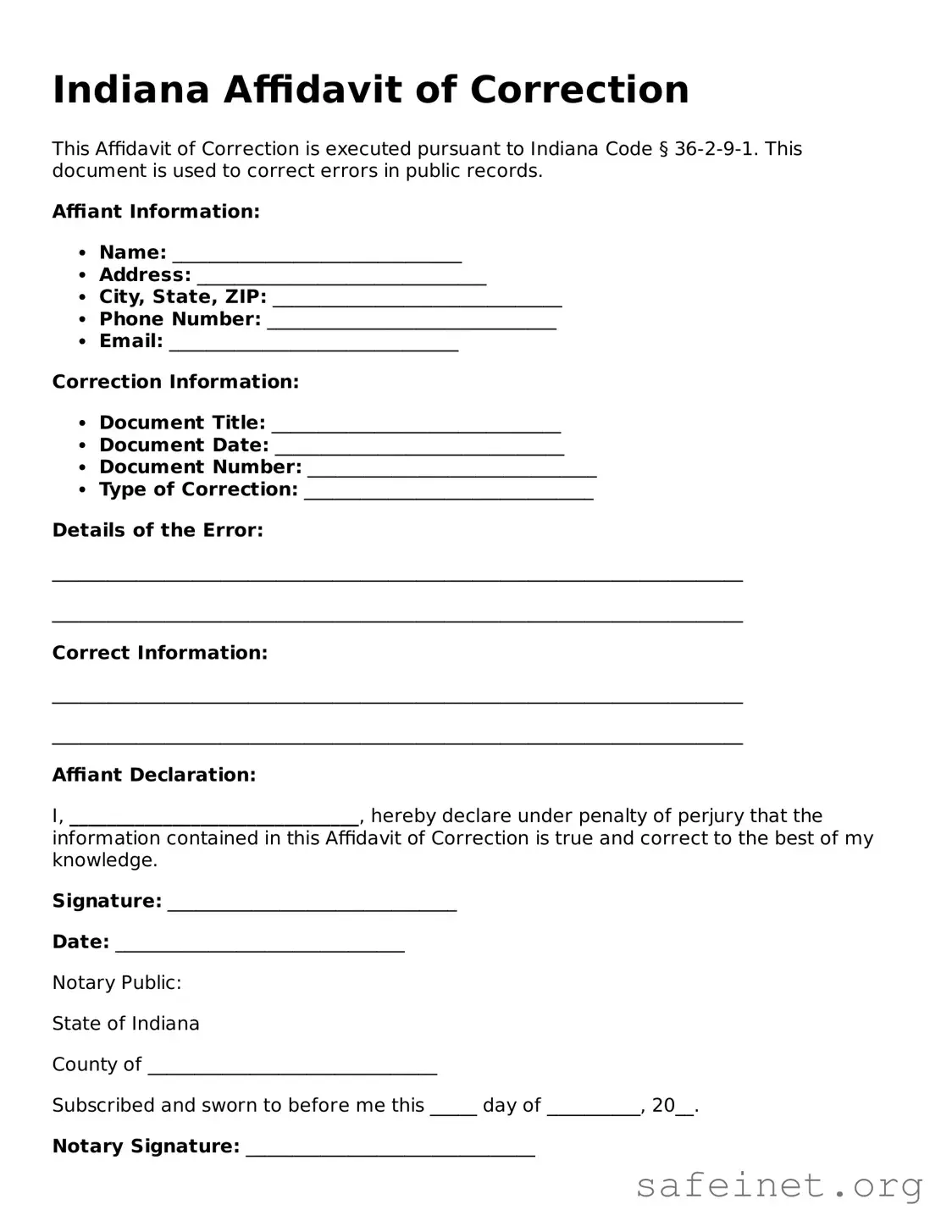
The Indiana Affidavit of Correction form serves as a vital tool for individuals and entities seeking to rectify errors in official documents, such as deeds, mortgages, or other legal instruments. This form is particularly significant when inaccuracies arise from typographical mistakes, misstatements, or clerical errors that could otherwise lead to confusion or disputes. By completing this affidavit, the individual can provide a sworn statement that clarifies the correct information, ensuring that public records reflect the true intent of the parties involved. The process typically requires the affiant to provide their personal information, detail the specific errors, and outline the corrections needed. Additionally, the affidavit must be signed in the presence of a notary public, adding a layer of authenticity and legal weight to the document. Understanding the proper use of this form can streamline the correction process and help maintain the integrity of public records in Indiana.
Indiana Affidavit of Correction
This Affidavit of Correction is executed pursuant to Indiana Code § 36-2-9-1. This document is used to correct errors in public records.
Affiant Information:
Correction Information:
Details of the Error:
__________________________________________________________________________
__________________________________________________________________________
Correct Information:
__________________________________________________________________________
__________________________________________________________________________
Affiant Declaration:
I, _______________________________, hereby declare under penalty of perjury that the information contained in this Affidavit of Correction is true and correct to the best of my knowledge.
Signature: _______________________________
Date: _______________________________
Notary Public:
State of Indiana
County of _______________________________
Subscribed and sworn to before me this _____ day of __________, 20__.
Notary Signature: _______________________________
My Commission Expires: _______________________________
| Fact Name | Description |
|---|---|
| Purpose | The Indiana Affidavit of Correction is used to correct errors in public records. |
| Governing Law | This form is governed by Indiana Code § 36-2-11-1. |
| Who Can File | Any individual or entity that has a vested interest in the record can file this affidavit. |
| Common Errors | It can correct typographical errors, incorrect names, and other factual inaccuracies. |
| Filing Process | The affidavit must be signed in the presence of a notary public before submission. |
| Submission Location | File the affidavit with the county recorder where the original document is located. |
| Effectiveness | Once filed, the corrections are made part of the public record and are legally binding. |
After obtaining the Indiana Affidavit of Correction form, you will need to complete it accurately to ensure it is processed correctly. This form is essential for making necessary corrections to previously filed documents. Follow the steps below to fill out the form properly.
What is the purpose of the Indiana Affidavit of Correction form?
The Indiana Affidavit of Correction form is designed to correct errors in official documents, such as deeds, mortgages, or other legal filings. When mistakes occur, whether due to typographical errors, misstatements, or omissions, this form provides a mechanism to rectify those inaccuracies. By filing this affidavit, individuals can ensure that the public record accurately reflects the intended information, which is crucial for legal clarity and property rights.
Who can file an Indiana Affidavit of Correction?
Any individual or entity that has a vested interest in the document that contains the error can file an Indiana Affidavit of Correction. This typically includes property owners, lienholders, or other parties directly affected by the erroneous information. It is important for the person filing the affidavit to have the legal authority to make corrections on behalf of the affected parties.
What information is required to complete the affidavit?
To complete the Indiana Affidavit of Correction, the form generally requires specific details about the original document, including the type of document, the date it was recorded, and the names of the parties involved. Additionally, the affidavit must clearly state the nature of the error and the correct information that should replace it. Signatures of the individuals involved, along with notarization, may also be required to validate the affidavit.
Where should the completed affidavit be filed?
The completed Indiana Affidavit of Correction should be filed with the same office where the original document was recorded. This is typically the county recorder's office. By filing it there, the correction will be officially recognized and updated in the public records. It is advisable to keep a copy of the filed affidavit for personal records and to ensure that all parties are informed of the correction.
Not providing accurate information. Double-check all details, including names, addresses, and dates. Any errors can lead to delays or rejection of the affidavit.
Failing to sign the form. A signature is essential for the affidavit to be valid. Without it, the document cannot be processed.
Neglecting to date the affidavit. Always include the date on which you are signing the document. This helps establish the timeline of the correction.
Using the wrong form. Ensure you are using the correct Indiana Affidavit of Correction form for your specific situation. Different forms may exist for various types of corrections.
Not including supporting documentation. If your correction requires additional proof, such as identification or previous documents, be sure to attach them.
Leaving sections blank. Fill out all required sections completely. Incomplete forms can lead to processing issues.
Submitting the affidavit to the wrong office. Make sure you know where to send your completed form. Each type of correction may have a designated office.
Overlooking the filing fee. Some affidavits may require a fee for processing. Check the current fee schedule and include payment if necessary.
Not keeping a copy. Always make a copy of the completed affidavit for your records. This can be helpful in case of future inquiries or issues.
When dealing with the Indiana Affidavit of Correction form, it is essential to understand that several other documents may accompany it. These documents can provide additional context or serve specific purposes related to the correction process. Below is a list of commonly used forms and documents that often work in conjunction with the Affidavit of Correction.
Understanding these documents can help streamline the correction process and ensure compliance with Indiana state law. Always consider consulting with a legal professional to navigate these forms effectively and address any specific concerns you may have.
The Indiana Affidavit of Correction is similar to the Affidavit of Identity. This document is used to affirm a person's identity and correct any discrepancies in public records. Much like the Affidavit of Correction, it serves to clarify and rectify issues, ensuring that the correct information is officially recognized. Both documents require the individual to provide a sworn statement, enhancing the credibility of the information being presented.
Another document akin to the Affidavit of Correction is the Affidavit of Support. This form is often used in immigration processes to demonstrate that a person has adequate financial backing. Like the Affidavit of Correction, it involves a sworn declaration, affirming the sponsor's commitment to support the immigrant financially. Both documents aim to provide assurance and rectify potential issues that could arise from incorrect or incomplete information.
The Affidavit of Heirship is also similar. This document is used to establish the heirs of a deceased person when there is no will. It serves to clarify ownership and rights to property, much like the Affidavit of Correction clarifies errors in public records. Both documents require a sworn statement from individuals with knowledge of the facts, reinforcing the legitimacy of the claims being made.
Additionally, the Affidavit of Marriage is comparable. This document verifies the existence of a marriage and is often needed for legal purposes, such as changing a name or applying for benefits. Similar to the Affidavit of Correction, it involves a sworn declaration to confirm the truth of the information provided. Both documents help ensure that legal records accurately reflect personal circumstances.
The Affidavit of Service is another related document. It is used to confirm that legal documents have been properly delivered to a party involved in a legal proceeding. Like the Affidavit of Correction, it requires a sworn statement attesting to the accuracy of the information. Both documents serve to uphold the integrity of legal processes by ensuring that all parties are correctly informed.
Moreover, the Affidavit of Financial Support shares similarities. This document is often required in various financial transactions, such as loan applications, to confirm an individual's financial status. It functions much like the Affidavit of Correction by providing a sworn statement that clarifies financial information, ensuring that all parties have a clear understanding of the applicant's financial situation.
The Affidavit of Consent is also comparable. This document is commonly used in situations where permission is needed, such as for minors traveling without a parent. Similar to the Affidavit of Correction, it requires a sworn statement to confirm that consent has been granted. Both documents play a crucial role in ensuring that necessary permissions are documented and recognized legally.
Another similar document is the Affidavit of Truth. This is often used in various legal contexts to affirm the truthfulness of statements made by an individual. Like the Affidavit of Correction, it requires a sworn declaration to ensure that the information is accurate and reliable. Both documents are vital in maintaining the integrity of legal proceedings by providing verified information.
The Affidavit of Ownership is also relevant. This document is used to assert ownership of property or assets, often required in transactions like vehicle sales. Similar to the Affidavit of Correction, it involves a sworn statement to affirm the ownership claims. Both documents help clarify rights and responsibilities regarding property, ensuring that records are accurate and up to date.
Lastly, the Affidavit of Non-Ownership is comparable. This document is used to declare that an individual does not own certain property or assets, often for legal or financial purposes. Like the Affidavit of Correction, it requires a sworn statement to confirm the individual's status. Both documents are essential for clarifying ownership issues and ensuring that public records reflect the true situation.
When filling out the Indiana Affidavit of Correction form, it is important to follow specific guidelines to ensure accuracy and compliance. Here is a list of things you should and shouldn't do:
Understanding the Indiana Affidavit of Correction form can be challenging. Here are some common misconceptions that people have about this document:
By clearing up these misconceptions, individuals can better navigate the process of correcting public records in Indiana.
Filling out the Indiana Affidavit of Correction form can seem daunting, but understanding its key aspects can simplify the process. Here are five essential takeaways to keep in mind:
Purpose of the Form: The Indiana Affidavit of Correction is used to correct clerical errors in public records. This can include mistakes in names, dates, or other vital information.
Eligibility: Anyone can file this affidavit if they are directly affected by the error. This includes individuals, businesses, or legal representatives.
Required Information: Ensure you provide accurate details, such as the original document's information and the specific corrections needed. Clear and precise information helps avoid further issues.
Signature Requirement: The affidavit must be signed by the person making the correction. If someone is signing on behalf of another, proper authority must be established.
Filing Process: After completing the form, file it with the appropriate county office. Keep copies for your records, as you may need them for future reference.
By following these key points, you can ensure that the process of correcting errors in public records is as smooth as possible.