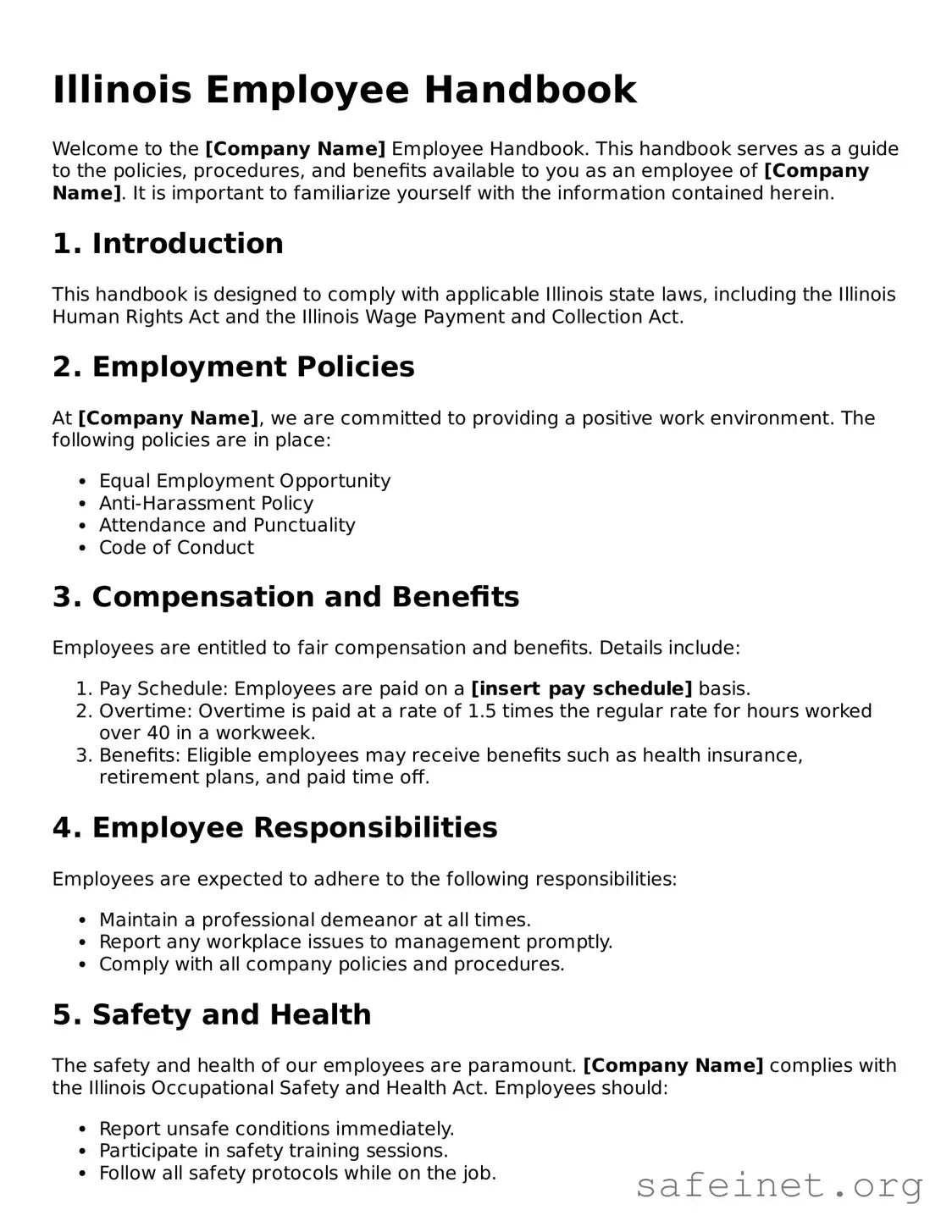
Creating a comprehensive employee handbook is a crucial step for any organization in Illinois. This document serves as a vital resource for both employers and employees, outlining workplace policies, procedures, and expectations. The Illinois Employee Handbook form encompasses various essential topics, including workplace conduct, attendance policies, and employee benefits. It also addresses legal obligations, such as anti-discrimination laws and workplace safety regulations, ensuring that both parties understand their rights and responsibilities. Furthermore, the handbook can cover disciplinary procedures, grievance processes, and guidelines for performance evaluations. By providing clear and accessible information, the employee handbook helps foster a positive work environment and promotes compliance with state and federal regulations.
Illinois Employee Handbook
Welcome to the [Company Name] Employee Handbook. This handbook serves as a guide to the policies, procedures, and benefits available to you as an employee of [Company Name]. It is important to familiarize yourself with the information contained herein.
1. Introduction
This handbook is designed to comply with applicable Illinois state laws, including the Illinois Human Rights Act and the Illinois Wage Payment and Collection Act.
2. Employment Policies
At [Company Name], we are committed to providing a positive work environment. The following policies are in place:
3. Compensation and Benefits
Employees are entitled to fair compensation and benefits. Details include:
4. Employee Responsibilities
Employees are expected to adhere to the following responsibilities:
5. Safety and Health
The safety and health of our employees are paramount. [Company Name] complies with the Illinois Occupational Safety and Health Act. Employees should:
6. Acknowledgment of Receipt
All employees are required to sign an acknowledgment form confirming receipt of this handbook. Please complete the following:
I, [Employee Name], acknowledge that I have received the [Company Name] Employee Handbook and understand the policies outlined within.
Employee Signature: _______________________ Date: _______________
| Fact Name | Description |
|---|---|
| Purpose | The Illinois Employee Handbook serves as a guide for employees regarding company policies, procedures, and expectations. |
| Legal Requirement | While not legally required, providing an employee handbook is considered a best practice in Illinois. |
| Governing Laws | The handbook should align with Illinois state laws, including the Illinois Human Rights Act and the Illinois Wage Payment and Collection Act. |
| Content Guidelines | It should include sections on workplace conduct, anti-discrimination policies, and employee benefits. |
| Updates | Employers should regularly update the handbook to reflect changes in laws or company policies. |
| Distribution | Handbooks should be distributed to all employees, ideally during onboarding or orientation. |
| Acknowledgment | Employees should sign an acknowledgment form to confirm they have received and understood the handbook. |
| Confidentiality | Employers must ensure that the handbook maintains confidentiality regarding sensitive company information. |
| Legal Disclaimer | A disclaimer stating that the handbook is not a contract can help protect the employer from liability. |
Completing the Illinois Employee Handbook form is an essential step in ensuring that you have all necessary information organized. Follow these steps carefully to fill out the form accurately.
By following these steps, you will ensure that your Employee Handbook form is filled out correctly and submitted in a timely manner.
What is the Illinois Employee Handbook form?
The Illinois Employee Handbook form is a document designed to help employers outline their policies and procedures for employees. It serves as a guide that communicates important information about workplace rules, benefits, and expectations. By providing this handbook, employers ensure that employees have access to essential information about their rights and responsibilities at work.
Why is it important to have an Employee Handbook?
An Employee Handbook is crucial for several reasons. First, it sets clear expectations for behavior and performance, which can help prevent misunderstandings. Second, it can protect the company from legal issues by ensuring compliance with state and federal laws. Lastly, it fosters a positive workplace culture by promoting transparency and open communication between employees and management.
Who should receive a copy of the Employee Handbook?
All employees should receive a copy of the Employee Handbook, whether they are full-time, part-time, or temporary workers. It is important that every employee understands the policies and procedures that apply to them. Employers should also consider providing a copy to new hires during their onboarding process to ensure they start with a clear understanding of the company’s expectations.
How often should the Employee Handbook be updated?
The Employee Handbook should be reviewed and updated regularly, at least once a year. Changes in laws, company policies, or workplace culture can necessitate updates. Regular reviews help ensure that the information remains accurate and relevant. Employers should also communicate any changes to employees promptly, so everyone is aware of the latest policies.
What should be included in the Employee Handbook?
An effective Employee Handbook should include several key components. These may consist of an introduction to the company, an overview of employment policies, information about benefits and compensation, guidelines for conduct and discipline, and procedures for reporting issues. Additionally, including sections on equal employment opportunity, workplace safety, and anti-harassment policies is essential to promote a respectful and safe work environment.
Incomplete Information: Many individuals fail to fill out all required fields. Leaving sections blank can lead to misunderstandings or delays.
Incorrect Personal Details: Entering wrong names, addresses, or contact information can create confusion. Always double-check for accuracy.
Not Reading the Handbook: Skimming through the handbook without understanding its contents can result in missed important policies or procedures.
Ignoring Signature Requirements: Some people forget to sign the form. A signature is often necessary to confirm acknowledgment of the handbook.
Failure to Update Information: Employees sometimes neglect to update their information after changes, such as a new address or phone number.
Misunderstanding Company Policies: Misinterpretation of policies can lead to non-compliance. It’s crucial to ask questions if anything is unclear.
Submitting Late: Delaying submission of the form can create issues with HR. Timeliness is key to ensuring compliance with company procedures.
Not Keeping a Copy: Failing to retain a copy of the completed form can be problematic. Always keep a record for personal reference.
Ignoring Updates: Some employees do not pay attention to updates made to the handbook. Staying informed about changes is essential for compliance.
The Illinois Employee Handbook is a vital document for any employer in the state, providing essential guidelines and policies for employees. Alongside this handbook, several other forms and documents can help ensure clarity and compliance within the workplace. Below is a list of commonly used forms that complement the Employee Handbook.
Utilizing these forms in conjunction with the Illinois Employee Handbook can help create a well-structured and supportive work environment. Each document plays a specific role in fostering clear communication and ensuring compliance with legal requirements, ultimately benefiting both employees and employers.
The Illinois Employee Handbook serves as a foundational document for employers, outlining workplace policies and expectations. It shares similarities with the Employee Manual, which also provides guidance on company policies, procedures, and employee rights. Both documents aim to ensure that employees understand their roles and responsibilities, fostering a positive work environment. While the Employee Handbook is often more comprehensive, the Employee Manual may be more concise and focused on day-to-day operations.
Another document that aligns closely with the Illinois Employee Handbook is the Workplace Safety Policy. This policy outlines the safety measures and protocols that employees must follow to ensure a safe working environment. Like the Employee Handbook, it emphasizes the importance of compliance and provides details on reporting unsafe conditions. Both documents work together to promote a culture of safety and accountability within the organization.
The Code of Conduct is another related document. This code establishes the behavioral expectations for employees, detailing acceptable and unacceptable conduct in the workplace. It complements the Employee Handbook by providing specific guidelines on professionalism, ethics, and respect among colleagues. Together, they help to cultivate a respectful and productive workplace culture.
The Job Description document is also similar to the Illinois Employee Handbook. Job descriptions outline the specific duties and responsibilities associated with each position within the company. While the Employee Handbook provides an overview of policies, the Job Description offers detailed expectations for individual roles. Both documents are essential for aligning employee performance with organizational goals.
Additionally, the Employee Benefits Guide is closely related to the Employee Handbook. This guide details the benefits available to employees, such as health insurance, retirement plans, and paid time off. While the Employee Handbook may reference these benefits, the Employee Benefits Guide provides in-depth information that helps employees understand their options and make informed decisions.
The Anti-Discrimination Policy is another important document that parallels the Illinois Employee Handbook. This policy outlines the company’s commitment to providing a workplace free from discrimination and harassment. It provides employees with clear information on their rights and the procedures for reporting violations. Both documents reinforce the organization’s dedication to diversity and inclusion.
The Performance Review Policy is similar in that it outlines the process for evaluating employee performance. This policy details how reviews are conducted, the criteria used, and the frequency of evaluations. By including this information in the Employee Handbook, employers ensure that employees are aware of how their performance will be assessed and the importance of feedback in their professional development.
The Confidentiality Agreement is another document that often accompanies the Employee Handbook. This agreement outlines the expectations regarding the handling of sensitive company information. It emphasizes the importance of maintaining confidentiality and the consequences of breaches. Together, these documents protect both the company’s interests and the privacy of employees.
Lastly, the Grievance Policy is similar to the Illinois Employee Handbook as it provides a framework for employees to voice concerns or complaints. This policy outlines the steps employees should take if they feel their rights have been violated or if they have issues with workplace conditions. It complements the Employee Handbook by ensuring that employees know their rights and the processes available to seek resolution.
When filling out the Illinois Employee Handbook form, it's essential to approach the task with care. Here are ten important do's and don'ts to keep in mind:
Many people have misunderstandings about the Illinois Employee Handbook form. Here are some common misconceptions and clarifications to help you understand this important document.
This is false. While not legally required, having an Employee Handbook is highly recommended as it helps set clear expectations and guidelines for employees.
Not true. Each handbook can be tailored to fit the specific needs and culture of the organization, though certain policies are typically included.
This is incorrect. Laws and company policies change, so it’s crucial to review and update the handbook regularly to stay compliant and relevant.
This is a misunderstanding. Employees should read the handbook to understand their rights and responsibilities within the company.
This is misleading. While a handbook can include various policies, it should focus on workplace-related topics to remain effective and appropriate.
This is not entirely accurate. While a well-written handbook can help mitigate risks, it cannot provide complete protection against legal claims.
This is false. Employees have the right to voice concerns or challenge policies, and open communication is encouraged.
This is incorrect. Digital handbooks are just as valid as printed versions, as long as they are accessible to all employees.
When filling out and using the Illinois Employee Handbook form, keep these key takeaways in mind: