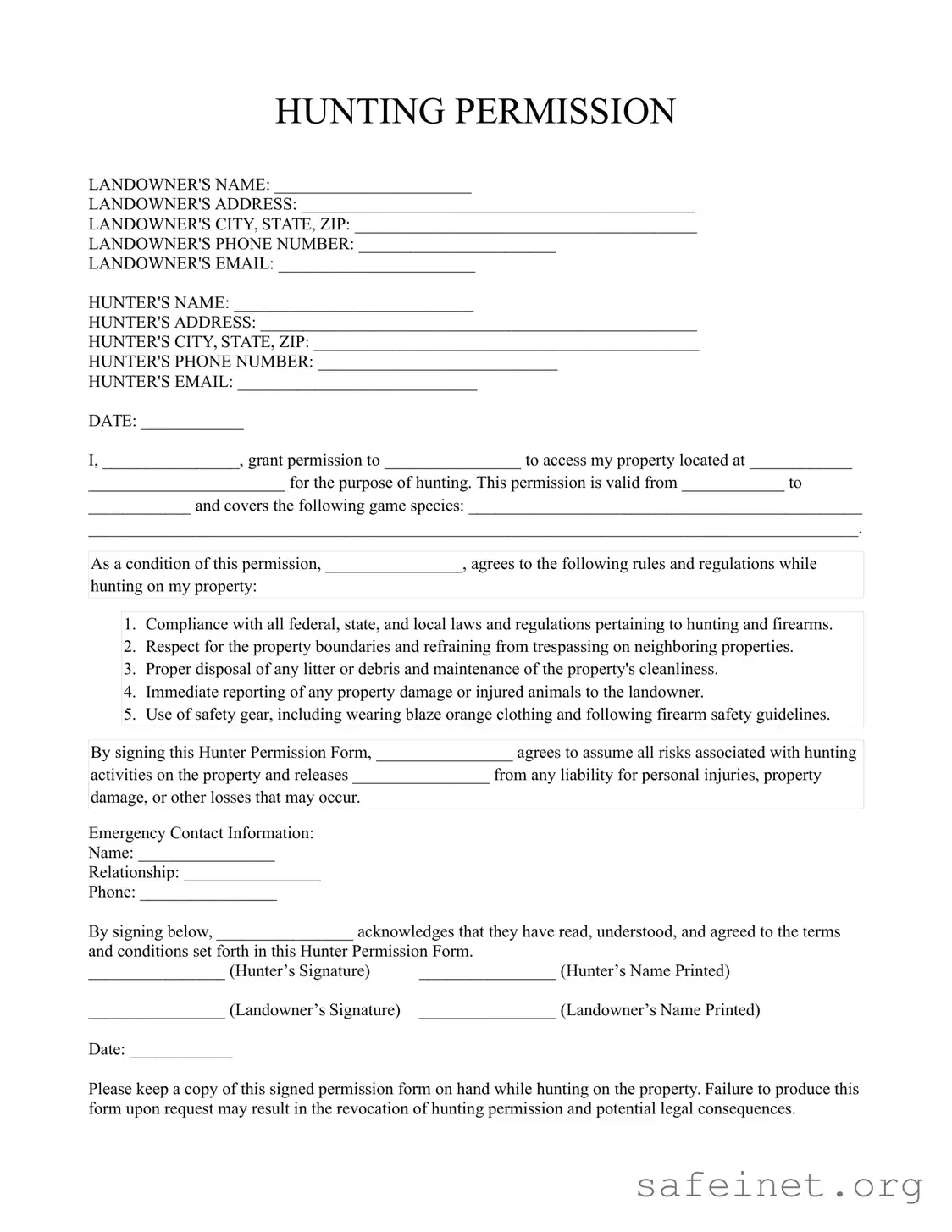
The Hunter Permission form serves as an important document that outlines the agreement between a landowner and a hunter. This form includes essential details such as the names and contact information of both parties, the location of the property, and the specific dates during which hunting is permitted. Additionally, it specifies the game species that can be hunted, ensuring clarity on what is allowed. The form also lists a series of rules and regulations that the hunter must follow, which include compliance with all relevant laws, respect for property boundaries, and proper waste disposal. Safety is emphasized, requiring the use of safety gear and adherence to firearm safety guidelines. By signing the form, the hunter accepts responsibility for any risks associated with hunting on the property and releases the landowner from liability for any injuries or damages that may occur. Emergency contact information is also included to ensure that assistance can be reached if needed. It is crucial for hunters to keep a copy of the signed permission form while on the property, as failure to produce it may lead to revocation of permission and potential legal consequences.

| Fact Name | Description |
|---|---|
| Landowner Information | The form requires the landowner's name, address, city, state, ZIP, phone number, and email. |
| Hunter Information | Hunters must provide their own name, address, city, state, ZIP, phone number, and email. |
| Permission Grant | The landowner grants permission for the hunter to access their property for hunting purposes. |
| Validity Period | The permission is valid for a specified period, which must be indicated on the form. |
| Game Species | The form allows the landowner to specify which game species the hunter is permitted to pursue. |
| Rules and Regulations | The hunter agrees to follow specific rules, including compliance with laws and respect for property boundaries. |
| Liability Release | By signing, the hunter assumes all risks and releases the landowner from liability for injuries or damages. |
| Emergency Contact | Hunters must provide emergency contact information, including the name, relationship, and phone number. |
| Signature Requirement | Both the hunter and landowner must sign the form to validate the permission granted. |
| Legal Consequences | Failure to produce the signed form while hunting may lead to revocation of permission and potential legal issues. |
Filling out the Hunter Permission form is an important step in ensuring that both the landowner and the hunter are clear about the terms of access to the property for hunting purposes. After completing the form, both parties will have a signed document that outlines the rules and regulations, as well as the responsibilities involved. Follow these steps to fill out the form correctly.
What is the purpose of the Hunter Permission form?
The Hunter Permission form serves as a legal agreement between a landowner and a hunter. It grants the hunter permission to access the landowner's property for hunting purposes. This document outlines the terms and conditions of the permission, ensuring that both parties understand their rights and responsibilities during the hunting period.
Who needs to sign the Hunter Permission form?
Both the landowner and the hunter must sign the Hunter Permission form. The landowner provides consent for the hunter to use their property, while the hunter acknowledges and agrees to the rules and regulations set forth in the document. Signatures from both parties are essential to validate the agreement.
What information is required on the form?
The form requires several key pieces of information. The landowner must provide their name, address, phone number, and email. Similarly, the hunter must include their name, address, phone number, and email. Additionally, the form asks for the specific dates the permission is valid and the types of game species that may be hunted.
How long is the permission valid?
The permission granted by the landowner is valid for the specific dates outlined in the form. Both the start and end dates must be clearly stated. If the hunter wishes to extend their hunting period, they will need to obtain a new permission form from the landowner.
What rules must the hunter follow while on the property?
The form outlines several important rules that the hunter must adhere to while on the property. These include compliance with all hunting laws, respect for property boundaries, proper disposal of litter, immediate reporting of any property damage or injured animals, and the use of safety gear. Following these rules helps ensure a safe and respectful hunting experience.
What happens if the hunter violates the rules?
If the hunter violates any of the rules stated in the form, the landowner has the right to revoke the hunting permission. Violations may also lead to legal consequences, depending on the severity of the infraction. It is crucial for the hunter to understand and follow the guidelines to avoid such outcomes.
What is the liability clause in the form?
The liability clause in the Hunter Permission form states that the hunter assumes all risks associated with hunting activities on the property. By signing the form, the hunter releases the landowner from any liability for personal injuries, property damage, or other losses that may occur during the hunting period. This clause protects the landowner from potential legal claims.
Is it necessary to keep a copy of the signed form?
Yes, it is essential for the hunter to keep a copy of the signed Hunter Permission form while hunting on the property. Having this document on hand can help avoid misunderstandings and provide proof of permission if requested by law enforcement or other authorities.
What should the hunter do if they encounter an emergency?
The form includes a section for emergency contact information, which the hunter should fill out. In the event of an emergency, the hunter can reach out to the designated contact person. It is advisable for the hunter to be familiar with the area and have a plan in place for emergencies, including knowing the nearest medical facilities.
Can the Hunter Permission form be modified?
Incomplete Information: Many people forget to fill out all required fields. Missing details such as the landowner's phone number or the hunter's email can lead to confusion later. Ensure every section is completed to avoid delays or misunderstandings.
Incorrect Dates: Filling in the wrong dates for permission can create issues. If the permission is valid from the wrong start date or to the wrong end date, it may lead to unauthorized hunting. Double-check the dates before submitting the form.
Ignoring Rules and Regulations: Some hunters overlook the rules outlined in the form. Not adhering to local laws or property regulations can result in legal trouble. It’s essential to read and understand these conditions thoroughly.
Failure to Keep a Copy: After signing the form, many forget to keep a copy. This can lead to problems if the hunter is asked to present the permission while on the property. Always retain a signed copy for reference during the hunt.
When obtaining permission to hunt on private land, several other forms and documents are often used alongside the Hunter Permission form. These documents help clarify responsibilities and ensure safety for both the landowner and the hunter. Below is a list of commonly used documents.
These documents work together to create a safe and responsible hunting experience. It is essential for both hunters and landowners to understand and complete these forms to ensure compliance with laws and regulations.
The Hunter Permission form is similar to a Property Access Agreement. This document allows someone to enter another person's property for specific purposes, such as hunting, fishing, or other recreational activities. Like the Hunter Permission form, a Property Access Agreement outlines the terms of access, including the duration and any rules that must be followed. It helps protect both the landowner's rights and the visitor's responsibilities, ensuring everyone is clear on what is allowed and what is not.
Another document that shares similarities is the Liability Waiver. This form is often used when someone engages in activities that carry risks, like hunting. It typically states that the participant understands the risks involved and agrees not to hold the landowner responsible for any injuries or damages. The Hunter Permission form includes a similar clause, where the hunter releases the landowner from liability, making both documents crucial for protecting the interests of the landowner.
A third document is the Lease Agreement for Hunting Rights. This legal contract allows hunters to pay for the right to hunt on a specific piece of land for a set period. Like the Hunter Permission form, it specifies the terms of access, including the types of game allowed and any rules that must be followed. While a lease often involves payment, both documents serve to clarify the relationship between the landowner and the hunter.
Lastly, a Release of Liability form is comparable to the Hunter Permission form. This document is often signed before participating in activities that could lead to injury. It informs participants of the risks involved and releases the organizer from liability. In the case of the Hunter Permission form, the hunter agrees to assume all risks associated with hunting on the property, similar to what a Release of Liability does in other contexts.
When filling out the Hunter Permission form, it is essential to follow certain guidelines to ensure clarity and compliance. Below is a list of things you should and shouldn't do.
Understanding the Hunter Permission form is essential for both landowners and hunters. However, there are several misconceptions that can lead to confusion. Here are five common myths:
This is not true. The form serves as a legal agreement between the landowner and the hunter. Without it, there may be misunderstandings about permission and liability.
In fact, the form includes a release of liability. This means that the hunter assumes all risks associated with hunting on the property, protecting the landowner from legal claims.
Permission is typically granted for a specific time period. Therefore, if the hunting dates change or if new hunters are involved, a new form should be completed.
These rules are mandatory. Hunters must comply with all regulations outlined in the form to maintain their permission to hunt on the property.
This form is beneficial for any size property. Whether it’s a vast expanse of land or a small backyard, having a written agreement protects both parties.
Filling out and using the Hunter Permission form is essential for both landowners and hunters. Here are some key takeaways to keep in mind: