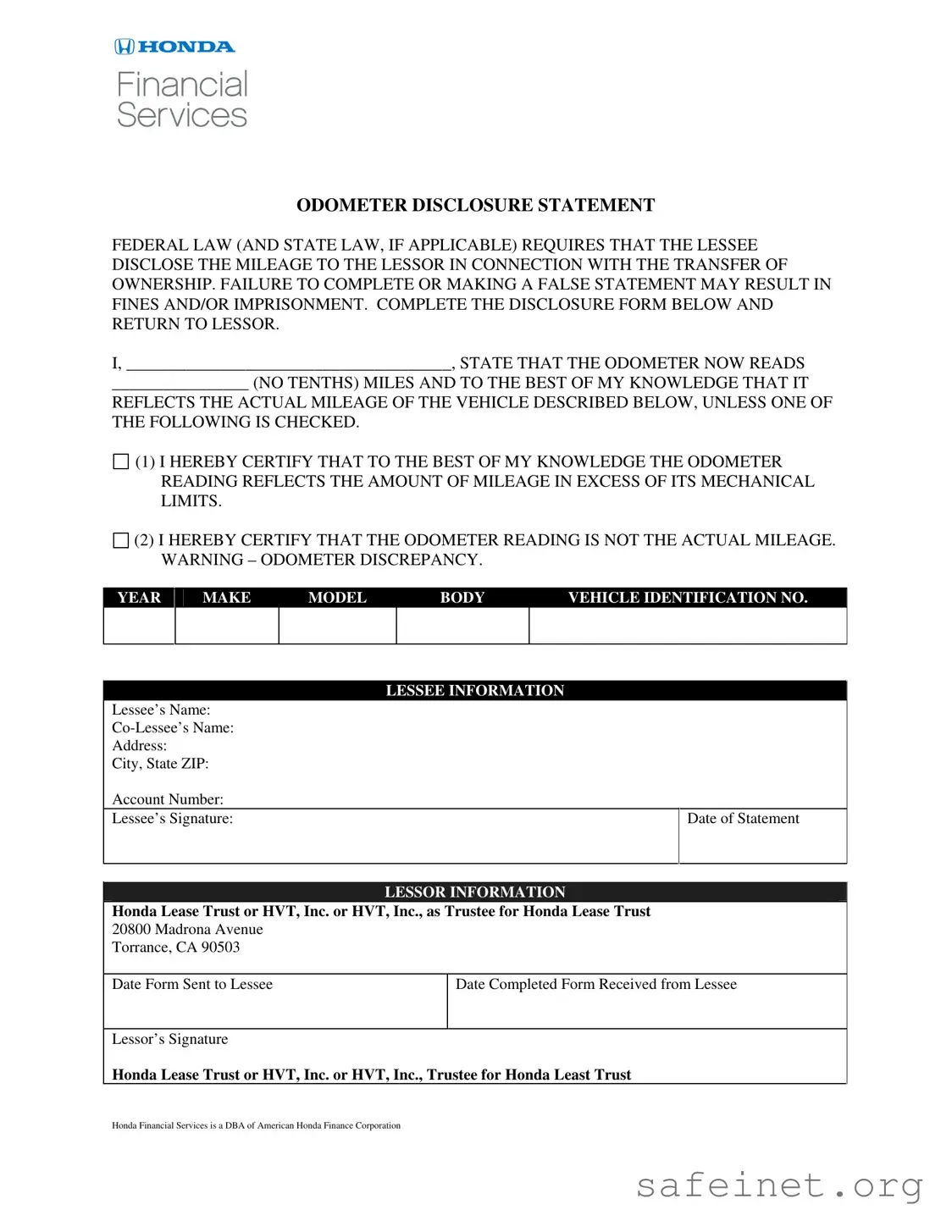
The Honda Odometer Statement form is a crucial document required during the transfer of vehicle ownership, particularly in leasing situations. It serves to disclose the current mileage of the vehicle and ensures compliance with federal and state laws. The form mandates that the lessee accurately report the odometer reading, confirming that it reflects the actual mileage unless specific exceptions apply. These exceptions include cases where the odometer has exceeded its mechanical limits or when the reading does not represent the true mileage. Failing to complete this form accurately can lead to serious consequences, including fines or imprisonment. This statement must be signed by the lessee and returned to the lessor, which is typically Honda Lease Trust or its designated trustee. The form also collects essential information about the vehicle, such as its year, make, model, and vehicle identification number (VIN), alongside the lessee's details. Understanding the importance of this form is vital for anyone involved in a vehicle lease or transfer, as it protects both parties and upholds the integrity of the transaction.
| Fact Name | Description |
|---|---|
| Federal Requirement | The Odometer Disclosure Statement is mandated by federal law, requiring lessees to disclose mileage when transferring ownership. |
| State Law Compliance | In addition to federal law, specific states may have their own regulations governing odometer disclosures. |
| Consequences of False Statements | Providing false information or failing to complete the form can lead to fines and possible imprisonment. |
| Lessee and Lessor Information | The form requires detailed information from both the lessee and the lessor, including names, addresses, and signatures. |
Completing the Honda Odometer Statement form is a straightforward process that requires accurate information about the vehicle's mileage. Once you have filled out the form, it should be returned to the lessor to comply with federal and state laws regarding odometer disclosures. Below are the steps to guide you through filling out the form correctly.
What is the Honda Odometer Statement form?
The Honda Odometer Statement form is a legal document required by federal and state laws. It ensures that the lessee discloses the current mileage of a vehicle to the lessor during a transfer of ownership. This form is essential for confirming the accuracy of the vehicle's odometer reading.
Why is it important to complete the form accurately?
Completing the form accurately is crucial because providing false information can lead to serious consequences, including fines or imprisonment. The form helps protect both the lessee and the lessor by ensuring that the mileage disclosed reflects the actual condition of the vehicle.
What information do I need to provide on the form?
You will need to provide your name, the current odometer reading (without tenths), and details about the vehicle, including its year, make, model, and vehicle identification number (VIN). Additionally, you must sign and date the form to validate your disclosure.
What should I do if the odometer reading is not accurate?
If the odometer reading does not reflect the actual mileage, you must check the option that certifies this discrepancy on the form. It is essential to be honest about the mileage to avoid any legal issues.
Who is considered the lessor in this form?
The lessor refers to Honda Lease Trust or HVT, Inc., acting as the trustee for Honda Lease Trust. This entity is the one to whom the odometer disclosure is submitted.
What happens if I forget to send the form?
If you forget to send the form, it may delay the transfer of ownership process. It is important to complete and return the form promptly to avoid any complications with your lease or vehicle registration.
Can I complete the form electronically?
Typically, the form must be completed in writing and signed. However, check with your lessor to see if they accept electronic submissions or digital signatures, as policies may vary.
What should I do if I have questions about the form?
If you have questions about completing the form, contact Honda Financial Services or your lessor directly. They can provide guidance and clarify any concerns you may have regarding the odometer disclosure process.
Where do I send the completed form?
After completing the form, return it to the lessor at the address provided on the form. Make sure to keep a copy for your records before sending it.
Failing to provide a complete name in the designated space. It is essential to fill in both the lessee's name and co-lessee's name, if applicable.
Not entering the odometer reading correctly. The form specifically requires that the mileage is reported without tenths, which can lead to inaccuracies if not followed.
Neglecting to check the appropriate certification box. The form includes options for indicating whether the odometer reading reflects actual mileage or if there is a discrepancy.
Providing an incorrect vehicle identification number (VIN). The VIN must match the vehicle being described to avoid confusion and potential legal issues.
Leaving out the date of the statement. This date is crucial for record-keeping and establishing the timeline of the transaction.
Omitting the signature of the lessee. A signature is required to validate the statement and confirm that the information provided is accurate.
Failing to include the correct address. The address must be complete, including city, state, and ZIP code, to ensure proper communication.
Not returning the completed form to the lessor in a timely manner. Delays can result in complications with the transfer of ownership and may incur additional penalties.
The Honda Odometer Statement form is crucial for documenting the mileage of a vehicle during ownership transfer. However, it is often accompanied by several other important documents that help facilitate the process. Below is a list of these documents, each serving a specific purpose in the transaction.
Each of these documents plays a vital role in ensuring a smooth and legal transfer of vehicle ownership. Understanding their significance can help both buyers and sellers navigate the process more effectively.
The Vehicle Title Transfer form is similar to the Honda Odometer Statement in that both documents are essential for the transfer of vehicle ownership. When you sell or transfer a vehicle, the title must be updated to reflect the new owner. This form requires the seller to disclose the odometer reading at the time of transfer, ensuring that the new owner is aware of the vehicle's mileage. Just like the Odometer Statement, failure to provide accurate information can lead to legal consequences.
The Bill of Sale serves as another comparable document. It acts as a receipt for the transaction between the buyer and seller. This document typically includes the vehicle's odometer reading, which helps confirm the mileage at the time of sale. Both the Bill of Sale and the Odometer Statement protect the interests of both parties by documenting key details of the transaction, including any discrepancies in mileage.
The Vehicle Registration form is also relevant here. When you register a vehicle, you must provide details about its mileage. This form helps state authorities keep track of vehicle ownership and mileage records. Like the Odometer Statement, it requires accurate reporting to prevent fraud and ensure compliance with state laws.
The Lease Agreement shares similarities with the Honda Odometer Statement, especially regarding mileage disclosure. In a lease, the lessee must agree to certain mileage limits, and the odometer reading at the end of the lease term is crucial for determining any excess mileage fees. Both documents emphasize the importance of accurate mileage reporting to avoid potential penalties.
The odometer disclosure statement in a private sale is another document that parallels the Honda form. This statement is often required in private vehicle sales to confirm the mileage and protect against fraud. It serves the same purpose as the Odometer Statement, ensuring that the buyer is aware of the vehicle's condition and history.
The Affidavit of Odometer Disclosure is similar as well. This legal document is often used in situations where the seller cannot provide a standard odometer disclosure. It requires the seller to affirm the accuracy of the odometer reading under penalty of perjury, much like the Honda Odometer Statement, which stresses the importance of truthfulness in reporting mileage.
The DMV Odometer Disclosure form is another relevant document. Required by many state Departments of Motor Vehicles, this form captures the odometer reading during vehicle sales or transfers. It serves a similar function to the Honda Odometer Statement, ensuring that the mileage is documented correctly to prevent fraud.
The Warranty Deed for vehicles can also be compared. While primarily used in real estate, a warranty deed for a vehicle guarantees that the seller has the right to sell the vehicle and that the odometer reading is accurate. This document, like the Honda Odometer Statement, provides assurance to the buyer regarding the vehicle's history.
The Insurance Declaration page often requires odometer readings for policy purposes. Insurers may need this information to assess the vehicle's value and coverage needs. This requirement parallels the Honda Odometer Statement, where accurate mileage is essential for determining the vehicle's worth and ensuring proper coverage.
Finally, the Vehicle History Report often includes odometer readings as part of its comprehensive analysis of a vehicle's past. This report helps potential buyers make informed decisions. Just like the Honda Odometer Statement, it underscores the importance of accurate mileage reporting to maintain transparency in vehicle transactions.
When filling out the Honda Odometer Statement form, it’s essential to ensure accuracy and compliance. Here’s a helpful list of things to do and avoid:
When dealing with the Honda Odometer Statement form, several misconceptions can lead to confusion. Understanding these can help ensure compliance and avoid potential legal issues. Here are four common misconceptions:
Some individuals believe that completing the Odometer Statement is not mandatory. In reality, federal law, along with applicable state laws, requires lessees to disclose the mileage to lessors during the transfer of ownership. Failing to complete this form can lead to serious penalties.
Many think it is acceptable to estimate the odometer reading. However, the form explicitly states that the reading must reflect the actual mileage of the vehicle. Providing an inaccurate reading, whether intentional or not, can result in fines or even imprisonment.
Some may assume that the lessor holds all responsibility for the accuracy of the odometer statement. In fact, it is the lessee’s responsibility to ensure that the information provided is accurate and truthful. The lessee must sign the statement, confirming the accuracy of the odometer reading.
There is a belief that the Odometer Statement is only necessary for new vehicles. This is incorrect. The form is required for any vehicle transfer, regardless of its age. Proper disclosure is essential for all transactions to maintain transparency and legality.
When filling out and using the Honda Odometer Statement form, it is essential to adhere to specific guidelines to ensure compliance with federal and state laws. Here are some key takeaways:
By following these guidelines, individuals can navigate the process of completing the Honda Odometer Statement form more effectively, ensuring compliance and reducing the risk of potential penalties.