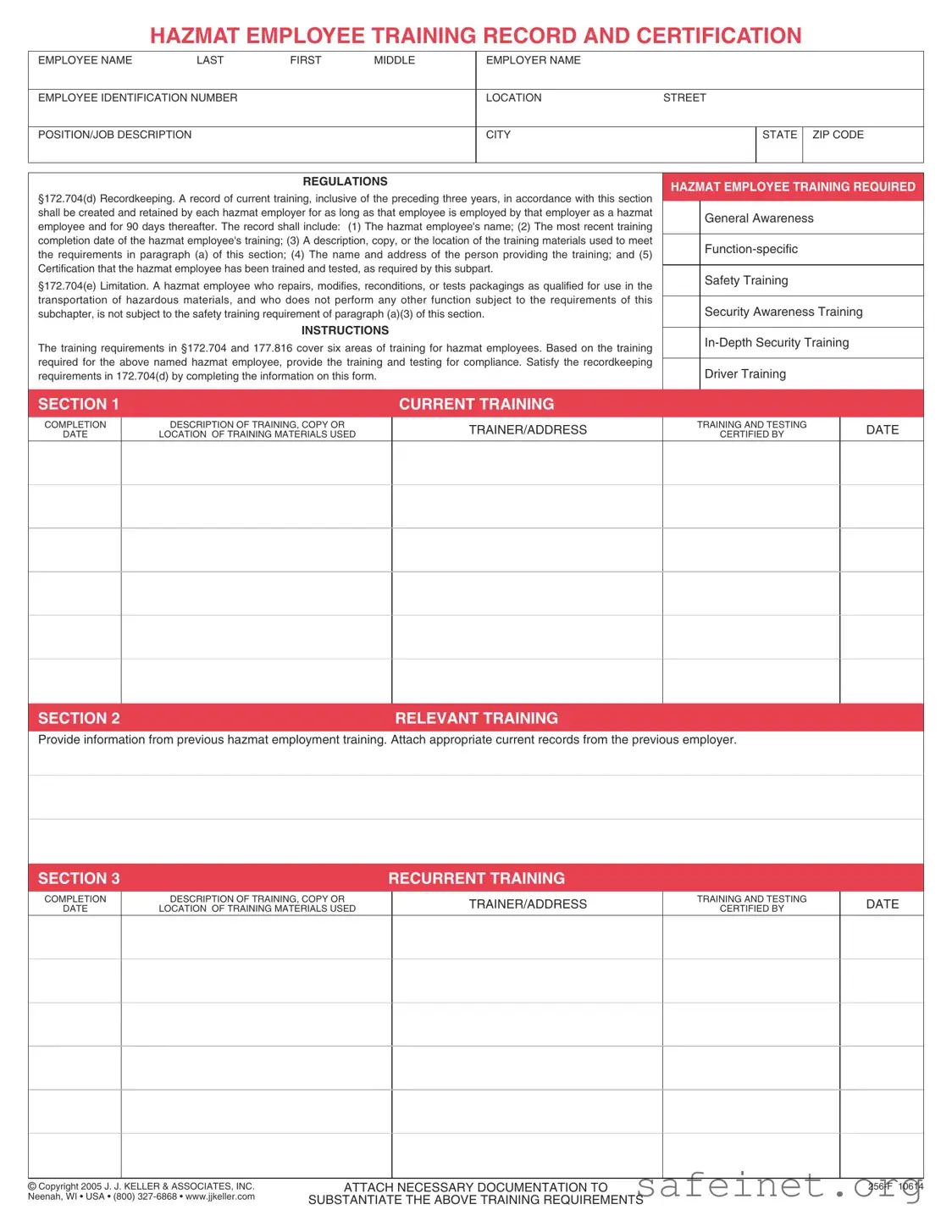
The Hazmat Employee Training Record form plays a crucial role in ensuring that employees handling hazardous materials are properly trained and certified. This form captures essential information about the employee, including their name, employer details, and job description, which helps create a comprehensive training profile. It also outlines the specific training requirements mandated by federal regulations, particularly under sections 172.704(d) and 177.816. Employers must maintain records of training for a minimum of three years, documenting not only the completion dates but also the training materials used and the credentials of the trainers. This recordkeeping is vital for compliance and safety, as it confirms that employees have undergone the necessary training and testing. Additionally, the form includes sections for relevant previous training and recurrent training, ensuring a holistic view of an employee's qualifications. By meticulously filling out this form, employers can demonstrate their commitment to safety and regulatory compliance in the handling of hazardous materials.

| Fact Name | Description |
|---|---|
| Training Record Retention | Hazmat employers must keep training records for each employee for the duration of their employment and for 90 days after termination. |
| Required Information | The training record must include the employee's name, training completion date, training materials description, trainer's information, and a certification of training. |
| Regulatory Basis | This form is governed by regulations under 49 CFR §172.704(d) for recordkeeping and §172.704(e) for safety training limitations. |
| Previous Employment Records | Employers must include relevant training records from previous hazmat employment as part of the documentation process. |
Completing the Hazmat Employee Training Record form is essential for maintaining compliance with training requirements. This form documents the training history of hazmat employees, ensuring that all necessary training and certifications are recorded accurately. Follow these steps to fill out the form correctly.
What is the purpose of the Hazmat Employee Training Record form?
The Hazmat Employee Training Record form is used to document the training that hazmat employees have completed. This record helps employers maintain compliance with federal regulations regarding hazardous materials training. It ensures that employees are properly trained and tested for their roles in handling hazardous materials.
What information is required on the form?
The form requires several key pieces of information, including the employee's name, employer's name, employee identification number, job description, and the most recent training completion date. Additionally, it must include details about the training materials used and the trainer’s information.
How long must training records be kept?
Employers must keep training records for as long as the employee is employed in a hazmat position and for 90 days after their employment ends. This ensures that there is a complete record of training during the employee's tenure.
What types of training must be documented?
The training documented must cover general awareness, function-specific training, safety training, and security awareness training. Each area is crucial for ensuring that employees understand how to safely handle hazardous materials.
What happens if an employee does not meet the training requirements?
If an employee does not complete the required training, they may not be allowed to perform their job duties related to hazardous materials. This could lead to compliance issues for the employer and potential safety risks.
Is there a specific format for the training record?
While the form itself provides a structured format, employers can also attach additional documentation if necessary. The key is to ensure that all required information is clearly presented and easily accessible for compliance checks.
What should be done if an employee has previous hazmat training?
Employers should include information from the employee's previous hazmat training on the form. This may involve attaching relevant records from the previous employer to substantiate the training requirements.
Who is responsible for completing the Hazmat Employee Training Record form?
The responsibility for completing the form typically falls on the employer or the designated training coordinator. They must ensure that all information is accurate and that the form is updated as needed.
What is the significance of the certification section on the form?
The certification section is crucial as it confirms that the hazmat employee has been trained and tested according to regulatory requirements. This certification provides legal protection for the employer and demonstrates compliance with federal regulations.
Failing to include the employee's full name, including last, first, and middle names. This can lead to confusion and misidentification.
Not providing the employer's name accurately. An incorrect employer name may result in issues with recordkeeping and compliance.
Omitting the employee identification number. This number is crucial for tracking training records and ensuring proper documentation.
Leaving out the training completion date. This date is essential for verifying that the employee's training is current.
Not documenting the location of training materials used. This information is necessary for compliance and future reference.
Failing to include the name and address of the trainer. This detail is important for accountability and verification of the training provided.
Neglecting to certify that the employee has been trained and tested. This certification is a critical component of the training record.
Not attaching necessary documentation from previous employers. This can hinder the verification of an employee's past training and qualifications.
The Hazmat Employee Training Record form is an essential document for employers in the hazardous materials field. It ensures that employees receive the necessary training and that records are kept in compliance with federal regulations. Along with this form, several other documents are often utilized to support training and compliance efforts. Below is a list of these documents, along with a brief description of each.
Each of these documents plays a crucial role in maintaining a safe work environment for hazmat employees. Together, they support the overarching goal of compliance with training requirements and the safe handling of hazardous materials.
The Employee Training Record is similar to the Occupational Safety and Health Administration (OSHA) Training Record. This document serves to track the safety training that employees undergo to ensure a safe working environment. Like the Hazmat Employee Training Record, it includes the employee's name, the date of training, and a description of the training materials used. Both records are essential for compliance with federal regulations and help employers maintain a safe workplace by documenting that employees have received the necessary training.
Another document that shares similarities is the First Aid Training Record. This record is vital for organizations that require employees to be trained in first aid procedures. It typically includes the employee's name, training completion date, and a summary of the skills learned. Just as with the Hazmat Employee Training Record, this document ensures that employees are prepared to respond effectively in emergencies, highlighting the importance of proper training and documentation.
The Fire Safety Training Record is also akin to the Hazmat Employee Training Record. It outlines the training employees receive regarding fire safety protocols and emergency evacuation procedures. This document includes similar components, such as the employee's name, training dates, and training content. Both records emphasize the necessity of preparedness and compliance with safety regulations, ensuring that employees are equipped to handle hazardous situations.
In addition, the Environmental Compliance Training Record is comparable. This document tracks training related to environmental regulations and best practices. Like the Hazmat Employee Training Record, it contains the employee's name, completion dates, and details about the training provided. Both records are crucial for ensuring that employees are aware of their responsibilities regarding environmental safety and compliance with applicable laws.
The Forklift Operator Training Record is another document that parallels the Hazmat Employee Training Record. It documents the training that employees receive to operate forklifts safely. This record includes the operator's name, training completion date, and a summary of the skills acquired. Both documents serve to demonstrate compliance with safety standards and ensure that employees are adequately trained to perform their duties safely.
Similarly, the Chemical Safety Training Record is important for organizations that handle hazardous chemicals. This document tracks the training employees receive on safe handling, storage, and disposal of chemicals. It includes the employee's name, training dates, and a description of the training materials used. Like the Hazmat Employee Training Record, it ensures that employees are knowledgeable about safety protocols and regulatory compliance.
Lastly, the Emergency Response Training Record is akin to the Hazmat Employee Training Record. This document outlines the training employees receive for responding to emergencies, such as spills or accidents involving hazardous materials. It includes the employee's name, completion dates, and details about the training provided. Both records are essential for ensuring that employees are prepared to act swiftly and effectively in emergency situations, safeguarding both themselves and others.
Filling out the Hazmat Employee Training Record form is a crucial step in ensuring compliance with safety regulations. Here are some important dos and don'ts to keep in mind:
By following these guidelines, you can help ensure that the Hazmat Employee Training Record form is filled out correctly and thoroughly, contributing to a safer work environment.
Misconception 1: The Hazmat Employee Training Record form is only necessary for new employees.
This form is required for all hazmat employees, not just new hires. It must be maintained for each employee as long as they are employed in a hazmat role and for 90 days after they leave the job.
Misconception 2: The training records do not need to be updated regularly.
Training records must be updated to reflect the most recent training completion date. This ensures compliance with federal regulations and confirms that employees have received the necessary training.
Misconception 3: Any training material can be used without documentation.
It is essential to document the training materials used. This includes a description or location of the materials to verify that they meet regulatory requirements.
Misconception 4: Only the initial training is required; recurrent training is optional.
Recurrent training is mandatory for hazmat employees. This ensures that employees stay current with safety practices and regulatory updates in their field.
Filling out and using the Hazmat Employee Training Record form is crucial for compliance and safety in the transportation of hazardous materials. Here are key takeaways to consider: