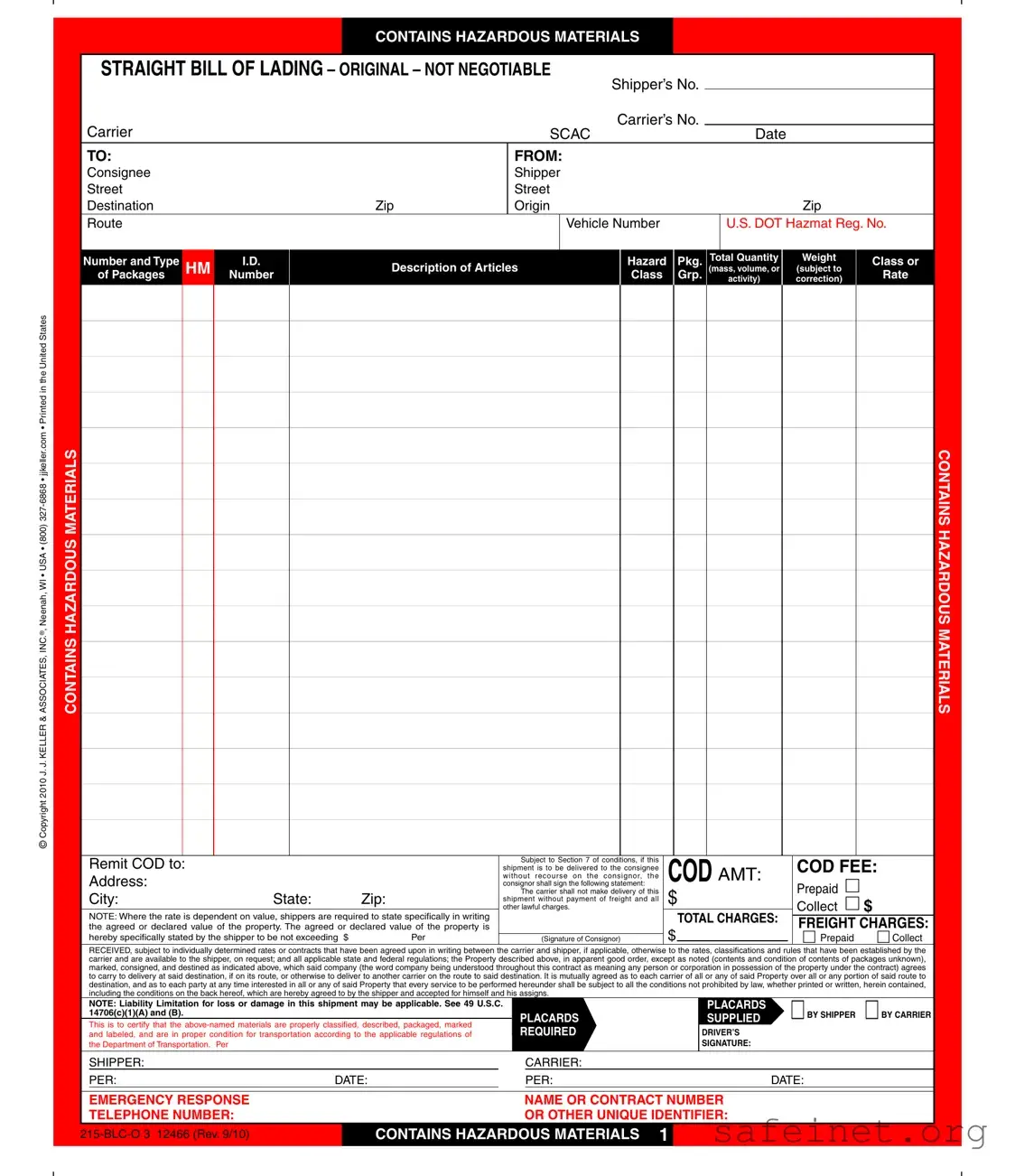
The Hazard Bill of Lading form plays a crucial role in the transportation of hazardous materials, ensuring compliance with federal regulations and protecting both shippers and carriers. This form serves as a receipt and contract between the shipper and carrier, detailing essential information such as the nature of the hazardous materials, the quantity being shipped, and the applicable freight charges. It includes specific sections that outline the responsibilities of both parties, including liability limitations and procedures for filing claims in case of loss or damage. The form also emphasizes the importance of proper classification, packaging, and labeling of hazardous materials, which is vital for safe transport. Additionally, it contains provisions regarding the handling of perishable goods and the consequences of failure to receive shipments. Overall, the Hazard Bill of Lading is not just a regulatory requirement; it is a critical document that facilitates the safe and efficient movement of hazardous materials across the country.

| Fact Name | Description |
|---|---|
| Purpose | The Hazardous Materials Straight Bill of Lading is used to document the transportation of hazardous materials, ensuring compliance with safety regulations. |
| Governing Laws | This bill of lading is governed by federal regulations, including the Hazardous Materials Transportation Act, and applicable state laws. |
| Liability Limitations | The carrier's liability for loss or damage may be limited based on the declared value of the property, as specified in the bill of lading. |
| Emergency Response | Shippers must provide an emergency response contact name and number, ensuring prompt communication in case of an incident during transportation. |
| Signature Requirement | The bill of lading requires signatures from both the shipper and carrier, confirming acceptance of the terms and conditions outlined within. |
Filling out the Hazard Bill of Lading form is an important step in ensuring that hazardous materials are transported safely and legally. After completing the form, it will be submitted to the carrier for processing. Make sure all information is accurate to avoid any delays or issues during transportation.
What is the Hazard Bill of Lading form used for?
The Hazard Bill of Lading form is primarily used for the transportation of hazardous materials. It serves as a receipt for the goods being shipped and outlines the terms and conditions of the shipment. This form ensures that all parties involved are aware of the nature of the materials being transported and the associated risks. It also provides essential information for compliance with federal and state regulations regarding hazardous materials.
What information must be included on the form?
The form requires several key details to be completed. This includes the shipper's and consignee's names and addresses, the description of the hazardous materials, the total quantity and weight of the packages, and any special handling instructions. Additionally, the form must indicate whether the shipment is prepaid or collect, and it should include the carrier's information and any applicable regulatory numbers. Accurate completion of these fields is crucial for the safe and legal transport of hazardous materials.
What are the liability limitations associated with this form?
Liability limitations are specified in the Hazard Bill of Lading form. The carrier is generally liable for loss or damage to the property, but there are exceptions. For instance, the carrier is not liable for losses caused by acts of God, defects in the property, or delays due to requests from the shipper. Additionally, if the shipper declares a lower value for the shipment, the carrier's liability may be limited to that declared value. It's important for shippers to understand these limitations to avoid unexpected issues during transportation.
How should claims for loss or damage be filed?
If a shipment is lost or damaged, claims must be filed in writing with the carrier within nine months of delivery. For export shipments, this timeline applies from the date of delivery at the port of export. If the carrier disallows the claim, the shipper has two years to initiate legal action. Following these guidelines is essential for ensuring that claims are considered and processed appropriately.
Incomplete Information: One common mistake is leaving out essential details. Ensure that all required fields, such as the shipper's and consignee's information, are filled out completely. Missing information can delay the shipment or lead to complications.
Incorrect Hazard Class: Selecting the wrong hazard class for the materials being shipped can lead to serious consequences. Always double-check the classification to ensure compliance with regulations.
Failure to Declare Value: Not stating the agreed or declared value of the property can limit your recovery in case of loss or damage. It’s crucial to provide this information accurately to protect your interests.
Omitting Signatures: A signature from the consignor is often required. Failing to sign the document can render it invalid, causing delays in the shipping process.
Improper Packaging: Hazardous materials must be packaged according to specific regulations. Inadequate packaging can result in penalties and unsafe conditions during transportation.
Ignoring Regulations: Not adhering to federal and state regulations can lead to legal issues. Familiarize yourself with the applicable laws to ensure compliance when filling out the form.
The Hazard Bill of Lading form is crucial for the transportation of hazardous materials. It serves as a legal document that outlines the details of the shipment, ensuring compliance with federal regulations. Alongside this form, several other documents are often required to facilitate safe and legal transport. Below is a list of these essential forms and documents.
Understanding these documents and their roles in the transportation of hazardous materials is essential for compliance and safety. Proper documentation not only protects the parties involved but also ensures the safety of the public and the environment. Always verify that all necessary documents are in order before shipment to avoid legal complications and ensure a smooth transportation process.
The Hazard Bill of Lading form shares similarities with the Uniform Commercial Code (UCC) Bill of Lading. Both documents serve as contracts between a shipper and a carrier, detailing the terms of transport for goods. Each form outlines the responsibilities of both parties and specifies the conditions under which goods are to be transported. The UCC Bill of Lading emphasizes the rights of the holder, including the ability to transfer ownership, while the Hazard Bill of Lading focuses on the specific regulations and safety measures necessary for hazardous materials.
Another comparable document is the Air Waybill. Like the Hazard Bill of Lading, the Air Waybill is a contract between the shipper and the carrier, but it is specifically used for air transport. Both documents require detailed descriptions of the goods being transported, including their weight and classification. However, the Air Waybill typically does not confer ownership rights to the holder, while the Hazard Bill of Lading does, provided it meets certain conditions.
The Ocean Bill of Lading is also similar in nature. This document is used for maritime transport and serves as both a receipt for the goods and a contract for their carriage. Both the Ocean Bill and the Hazard Bill of Lading require specific information about the goods, including their hazardous nature. However, the Ocean Bill of Lading is governed by maritime law, while the Hazard Bill of Lading is subject to different regulatory standards for hazardous materials.
The Freight Bill is another relevant document. While it primarily serves as a request for payment for transportation services, it is often used in conjunction with a Bill of Lading. Both documents contain details about the shipment, including the type of goods and their destination. However, the Freight Bill focuses on the financial aspects of the transaction, whereas the Hazard Bill of Lading emphasizes safety and compliance with regulations regarding hazardous materials.
The Consignment Note is similar in that it serves as a record of the shipment and outlines the responsibilities of the parties involved. Both documents provide essential information about the goods being transported, including their description and destination. However, the Consignment Note is typically used in less formal shipping arrangements and may not include the same level of detail regarding hazardous materials as the Hazard Bill of Lading.
The Delivery Order is another document that shares characteristics with the Hazard Bill of Lading. Both serve to authorize the release of goods to the consignee upon arrival. They require specific details about the shipment, such as the consignee's information and the nature of the goods. However, the Delivery Order is often issued after the Bill of Lading and is primarily concerned with the final delivery of goods rather than the terms of transport.
The Packing List is also related to the Hazard Bill of Lading. Both documents detail the contents of a shipment, including quantities and descriptions. The Packing List, however, is more focused on the specifics of the items being shipped rather than the contractual obligations between the shipper and carrier. While the Hazard Bill of Lading includes safety considerations for hazardous materials, the Packing List does not.
Finally, the Certificate of Origin is a document that can complement the Hazard Bill of Lading. Both are used in international shipping and contain essential details about the goods. However, the Certificate of Origin specifically verifies the country of manufacture, which may be necessary for customs clearance. In contrast, the Hazard Bill of Lading focuses on the safe transport of hazardous materials and compliance with relevant regulations.
When filling out the Hazard Bill of Lading form, it’s essential to follow certain guidelines to ensure accuracy and compliance. Below is a list of things to do and avoid.
By adhering to these guidelines, you can help ensure a smooth shipping process for hazardous materials.
Understanding the Hazard Bill of Lading form can be challenging, and several misconceptions often arise. Here are four common misunderstandings:
This form is specifically designed for shipments that contain hazardous materials, but it can also be used for non-hazardous goods. It serves as a comprehensive document for various types of shipments, ensuring all necessary information is documented.
While the carrier does take responsibility for the property during transit, their liability is limited. Specific conditions outlined in the form restrict their responsibility in cases of acts of God or other unforeseen events.
Shippers must provide an accurate and agreed-upon value for the property. If a lower value is declared than the actual value, this can limit the amount recoverable in case of loss or damage.
The carrier is not obligated to deliver the shipment without payment of freight and other lawful charges. If payment has not been made, the carrier can hold the shipment until all charges are settled.
When filling out and using the Hazard Bill of Lading form, there are several important points to keep in mind. Understanding these can help ensure the safe and compliant transportation of hazardous materials.