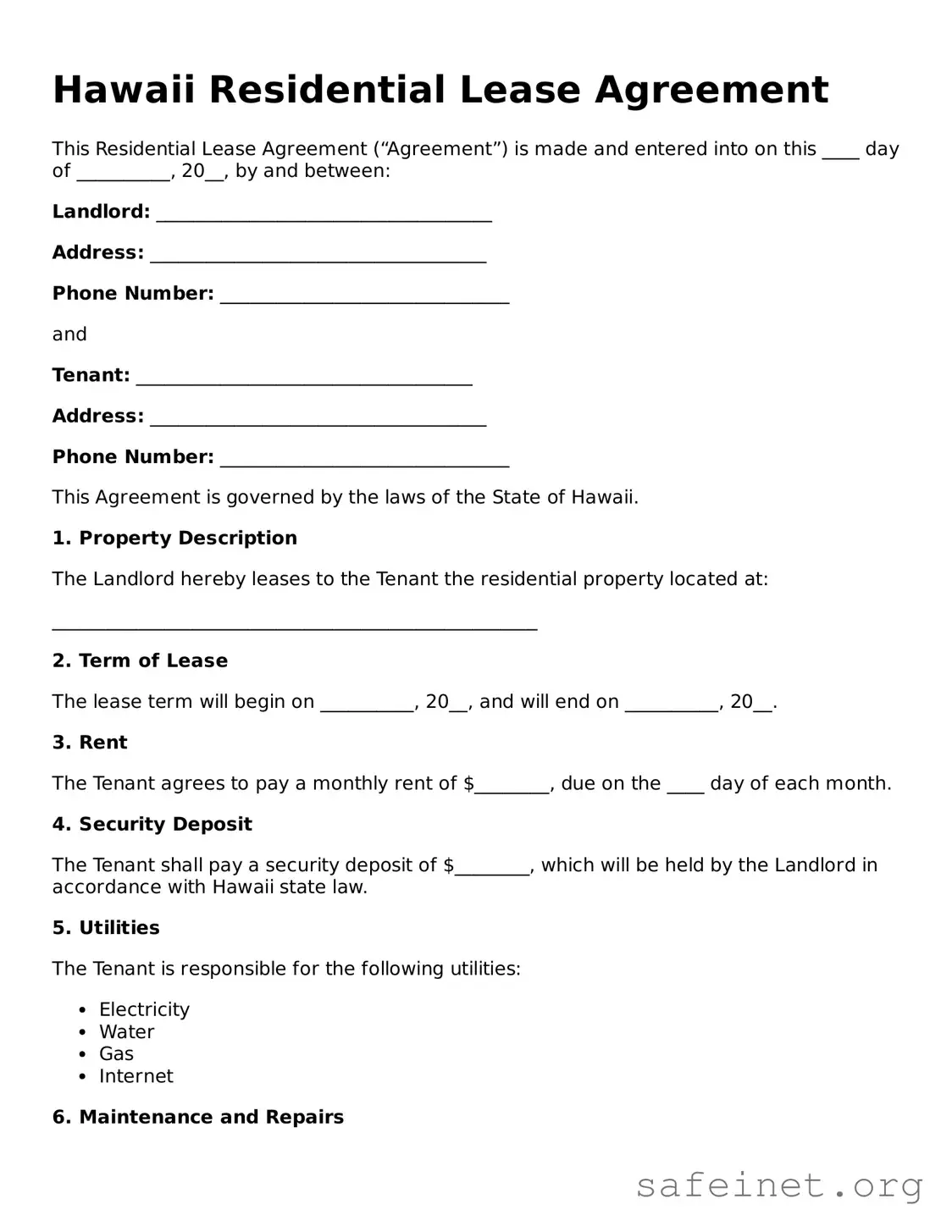
The Hawaii Residential Lease Agreement is a crucial document for both landlords and tenants, establishing the terms of the rental relationship in a clear and legally binding manner. This agreement outlines essential details such as the duration of the lease, the amount of rent due, and the responsibilities of both parties regarding property maintenance and repairs. It also addresses important provisions like security deposits, late fees, and rules for terminating the lease. Understanding the nuances of this agreement is vital for ensuring compliance with state laws and protecting the rights of both landlords and tenants. By clearly defining expectations and obligations, the Hawaii Residential Lease Agreement helps to prevent disputes and fosters a more harmonious living environment. Whether you are a first-time renter or an experienced property owner, familiarizing yourself with this form can significantly impact your rental experience.
Hawaii Residential Lease Agreement
This Residential Lease Agreement (“Agreement”) is made and entered into on this ____ day of __________, 20__, by and between:
Landlord: ____________________________________
Address: ____________________________________
Phone Number: _______________________________
and
Tenant: ____________________________________
Address: ____________________________________
Phone Number: _______________________________
This Agreement is governed by the laws of the State of Hawaii.
1. Property Description
The Landlord hereby leases to the Tenant the residential property located at:
____________________________________________________
2. Term of Lease
The lease term will begin on __________, 20__, and will end on __________, 20__.
3. Rent
The Tenant agrees to pay a monthly rent of $________, due on the ____ day of each month.
4. Security Deposit
The Tenant shall pay a security deposit of $________, which will be held by the Landlord in accordance with Hawaii state law.
5. Utilities
The Tenant is responsible for the following utilities:
6. Maintenance and Repairs
The Tenant agrees to keep the property clean and in good condition. The Tenant must notify the Landlord of any necessary repairs.
7. Pets
Pets are allowed / not allowed (circle one). If allowed, a pet deposit of $________ is required.
8. Termination
Either party may terminate this Agreement by providing a written notice of ____ days prior to the intended termination date.
9. Governing Law
This Agreement will be governed by the laws of the State of Hawaii.
10. Signatures
By signing below, both parties agree to the terms of this Agreement:
Landlord Signature: ___________________________ Date: _____________
Tenant Signature: ____________________________ Date: _____________
| Fact Name | Details |
|---|---|
| Governing Law | The Hawaii Residential Lease Agreement is governed by the laws of the State of Hawaii. |
| Parties Involved | The agreement involves a landlord and a tenant. |
| Lease Duration | Leases can be for a fixed term or month-to-month, as specified in the agreement. |
| Security Deposit | The maximum security deposit allowed is one month's rent, unless otherwise agreed. |
| Rent Payment | Rent is typically due on the first day of each month, unless stated otherwise. |
| Maintenance Responsibilities | The lease should outline the maintenance responsibilities of both the landlord and the tenant. |
| Termination Notice | A written notice is required for lease termination, with specific notice periods depending on the lease type. |
| Late Fees | Late fees may be imposed if rent is not paid on time, but must be specified in the lease. |
| Utilities | The lease should clarify which utilities are the responsibility of the tenant and which are covered by the landlord. |
| Alterations | Any alterations to the property typically require written consent from the landlord. |
After obtaining the Hawaii Residential Lease Agreement form, it is essential to complete it accurately to ensure that all parties involved understand their rights and responsibilities. Follow these steps to fill out the form correctly.
Once the form is completed and signed, it should be distributed to all parties involved for their records. Ensure that everyone retains a copy for future reference.
What is a Hawaii Residential Lease Agreement?
A Hawaii Residential Lease Agreement is a legally binding document between a landlord and a tenant. It outlines the terms and conditions for renting a residential property in Hawaii. This agreement typically includes details such as rent amount, payment due dates, lease duration, and responsibilities of both parties.
What are the key components of the lease agreement?
Key components of a Hawaii Residential Lease Agreement include the names of the landlord and tenant, property address, lease term, rental amount, security deposit details, maintenance responsibilities, and rules regarding pets or smoking. It may also cover termination procedures and notice requirements.
How long is a typical lease term in Hawaii?
Lease terms in Hawaii can vary. Commonly, leases are signed for one year, but shorter or longer terms are also possible. Month-to-month agreements are available as well, allowing for more flexibility in rental arrangements.
Is a security deposit required?
Yes, landlords in Hawaii often require a security deposit. The maximum amount cannot exceed one month's rent for unfurnished properties and can be up to one and a half months' rent for furnished properties. This deposit serves as protection for the landlord against potential damages or unpaid rent.
Can a landlord increase rent during the lease term?
Generally, a landlord cannot increase rent during the lease term unless the lease agreement specifically allows for it. For month-to-month leases, landlords must provide a written notice of at least 45 days before the increase takes effect.
What happens if a tenant wants to terminate the lease early?
If a tenant wishes to terminate the lease early, they should review the lease agreement for any clauses regarding early termination. Often, tenants may be required to provide written notice and may incur penalties or fees. In some cases, finding a replacement tenant may be an option to avoid penalties.
Are there any specific laws regarding eviction in Hawaii?
Yes, Hawaii has specific laws governing the eviction process. Landlords must provide valid reasons for eviction, such as non-payment of rent or violation of lease terms. Proper legal procedures must be followed, including providing written notice and obtaining a court order if necessary.
Can tenants make alterations to the property?
Typically, tenants must obtain written permission from the landlord before making any alterations to the property. This includes painting walls, installing fixtures, or making structural changes. Unauthorized alterations can lead to deductions from the security deposit upon lease termination.
What should a tenant do if there are maintenance issues?
If a tenant encounters maintenance issues, they should promptly notify the landlord in writing. The lease agreement usually outlines the procedure for reporting such issues. Landlords are generally responsible for maintaining the property and must address repair requests in a timely manner.
Incomplete Tenant Information: Many individuals fail to provide all required details for each tenant. This includes full names, contact information, and the number of occupants. Ensure every tenant is listed accurately.
Incorrect Lease Dates: People often make mistakes with the start and end dates of the lease. Double-check these dates to avoid confusion and potential disputes.
Neglecting to Specify Rent Amount: Some forget to clearly state the monthly rent. This can lead to misunderstandings. Clearly define the rent amount and any additional fees.
Ignoring Security Deposit Terms: Failing to outline the security deposit amount and conditions can create issues later. Specify the amount, the conditions for its return, and any deductions that may apply.
Overlooking Maintenance Responsibilities: Many overlook detailing who is responsible for maintenance and repairs. Clearly outline these responsibilities to avoid disputes during the lease term.
When entering into a residential lease agreement in Hawaii, several other forms and documents may be necessary to ensure a smooth rental experience. These documents help clarify the rights and responsibilities of both landlords and tenants, providing legal protections and establishing clear expectations.
Having these documents prepared and organized can facilitate a better rental experience for both landlords and tenants. Clear communication and understanding of each party's obligations lead to a more harmonious living situation.
The Hawaii Rental Application is similar to the Residential Lease Agreement in that both documents are essential for establishing a rental relationship. The rental application is typically completed by prospective tenants before a lease is signed. It collects vital information about the applicant, including employment history, rental history, and references. This information helps landlords assess the suitability of potential tenants, ensuring they choose individuals who will fulfill the terms of the lease agreement.
The Lease Addendum serves as an extension of the Residential Lease Agreement, allowing for additional terms or conditions to be added after the initial lease has been signed. This document can address specific issues that may arise during the lease term, such as pet policies, maintenance responsibilities, or modifications to the property. By utilizing a lease addendum, both landlords and tenants can clarify expectations and responsibilities without needing to create an entirely new lease.
The Notice to Quit is another document related to the Residential Lease Agreement. This formal notice is issued by landlords to tenants when they wish to terminate the lease due to violations, such as non-payment of rent or lease infractions. The Notice to Quit outlines the reasons for termination and provides a timeline for the tenant to vacate the premises. It serves as a crucial step in the eviction process, ensuring that both parties are aware of their rights and obligations.
The Security Deposit Agreement is closely linked to the Residential Lease Agreement, as it outlines the terms under which a security deposit is collected and managed. This document specifies the amount of the deposit, the conditions for its return, and any deductions that may be made for damages or unpaid rent. Clear communication regarding the security deposit helps prevent disputes between landlords and tenants at the end of the lease term.
Finally, the Rent Receipt is a document that complements the Residential Lease Agreement by providing proof of payment. Landlords issue rent receipts to tenants upon receiving rent payments, detailing the amount paid, the date, and the rental period covered. This documentation is vital for both parties, as it helps tenants keep track of their payments and provides landlords with a record of transactions for accounting and legal purposes.
When filling out the Hawaii Residential Lease Agreement form, it's important to be thorough and accurate. Here are some guidelines to consider:
Following these tips can help ensure a smoother leasing process and protect your rights as a tenant.
Understanding the Hawaii Residential Lease Agreement is crucial for both landlords and tenants. However, several misconceptions can lead to confusion. Here are four common misunderstandings:
Being aware of these misconceptions can help tenants and landlords navigate their agreements more effectively and avoid potential disputes.
When filling out and using the Hawaii Residential Lease Agreement form, it’s essential to keep several key points in mind. Here are some takeaways to guide you through the process: