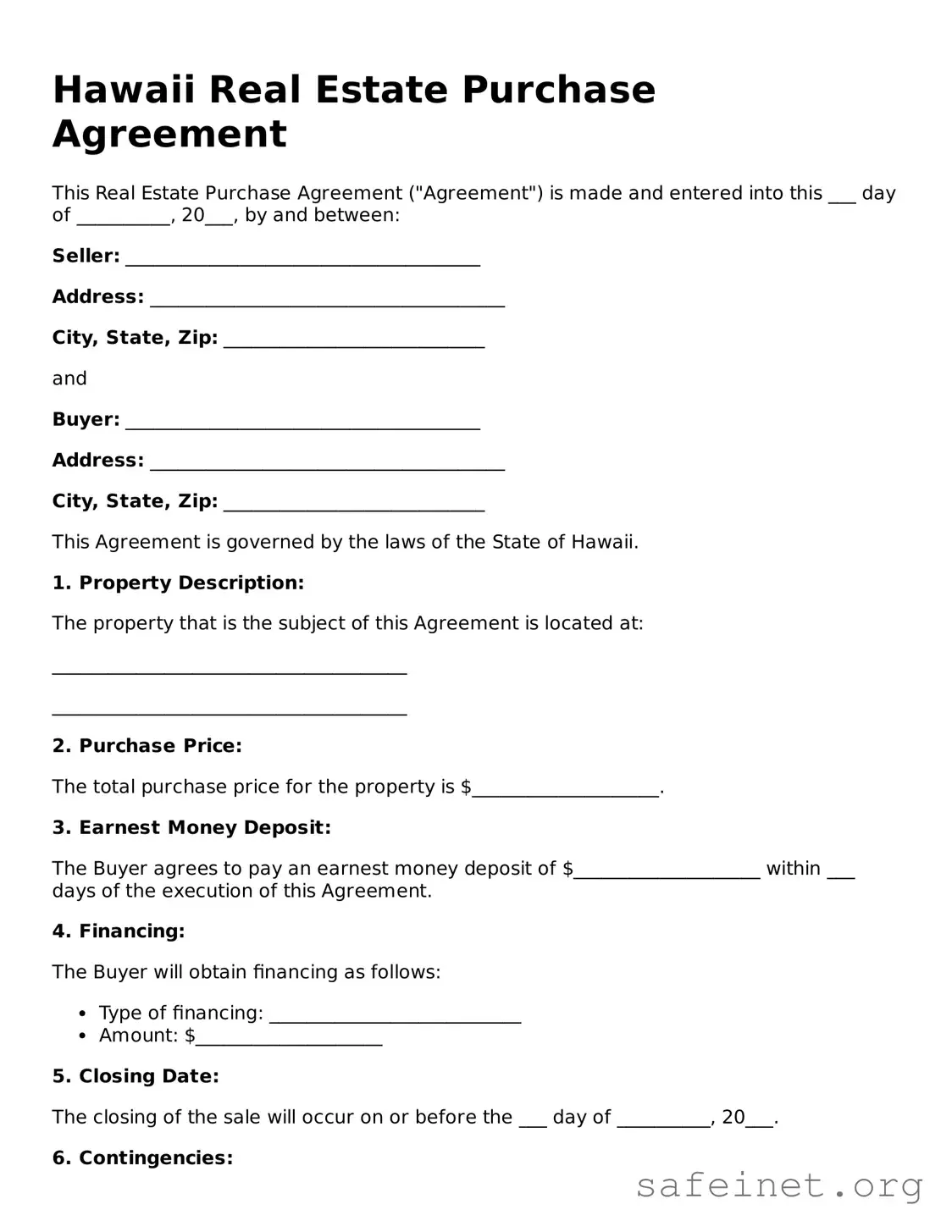
The Hawaii Real Estate Purchase Agreement is a vital document in the property transaction process, serving as a blueprint for both buyers and sellers. This form outlines essential elements such as the purchase price, financing details, and the closing date, ensuring that all parties have a clear understanding of their obligations. Additionally, it addresses contingencies, which are conditions that must be met for the sale to proceed, such as home inspections or securing financing. The agreement also includes provisions for earnest money deposits, which demonstrate the buyer's commitment to the purchase. By incorporating details about property disclosures and any applicable warranties, the form helps protect both parties and facilitates a smoother transaction. Understanding the intricacies of this agreement is crucial for anyone looking to navigate the Hawaii real estate market effectively.
Hawaii Real Estate Purchase Agreement
This Real Estate Purchase Agreement ("Agreement") is made and entered into this ___ day of __________, 20___, by and between:
Seller: ______________________________________
Address: ______________________________________
City, State, Zip: ____________________________
and
Buyer: ______________________________________
Address: ______________________________________
City, State, Zip: ____________________________
This Agreement is governed by the laws of the State of Hawaii.
1. Property Description:
The property that is the subject of this Agreement is located at:
______________________________________
______________________________________
2. Purchase Price:
The total purchase price for the property is $____________________.
3. Earnest Money Deposit:
The Buyer agrees to pay an earnest money deposit of $____________________ within ___ days of the execution of this Agreement.
4. Financing:
The Buyer will obtain financing as follows:
5. Closing Date:
The closing of the sale will occur on or before the ___ day of __________, 20___.
6. Contingencies:
This Agreement is contingent upon the following:
7. Signatures:
By signing below, both parties agree to the terms and conditions set forth in this Agreement.
Seller's Signature: ________________________ Date: __________
Buyer's Signature: ________________________ Date: __________
This Agreement is binding upon the parties and their successors and assigns.
| Fact Name | Description |
|---|---|
| Governing Law | The Hawaii Real Estate Purchase Agreement is governed by the laws of the State of Hawaii. |
| Purpose | This form serves as a legally binding contract between a buyer and a seller for the purchase of real estate in Hawaii. |
| Required Information | Key details such as purchase price, property description, and contingencies must be included in the agreement. |
| Signature Requirement | Both parties must sign the agreement for it to be valid and enforceable. |
Filling out the Hawaii Real Estate Purchase Agreement form is an important step in the home buying process. This document will outline the terms and conditions of the sale, ensuring both parties understand their obligations. Follow these steps carefully to complete the form accurately.
Once the form is completed, both parties should review it carefully. It is advisable to consult with a real estate professional or attorney to ensure everything is in order before moving forward with the transaction.
What is the Hawaii Real Estate Purchase Agreement form?
The Hawaii Real Estate Purchase Agreement form is a legal document that outlines the terms and conditions under which a property is bought and sold in Hawaii. This form serves as a binding contract between the buyer and seller, detailing the purchase price, property description, contingencies, and other essential elements necessary for the transaction. It ensures that both parties understand their rights and obligations throughout the process.
What are the key components of the agreement?
Key components of the Hawaii Real Estate Purchase Agreement include the identification of the buyer and seller, a detailed description of the property, the purchase price, earnest money deposit details, financing terms, and any contingencies such as home inspections or appraisals. Additionally, the agreement specifies the closing date and any disclosures required by law. Each section is crucial for protecting the interests of both parties involved.
Is it necessary to use a real estate agent when completing this form?
While it is not mandatory to use a real estate agent when filling out the Hawaii Real Estate Purchase Agreement, having professional guidance can be beneficial. Agents bring expertise in navigating the complexities of real estate transactions, ensuring that the agreement is correctly filled out and that all legal requirements are met. They can also help negotiate terms and provide valuable market insights.
What happens if one party does not fulfill their obligations?
If one party fails to fulfill their obligations as outlined in the agreement, the other party may have several options. They can seek to enforce the contract, potentially through legal action, or they may negotiate a resolution. The specific remedies available depend on the terms of the agreement and the nature of the breach. It is advisable to consult with a legal professional to understand the best course of action in such situations.
Can the agreement be modified after it is signed?
Yes, the Hawaii Real Estate Purchase Agreement can be modified after it is signed, but any changes must be agreed upon by both parties. Modifications should be documented in writing and signed by both the buyer and seller to ensure clarity and enforceability. This can include changes to the purchase price, closing date, or any contingencies. Clear communication is essential to avoid misunderstandings.
What should buyers and sellers do before signing the agreement?
Before signing the Hawaii Real Estate Purchase Agreement, both buyers and sellers should carefully review the document. It is advisable to understand all terms and conditions fully. Buyers should conduct due diligence, including property inspections and reviewing disclosures. Sellers should ensure that they are providing accurate information about the property. Consulting with a real estate professional or attorney can also provide additional assurance that all aspects of the agreement are understood.
Failing to include the legal names of all parties involved. It’s essential to list the full names as they appear on identification documents.
Not specifying the property address correctly. Ensure the complete and accurate address is provided to avoid confusion.
Overlooking the purchase price. Clearly state the agreed amount to prevent disputes later on.
Neglecting to outline financing details. Include information about how the purchase will be funded, whether through a mortgage or cash.
Leaving out contingencies. These are conditions that must be met for the sale to proceed. Common contingencies include inspections and financing.
Not addressing closing costs. Specify who is responsible for these costs to avoid misunderstandings at closing.
Failing to set a closing date. This date is critical for both parties and should be mutually agreed upon.
Ignoring the disclosure requirements. Sellers must disclose any known issues with the property. This protects both parties.
Not signing the document. All parties must sign the agreement for it to be legally binding.
Forgetting to date the agreement. A date is essential for establishing timelines and deadlines.
When engaging in a real estate transaction in Hawaii, several forms and documents accompany the Hawaii Real Estate Purchase Agreement. These documents help clarify terms, protect parties involved, and ensure compliance with state laws. Below is a list of commonly used forms that complement the Purchase Agreement.
Each of these forms plays a vital role in the real estate transaction process in Hawaii. Understanding their purpose can help both buyers and sellers navigate the complexities of property sales with confidence.
The Purchase and Sale Agreement is a fundamental document in real estate transactions. Like the Hawaii Real Estate Purchase Agreement, it outlines the terms and conditions under which a buyer agrees to purchase a property from a seller. This document includes details such as the purchase price, closing date, and any contingencies that must be met before the sale is finalized. Both agreements aim to protect the interests of both parties and ensure a clear understanding of the transaction process.
The Lease Agreement is another important document in real estate. While it serves a different purpose, it shares similarities with the Hawaii Real Estate Purchase Agreement in that it outlines the rights and responsibilities of both the landlord and tenant. This document includes terms such as rent amount, duration of the lease, and maintenance responsibilities. Both agreements are legally binding and require the parties to adhere to the terms specified within them.
The Seller's Disclosure Statement is a document that complements the Hawaii Real Estate Purchase Agreement. It provides potential buyers with essential information about the property's condition. Sellers must disclose any known issues, such as structural problems or past repairs. This transparency helps buyers make informed decisions, similar to how the Purchase Agreement details the terms of the sale.
The Counteroffer is a common occurrence in real estate negotiations. When a buyer or seller disagrees with the terms of the initial offer, a counteroffer is made to propose new terms. This document is similar to the Hawaii Real Estate Purchase Agreement in that it modifies the original terms and can lead to a final agreement. Both documents require clear communication and understanding between the parties involved.
The Addendum is an additional document that can be attached to the Hawaii Real Estate Purchase Agreement. It allows for modifications or additions to the original agreement without rewriting the entire contract. Addendums can address specific issues, such as repairs or changes in financing. Like the Purchase Agreement, it is legally binding and must be agreed upon by both parties to be enforceable.
When filling out the Hawaii Real Estate Purchase Agreement form, it’s crucial to approach the process with care. Here’s a helpful list of dos and don’ts to guide you through.
By following these guidelines, you can help ensure a smoother transaction and avoid potential pitfalls in the real estate process.
Understanding the Hawaii Real Estate Purchase Agreement form is crucial for anyone involved in a real estate transaction in Hawaii. However, several misconceptions can lead to confusion. Here are six common misunderstandings:
Being aware of these misconceptions can help buyers and sellers navigate the real estate process in Hawaii more effectively. Always seek clarification and ensure all parties are on the same page before proceeding.
When filling out and using the Hawaii Real Estate Purchase Agreement form, it’s essential to keep several key points in mind. Here are ten important takeaways:
By following these guidelines, you can navigate the Hawaii Real Estate Purchase Agreement form with confidence and clarity.