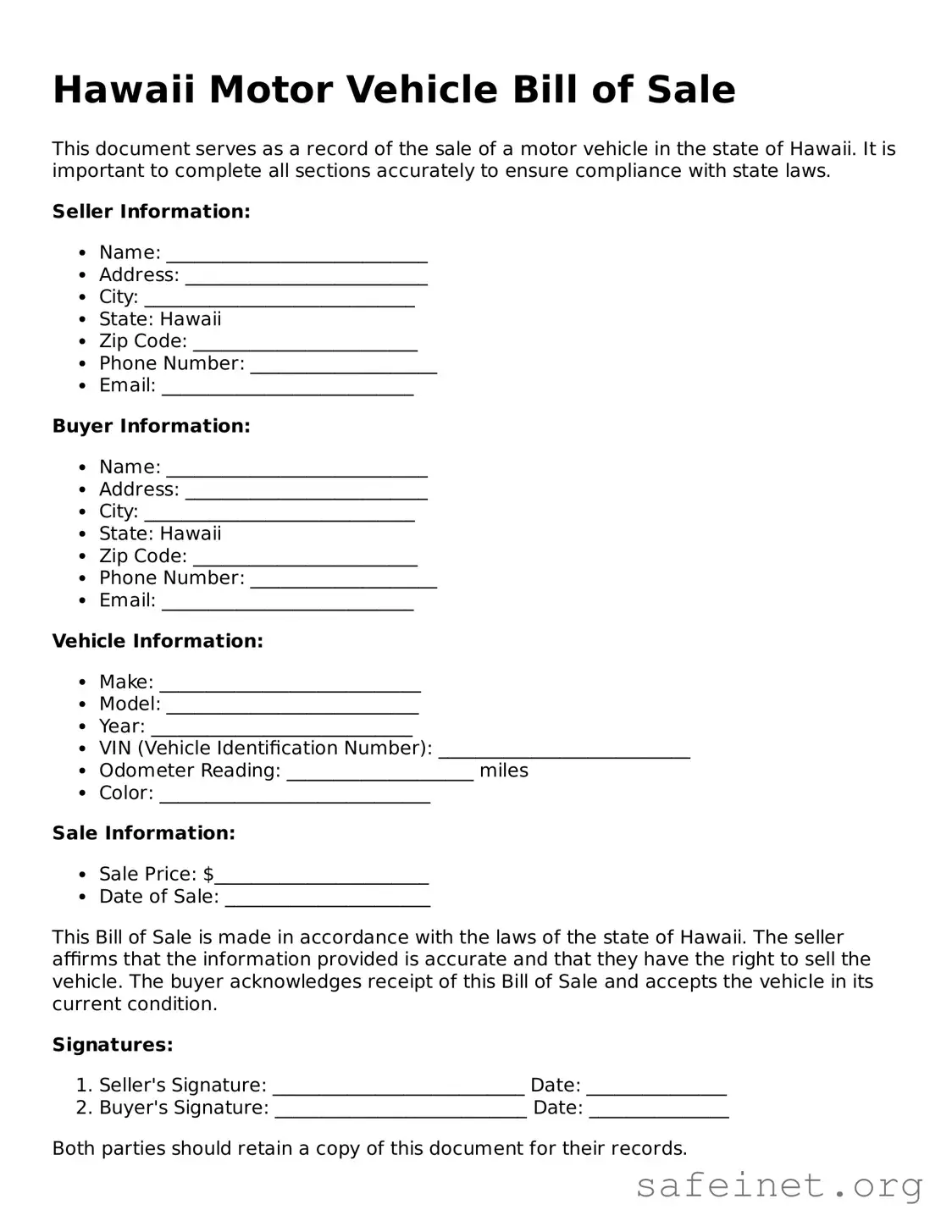
The Hawaii Motor Vehicle Bill of Sale form serves as a crucial document in the process of buying or selling a vehicle in the state. This form captures essential details about the transaction, including the names and addresses of both the buyer and seller, the vehicle’s make, model, year, and Vehicle Identification Number (VIN). It also outlines the sale price and any terms agreed upon by both parties. By completing this form, both the buyer and seller create a clear record of the transaction, which can help prevent disputes in the future. Additionally, the Bill of Sale may be necessary for the buyer to register the vehicle with the state and obtain a title. Ensuring that all information is accurate and complete is vital for a smooth transfer of ownership. Understanding the components of this form can make the vehicle sale process more straightforward and legally sound.
Hawaii Motor Vehicle Bill of Sale
This document serves as a record of the sale of a motor vehicle in the state of Hawaii. It is important to complete all sections accurately to ensure compliance with state laws.
Seller Information:
Buyer Information:
Vehicle Information:
Sale Information:
This Bill of Sale is made in accordance with the laws of the state of Hawaii. The seller affirms that the information provided is accurate and that they have the right to sell the vehicle. The buyer acknowledges receipt of this Bill of Sale and accepts the vehicle in its current condition.
Signatures:
Both parties should retain a copy of this document for their records.
| Fact Name | Description |
|---|---|
| Purpose | The Hawaii Motor Vehicle Bill of Sale form is used to document the sale of a vehicle between a buyer and a seller. |
| Governing Law | This form is governed by the Hawaii Revised Statutes, specifically Chapter 286, which covers motor vehicle registration and titles. |
| Required Information | The form requires details such as the vehicle identification number (VIN), make, model, year, and the sale price. |
| Signatures | Both the buyer and seller must sign the form to validate the transaction and transfer ownership. |
| Record Keeping | It is advisable for both parties to keep a copy of the completed Bill of Sale for their records, as it serves as proof of the transaction. |
Once you have the Hawaii Motor Vehicle Bill of Sale form ready, you'll need to fill it out carefully. This document is crucial for transferring ownership of a vehicle. After completing the form, ensure that both the buyer and seller keep a copy for their records.
After completing these steps, make sure to review the form for accuracy. Once confirmed, the buyer can use this document to register the vehicle in their name with the appropriate state agency.
What is a Hawaii Motor Vehicle Bill of Sale?
The Hawaii Motor Vehicle Bill of Sale is a legal document used to record the sale of a vehicle between a buyer and a seller. This form provides important details about the transaction, including the vehicle's identification number (VIN), make, model, year, and the sale price. It serves as proof of ownership transfer and can be useful for registration purposes.
Who needs to complete a Bill of Sale?
Both the buyer and the seller need to complete the Bill of Sale when a vehicle is sold. The seller provides the necessary details about the vehicle, while the buyer should ensure that all information is accurate. This document protects both parties by clearly outlining the terms of the sale.
Is a Bill of Sale required in Hawaii?
What information is needed to fill out the Bill of Sale?
To complete the Bill of Sale, you will need several pieces of information. This includes the buyer's and seller's names and addresses, the vehicle's make, model, year, VIN, sale price, and the date of the sale. Both parties should also sign the document to validate the transaction.
Can I use a generic Bill of Sale form?
While you can use a generic Bill of Sale form, it is advisable to use the specific Hawaii Motor Vehicle Bill of Sale form. This ensures that you include all the necessary information required by the state and helps avoid any potential issues during registration or title transfer.
Do I need to notarize the Bill of Sale?
Notarization is not required for the Hawaii Motor Vehicle Bill of Sale. However, having the document notarized can add an extra layer of security and authenticity to the transaction, especially if there are any disputes in the future.
What should I do with the Bill of Sale after the sale?
After the sale is complete, both the buyer and seller should keep a copy of the Bill of Sale for their records. The buyer will need to present this document when registering the vehicle in their name. It’s a good practice to store it in a safe place for future reference.
Can I cancel the Bill of Sale after signing it?
Once the Bill of Sale is signed by both parties, it typically cannot be canceled. It is a binding agreement that confirms the sale of the vehicle. If issues arise after the sale, it is best to consult with a legal professional for guidance on how to proceed.
Where can I obtain a Hawaii Motor Vehicle Bill of Sale form?
You can obtain the Hawaii Motor Vehicle Bill of Sale form from various sources. It is available at the Hawaii Department of Transportation's website, local DMV offices, or through legal document providers. Ensure that you are using the most current version of the form for your transaction.
Not including the vehicle identification number (VIN). This number is crucial for identifying the vehicle and ensuring the transaction is valid.
Failing to provide accurate buyer and seller information. Both parties must include their full names and addresses to avoid confusion.
Omitting the purchase price. Clearly stating the amount paid helps establish the value of the transaction for tax purposes.
Not signing the form. Both the buyer and seller must sign the Bill of Sale to make it legally binding.
Using incorrect dates. Ensure the date of the transaction is accurate to avoid issues later.
Leaving out the odometer reading. This information is important for tracking vehicle mileage and potential fraud.
Not providing a description of the vehicle. Details like make, model, and year help clarify what is being sold.
Failing to check for any liens on the vehicle. Buyers should ensure that the vehicle is free of any financial claims before purchase.
Neglecting to keep a copy of the completed form. Both parties should retain a copy for their records to refer back to if needed.
When engaging in the sale or purchase of a motor vehicle in Hawaii, several important documents accompany the Motor Vehicle Bill of Sale. Each of these forms serves a distinct purpose, ensuring that both parties are protected and that the transaction is conducted smoothly. Below is a list of commonly used documents in conjunction with the Bill of Sale.
Understanding these documents is crucial for both buyers and sellers. Each plays a vital role in ensuring a legal and efficient transaction. It is essential to gather and complete these forms accurately to avoid potential issues down the road.
The Vehicle Title Transfer form is similar to the Hawaii Motor Vehicle Bill of Sale. Both documents are essential for transferring ownership of a vehicle from one person to another. The Vehicle Title Transfer form includes information about the buyer and seller, as well as details about the vehicle. Just like the Bill of Sale, it serves as proof of the transaction and is often required by state authorities to register the vehicle under the new owner's name.
The Odometer Disclosure Statement is another document that complements the Hawaii Motor Vehicle Bill of Sale. This form is used to disclose the mileage on the vehicle at the time of sale. It helps protect buyers from fraud by ensuring they are aware of the vehicle's actual mileage. Similar to the Bill of Sale, it must be signed by both the seller and the buyer, making it a crucial part of the vehicle sale process.
The Power of Attorney form is also relevant in vehicle transactions. This document allows one person to act on behalf of another, particularly in signing documents related to the sale. In cases where the seller cannot be present, the Power of Attorney can facilitate the transfer of ownership. Like the Bill of Sale, it requires signatures from both parties to be valid.
The Vehicle Registration Application is another document that works alongside the Bill of Sale. After purchasing a vehicle, the new owner must register it with the state. This application includes information about the vehicle and the new owner. The Bill of Sale often serves as proof of ownership when submitting this application, ensuring a smooth registration process.
The Release of Liability form is important for sellers. This document notifies the state that the seller is no longer responsible for the vehicle once it is sold. It protects the seller from any future liabilities related to the vehicle. Like the Bill of Sale, it provides a clear record of the transaction and is often required by state law.
The Sales Tax Form may also be necessary when completing a vehicle sale. This document records the sales tax collected during the transaction. Buyers usually need this form when registering the vehicle to prove that they have paid the appropriate taxes. The Bill of Sale often accompanies this form, as it provides details about the sale price and parties involved.
The Insurance Verification form is relevant when buying a vehicle. This document confirms that the buyer has obtained insurance coverage for the newly purchased vehicle. Just like the Bill of Sale, it is often required by the state before the vehicle can be registered. Both documents work together to ensure that the buyer is prepared to legally operate the vehicle on public roads.
Finally, the Title Application is similar to the Hawaii Motor Vehicle Bill of Sale in that it is used to obtain a new title for the vehicle. After the sale, the buyer must apply for a title in their name. This application typically requires the Bill of Sale as proof of the transaction. Both documents are vital for ensuring that ownership is legally recognized and recorded by the state.
When filling out the Hawaii Motor Vehicle Bill of Sale form, there are important guidelines to follow. Here are four things you should and shouldn't do:
Understanding the Hawaii Motor Vehicle Bill of Sale form can be tricky. Here are some common misconceptions that people often have:
Being aware of these misconceptions can help ensure a smoother transaction when buying or selling a vehicle in Hawaii.
When filling out and using the Hawaii Motor Vehicle Bill of Sale form, there are several important points to consider. The following key takeaways will help ensure a smooth transaction.