In the picturesque state of Hawaii, the Mobile Home Bill of Sale form serves as a crucial document for anyone looking to buy or sell a mobile home. This form not only facilitates the transfer of ownership but also ensures that both parties are protected throughout the transaction. It typically includes essential details such as the names and addresses of the buyer and seller, a thorough description of the mobile home being sold, and the agreed-upon purchase price. Additionally, the form may outline any warranties or representations made by the seller regarding the condition of the mobile home, which can be vital for the buyer's peace of mind. By utilizing this form, individuals can navigate the complexities of mobile home transactions with greater ease, ensuring that all legal requirements are met while fostering a transparent exchange between both parties. Whether you are a first-time buyer or a seasoned seller, understanding the nuances of this form can significantly enhance your experience in the mobile home market.
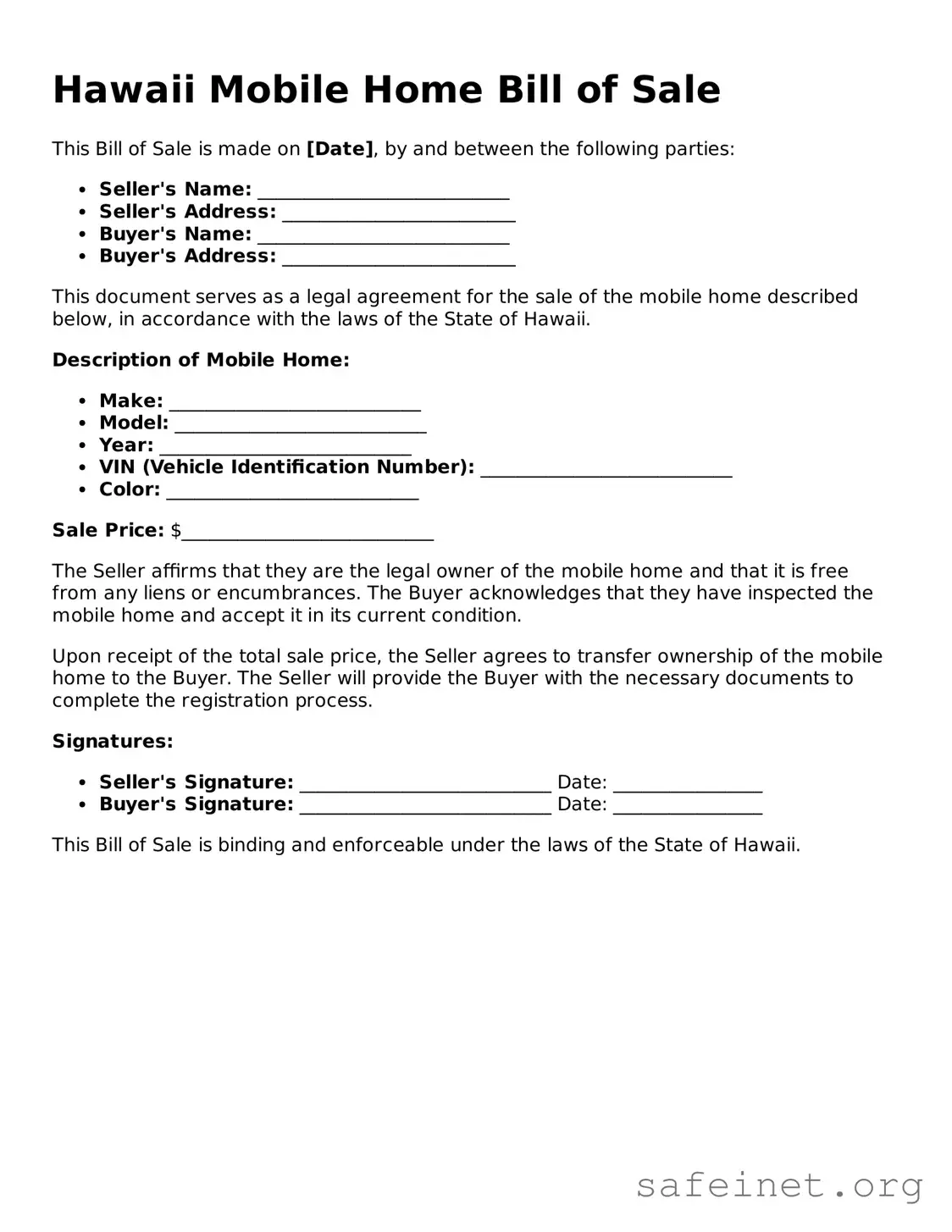
Hawaii Mobile Home Bill of Sale
This Bill of Sale is made on [Date], by and between the following parties:
This document serves as a legal agreement for the sale of the mobile home described below, in accordance with the laws of the State of Hawaii.
Description of Mobile Home:
Sale Price: $___________________________
The Seller affirms that they are the legal owner of the mobile home and that it is free from any liens or encumbrances. The Buyer acknowledges that they have inspected the mobile home and accept it in its current condition.
Upon receipt of the total sale price, the Seller agrees to transfer ownership of the mobile home to the Buyer. The Seller will provide the Buyer with the necessary documents to complete the registration process.
Signatures:
This Bill of Sale is binding and enforceable under the laws of the State of Hawaii.
| Fact Name | Description |
|---|---|
| Purpose | The Hawaii Mobile Home Bill of Sale form is used to document the sale and transfer of ownership of a mobile home in the state of Hawaii. |
| Governing Law | This form is governed by Hawaii Revised Statutes, specifically Chapter 200, which outlines the regulations surrounding mobile homes and their sales. |
| Required Information | Essential details such as the names of the buyer and seller, the mobile home’s identification number, and the sale price must be included in the form. |
| Signatures | Both the seller and the buyer must sign the form to validate the transaction, ensuring that both parties agree to the terms of the sale. |
Filling out the Hawaii Mobile Home Bill of Sale form requires attention to detail. After completing the form, you will need to ensure that both the buyer and seller sign it. This will create a legally binding document for the transaction.
What is a Hawaii Mobile Home Bill of Sale?
A Hawaii Mobile Home Bill of Sale is a legal document that records the transfer of ownership of a mobile home from one party to another. This form serves as proof of the sale and includes important details about the mobile home, such as its make, model, year, and identification number. It protects both the buyer and the seller by providing a clear record of the transaction.
Why do I need a Bill of Sale for a mobile home?
A Bill of Sale is essential for several reasons. First, it provides legal proof of the transaction, which can be important for registration and title transfer. Second, it protects both parties by documenting the terms of the sale, including the purchase price and any conditions agreed upon. Lastly, it can help resolve disputes that may arise in the future regarding ownership or sale terms.
What information is required on the form?
The form should include the names and addresses of both the buyer and the seller, a description of the mobile home (including make, model, year, and identification number), the purchase price, and the date of the sale. Additionally, both parties should sign the document to validate the transaction.
Is the Bill of Sale required by law in Hawaii?
How do I complete the form?
To complete the form, fill in the required information accurately. Ensure that all details about the mobile home and the parties involved are correct. Both the buyer and the seller should review the completed form, sign it, and keep a copy for their records. If necessary, consult with a legal professional for assistance.
Can I use a generic Bill of Sale form for my mobile home?
While you can use a generic Bill of Sale form, it is advisable to use a specific form designed for mobile homes in Hawaii. This ensures that all necessary details are included and complies with state requirements. A specific form reduces the risk of missing important information that could affect the transaction.
What should I do after completing the Bill of Sale?
After completing the Bill of Sale, both parties should sign and date the document. The seller should provide the buyer with a copy for their records. The buyer may need to take the signed Bill of Sale to the local Department of Motor Vehicles (DMV) or other relevant agency to complete the title transfer and register the mobile home in their name.
Failing to provide complete information about the seller. It's essential to include the full name, address, and contact details to ensure clarity in the transaction.
Omitting the buyer's details. Just as with the seller, the buyer's full name and contact information must be accurately recorded.
Not including the mobile home's Vehicle Identification Number (VIN). This number is crucial for identifying the specific mobile home being sold.
Forgetting to specify the sale price. The agreed-upon amount should be clearly stated to avoid any misunderstandings later.
Neglecting to date the bill of sale. A date is necessary to establish when the transaction took place, which can be important for record-keeping and legal purposes.
Not signing the document. Both the seller and the buyer must sign the bill of sale to validate the agreement.
Using incorrect or outdated forms. It's vital to ensure that the most current version of the Hawaii Mobile Home Bill of Sale is being used.
Failing to keep copies of the completed form. Both parties should retain a copy for their records, which can be useful in case of future disputes.
When buying or selling a mobile home in Hawaii, the Mobile Home Bill of Sale is a crucial document. However, several other forms and documents often accompany it to ensure a smooth transaction. Here’s a brief overview of some essential documents you might encounter.
Having these documents ready can simplify the process of buying or selling a mobile home in Hawaii. Each plays a vital role in ensuring that the transaction is legally binding and recognized by the state. Proper documentation helps protect the interests of all parties involved.
The Hawaii Mobile Home Bill of Sale form shares similarities with a standard Vehicle Bill of Sale. Both documents serve as proof of transfer of ownership from one party to another. They typically include details such as the buyer's and seller's names, addresses, and signatures. Additionally, both forms require information about the item being sold, like the make, model, and identification number. This ensures clarity in the transaction and protects both parties in case of disputes.
Another document that resembles the Mobile Home Bill of Sale is the Boat Bill of Sale. Like the mobile home version, the Boat Bill of Sale outlines the transfer of ownership for a watercraft. Key components include the seller's and buyer's information, the boat's details, and the sale price. Both documents are essential for registering the item with the appropriate authorities and can help in resolving future ownership issues.
The Equipment Bill of Sale is also similar in nature. This document is used when transferring ownership of heavy machinery or tools. It includes the same fundamental elements: identification of the seller and buyer, descriptions of the equipment, and the agreed-upon price. Just like the Mobile Home Bill of Sale, this document provides legal protection and clarity for both parties involved in the transaction.
A Real Estate Purchase Agreement shares some similarities as well. While it typically involves more complex terms and conditions, it also serves to document the transfer of property ownership. Both documents include the names and addresses of the parties, a description of the property, and the sale price. They both aim to protect the interests of buyers and sellers during the transfer process.
Lastly, the Personal Property Bill of Sale is comparable to the Mobile Home Bill of Sale. This document is used for various types of personal property, from furniture to collectibles. It contains similar elements, such as the buyer's and seller's details, a description of the item, and the sale price. Both documents provide a clear record of the transaction, helping to avoid misunderstandings and disputes in the future.
When filling out the Hawaii Mobile Home Bill of Sale form, it is important to follow certain guidelines to ensure the process is smooth and successful. Below are some recommended actions and cautions to keep in mind.
The Hawaii Mobile Home Bill of Sale form is often misunderstood. Clarifying these misconceptions can help individuals navigate the process more effectively. Below are six common misconceptions:
Understanding these misconceptions can lead to a smoother transaction process when buying or selling a mobile home in Hawaii.
When it comes to filling out and using the Hawaii Mobile Home Bill of Sale form, there are several important points to keep in mind. This ensures a smooth transaction and protects both the buyer and seller.
By following these key takeaways, you can navigate the process with confidence and clarity.