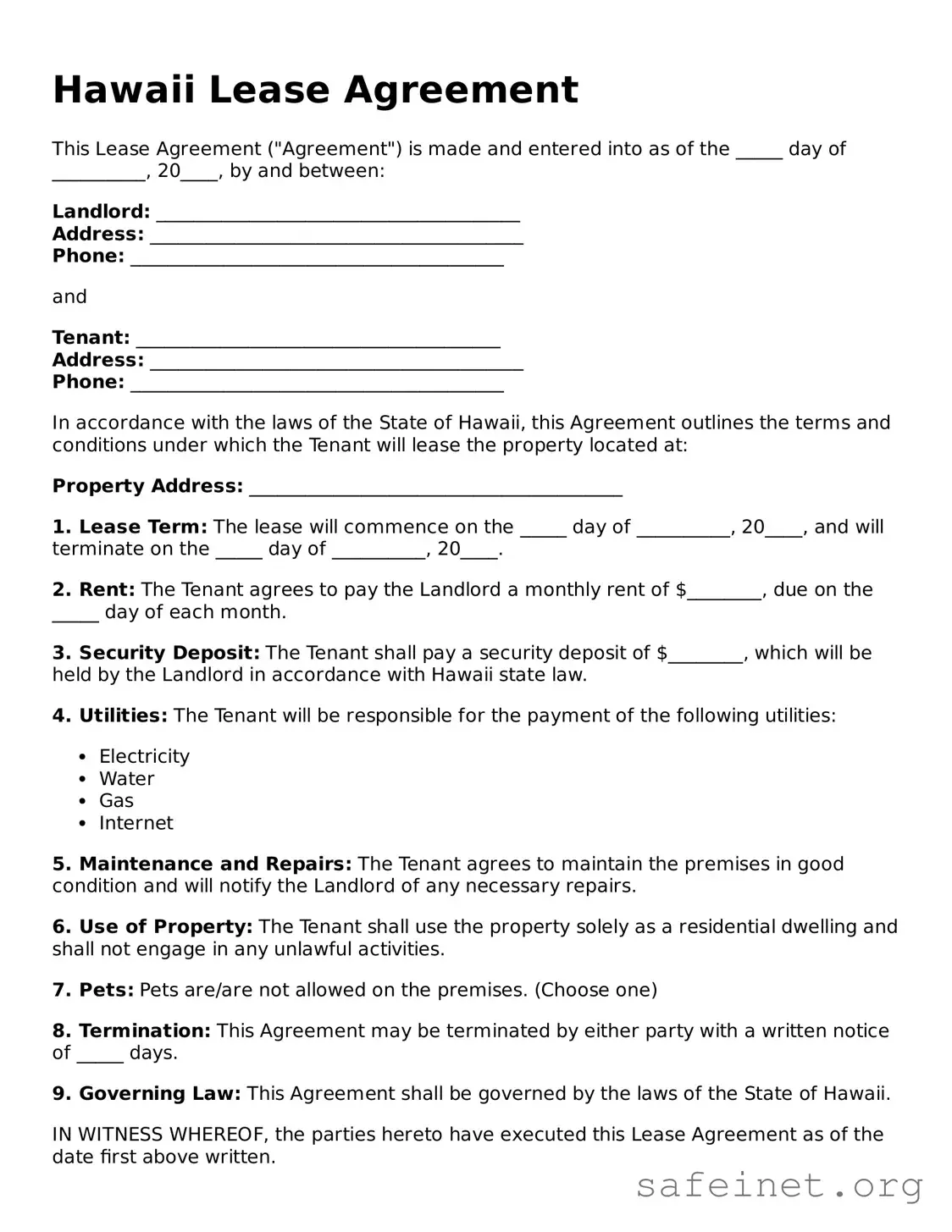
When entering into a rental arrangement in Hawaii, a well-structured lease agreement is essential for both landlords and tenants. This legal document outlines the terms and conditions of the rental, ensuring that both parties understand their rights and responsibilities. Key components typically included in the Hawaii Lease Agreement form are the rental amount, payment due dates, and the duration of the lease. Additionally, it addresses security deposits, maintenance responsibilities, and rules regarding pets or alterations to the property. The agreement also covers the procedures for terminating the lease, which helps to prevent misunderstandings down the line. By clearly defining these aspects, the lease agreement serves as a vital tool in promoting a positive rental experience and fostering good communication between landlords and tenants.
Hawaii Lease Agreement
This Lease Agreement ("Agreement") is made and entered into as of the _____ day of __________, 20____, by and between:
Landlord: _______________________________________
Address: ________________________________________
Phone: ________________________________________
and
Tenant: _______________________________________
Address: ________________________________________
Phone: ________________________________________
In accordance with the laws of the State of Hawaii, this Agreement outlines the terms and conditions under which the Tenant will lease the property located at:
Property Address: ________________________________________
1. Lease Term: The lease will commence on the _____ day of __________, 20____, and will terminate on the _____ day of __________, 20____.
2. Rent: The Tenant agrees to pay the Landlord a monthly rent of $________, due on the _____ day of each month.
3. Security Deposit: The Tenant shall pay a security deposit of $________, which will be held by the Landlord in accordance with Hawaii state law.
4. Utilities: The Tenant will be responsible for the payment of the following utilities:
5. Maintenance and Repairs: The Tenant agrees to maintain the premises in good condition and will notify the Landlord of any necessary repairs.
6. Use of Property: The Tenant shall use the property solely as a residential dwelling and shall not engage in any unlawful activities.
7. Pets: Pets are/are not allowed on the premises. (Choose one)
8. Termination: This Agreement may be terminated by either party with a written notice of _____ days.
9. Governing Law: This Agreement shall be governed by the laws of the State of Hawaii.
IN WITNESS WHEREOF, the parties hereto have executed this Lease Agreement as of the date first above written.
Landlord Signature: _____________________________
Date: _____________________________
Tenant Signature: _____________________________
Date: _____________________________
| Fact Name | Description |
|---|---|
| Governing Law | The Hawaii Lease Agreement is governed by the Hawaii Revised Statutes, specifically Chapter 521, which covers residential landlord-tenant law. |
| Types of Leases | Hawaii offers various lease agreements, including residential, commercial, and vacation rentals, each with specific terms and conditions. |
| Security Deposit Limits | Landlords in Hawaii can charge a security deposit up to one month's rent for unfurnished properties and up to two months' rent for furnished properties. |
| Notice Requirements | Landlords must provide tenants with a written notice of any rent increase at least 45 days in advance for month-to-month leases. |
| Termination Notice | To terminate a month-to-month lease, a landlord or tenant must give at least 45 days' written notice. |
| Habitability Standards | Landlords are required to maintain rental properties in a habitable condition, ensuring safety and health standards are met. |
| Discrimination Laws | Hawaii law prohibits discrimination in housing based on race, color, religion, sex, national origin, disability, and familial status. |
Filling out the Hawaii Lease Agreement form is an important step in establishing a rental relationship. This process ensures that both the landlord and tenant understand their rights and responsibilities. Follow these steps to complete the form accurately.
Once you have completed the form, review it for accuracy. Both parties should keep a copy for their records. This will help avoid misunderstandings in the future.
What is a Hawaii Lease Agreement form?
A Hawaii Lease Agreement form is a legal document that outlines the terms and conditions under which a property owner (landlord) rents out their property to a tenant. This agreement typically includes details such as the rental amount, duration of the lease, and responsibilities of both parties. It serves to protect the rights of both the landlord and the tenant by clearly defining expectations and obligations.
What key elements should be included in a Hawaii Lease Agreement?
Essential components of a Hawaii Lease Agreement include the names of the parties involved, the property address, the rental amount, the lease term (length of the lease), security deposit details, maintenance responsibilities, and rules regarding pets or subletting. Additionally, it is important to include provisions for termination and renewal of the lease. Clarity in these areas can help prevent disputes in the future.
Is a written lease agreement required in Hawaii?
While a verbal agreement can be legally binding in Hawaii, it is highly advisable to have a written lease agreement. A written document provides clear evidence of the terms agreed upon and can protect both parties in case of misunderstandings or disputes. It is particularly important for leases that extend beyond one year, as these must be in writing to be enforceable.
What are the tenant's rights under a Hawaii Lease Agreement?
Tenants in Hawaii have several rights protected by law. These include the right to a habitable living environment, the right to privacy, and the right to receive proper notice before eviction. Tenants also have the right to withhold rent if the landlord fails to make necessary repairs, provided they follow the appropriate legal procedures. Understanding these rights is crucial for tenants to ensure they are treated fairly.
Can a landlord terminate a lease early in Hawaii?
Yes, a landlord can terminate a lease early under certain circumstances. Common reasons include non-payment of rent, violation of lease terms, or illegal activity on the premises. However, landlords must follow the legal process for eviction, which typically involves providing proper notice to the tenant. It is important for landlords to adhere to these legal requirements to avoid potential disputes.
What should a tenant do if they want to break their lease?
If a tenant wishes to break their lease, they should first review the lease agreement for any specific terms regarding early termination. It may be necessary to communicate with the landlord to discuss the situation and seek mutual agreement. In some cases, tenants may be required to pay a penalty or find a replacement tenant. Understanding the terms of the lease and maintaining open communication can facilitate a smoother process.
Are there any specific laws that govern lease agreements in Hawaii?
Yes, lease agreements in Hawaii are governed by both state and local laws. The Hawaii Residential Landlord-Tenant Code outlines the rights and responsibilities of landlords and tenants. This code addresses issues such as security deposits, eviction procedures, and maintenance obligations. Familiarity with these laws is essential for both parties to ensure compliance and protect their rights.
Not reading the entire lease agreement thoroughly. Many people skim through the document, missing important clauses and terms.
Failing to include all required personal information. This can lead to delays or even rejection of the lease.
Not specifying the lease term clearly. Whether it’s a month-to-month agreement or a fixed-term lease, clarity is crucial.
Overlooking the security deposit details. Ensure the amount and conditions for its return are clearly stated.
Neglecting to document any agreed-upon repairs or maintenance responsibilities. This can lead to disputes later on.
Not understanding the consequences of breaking the lease. Familiarity with penalties can prevent future issues.
Forgetting to sign and date the agreement. An unsigned lease is not legally binding.
When entering into a lease agreement in Hawaii, several additional forms and documents may be necessary to ensure clarity and legal compliance. These documents help both landlords and tenants understand their rights and responsibilities, as well as outline specific terms related to the lease.
Utilizing these documents in conjunction with the Hawaii Lease Agreement can help create a comprehensive understanding between landlords and tenants, ultimately fostering a more harmonious rental experience.
A rental agreement is similar to a lease agreement, as both documents outline the terms under which a property is rented. A rental agreement typically covers a shorter time frame, often on a month-to-month basis, while a lease agreement usually spans a longer period, such as one year. Both documents specify the responsibilities of the landlord and tenant, including payment terms, maintenance obligations, and rules regarding the use of the property.
A sublease agreement is another document that shares similarities with a lease agreement. This type of agreement allows a tenant to rent out the property to another person while still maintaining their lease with the original landlord. The sublease agreement will detail the terms under which the subtenant can occupy the property, including rent payments and duration of stay. It is essential for both the original tenant and the subtenant to understand their rights and responsibilities.
A commercial lease agreement is akin to a residential lease but is specifically designed for business properties. It outlines the terms under which a business can occupy a commercial space, detailing rent, duration, maintenance responsibilities, and permitted uses of the property. Both commercial and residential leases establish a legal framework that protects the rights of landlords and tenants while ensuring that the property is used appropriately.
A month-to-month rental agreement also resembles a lease agreement, but it offers more flexibility. This type of agreement allows either party to terminate the arrangement with a short notice period, often 30 days. While it still includes essential terms such as rent, security deposits, and maintenance obligations, the shorter commitment period provides tenants with greater mobility and landlords with the ability to adjust terms more frequently.
A lease option agreement combines elements of a lease agreement and an option to purchase. This document allows a tenant to rent a property with the possibility of buying it later. The lease option outlines the rental terms and specifies the purchase price or how it will be determined. This type of agreement can benefit both parties by providing the tenant with time to secure financing while ensuring the landlord has a potential buyer for the property.
When filling out a Hawaii Lease Agreement form, it's essential to approach the process with care. Here are some important dos and don'ts to keep in mind:
Understanding the Hawaii Lease Agreement form is essential for both landlords and tenants. However, several misconceptions can lead to confusion. Here are four common misunderstandings:
Being aware of these misconceptions can help both landlords and tenants navigate the leasing process more effectively.
Filling out and using the Hawaii Lease Agreement form requires careful attention to detail. Here are key takeaways to consider:
Following these guidelines will help ensure that the lease agreement is effective and legally binding.