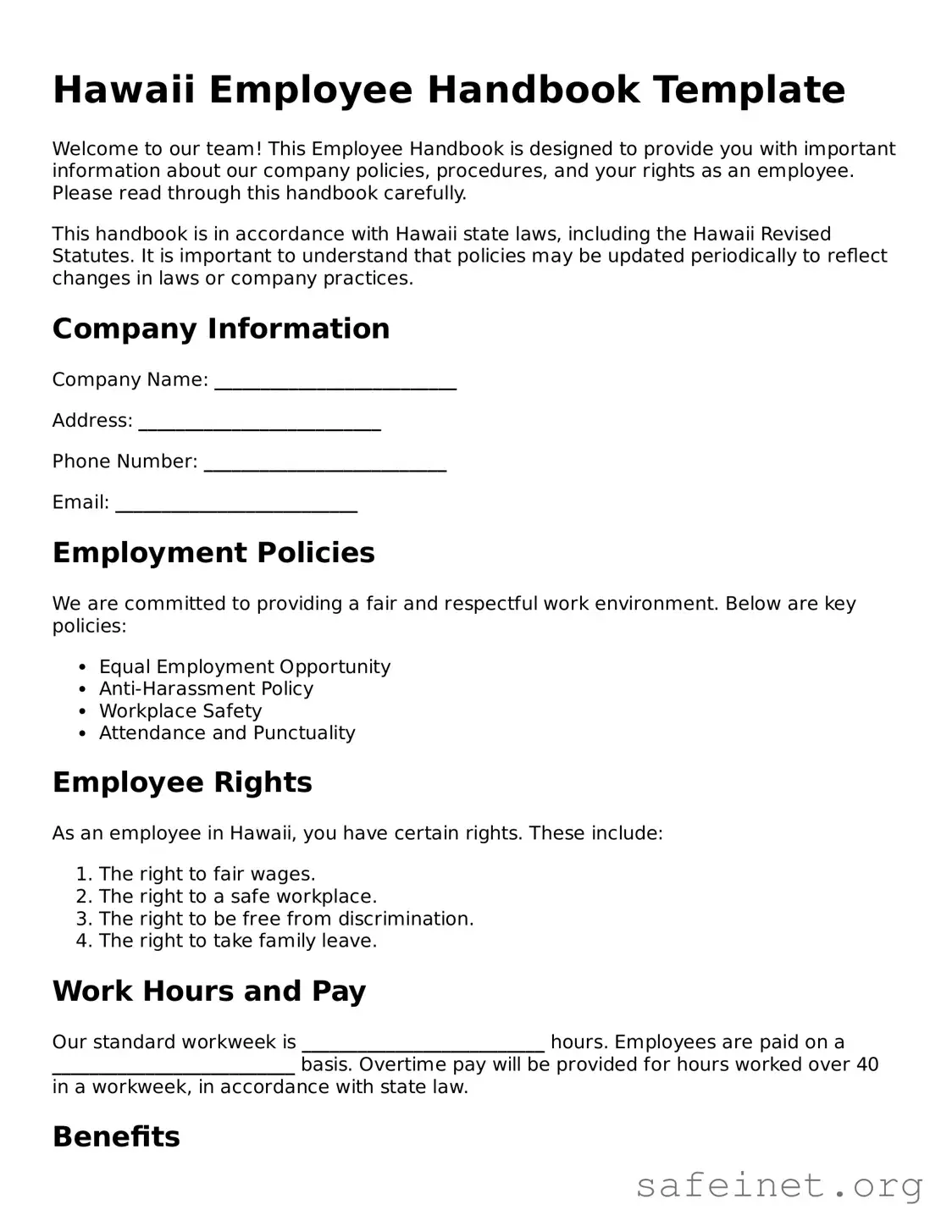
The Hawaii Employee Handbook form serves as a vital resource for both employers and employees within the state. This comprehensive document outlines essential workplace policies, procedures, and expectations that govern the employment relationship. Key aspects of the handbook include sections on employee rights, workplace conduct, and disciplinary procedures. Additionally, it addresses topics such as benefits, leave policies, and safety regulations, ensuring that all employees are informed about their entitlements and responsibilities. By clearly delineating company policies, the handbook fosters a transparent work environment and helps to mitigate misunderstandings. Employers can customize the handbook to reflect their specific organizational culture while adhering to state and federal laws. Ultimately, the Hawaii Employee Handbook form is designed to promote a positive workplace atmosphere and protect the rights of all parties involved.
Hawaii Employee Handbook Template
Welcome to our team! This Employee Handbook is designed to provide you with important information about our company policies, procedures, and your rights as an employee. Please read through this handbook carefully.
This handbook is in accordance with Hawaii state laws, including the Hawaii Revised Statutes. It is important to understand that policies may be updated periodically to reflect changes in laws or company practices.
Company Information
Company Name: __________________________
Address: __________________________
Phone Number: __________________________
Email: __________________________
Employment Policies
We are committed to providing a fair and respectful work environment. Below are key policies:
Employee Rights
As an employee in Hawaii, you have certain rights. These include:
Work Hours and Pay
Our standard workweek is __________________________ hours. Employees are paid on a __________________________ basis. Overtime pay will be provided for hours worked over 40 in a workweek, in accordance with state law.
Benefits
Eligible employees may receive the following benefits:
Disciplinary Procedures
We expect all employees to adhere to company policies. Violations may result in disciplinary action, which can include:
Conclusion
We value your contribution to our team. If you have any questions about this handbook or your employment, please reach out to your supervisor or the HR department.
Employee Signature: __________________________
Date: __________________________
| Fact Name | Description |
|---|---|
| Purpose | The Hawaii Employee Handbook serves as a guide for employees, outlining company policies, procedures, and expectations. |
| Legal Requirement | While not legally required, having an employee handbook is strongly recommended for clarity and compliance. |
| Governing Laws | The handbook should comply with Hawaii Revised Statutes (HRS) and federal employment laws. |
| Content Areas | Common topics include workplace conduct, anti-discrimination policies, and leave policies. |
| Employee Acknowledgment | Employees typically sign an acknowledgment form confirming they have received and understood the handbook. |
| Updates | The handbook should be reviewed and updated regularly to reflect changes in laws and company policies. |
| Non-Discrimination Policy | A clear non-discrimination policy is essential to comply with state and federal laws. |
| At-Will Employment | The handbook should clarify that employment is at-will unless otherwise stated in a written contract. |
| Contact Information | It is advisable to include contact details for HR or management for questions regarding the handbook. |
| Disciplinary Procedures | Outlining disciplinary procedures helps ensure fair treatment of employees and consistency in enforcement. |
After obtaining the Hawaii Employee Handbook form, you'll be ready to provide essential information about your employment. Completing this form accurately ensures that you understand your rights and responsibilities as an employee. Follow these steps to fill it out correctly.
Once you have submitted the form, your HR department will review it and may reach out if there are any questions or clarifications needed. It's important to stay informed about any updates or changes to the handbook in the future.
What is the Hawaii Employee Handbook form?
The Hawaii Employee Handbook form is a document that outlines the policies, procedures, and expectations for employees working in Hawaii. It serves as a guide to help employees understand their rights and responsibilities, as well as the company's values and culture.
Why is an Employee Handbook important?
An Employee Handbook is crucial for both employers and employees. It provides clarity on workplace policies, helping to prevent misunderstandings. For employers, it can serve as a legal safeguard, demonstrating that employees have been informed of company policies and procedures.
What should be included in the Hawaii Employee Handbook?
A comprehensive Hawaii Employee Handbook typically includes sections on company policies, employee rights, workplace conduct, benefits, leave policies, and safety regulations. It may also address specific state laws that impact employment in Hawaii, ensuring compliance with local regulations.
How often should the Employee Handbook be updated?
It's advisable to review and update the Employee Handbook at least annually. Changes in laws, company policies, or organizational structure may necessitate updates. Regular reviews ensure that the handbook remains relevant and compliant with current regulations.
Can I customize the Hawaii Employee Handbook form?
Absolutely! The form can and should be customized to reflect your company's unique culture, policies, and practices. Tailoring the handbook to your specific workplace will make it more effective and relatable for your employees.
Is it necessary for all employees to receive a copy of the Employee Handbook?
Yes, all employees should receive a copy of the Employee Handbook. This ensures that everyone is aware of the policies and procedures that govern their employment. Providing a copy also helps protect the employer by demonstrating that employees have been informed of their rights and responsibilities.
How should I distribute the Employee Handbook?
The Employee Handbook can be distributed in various ways. You can provide printed copies during orientation, email a digital version, or make it accessible through an internal company portal. Whatever method you choose, ensure that employees acknowledge receipt of the handbook.
What if an employee has questions about the Employee Handbook?
If an employee has questions, encourage them to reach out to their supervisor or the HR department. Open communication is essential. Addressing questions promptly helps clarify policies and reinforces a supportive workplace environment.
What should I do if an employee violates a policy outlined in the Employee Handbook?
In the event of a policy violation, follow the disciplinary procedures outlined in the Employee Handbook. Consistency is key. Treat similar violations in the same manner to maintain fairness and uphold company standards.
Is legal advice necessary when creating an Employee Handbook?
While it’s not mandatory, seeking legal advice is highly recommended. An attorney can help ensure that your Employee Handbook complies with federal and state laws, reducing the risk of potential legal issues down the line.
When filling out the Hawaii Employee Handbook form, individuals often encounter several common mistakes. Here’s a list of eight mistakes that can lead to confusion or issues later on:
Understanding the policies is crucial.
Incorrect details can lead to problems with payroll or benefits.
This section confirms that you have read and understood the handbook.
Clarification is important to avoid misunderstandings.
Timeliness ensures compliance with company policies.
Staying informed about changes is essential for compliance.
This can be helpful for future reference.
Written documentation typically holds more weight in employment matters.
Being mindful of these common pitfalls can help ensure a smoother onboarding process and a better understanding of workplace policies.
The Hawaii Employee Handbook serves as a vital resource for employees, outlining company policies, procedures, and expectations. Alongside this handbook, several other documents are commonly utilized to ensure clarity and compliance within the workplace. Below is a list of these important forms and documents.
These documents collectively support a structured and transparent work environment. They help ensure that employees are informed of their rights and responsibilities, fostering a culture of mutual respect and accountability.
The Hawaii Employee Handbook is similar to an Employee Manual, which serves as a comprehensive guide for employees regarding workplace policies, procedures, and expectations. Both documents outline the rights and responsibilities of employees, including information on workplace conduct, attendance policies, and disciplinary actions. The Employee Manual, like the Employee Handbook, aims to foster a clear understanding of the company culture and legal obligations, ensuring that employees are informed about their roles within the organization.
Another document that shares similarities with the Hawaii Employee Handbook is the Orientation Guide. This guide is often provided to new hires during their onboarding process and contains essential information about the company, including its mission, values, and operational procedures. While the Employee Handbook is more comprehensive and serves as a long-term reference, the Orientation Guide offers a condensed version of crucial policies and practices, helping new employees acclimate to their work environment quickly.
The Employee Policy Manual is also comparable to the Hawaii Employee Handbook. This document focuses specifically on the policies governing employee behavior and workplace standards. Both documents address topics such as anti-discrimination policies, harassment prevention, and workplace safety. The Employee Policy Manual may delve deeper into specific policies, while the Employee Handbook provides an overview, making it easier for employees to grasp the key points and expectations.
Lastly, the Code of Conduct is another document that aligns with the Hawaii Employee Handbook. The Code of Conduct outlines the ethical standards and behavioral expectations for employees within the organization. Similar to the Employee Handbook, it emphasizes the importance of integrity, respect, and professionalism. While the Employee Handbook may provide a broader context for company policies, the Code of Conduct focuses on the specific ethical guidelines that employees are expected to follow in their daily interactions.
When filling out the Hawaii Employee Handbook form, it’s important to ensure accuracy and clarity. Here’s a helpful list of dos and don’ts to guide you through the process:
Many people have misunderstandings about the Hawaii Employee Handbook form. Here are six common misconceptions:
This is not true. While not legally required, having an employee handbook is highly recommended. It serves as a guide for both employers and employees, outlining policies and expectations.
Each employee handbook should be tailored to the specific needs of the business. Different industries and company cultures will require different policies and procedures.
This is a common error. Employment laws and company policies can change frequently. Regularly reviewing and updating the handbook is essential to ensure compliance and relevance.
Employees should be encouraged to read the handbook. It contains important information regarding their rights, responsibilities, and the company's expectations.
While a well-written handbook can reduce legal risks, it does not provide absolute protection. Employers must still comply with all applicable laws and treat employees fairly.
Existing employees should also have access to the handbook. It serves as a valuable resource for all staff, ensuring everyone is aware of the company policies.
When filling out and using the Hawaii Employee Handbook form, there are several important points to consider. Here are some key takeaways:
Following these guidelines can help create a clear and effective employee handbook that serves both the organization and its employees.