When navigating the emotional and often complex journey of divorce, understanding the necessary legal documentation can make a significant difference in achieving a smooth transition. One key document in this process is the Hawaii Divorce Settlement Agreement form. This form serves as a comprehensive outline of the terms agreed upon by both parties regarding the division of assets, debts, and responsibilities. It addresses critical aspects such as child custody arrangements, visitation schedules, and child support obligations, ensuring that the best interests of any children involved are prioritized. Additionally, it may include stipulations for spousal support and the division of property, providing clarity and security for both individuals as they move forward. By carefully considering and accurately completing this form, couples can minimize potential conflicts and foster a more amicable separation, paving the way for a healthier post-divorce relationship.
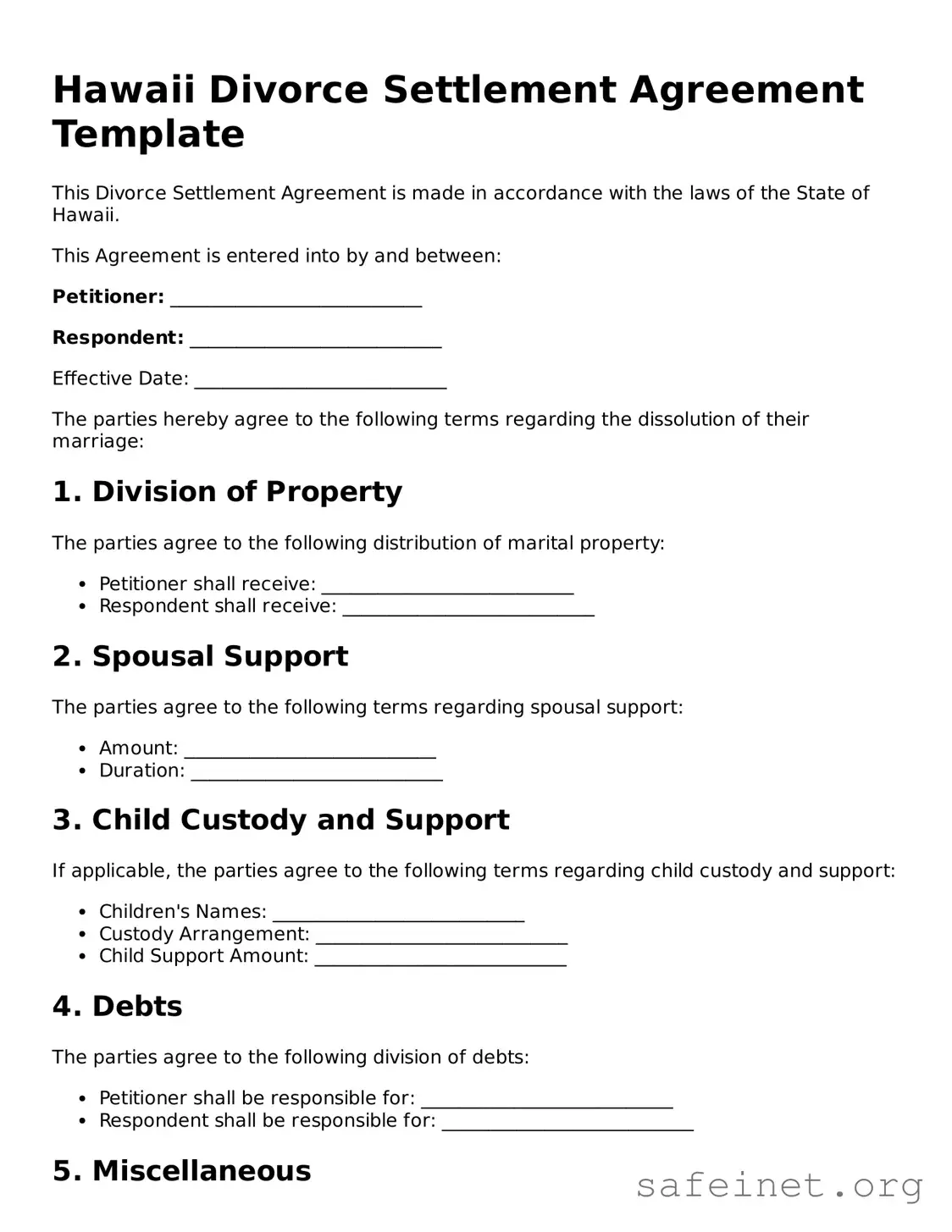
Hawaii Divorce Settlement Agreement Template
This Divorce Settlement Agreement is made in accordance with the laws of the State of Hawaii.
This Agreement is entered into by and between:
Petitioner: ___________________________
Respondent: ___________________________
Effective Date: ___________________________
The parties hereby agree to the following terms regarding the dissolution of their marriage:
1. Division of Property
The parties agree to the following distribution of marital property:
2. Spousal Support
The parties agree to the following terms regarding spousal support:
3. Child Custody and Support
If applicable, the parties agree to the following terms regarding child custody and support:
4. Debts
The parties agree to the following division of debts:
5. Miscellaneous
The parties agree to the following additional terms:
This Agreement represents the entire understanding between the parties. It supersedes all prior agreements, whether written or oral.
IN WITNESS WHEREOF, the parties have executed this Divorce Settlement Agreement on the date first above written.
Petitioner Signature: ___________________________
Date: ___________________________
Respondent Signature: ___________________________
Date: ___________________________
| Fact Name | Description |
|---|---|
| Purpose | The Hawaii Divorce Settlement Agreement form outlines the terms of the divorce, including asset division, child custody, and support obligations. |
| Governing Law | This form is governed by the Hawaii Revised Statutes, specifically Chapter 580, which covers divorce and family law. |
| Filing Requirement | Both parties must sign the agreement, and it should be submitted to the court as part of the divorce proceedings. |
| Children Consideration | If children are involved, the agreement must address custody arrangements and child support payments. |
| Asset Division | The form facilitates the equitable division of marital assets and debts, ensuring both parties understand their rights. |
| Modification Clause | Provisions for future modifications can be included, allowing adjustments as circumstances change. |
| Legal Advice | While not mandatory, seeking legal advice before signing is highly recommended to protect your interests. |
| Finalization | Once approved by the court, the agreement becomes legally binding, ensuring compliance from both parties. |
After completing the Hawaii Divorce Settlement Agreement form, you will need to submit it to the appropriate court. This step is crucial in finalizing the divorce process and ensuring that all agreements are legally recognized. Make sure to keep copies of the completed form for your records.
What is a Hawaii Divorce Settlement Agreement?
A Hawaii Divorce Settlement Agreement is a legal document that outlines the terms of a divorce between two parties. It includes details about property division, child custody, child support, and any other relevant issues. This agreement is typically negotiated and signed by both spouses to ensure that all matters are resolved amicably and in accordance with Hawaii law.
Why is a Divorce Settlement Agreement important?
This agreement is crucial as it provides a clear framework for how the couple will handle their financial and personal responsibilities after the divorce. It helps prevent future disputes by clearly defining each party's rights and obligations. Having a written agreement can also expedite the divorce process and make it easier for the court to finalize the divorce.
What should be included in the Divorce Settlement Agreement?
The agreement should include several key components: division of marital property, allocation of debts, child custody arrangements, visitation schedules, child support obligations, and spousal support (if applicable). Each section should be detailed to avoid ambiguity and ensure both parties understand their responsibilities.
How do I complete the Divorce Settlement Agreement?
To complete the agreement, both parties should discuss and negotiate the terms. It's advisable to document all agreements clearly and ensure both spouses agree to the terms. Once finalized, both parties should sign the document. It may be beneficial to consult with a legal professional to ensure that the agreement meets all legal requirements and adequately protects your interests.
Can I modify the Divorce Settlement Agreement after it is signed?
Yes, modifications can be made to the Divorce Settlement Agreement after it is signed, but both parties must agree to the changes. It is important to document any modifications in writing and have both parties sign the revised agreement. If substantial changes are needed, it may be advisable to seek legal assistance.
Do I need a lawyer to create a Divorce Settlement Agreement?
While it is not mandatory to have a lawyer, it is highly recommended. A legal professional can provide guidance on the terms of the agreement and ensure that it complies with Hawaii law. They can also help protect your rights and interests during negotiations.
How is the Divorce Settlement Agreement submitted to the court?
Once both parties have signed the Divorce Settlement Agreement, it should be submitted to the court along with the divorce petition. The court will review the agreement to ensure it is fair and in the best interest of any children involved. If approved, the agreement becomes part of the final divorce decree.
What happens if we cannot agree on the terms of the Divorce Settlement Agreement?
If the parties cannot reach an agreement, they may need to consider mediation or seek the assistance of a legal professional. In some cases, the court may intervene to resolve disputes. If all else fails, the case may proceed to trial, where a judge will make the final decisions on contested issues.
Incomplete Information: One common mistake is failing to provide all necessary information. Each section of the form must be filled out completely. Missing details can delay the process and may lead to additional court appearances.
Incorrect Financial Disclosure: Many individuals underestimate the importance of accurately disclosing their financial situation. This includes income, assets, and debts. Inaccurate information can result in unfair settlements and legal complications.
Ignoring Legal Requirements: Some people overlook specific legal requirements that apply to divorce settlements in Hawaii. For example, certain forms may need notarization or must be filed within specific time frames. Ignoring these can lead to the rejection of the agreement.
Not Considering Future Needs: Individuals often focus on immediate concerns without considering long-term implications. It's essential to think about future financial needs, such as child support or alimony, and how the agreement will impact those needs.
Failing to Seek Legal Advice: Many people attempt to navigate the process without legal assistance. While it is possible to fill out the form independently, consulting with a lawyer can provide valuable insights and help avoid costly mistakes.
When navigating a divorce in Hawaii, several forms and documents may accompany the Divorce Settlement Agreement to ensure a smooth process. Each of these documents serves a specific purpose and can help clarify the terms of the divorce, protect the rights of both parties, and facilitate the court's understanding of the situation.
Understanding these documents and their purposes can make the divorce process less daunting. Each form plays a vital role in ensuring that both parties are treated fairly and that all legal requirements are met. Being informed helps individuals navigate this challenging time with greater confidence.
The Marital Settlement Agreement is similar to the Hawaii Divorce Settlement Agreement in that it outlines the terms agreed upon by both spouses regarding asset division, child custody, and support payments. This document serves as a blueprint for how the couple intends to resolve their issues without going to trial. Both agreements aim to facilitate a smoother divorce process by clearly stating each party's rights and responsibilities.
The Separation Agreement shares many similarities with the Hawaii Divorce Settlement Agreement. It is often used when couples decide to live apart before finalizing their divorce. Like the divorce settlement, this document details how property and debts will be divided, as well as arrangements for children. It provides a framework for the couple to manage their separation amicably, which can make the eventual divorce process easier.
The Parenting Plan is another document that aligns closely with the Hawaii Divorce Settlement Agreement. This plan specifically addresses child custody and visitation arrangements. It outlines how parents will share responsibilities and make decisions about their children’s welfare. Both documents prioritize the best interests of the children involved, ensuring that their needs are met during and after the divorce.
The Property Settlement Agreement is focused on the division of assets and debts between spouses. Similar to the Hawaii Divorce Settlement Agreement, it specifies which party will receive what property, including real estate, bank accounts, and personal belongings. This agreement helps to prevent future disputes by clearly defining ownership and financial responsibilities.
The Child Support Agreement is a critical document that often accompanies the Hawaii Divorce Settlement Agreement. It outlines the financial obligations of one parent to the other for the support of their children. Both documents aim to ensure that children’s needs are met after the divorce, providing clarity on how much support will be paid and when.
The Alimony Agreement, or Spousal Support Agreement, is another related document. It details any financial support one spouse will provide to the other after the divorce. Like the Hawaii Divorce Settlement Agreement, it aims to ensure that both parties can maintain a reasonable standard of living post-divorce, especially if one spouse has been financially dependent on the other.
The Quitclaim Deed can also be compared to the Hawaii Divorce Settlement Agreement in terms of property transfer. This document is used to transfer ownership of real estate from one spouse to another as part of the divorce settlement. It ensures that property ownership is clearly defined, aligning with the goals of the divorce settlement to prevent future disputes over assets.
Finally, the Court Order is a legal document that finalizes the terms agreed upon in the Hawaii Divorce Settlement Agreement. Once the settlement is approved by the court, the court order enforces the terms regarding custody, support, and division of property. Both documents work together to ensure that the divorce settlement is legally binding and enforceable.
When filling out the Hawaii Divorce Settlement Agreement form, it is important to approach the process with care. Here are six essential do's and don'ts to consider.
Understanding the Hawaii Divorce Settlement Agreement form is essential for anyone going through a divorce in the state. However, several misconceptions can lead to confusion. Here are nine common misconceptions:
Being aware of these misconceptions can help individuals navigate the divorce process more effectively. Understanding the purpose and implications of the Hawaii Divorce Settlement Agreement form is vital for achieving a fair resolution.
When filling out and using the Hawaii Divorce Settlement Agreement form, it is essential to understand several key points to ensure the process runs smoothly. Below are important takeaways to keep in mind: