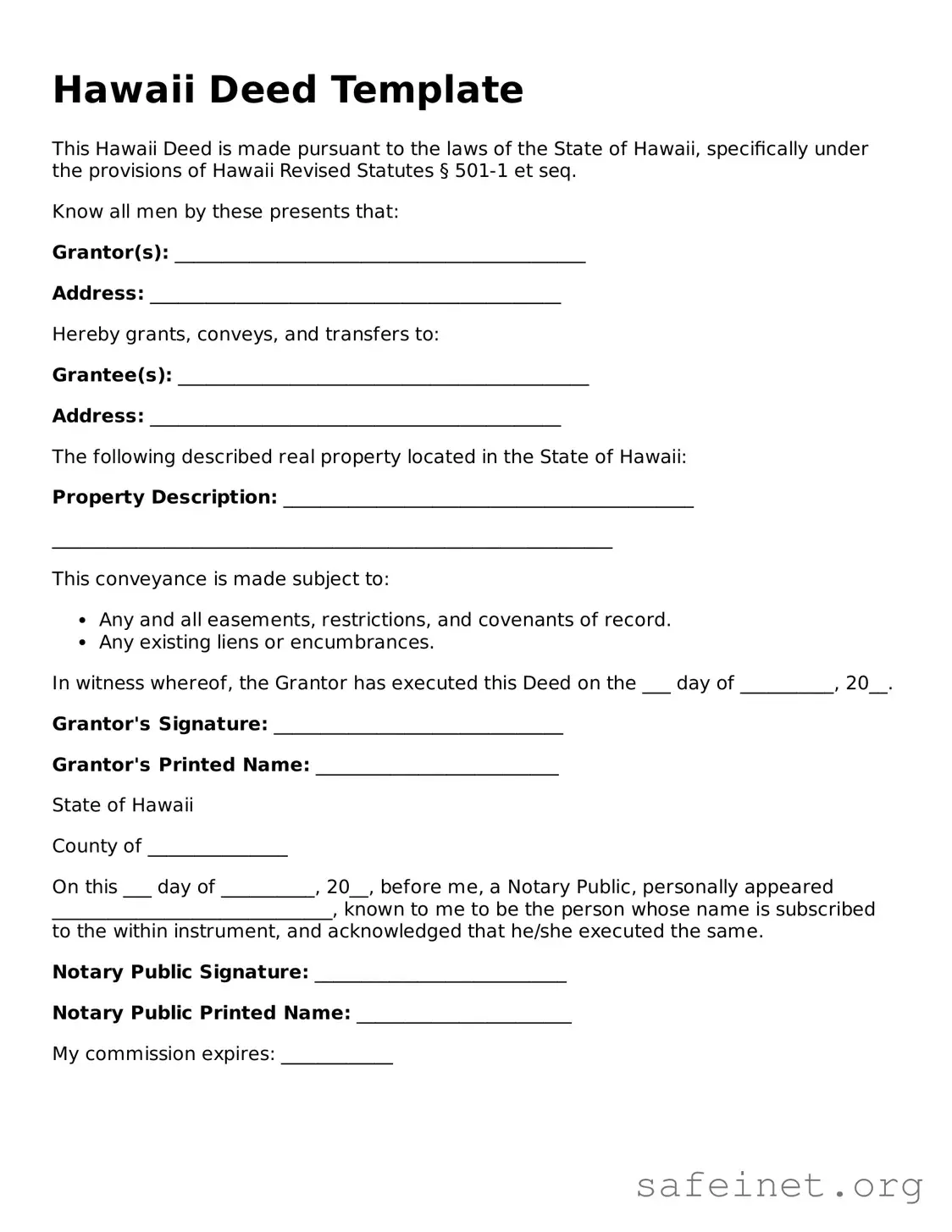
When it comes to transferring property ownership in Hawaii, understanding the Hawaii Deed form is essential. This legal document serves as the backbone of real estate transactions, ensuring that the transfer of title is executed smoothly and legally. The form outlines critical information such as the names of the parties involved, the legal description of the property, and any specific terms or conditions associated with the transfer. Additionally, it may include details about the consideration, or the value exchanged for the property. Whether you're a buyer, seller, or simply interested in real estate, grasping the nuances of this deed can empower you to navigate the process with confidence. Understanding how to properly fill out and file this form is crucial, as it not only protects your interests but also ensures compliance with state laws. With this knowledge in hand, you can approach property transactions in Hawaii with clarity and assurance.
Hawaii Deed Template
This Hawaii Deed is made pursuant to the laws of the State of Hawaii, specifically under the provisions of Hawaii Revised Statutes § 501-1 et seq.
Know all men by these presents that:
Grantor(s): ____________________________________________
Address: ____________________________________________
Hereby grants, conveys, and transfers to:
Grantee(s): ____________________________________________
Address: ____________________________________________
The following described real property located in the State of Hawaii:
Property Description: ____________________________________________
____________________________________________________________
This conveyance is made subject to:
In witness whereof, the Grantor has executed this Deed on the ___ day of __________, 20__.
Grantor's Signature: _______________________________
Grantor's Printed Name: __________________________
State of Hawaii
County of _______________
On this ___ day of __________, 20__, before me, a Notary Public, personally appeared ______________________________, known to me to be the person whose name is subscribed to the within instrument, and acknowledged that he/she executed the same.
Notary Public Signature: ___________________________
Notary Public Printed Name: _______________________
My commission expires: ____________
| Fact Name | Description |
|---|---|
| Governing Law | The Hawaii Deed form is governed by the Hawaii Revised Statutes, specifically Chapter 501, which deals with property conveyances. |
| Types of Deeds | Hawaii recognizes several types of deeds, including warranty deeds, quitclaim deeds, and special warranty deeds. |
| Transfer of Ownership | The deed is the legal document that facilitates the transfer of ownership from one party to another. |
| Recording Requirements | To be enforceable against third parties, the deed must be recorded with the Bureau of Conveyances in Hawaii. |
| Signature Requirements | For a deed to be valid, it must be signed by the grantor (the person transferring the property) and notarized. |
Once you have the Hawaii Deed form in hand, it’s time to fill it out accurately. Completing this form is essential for transferring property ownership. Make sure to have all necessary information ready before you start, as this will help streamline the process.
What is a Hawaii Deed form?
A Hawaii Deed form is a legal document used to transfer ownership of real property in the state of Hawaii. This form outlines the details of the property being transferred, including its legal description, and identifies the parties involved in the transaction. The deed serves as evidence of the transfer and is recorded with the Bureau of Conveyances in Hawaii to ensure public notice of the change in ownership.
What types of deeds are available in Hawaii?
Hawaii recognizes several types of deeds, each serving a different purpose. The most common types include the Warranty Deed, which guarantees that the seller has clear title to the property and has the right to sell it; the Quitclaim Deed, which transfers whatever interest the seller has in the property without any guarantees; and the Special Warranty Deed, which offers limited warranties regarding the title. Each type of deed has its own implications for the buyer and seller, so it's essential to choose the right one for your situation.
How do I complete a Hawaii Deed form?
Completing a Hawaii Deed form involves several steps. First, you need to accurately fill out the form with the necessary information, including the names of the grantor (seller) and grantee (buyer), the legal description of the property, and the consideration (price) for the sale. After filling out the form, both parties must sign it in the presence of a notary public. Finally, the completed deed must be filed with the Bureau of Conveyances to officially record the transfer of ownership.
Is a notary required for a Hawaii Deed?
Yes, a notary public is required for a Hawaii Deed. The signatures of both the grantor and grantee must be notarized to ensure the authenticity of the document. This step is crucial because it helps prevent fraud and ensures that both parties are entering into the agreement willingly and with an understanding of its terms.
Are there any fees associated with recording a Hawaii Deed?
Yes, there are fees associated with recording a Hawaii Deed. The Bureau of Conveyances charges a fee based on the number of pages in the document and the type of deed being recorded. It's important to check the current fee schedule on the Bureau's website or contact them directly for the most accurate information. Additionally, there may be other costs involved, such as notary fees or title search fees, depending on your specific situation.
What happens after I file the Hawaii Deed?
Once you file the Hawaii Deed with the Bureau of Conveyances, the deed becomes part of the public record. You will receive a stamped copy of the deed, which serves as proof of the transfer of ownership. This recorded deed is essential for the new owner, as it establishes their legal claim to the property. It is advisable to keep this document in a safe place, as it may be needed for future transactions or legal matters related to the property.
Incorrect Names: One common mistake is failing to accurately list the names of the parties involved. It is essential to ensure that the names match exactly as they appear on legal documents. Any discrepancies can lead to complications.
Missing Signatures: All required signatures must be included. Omitting a signature can invalidate the deed. Both the grantor and grantee should review the document to confirm that their signatures are present.
Improper Property Description: The property must be described accurately. This includes providing the correct address and legal description. Failing to do so can create confusion regarding the property being transferred.
Inaccurate Notarization: The deed must be notarized properly. If the notary fails to complete their section correctly, the deed may not be recognized as valid. Always check that the notary's signature and seal are present.
Failure to Record: After filling out the deed form, it is crucial to record it with the appropriate county office. Neglecting this step can result in the deed not being enforceable against third parties.
When engaging in real estate transactions in Hawaii, several forms and documents accompany the Hawaii Deed form. Each of these documents plays a crucial role in ensuring that the transfer of property is legally sound and properly documented. Below is a list of some commonly used forms and documents that you may encounter.
Understanding these accompanying documents is vital for anyone involved in a property transaction in Hawaii. Each document serves a specific purpose, contributing to a transparent and legally binding process. By familiarizing yourself with these forms, you can navigate the complexities of real estate transactions with greater confidence.
The Hawaii Deed form shares similarities with a Warranty Deed. A Warranty Deed provides a guarantee that the seller holds clear title to the property and has the right to sell it. This document assures the buyer that there are no hidden liens or claims against the property. In Hawaii, as in many states, a Warranty Deed is often used in residential transactions to provide peace of mind to the buyer, ensuring their investment is protected against future disputes regarding ownership.
Another document similar to the Hawaii Deed form is the Quitclaim Deed. A Quitclaim Deed transfers whatever interest the seller has in the property without making any guarantees about the title. This means that if the seller does not own the property outright, the buyer may receive nothing. Quitclaim Deeds are often used in situations where property is transferred between family members or in divorce settlements, as they are quick and straightforward, but they carry more risk for the buyer compared to a Warranty Deed.
The Special Purpose Deed is also comparable to the Hawaii Deed form. This type of deed is used for specific purposes, such as transferring property into a trust or for tax purposes. Like the Hawaii Deed, it must meet certain legal requirements to be valid. However, a Special Purpose Deed may include unique provisions that cater to the specific needs of the transaction, making it distinct from more traditional deed forms.
Lastly, the Bargain and Sale Deed resembles the Hawaii Deed in that it conveys property but does not provide warranties against defects in the title. This type of deed implies that the seller has the right to sell the property but does not guarantee that they own it free and clear. It is often used in foreclosure sales or tax sales, where the seller may not have full knowledge of the property's history. Buyers should exercise caution and conduct thorough due diligence when dealing with a Bargain and Sale Deed.
When filling out the Hawaii Deed form, it's essential to be careful and thorough. Here are some key points to keep in mind:
Following these guidelines can help ensure that your deed is processed smoothly and without complications.
Many people have misunderstandings about the Hawaii Deed form. Here are five common misconceptions clarified:
All deeds in Hawaii are the same. This is not true. Different types of deeds serve different purposes. For example, a warranty deed offers more protection to the buyer than a quitclaim deed.
Hawaii does not require a deed to transfer property. This is incorrect. A deed is essential for transferring property ownership in Hawaii. Without it, the transfer is not legally recognized.
Only a lawyer can prepare a Hawaii Deed. While it's advisable to consult with a legal professional, individuals can prepare their own deeds. However, they must ensure that all legal requirements are met.
Once a deed is signed, it cannot be changed. This is a misconception. Deeds can be amended or revoked, but specific procedures must be followed to ensure the changes are legally binding.
Hawaii Deeds are not public records. This is false. Deeds in Hawaii are public records and can be accessed by anyone. This transparency helps maintain property ownership records.
Understanding these misconceptions can help you navigate property transactions more effectively. Always seek reliable information when dealing with legal documents.
Filling out and using the Hawaii Deed form is a critical process for property transactions in the state. Here are some key takeaways to keep in mind: