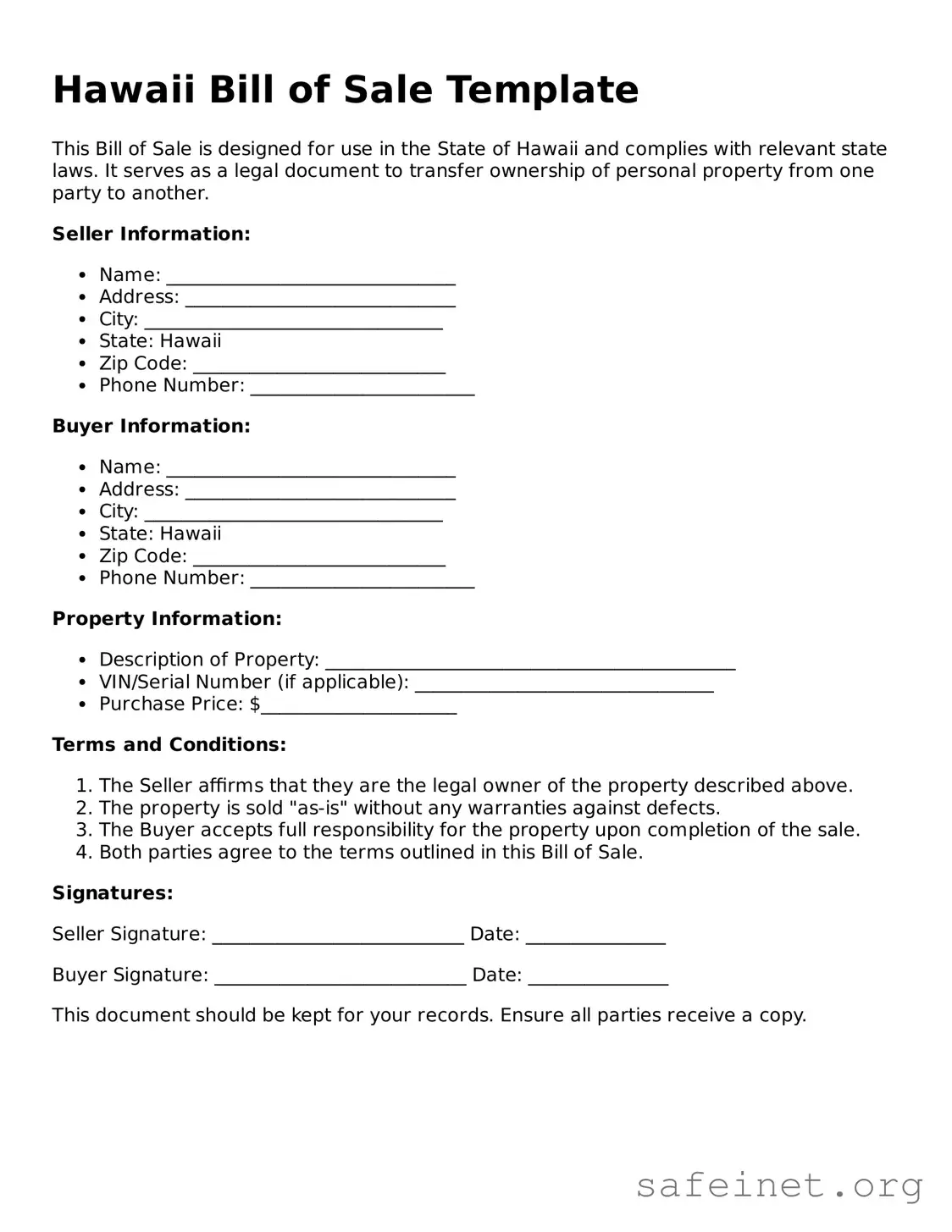
The Hawaii Bill of Sale form is an essential document for anyone involved in the buying or selling of personal property in the state. This form serves as proof of a transaction between a seller and a buyer, providing details such as the names and addresses of both parties, a description of the item being sold, and the sale price. It can apply to various items, including vehicles, boats, and even personal items like furniture or electronics. In Hawaii, having a Bill of Sale can help protect both the buyer and seller by clarifying the terms of the sale and serving as a legal record of the transaction. Additionally, it may be required for certain items, like vehicles, to complete the registration process. Understanding how to properly fill out this form is crucial to ensure a smooth and lawful transaction.
Hawaii Bill of Sale Template
This Bill of Sale is designed for use in the State of Hawaii and complies with relevant state laws. It serves as a legal document to transfer ownership of personal property from one party to another.
Seller Information:
Buyer Information:
Property Information:
Terms and Conditions:
Signatures:
Seller Signature: ___________________________ Date: _______________
Buyer Signature: ___________________________ Date: _______________
This document should be kept for your records. Ensure all parties receive a copy.
| Fact Name | Description |
|---|---|
| Purpose | The Hawaii Bill of Sale is used to document the transfer of ownership of personal property from one party to another. |
| Governing Law | The form is governed by Hawaii Revised Statutes, specifically Chapter 490 regarding the Uniform Commercial Code. |
| Types of Property | This form can be used for various types of personal property, including vehicles, boats, and equipment. |
| Notarization | While notarization is not required, it is highly recommended to add an extra layer of authenticity. |
| Buyer and Seller Information | Both parties must provide their names and addresses to ensure clear identification in the transaction. |
| Consideration | The form should specify the consideration, or payment, exchanged for the property, which is essential for legal validity. |
| As-Is Condition | Buyers should be aware that most bills of sale include an "as-is" clause, meaning the seller is not responsible for future defects. |
| Record Keeping | Both the buyer and seller should keep a copy of the bill of sale for their records, as it serves as proof of the transaction. |
| State-Specific Requirements | Hawaii may have additional requirements for specific types of property, such as vehicles, which must be noted in the bill of sale. |
Once you have the Hawaii Bill of Sale form in hand, you’re ready to fill it out. This document will help you finalize the sale of a vehicle or personal property. Make sure to have all necessary information ready to ensure a smooth process.
After completing the form, keep a copy for your records. The buyer should also retain a copy for their documentation. This will help both parties in case of any future inquiries or issues.
What is a Hawaii Bill of Sale form?
A Hawaii Bill of Sale form is a legal document that records the transfer of ownership of personal property from one party to another. This form serves as proof of the transaction and outlines the details of the sale, including the item being sold, the purchase price, and the names of both the buyer and seller.
When do I need a Bill of Sale in Hawaii?
A Bill of Sale is typically needed when selling or purchasing personal property, such as vehicles, boats, or equipment. It is especially important for high-value items or when the transaction involves a change of ownership that requires registration with the state, such as with vehicles or vessels.
Is a Bill of Sale required by law in Hawaii?
While a Bill of Sale is not legally required for every transaction in Hawaii, it is highly recommended for protecting both the buyer and seller. For certain items, like vehicles, a Bill of Sale is necessary for registration purposes and to establish proof of ownership.
What information should be included in a Hawaii Bill of Sale?
A complete Hawaii Bill of Sale should include the following information: the names and addresses of both the buyer and seller, a description of the item being sold (including serial numbers if applicable), the purchase price, the date of the transaction, and signatures from both parties. Including any warranties or conditions related to the sale can also be beneficial.
Can I create my own Bill of Sale in Hawaii?
Yes, you can create your own Bill of Sale in Hawaii. It is important to ensure that the document contains all necessary information and meets the requirements for the specific type of property being sold. Templates are available online, but it is advisable to review them carefully to ensure compliance with state laws.
Do I need to have the Bill of Sale notarized?
In Hawaii, notarization of a Bill of Sale is not generally required. However, having the document notarized can provide an extra layer of security and authenticity, especially for high-value transactions. It can also help in case of future disputes regarding the sale.
What should I do with the Bill of Sale after the transaction?
After the transaction, both the buyer and seller should keep a copy of the Bill of Sale for their records. This document can serve as proof of ownership and may be needed for future reference, such as when registering the item or for tax purposes.
Where can I find a Bill of Sale template for Hawaii?
Bill of Sale templates for Hawaii can be found online through various legal websites, government resources, and legal document services. It is important to choose a template that is specifically designed for Hawaii to ensure it meets state requirements.
Incorrect Information: People often provide inaccurate details about the buyer, seller, or item being sold. This can include wrong names, addresses, or vehicle identification numbers (VIN).
Missing Signatures: A common mistake is failing to have both parties sign the document. Without signatures, the bill of sale may not be considered valid.
Omitting Important Details: Some individuals forget to include essential information such as the sale price, date of sale, or any warranties. These details are crucial for a complete record.
Not Keeping Copies: After filling out the form, individuals often neglect to make copies for their records. This can lead to issues if disputes arise later.
The Hawaii Bill of Sale form is a crucial document for anyone looking to buy or sell personal property in the state. However, there are several other forms and documents that are often used in conjunction with the Bill of Sale to ensure a smooth transaction. Below is a list of these important documents.
Each of these documents plays a vital role in facilitating a successful transaction. Ensuring that all necessary forms are completed accurately can help protect both the buyer and seller from potential disputes in the future.
The Vehicle Bill of Sale is a document used when buying or selling a motor vehicle. It serves as proof of the transaction between the buyer and seller. Similar to the Hawaii Bill of Sale, it includes details such as the vehicle identification number (VIN), make, model, year, and the sale price. This document protects both parties by providing a clear record of the sale, which can be important for registration and title transfer purposes.
A Personal Property Bill of Sale is another document that shares similarities with the Hawaii Bill of Sale. This form is used for transactions involving personal items, such as furniture, electronics, or collectibles. Like the Hawaii Bill of Sale, it outlines the specifics of the item being sold, including a description and the agreed-upon price. This document helps establish ownership and can serve as evidence in case of disputes regarding the transaction.
The Boat Bill of Sale is specifically designed for the sale of watercraft. It includes details such as the boat's hull identification number (HIN), make, model, and year. This document is akin to the Hawaii Bill of Sale in that it provides a legal record of the sale and transfer of ownership. Both documents serve to protect the interests of the buyer and seller, ensuring that the transaction is documented properly.
The Equipment Bill of Sale is used for the sale of business or industrial equipment. This document details the equipment being sold, including its condition, make, model, and price. Much like the Hawaii Bill of Sale, it serves as a legal record of the transaction, protecting both the buyer and seller. This document can be particularly important for businesses, as it helps maintain clear records of asset ownership and value.
When filling out the Hawaii Bill of Sale form, it is important to adhere to certain guidelines to ensure accuracy and compliance. Below are six essential do's and don'ts to consider:
Following these guidelines can facilitate a smooth transaction and protect the interests of both parties involved.
The Hawaii Bill of Sale form is often misunderstood. Here are eight common misconceptions, clarified for better understanding.
Understanding these misconceptions can help individuals navigate transactions more effectively and ensure they are protected under Hawaii law.
Filling out and using the Hawaii Bill of Sale form is an important step in ensuring a smooth transaction when buying or selling personal property. Here are some key takeaways to keep in mind:
By following these guidelines, you can ensure that your use of the Hawaii Bill of Sale form is effective and legally sound. This document not only protects both parties involved but also helps facilitate a smooth transfer of ownership.