When it comes to purchasing or selling a tractor in Georgia, having a well-documented transaction is essential. The Georgia Tractor Bill of Sale form serves as a vital tool in this process, ensuring that both the buyer and seller have a clear record of the sale. This form typically includes important details such as the names and addresses of both parties, a description of the tractor including its make, model, and year, and the sale price. Additionally, it may include information about any warranties or conditions attached to the sale. By providing a written record, the bill of sale helps protect the interests of both parties and can serve as proof of ownership. Whether you're a seasoned farmer or a first-time buyer, understanding the significance of this document can lead to a smoother and more secure transaction.
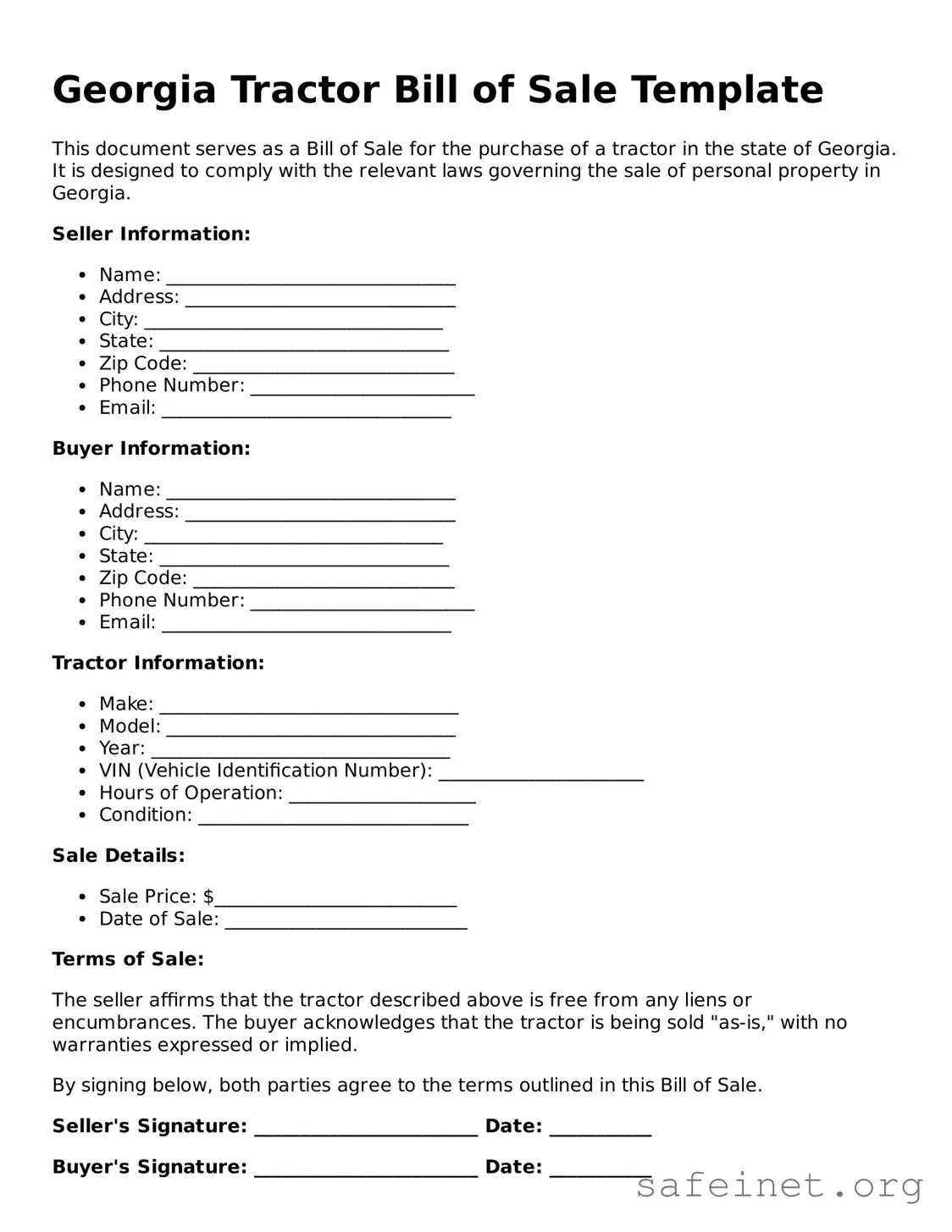
Georgia Tractor Bill of Sale Template
This document serves as a Bill of Sale for the purchase of a tractor in the state of Georgia. It is designed to comply with the relevant laws governing the sale of personal property in Georgia.
Seller Information:
Buyer Information:
Tractor Information:
Sale Details:
Terms of Sale:
The seller affirms that the tractor described above is free from any liens or encumbrances. The buyer acknowledges that the tractor is being sold "as-is," with no warranties expressed or implied.
By signing below, both parties agree to the terms outlined in this Bill of Sale.
Seller's Signature: ________________________ Date: ___________
Buyer's Signature: ________________________ Date: ___________
| Fact Name | Description |
|---|---|
| Purpose | The Georgia Tractor Bill of Sale form is used to document the sale and transfer of ownership of a tractor between a seller and a buyer. |
| Requirements | Both the seller and buyer must provide their names, addresses, and signatures on the form to make it valid. |
| Governing Law | This form is governed by Georgia state law, specifically under the Uniform Commercial Code (UCC) regarding the sale of goods. |
| Notarization | Although notarization is not required, having the form notarized can provide additional legal protection for both parties. |
| Record Keeping | It is advisable for both the buyer and seller to keep a copy of the completed form for their records, as it serves as proof of the transaction. |
Filling out the Georgia Tractor Bill of Sale form is an essential step in the process of transferring ownership of a tractor. After completing the form, both the buyer and seller should keep a copy for their records. This document serves as proof of the transaction and may be required for registration purposes.
What is a Georgia Tractor Bill of Sale?
A Georgia Tractor Bill of Sale is a legal document that records the sale of a tractor from one party to another. It serves as proof of the transaction and includes important details about the tractor, the buyer, and the seller.
Why do I need a Bill of Sale for a tractor?
This document is essential for several reasons. It provides evidence of ownership transfer, helps protect both the buyer and seller in case of disputes, and may be required for registration purposes with the state. Having a Bill of Sale can also assist in tax assessments.
What information is included in the Georgia Tractor Bill of Sale?
The form typically includes the names and addresses of both the buyer and seller, the date of the sale, the purchase price, and a description of the tractor, including its make, model, year, and Vehicle Identification Number (VIN). Any warranties or conditions of the sale may also be noted.
Is the Georgia Tractor Bill of Sale required by law?
While it is not always legally required to have a Bill of Sale for a tractor in Georgia, it is highly recommended. Having this document can facilitate the registration process and provide legal protection in case of disputes.
How do I complete a Georgia Tractor Bill of Sale?
To complete the form, gather the necessary information about the tractor and the parties involved. Fill in the details accurately, ensuring that all descriptions match the tractor’s documentation. Both the buyer and seller should sign the document to make it valid.
Do I need to have the Bill of Sale notarized?
Notarization is not required for a Georgia Tractor Bill of Sale. However, having it notarized can add an extra layer of security and authenticity to the document, which may be beneficial in the event of a dispute.
Can I use a generic Bill of Sale for my tractor?
While a generic Bill of Sale can be used, it is advisable to use a specific Georgia Tractor Bill of Sale form. This ensures that all necessary information is included and complies with state requirements, making the transaction smoother.
What if I lose my Bill of Sale?
If you lose your Bill of Sale, it is important to act quickly. You can request a copy from the seller if they kept a record. If that is not possible, consider drafting a new Bill of Sale and having both parties sign it again to document the transaction.
Where can I obtain a Georgia Tractor Bill of Sale form?
You can find a Georgia Tractor Bill of Sale form online through various legal form websites, or you may obtain one from local government offices or legal stationery stores. Ensure that the form you choose is specific to Georgia to meet state requirements.
What should I do after completing the Bill of Sale?
After completing the Bill of Sale, both the buyer and seller should keep a copy for their records. The buyer may also need to present the Bill of Sale when registering the tractor with the Georgia Department of Revenue or local authorities.
Incomplete Information: Many individuals fail to fill out all required fields. Missing information can lead to confusion or disputes later on.
Incorrect Vehicle Identification Number (VIN): A common mistake is miswriting the VIN. This number is crucial for identifying the tractor and ensuring a clear title transfer.
Not Including Sale Price: Omitting the sale price can create issues. The bill of sale should clearly state the amount paid to avoid misunderstandings.
Failure to Sign: Some sellers or buyers neglect to sign the document. Without signatures, the bill of sale may not be considered valid.
Not Keeping Copies: After completing the form, failing to keep copies for both parties can lead to problems. Each party should retain a signed copy for their records.
When completing a transaction for a tractor in Georgia, several additional forms and documents may be necessary to ensure a smooth process. Each of these documents serves a specific purpose and can help facilitate the transfer of ownership and registration.
Gathering these documents will help ensure that the transaction is legally sound and that both parties are protected. It's important to review each document carefully before finalizing the sale.
The Georgia Vehicle Bill of Sale is a document that serves a similar purpose to the Tractor Bill of Sale. Both forms are used to transfer ownership of a vehicle from one party to another. They include essential details such as the buyer's and seller's information, a description of the vehicle, and the sale price. Additionally, both documents provide a record of the transaction, which can be useful for future reference or legal purposes.
The Georgia Boat Bill of Sale is another document that shares similarities with the Tractor Bill of Sale. Like the Tractor Bill of Sale, it is used to document the sale of a watercraft. This form also includes pertinent information about the buyer and seller, as well as details about the boat, including its make, model, and hull identification number. Both documents serve to protect the interests of both parties involved in the transaction.
The Georgia Motorcycle Bill of Sale is comparable to the Tractor Bill of Sale in that it facilitates the transfer of ownership for motorcycles. This document captures the same essential information, such as the identities of the buyer and seller, a description of the motorcycle, and the purchase price. Both forms help to ensure that the transaction is recorded and can be referenced in the future if needed.
When filling out the Georgia Tractor Bill of Sale form, it's important to follow certain guidelines to ensure accuracy and legality. Here’s a list of things you should and shouldn’t do:
The Georgia Tractor Bill of Sale form is an important document for anyone buying or selling a tractor in the state. However, several misconceptions surround this form. Here are five common misunderstandings:
Understanding these misconceptions can help ensure a smoother transaction when buying or selling a tractor in Georgia.
When filling out and using the Georgia Tractor Bill of Sale form, it is essential to understand several key points to ensure a smooth transaction. Below are important takeaways to consider:
By following these guidelines, individuals can navigate the process of completing a Tractor Bill of Sale in Georgia with greater confidence and clarity.