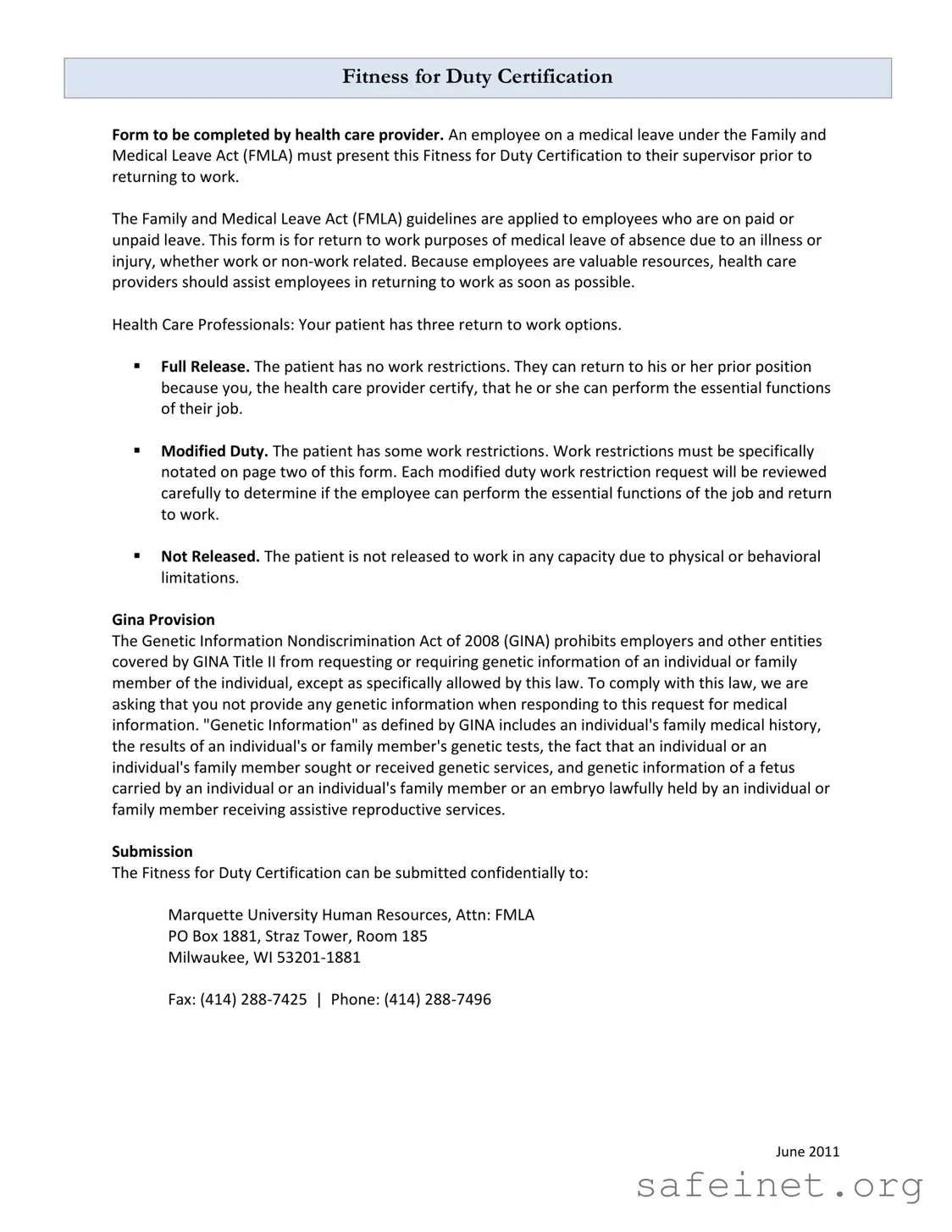
The Fitness for Duty Certification Form plays a crucial role in ensuring a smooth transition back to work for employees who have taken medical leave under the Family and Medical Leave Act (FMLA). This form must be completed by a healthcare provider and submitted to the employee's supervisor prior to their return. It is designed for individuals who have been absent due to illness or injury, regardless of whether the cause was work-related. The form outlines three possible return-to-work options: full release, modified duty, or not released. A full release indicates that the employee can return without restrictions, while modified duty allows for specific work restrictions that must be detailed on the form. If the employee is not released, it signifies that they cannot work in any capacity due to physical or behavioral limitations. Additionally, compliance with the Genetic Information Nondiscrimination Act (GINA) is essential, as it prohibits the collection of genetic information during this process. The form must be submitted confidentially to the designated Human Resources department, ensuring that all medical information is handled with care and respect. By following these guidelines, both employees and employers can facilitate a safe and effective return to the workplace.

| Fact Name | Details |
|---|---|
| Purpose | The Fitness for Duty form certifies an employee's ability to return to work after medical leave. |
| Legal Requirement | Employees on FMLA leave must present this form to their supervisor before returning. |
| Return Options | Health care providers can indicate full release, modified duty, or not released. |
| Modified Duty | Specific work restrictions must be noted if an employee is released with modifications. |
| GINA Compliance | Employers cannot request genetic information as per the Genetic Information Nondiscrimination Act of 2008. |
| Submission | The completed form can be submitted to Marquette University Human Resources confidentially. |
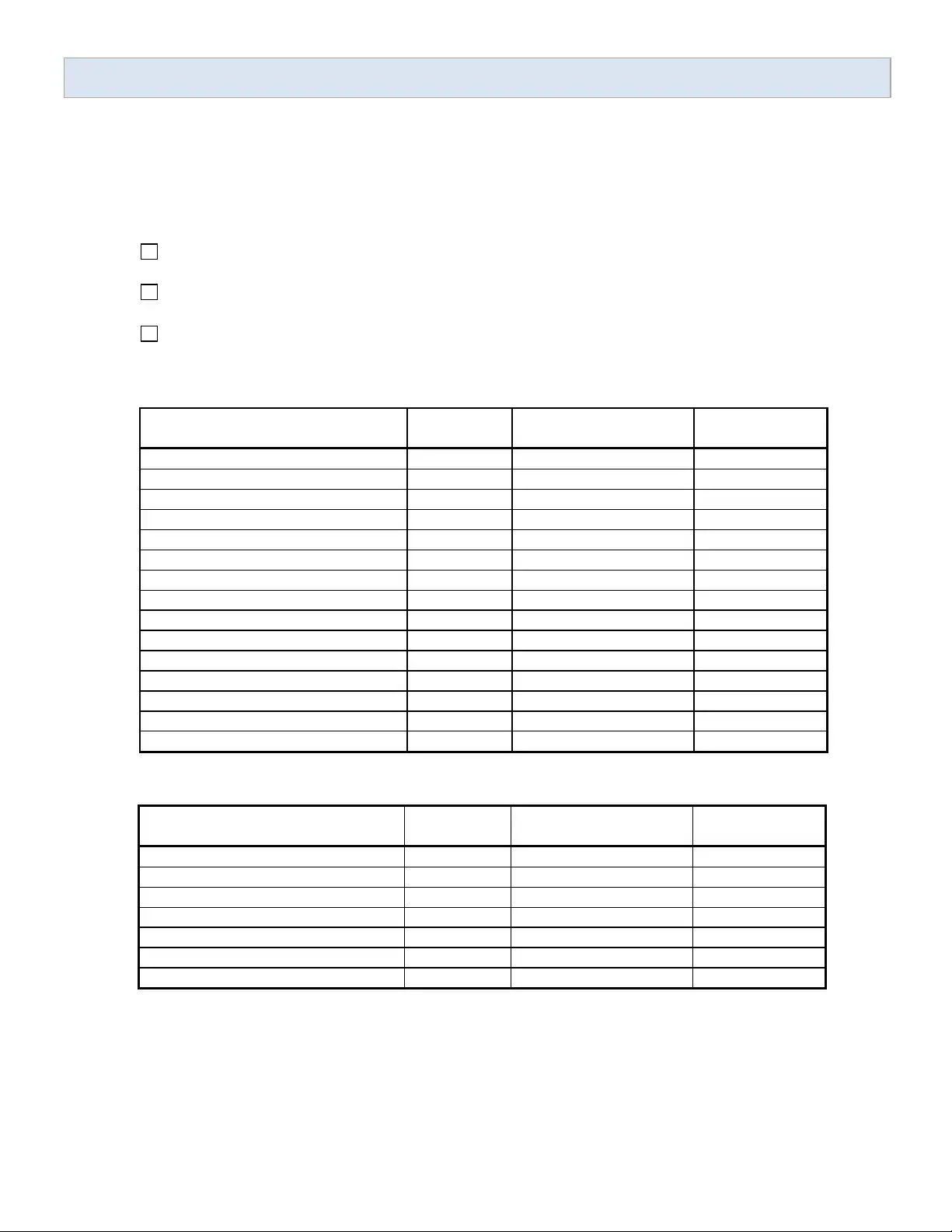
| Evaluation Dates | Next evaluation dates must be provided for modified or not released statuses. |
| Confidentiality | All submissions of the Fitness for Duty form are kept confidential to protect employee privacy. |
Completing the Fitness For Duty form is an important step for employees returning to work after a medical leave. This form must be filled out by a healthcare provider and submitted to ensure a smooth transition back to the workplace. Follow the steps below to fill out the form correctly.
Once the form is completed, submit it confidentially to the specified address or fax number. This ensures that the information is received securely and processed efficiently. Your cooperation is appreciated as it aids in the employee's return to work.
What is the Fitness For Duty form?
The Fitness For Duty form is a certification that must be completed by a health care provider. It is required for employees who are returning to work after a medical leave under the Family and Medical Leave Act (FMLA). This form confirms that the employee is fit to resume their duties, ensuring they can perform their job safely and effectively.
Who needs to complete the Fitness For Duty form?
The form must be completed by a health care provider who has examined the employee. This includes doctors, psychologists, or any licensed medical professional who can assess the employee’s physical and mental capabilities related to their job. The employee must present this form to their supervisor before returning to work.
What are the return to work options on the form?
There are three options for the health care provider to indicate on the form:
What should be included in the modified duty restrictions?
When indicating modified duty, the health care provider must specify the nature of the restrictions on the second page of the form. This can include limitations on lifting, standing, or any other physical or behavioral tasks relevant to the employee's job. Clear details help employers understand how to accommodate the employee's needs.
How does the Genetic Information Nondiscrimination Act (GINA) relate to this form?
GINA prohibits employers from requesting genetic information about an employee or their family members. When completing the Fitness For Duty form, health care providers should avoid including any genetic information. This includes family medical history or the results of genetic tests, ensuring compliance with the law.
Where should the completed form be submitted?
The completed Fitness For Duty Certification should be submitted confidentially to the Human Resources department at Marquette University. The address is:
Attn: FMLA
PO Box 1881
Straz Tower, Room 185
Milwaukee, WI 53201-1881
Fax: (414) 288-7425
Phone: (414) 288-7496
What happens if the employee is not released to work?
If the health care provider indicates that the employee is not released for any type of duty, the form will specify a next evaluation date. This means the employee should not return to work until they have been reassessed and cleared by their health care provider.
Is there a deadline for submitting the Fitness For Duty form?
Inaccurate Completion of Patient Information: Many individuals fail to provide complete and accurate details about the employee or patient. This includes missing the employee's full name or the date of the medical examination. Such omissions can delay the return-to-work process.
Failure to Specify Work Restrictions: When a health care provider indicates that an employee is on modified duty, they often neglect to clearly outline the specific work restrictions. Without this information, employers may struggle to accommodate the employee's needs effectively.
Not Including Next Evaluation Dates: Some forms are submitted without specifying the next evaluation date. This information is crucial for planning follow-up assessments and ensuring that the employee can return to work as soon as they are able.
Ignoring GINA Compliance: Providers sometimes overlook the requirement to avoid disclosing genetic information. Failing to adhere to the Genetic Information Nondiscrimination Act can lead to legal complications for both the provider and the employer.
Incomplete Signatures and Certifications: Lastly, many forms are submitted without the necessary signatures or certifications from the health care provider. This oversight can render the form invalid, causing further delays in the employee's return to work.
The Fitness for Duty form is a critical document for employees returning to work after a medical leave. Alongside this form, several other documents may be required to ensure a smooth transition back to the workplace. Below is a list of commonly used forms and documents that complement the Fitness for Duty Certification.
These documents work together to ensure that both the employer and employee are informed and compliant with regulations regarding medical leave and return to work. Proper handling of these forms can facilitate a smoother transition and support the employee's health and well-being.
The Return to Work form is similar to the Fitness for Duty Certification form in that it serves as a means for employees to demonstrate their readiness to resume work after a medical leave. This document typically requires input from a healthcare provider who assesses the employee's health status and ability to perform job duties. Like the Fitness for Duty form, it may include options for full release, modified duties, or restrictions based on the employee's health condition. Both forms aim to ensure that employees are fit to return to their roles without compromising their health or safety.
The Medical Leave of Absence form is another document that shares similarities with the Fitness for Duty Certification. This form is used to formally request a leave due to medical reasons, requiring supporting documentation from a healthcare provider. Both documents emphasize the importance of medical evaluation and often necessitate communication between the employee, employer, and healthcare professional. They are essential in managing the employee's health and ensuring compliance with workplace policies.
The Americans with Disabilities Act (ADA) Accommodation Request form also parallels the Fitness for Duty Certification. Employees may use this form to request reasonable accommodations based on their medical conditions. Both documents require detailed information about the employee's health and how it affects their job performance. They focus on facilitating a supportive work environment while ensuring that employees can fulfill their essential job functions.
The Short-Term Disability Claim form is similar to the Fitness for Duty Certification in that both documents involve medical assessments related to an employee's ability to work. The Short-Term Disability Claim form is submitted when an employee is unable to work due to a medical condition, while the Fitness for Duty form is required for returning to work after such a condition. Both forms highlight the role of healthcare providers in evaluating the employee's health status and the need for clear communication between all parties involved.
The Occupational Health Assessment form is another document that aligns with the Fitness for Duty Certification. This assessment is often conducted by occupational health professionals to determine an employee's fitness for their specific job duties. Like the Fitness for Duty form, it assesses both physical and behavioral aspects of an employee's health. The goal is to ensure that the employee can perform their job safely and effectively while considering any medical limitations.
The Family and Medical Leave Act (FMLA) Leave Request form also shares similarities with the Fitness for Duty Certification. This form is used by employees to request leave under FMLA guidelines, often requiring medical documentation to support the request. Both documents emphasize the importance of medical evaluation and the role of healthcare providers in verifying the employee's health status, ensuring that the leave process is compliant with legal requirements.
The Employee Health Questionnaire is another document that resembles the Fitness for Duty Certification. This questionnaire collects information about an employee's health history and current medical conditions. Both documents aim to assess the employee's fitness for work and may require input from healthcare providers. They help employers make informed decisions regarding the employee's ability to perform their job duties safely.
Lastly, the Worker's Compensation Claim form is similar to the Fitness for Duty Certification in that it involves medical documentation related to an employee's health. This form is used when an employee is injured on the job and seeks compensation for lost wages or medical expenses. Both documents require healthcare provider input to assess the employee's condition and ability to return to work, ensuring that the employee's health and safety are prioritized in the workplace.
When filling out the Fitness For Duty form, it's important to be thorough and accurate. Here’s a list of things you should and shouldn’t do:
Filling out and using the Fitness For Duty form is an important process for employees returning from medical leave. Here are some key takeaways to keep in mind: