Homepage > Blank Faa 8130 6 Template
Article Structure

The FAA Form 8130-6 serves as a crucial application for obtaining a U.S. Airworthiness Certificate, a key document that ensures an aircraft meets safety and operational standards set forth by federal regulations. This form is essential for both new and existing aircraft, as it evaluates an applicant's eligibility based on various criteria, including aircraft specifications and compliance with airworthiness directives. Information collected through this form is governed by the Privacy Act, ensuring that personal details are handled appropriately while allowing for necessary disclosures to relevant entities, such as law enforcement and financial institutions. Applicants must provide detailed information about the aircraft, including its registration mark, builder's name, model designation, and engine specifications. The form also requires a certification statement from the registered owner or their agent, affirming that the aircraft has been inspected and deemed airworthy. Additionally, specific sections address requests for different types of airworthiness certificates, such as standard or special certificates, which cater to various operational needs. Overall, the FAA Form 8130-6 is a comprehensive document that plays a vital role in maintaining aviation safety standards across the United States.
Form Sample

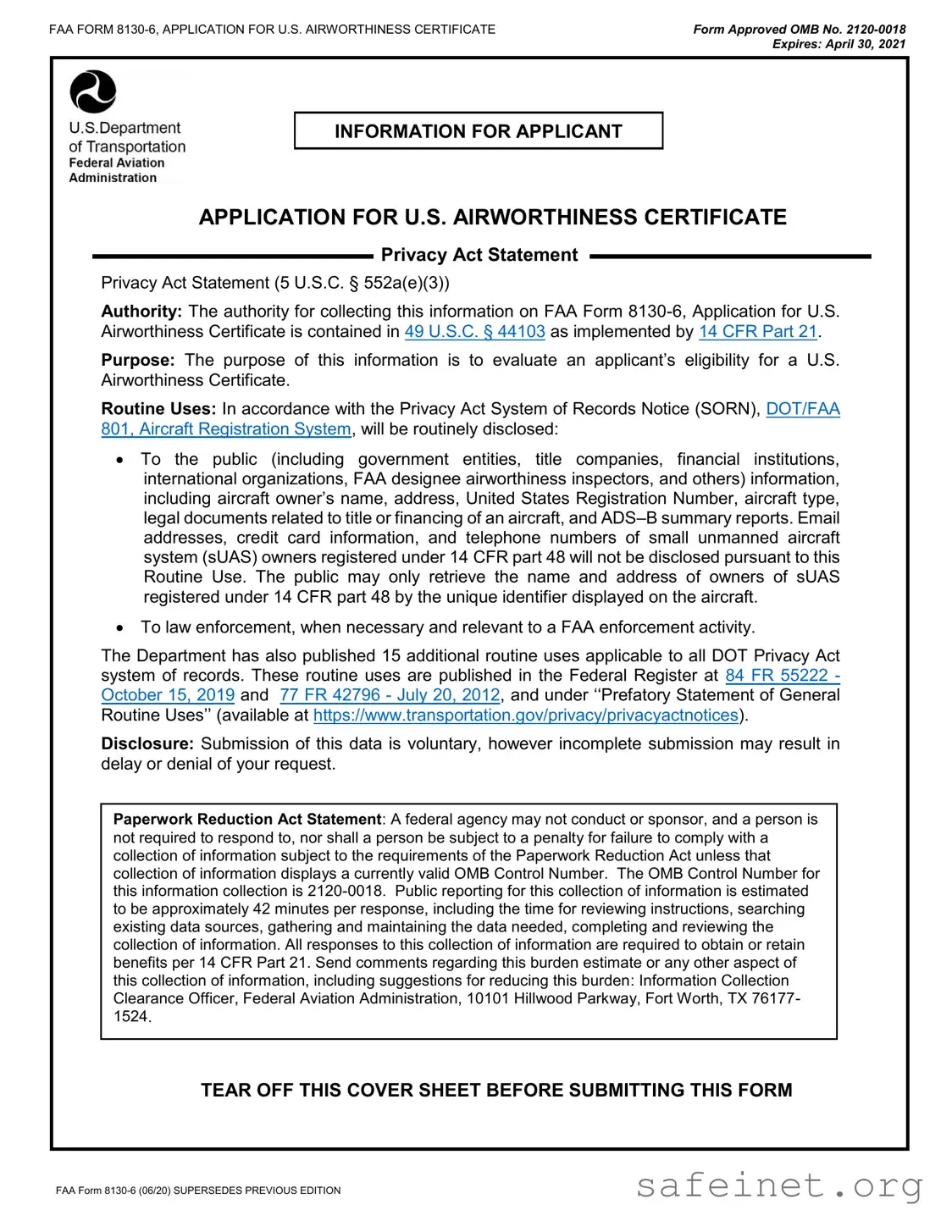
FAA FORM 8130-6, APPLICATION FOR U.S. AIRWORTHINESS CERTIFICATE
Form Approved OMB No. 2120-0018
Expires: April 30, 2021
APPLICATION FOR U.S. AIRWORTHINESS CERTIFICATE
Privacy Act Statement
Privacy Act Statement (5 U.S.C. § 552a(e)(3))
Authority: The authority for collecting this information on FAA Form 8130-6, Application for U.S.
Airworthiness Certificate is contained in
49 U.S.C. § 44103 as implemented by 14 CFR Part 21.
Purpose: The purpose of this information is to evaluate an applicant’s eligibility for a U.S.
Airworthiness Certificate.
Routine Uses: In accordance with the Privacy Act System of Records Notice (SORN),
DOT/FAA
801, Aircraft Registration System, will be routinely disclosed:
To the public (including government entities, title companies, financial institutions,
international organizations, FAA designee airworthiness inspectors, and others) information,
including aircraft owner’s name, address, United States Registration Number, aircraft type,
legal documents related to title or financing of an aircraft, and ADS–B summary reports. Email
addresses, credit card information, and telephone numbers of small unmanned aircraft
system (sUAS) owners registered under 14 CFR part 48 will not be disclosed pursuant to this
Routine Use. The public may only retrieve the name and address of owners of sUAS
registered under 14 CFR part 48 by the unique identifier displayed on the aircraft.
To law enforcement, when necessary and relevant to a FAA enforcement activity.
The Department has also published 15 additional routine uses applicable to all DOT Privacy Act
system of records. These routine uses are published in the Federal Register at
84 FR 55222 -
October 15, 2019 and 77 FR 42796 - July 20, 2012, and under ‘‘Prefatory Statement of General
Routine Uses’’ (available at https://www.transportation.gov/privacy/privacyactnotices).
Disclosure: Submission of this data is voluntary, however incomplete submission may result in
delay or denial of your request.
TEAR OFF THIS COVER SHEET BEFORE SUBMITTING THIS FORM
Paperwork Reduction Act Statement: A federal agency may not conduct or sponsor, and a person is
not required to respond to, nor shall a person be subject to a penalty for failure to comply with a
collection of information subject to the requirements of the Paperwork Reduction Act unless that
collection of information displays a currently valid OMB Control Number. The OMB Control Number for
this information collection is 2120-0018. Public reporting for this collection of information is estimated
to be approximately 42 minutes per response, including the time for reviewing instructions, searching
existing data sources, gathering and maintaining the data needed, completing and reviewing the
collection of information. All responses to this collection of information are required to obtain or retain
benefits per 14 CFR Part 21. Send comments regarding this burden estimate or any other aspect of
this collection of information, including suggestions for reducing this burden: Information Collection
Clearance Officer, Federal Aviation Administration, 10101 Hillwood Parkway, Fort Worth, TX 76177-
1524
.
INFORMATION FOR APPLICANT
FAA Form 8130-6 (06/20) SUPERSEDES PREVIOUS EDITION
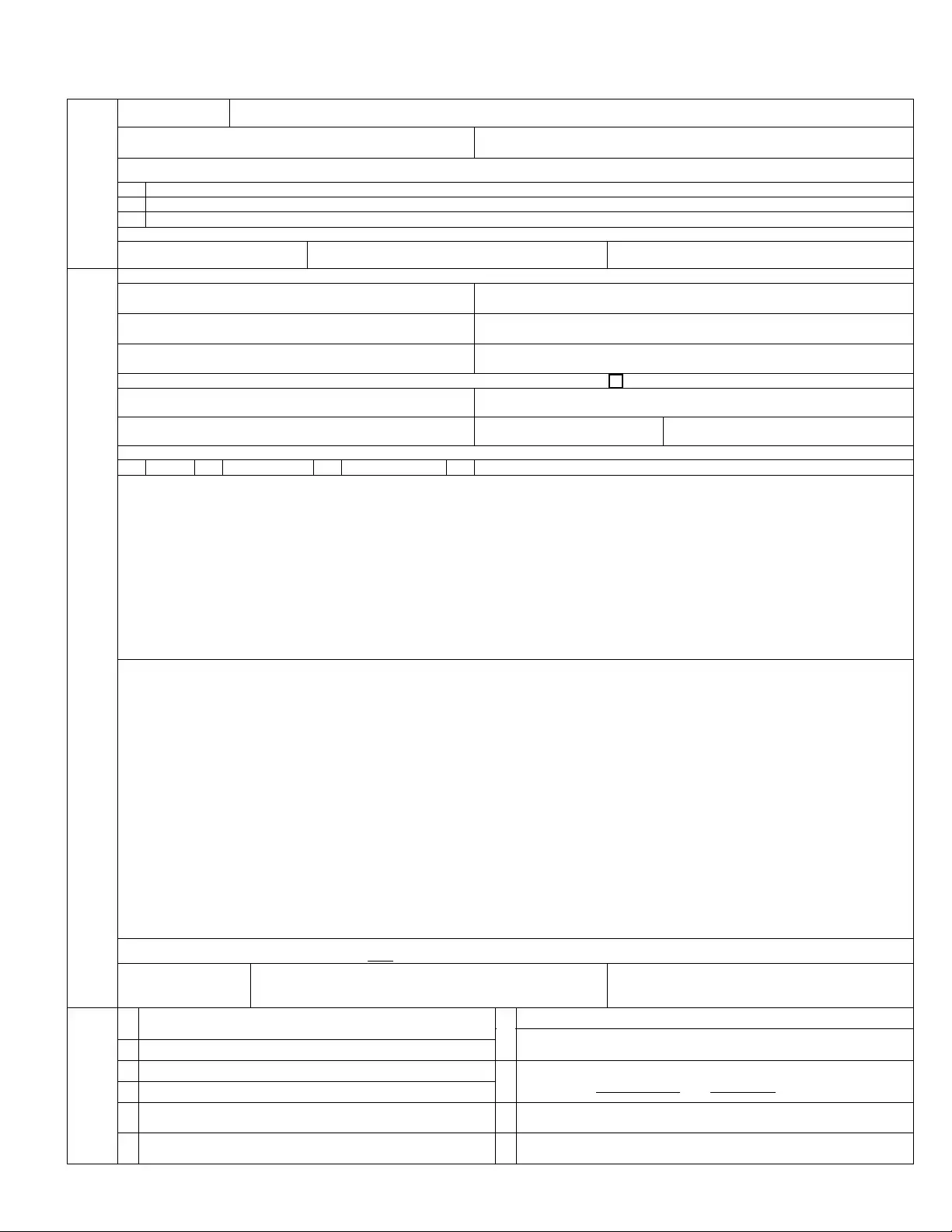
5. AIRCRAFT SERIAL NO. 6. ENGINE BUILDER’S NAME (Make) 7. ENGINE MODEL DESIGNATION
8. NUMBER OF ENGINES 9. PROPELLER BUILDER’S NAME (Make) 10. PROPELLER MODEL DESIGNATION 11. AIRCRAFT
IMPORT
NO
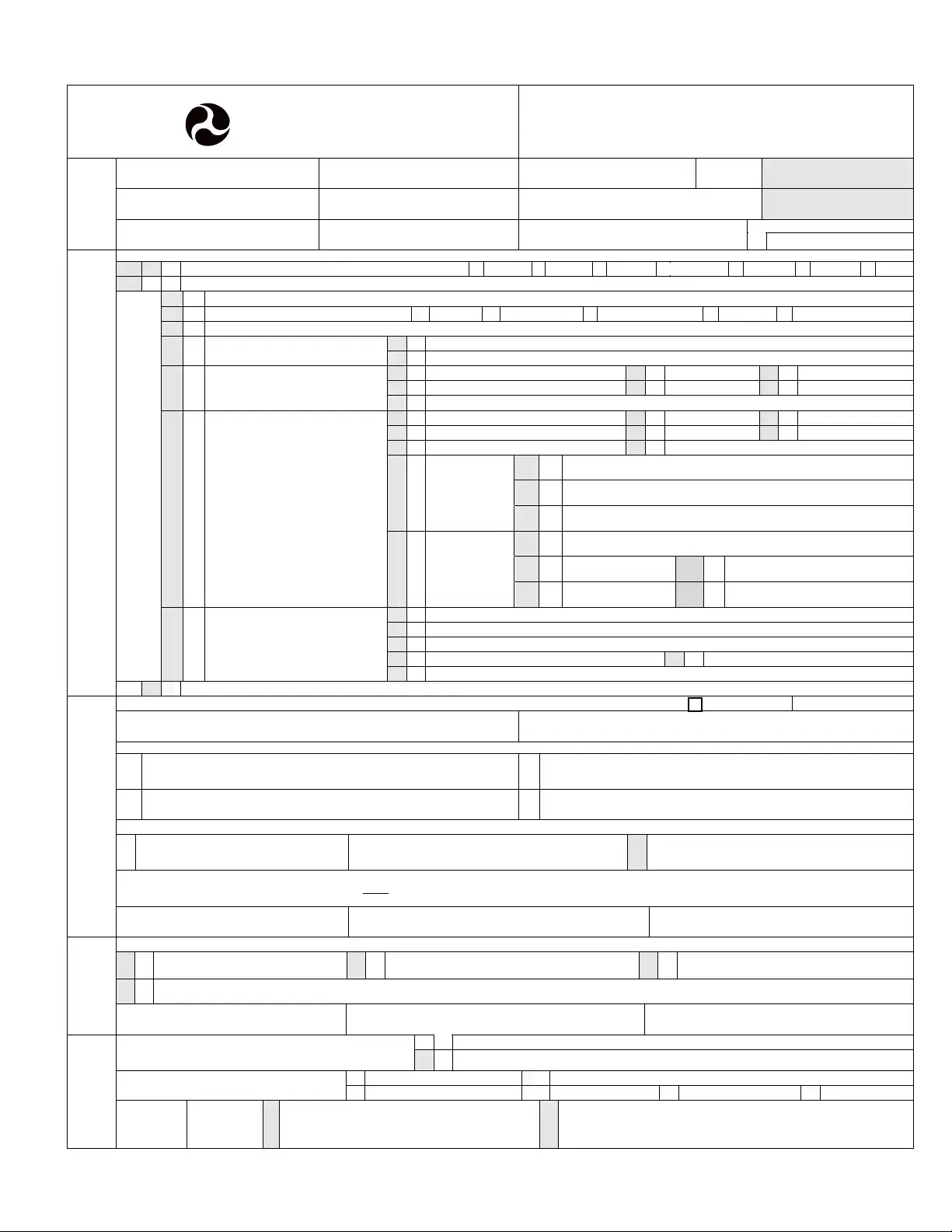
FAA FORM 8130-6, APPLICATION FOR U.S. AIRWORTHINESS CERTIFICATE
Form Approved OMB No. 2120-0018
Expires: April 30, 2021
APPLICATION FOR
INSTRUCTIONS - Print or type. Do not write in shaded areas; these are for
U.S. Department
U.S. AIRWORTHINESS
FAA use only. Submit original only to an authorized FAA Representative. If
of Transportation
additional space is required, use attachment. For special flight permits
Federal Aviation
CERTIFICATE
complete Sections II, VI, and VII as applicable.
Administration
1. REGISTRATION MARK 2. AIRCRAFT BUILDER’S NAME (Make) 3. AIRCRAFT MODEL DESIGNATION 4. YR. MFR. FAA CODING
N
TAF
IO
AIRCR
TIPCRS
I.
DE
IS (Check if applicable)
APPLICATION IS HEREBY MADE FOR:
(Check applicable items)
A 1 STANDARD AIRWORTHINESS CERTIFICATE (Indicate category)
RMAL UTILITY ACROBATIC TRANSPORT COMMUTER BALLOON OTHER
B SPECIAL AIRWORTHINESS CERTIFICATE (Check appropriate items)
7
PRIMARY
9
LIGHT-SPORT (Indicate Class) Airplane Power-Parachute Weight-Shift-Control Glider Lighter than Air
2 LIMITED
1 CLASS I
5
PROVISIONAL (Indicate class)
2 CLASS II
1 AGRICULTURE AND PEST CONTROL 2 AERIAL SURVEY 3 AERIAL ADVERTISING
RESTRICTED (Indicate operation(s)
3
4 FOREST (Wildlife conservation) 5 PATROLLING 6 WEATHER CONTROL
to be conducted)
D
0 OTHER (Specify)
ET
1 RESEARCH AND DEVELOPMENT 2 AMATEUR BUILT 3 EXHIBITION
SQUE
4 AIR RACING 5 CREW TRAINING 6 MARKET SURVEY
N RE
0 SHOW COMPLIANCE WITH THE CFR 7 OPERATING (Primary Category) KIT BUILT AIRCRAFT
8
A
Existing aircraft without an airworthiness certificate & do not meet § 103.1
IOICAT
OPERATING
8
8
B
Operating Light-Sport Kit-built
LIGHT-SPORT
IF
EXPERIMENTAL (Indicate operation(s)
4
RT
to be conducted)
Operating light-sport previously issued special light-sport category airworthiness
8
C
CE
certificate under § 21.190
. II
9
A
RESEARCH AND DEVELOPMENT
UNMANNED
9
9
B
MARKET SURVEY 9D EXHIBITION
AIRCRAFT
9
C
CREW TRAINING 9E SHOW COMPLIANCE WITH THE CFR
1 FERRY FLIGHT FOR REPAIRS, ALTERATIONS, MAINTENANCE, OR STORAGE
SPECIAL FLIGHT PERMIT
(Indicate
2 EVACUATE FROM AREA OF IMPENDING DANGER
operation to be conducted, then complete Section
8
3 OPERATION IN EXCESS OF MAXIMUM CERTIFICATED TAKE-OFF WEIGHT
VI or VII as applicable on reverse side)
4 DELIVERING OR EXPORTING 5 PRODUCTION FLIGHT TESTING
6 CUSTOMER DEMONSTRATION FLIGHTS
C 6
MULTIPLE AIRWORTHINESS CERTIFICATE
(Check ABOVE “Restricted Operation” and “Standard” or “Limited” as applicable)
A. REGISTERED OWNER (As shown on certificate of aircraft registration) IF DEALER, CHECK HERE
NAME ADDRESS
B. AIRCRAFT CERTIFICATION BASIS (Check applicable blocks and complete items as indicated)
NIO
AIRCRAFT SPECIFICATION OR TYPE CERTIFICATE DATA SHEET (Give No. and AIRWORTHINESS DIRECTIVES (Check if all applicable ADs are complied with and give the
ICAT
Revision No.) number of the last AD SUPPLEMENT available in the biweekly series as of the date of application)
IF
AIRCRAFT LISTING (Give page number(s)) SUPPLEMENTAL TYPE CERTIFICATE (List number of each STC incorporated)
RT CER’S
C. AIRCRAFT OPERATION AND MAINTENANCE RECORDS
NE
CHECK IF RECORDS IN COMPLIANCE TOTAL AIRFRAME HOURS EXPERIMENTAL ONLY (Enter hours flown since last certificate
WITH 14 CFR section 91.417
3
issued or renewed)
W OI.II
D. CERTIFICATION - I hereby certify that I am the registered owner (or his agent) of the aircraft described above, that the aircraft is registered with the Federal Aviation Administration in
accordance with Title 49 of the United States Code 44101 et seq. and applicable Federal Aviation Regulations, and that the aircraft has been inspected and is airworthy and eligible for the
airworthiness certificate requested.
DATE OF APPLICATION NAME AND TITLE (Print or type) SIGNATURE
A. THE AIRCRAFT DESCRIBED ABOVE HAS BEEN INSPECTED AND FOUND AIRWORTHY BY: (Complete the section only if 14 CFR part 21.183(d) applies)
N
N
IO
14 CFR part 121 CERTIFICATE HOLDER CERTIFICATED MECHANIC (Give Certificate No.)
CERTIFICATED REPAIR STATION (Give Certificate No.)
IO
2 3
CT
Y
6
ICAT
(Give Certificate No.)
E
NC
P
AGE
AIRCRAFT MANUFACTURER (Give name or firm)
5
INS
RIF
.
E
DATE TITLE SIGNATURE
IV
V
(Check ALL applicable block items A and B)
THE CERTIFICATE REQUESTED
E
A. I find that the aircraft described in Section I or VII meets
IV
N
4 AMENDMENT OR MODIFICATION OF CURRENT AIRWORTHINESS CERTIFICATE
IO
requirements for
AT
AA
NT
ICAT
B. Inspection for a special flight permit under Section
FAA INSPECTOR FAA DESIGNEE
F
E
VII was conducted by:
CERTIFICATE HOLDER UNDER 14 CFR part 65 14 CFR part 121 OR 135 14 CFR part 145
.
S
IF
V
RE
RT
DATE MIDO/FSDO FAA INSPECTOR’S SIGNATURE or DESIGNEE’S
FAA INSPECTOR’S CERTIFICATION FILE REVIEW SIGNATURE
P
CE
OFFICE SIGNATURE AND NO.
RE
4 1
FAA Form 8130-6 (06/20) SUPERSEDES PREVIOUS EDITION Page 1 of 2
E A
C
I rthiness Certificate Is
(Ori
A. MANUFACTURER
NAM DDRESS
N IO
ING
CT
T
B. PRODUCTION BASIS (Check applicable item)
S
RODU
E THT
PRODUCTION CERTIFICATE (Give production certificate number)
P
IG
TYPE CERTIFICATE
I.
L
V
F
OTHER:
C. GIVE QUANTITY OF CERTIFICATES REQUIRED FOR OPERATING NEEDS
DATE OF APPLICATION NAME AND TITLE (Print or type) SIGNATURE
A. DESCRIPTION OF AIRCRAFT
REGISTERED OWNER ADDRESS
BUILDER (Make) MODEL
SERIAL NUMBER REGISTRATION MARK
B. DESCRIPTION OF FLIGHT CUSTOMER DEMONSTRATION FLIGHTS (Check if applicable)
FROM TO
VIA DEPARTURE DATE DURATION
T
C. CREW REQUIRED TO OPERATE THE AIRCRAFT AND ITS EQUIPMENT
SE
PILOT CO-PILOT FLIGHT ENGINEER OTHER (Specify)
TTH
D. THE AIRCRAFT DOES NOT MEET THE APPLICABLE AIRWORTHINESS REQUIREMENTS AS FOLLOWS:
IGLN FIOCTRODUN PHAR THEOTS EOSP
E. THE FOLLOWING RESTRICTIONS ARE CONSIDERED NECESSARY FOR SAFE OPERATION: (Use attachment if necessary)
UR PITRME PHTIGL FCIALEPS. IIV
F. CERTIFICATION - I hereby certify that I am the registered owner (or his agent) of the aircraft described above; that the aircraft is registered with the Federal Aviation Administration in
accordance with Title 49 of the United States Code 44101 et seq. and applicable Federal Aviation Regulations; and that the aircraft has been inspected and is safe for the flight described.
DATE NAME AND TITLE (Print or type) SIGNATURE
A. Operating Limitations and Markings in Compliance With 14 CFR Section 91.9,
G. Statement of Conformity, FAA Form 8130-9 (Attach when required)
) y
As Applicable
S
ln
H. Foreign Airworthiness Certification for Import Aircraft
S
N
HINE
oe
B. Current Operating Limitations Attached
(Attach when required)
IO
s
AT
u
. Previous Airwo sued in Accordance With
ORT
E
. Data, Drawings, Photographs, etc. (Attach when required)
NTE
NE
14 CFR Section CAR ginal attached)
AIRW
IG
D. Current Weight and Balance Information Available in Aircraft
MDOCU
S/DE
J. Current Airworthiness Certificate Issued in Accordance With
I.
E. Major Repair and Alteration, FAA Form 337 (Attach when required)
II
AA
14 CFR Section (Copy attached)
V
F(
K. Light-Sport Aircraft Statement of Compliance, FAA Form 8130-15 (Attach when
F. This inspection Recorded in Aircraft Records
required)
FAA Form 8130-6 (06/20) SUPERSEDES PREVIOUS EDITION
Page 2 of 2
Form Approved OMB No. 2120-0018
Expires: April 30, 2021
FAA FORM 8130-6, APPLICATION FOR U.S. AIRWORTHINESS CERTIFICATE

Document Specifications

Fact Name Details
Form Purpose This form is used to apply for a U.S. Airworthiness Certificate for aircraft.
Governing Law The authority for this form is found in 49 U.S.C. § 44103 and implemented by 14 CFR Part 21.
Privacy Act Compliance Information collected is subject to the Privacy Act and may be disclosed under specific circumstances.
Voluntary Submission While submitting data is voluntary, incomplete forms may lead to delays or denials.
OMB Control Number The OMB Control Number for this form is 2120-0018, indicating its approval for use.
Estimated Response Time It is estimated that completing the form will take about 42 minutes, including review time.
Inspection Requirement Before submission, the aircraft must be inspected to confirm it is airworthy.
Special Flight Permits Specific sections must be completed for special flight permits, indicating the type of operation.
Form Expiration The current version of FAA Form 8130-6 expires on April 30, 2021, necessitating the use of updated forms.

Steps to Filling Out Faa 8130 6

Completing the FAA Form 8130-6 is a critical step in applying for a U.S. Airworthiness Certificate. This form requires accurate and complete information to ensure the application is processed without delays. Follow these steps carefully to fill out the form correctly.

  1. Begin with Section I, which asks for the aircraft description. Enter the registration mark, aircraft builder’s name, model designation, year of manufacture, FAA coding, serial number, engine builder’s name, engine model designation, number of engines, propeller builder’s name, and propeller model designation.
  2. Indicate if the aircraft is an import by checking the appropriate box.
  3. In the next section, check the type of airworthiness certificate you are applying for. Options include standard and special airworthiness certificates. Specify the category and any applicable items.
  4. Fill out Section III, which requires details about the registered owner. If you are a dealer, check the box provided.
  5. Provide the aircraft certification basis in Section IV. This may include information about the aircraft specification, airworthiness directives, and supplemental type certificates.
  6. Certify the information by signing and dating the form. Ensure the name and title are printed clearly.
  7. If applicable, complete Section VI regarding production flight testing, including manufacturer details and production basis.
  8. In Section VII, provide details for any special flight permits, including the operation to be conducted and any necessary restrictions for safe operation.
  9. Finally, ensure all necessary documentation is attached, including operating limitations, previous airworthiness certificates, and any required forms.

After completing the form, review it for accuracy. Submit the original to an authorized FAA representative. Missing or incorrect information may result in delays or denial of your application. Proper preparation will help facilitate a smoother process.

More About Faa 8130 6

What is the FAA Form 8130-6?

The FAA Form 8130-6 is an application used to request a U.S. Airworthiness Certificate for aircraft. This form is essential for demonstrating that an aircraft meets the necessary safety and operational standards established by the Federal Aviation Administration (FAA).

Who needs to fill out the FAA Form 8130-6?

Individuals or entities that own or operate an aircraft requiring an Airworthiness Certificate must complete this form. This includes private owners, commercial operators, and manufacturers seeking to certify new aircraft.

What information is required on the FAA Form 8130-6?

The form requires detailed information about the aircraft, including its registration mark, builder's name, model designation, and serial number. Additionally, applicants must provide information about the aircraft's maintenance history and compliance with airworthiness directives.

How does the FAA use the information provided on the form?

The FAA uses the information to evaluate the applicant's eligibility for an Airworthiness Certificate. This evaluation ensures that the aircraft meets safety and regulatory standards before it can be operated in U.S. airspace.

What happens if the application is incomplete?

If the application is incomplete, it may result in delays or even denial of the request for the Airworthiness Certificate. It is crucial to provide all requested information accurately to avoid such issues.

Is the submission of the FAA Form 8130-6 mandatory?

While submitting the form is voluntary, it is necessary for obtaining or retaining benefits associated with aircraft operation. Not submitting the form when required can lead to regulatory penalties or operational restrictions.

What is the estimated time to complete the FAA Form 8130-6?

It is estimated that completing the FAA Form 8130-6 will take approximately 42 minutes. This includes the time spent reviewing instructions, gathering necessary data, and filling out the form.

Where should I send the completed FAA Form 8130-6?

The completed form should be submitted to an authorized FAA representative. Ensure that you only submit the original form, as copies may not be accepted.

Common mistakes

  1. Incomplete Information: Failing to provide all required details can lead to delays. Ensure every section is filled out completely.

  2. Incorrect Signatures: Signatures must be from the registered owner or authorized agent. Missing or incorrect signatures can invalidate the application.

  3. Wrong Application Type: Selecting the incorrect type of airworthiness certificate can result in rejection. Review the options carefully.

  4. Failure to Check Compliance: Not verifying compliance with airworthiness directives can lead to significant issues. Ensure all applicable directives are checked.

  5. Neglecting to Attach Required Documents: Missing documents such as inspection reports or previous certificates can cause processing delays. Always double-check attachments.

  6. Ignoring Shaded Areas: Writing in shaded areas is prohibited. These sections are reserved for FAA use only.

  7. Submitting Multiple Copies: Only the original form should be submitted. Sending duplicates can confuse the processing of your application.

Documents used along the form

The FAA Form 8130-6 is an important document for obtaining a U.S. Airworthiness Certificate. However, it is often accompanied by several other forms and documents that provide additional information or fulfill specific requirements. Below are six commonly used forms and documents that may be needed alongside the FAA 8130-6.

  • FAA Form 8130-9: This form is a Statement of Conformity. It certifies that an aircraft or component complies with the approved design data and is in a condition for safe operation.
  • FAA Form 337: This document is used to report major repairs and alterations to an aircraft. It provides details about the work done and ensures that all modifications meet regulatory standards.
  • FAA Form 8130-15: This is a Light-Sport Aircraft Statement of Compliance. It is required for light-sport aircraft to confirm that they meet the necessary safety and operational standards.
  • Airworthiness Directives (ADs): These are mandatory notifications issued by the FAA to correct unsafe conditions in aircraft. Compliance with applicable ADs must be documented when applying for an airworthiness certificate.
  • Type Certificate Data Sheet: This document provides essential information about the aircraft's design and specifications. It is often referenced to ensure that the aircraft conforms to its approved type design.
  • Weight and Balance Information: Current weight and balance data is crucial for ensuring that the aircraft operates safely within its limits. This information must be available for review when applying for an airworthiness certificate.

Having these documents ready can facilitate a smoother application process for the FAA Form 8130-6. Each form serves a specific purpose and helps ensure that the aircraft meets all necessary safety and regulatory requirements.

Similar forms

The FAA Form 8130-6, which is an application for a U.S. Airworthiness Certificate, shares similarities with the FAA Form 8130-9, known as the Statement of Conformity. Both forms serve as essential documents in the airworthiness certification process. The 8130-9 is specifically used to demonstrate that an aircraft or component complies with the approved design and is in a condition for safe operation. While the 8130-6 focuses on the application aspect, the 8130-9 provides verification of compliance, ensuring that aircraft meet the necessary standards before being deemed airworthy.

Another document that parallels the FAA Form 8130-6 is the FAA Form 337, which is used to report major repairs and alterations. This form is critical in maintaining an aircraft’s airworthiness status after modifications. Just like the 8130-6, the Form 337 requires detailed information about the aircraft and the nature of the work performed. Both documents are essential for tracking the history of an aircraft, ensuring that any changes made are documented and comply with federal regulations.

The FAA Form 8100-1, known as the Application for a Special Flight Permit, is also similar to the 8130-6. This form is used when an aircraft does not meet the standard airworthiness criteria but requires a permit for specific operations. Like the 8130-6, the 8100-1 requires applicants to provide detailed information about the aircraft and its intended use. Both forms facilitate the temporary operation of an aircraft while ensuring safety and regulatory compliance.

Additionally, the FAA Form 8130-15, which is the Light-Sport Aircraft Statement of Compliance, is relevant. This form is specifically designed for light-sport aircraft and certifies that the aircraft meets the necessary standards for this category. Similar to the 8130-6, it requires the applicant to provide specific details about the aircraft and its compliance with applicable regulations. Both forms play a crucial role in the certification process, albeit for different categories of aircraft.

The FAA Form 8110-3, which is the Statement of Compliance, is another document akin to the 8130-6. This form is utilized to demonstrate that a product meets the applicable airworthiness standards. While the 8130-6 is an application form, the 8110-3 serves as a certification document confirming that the aircraft or component adheres to safety regulations. Both forms are integral in the process of ensuring that aircraft are safe for operation.

Lastly, the FAA Form 5100-100, known as the Airport Improvement Program (AIP) Grant Application, shares some procedural similarities with the 8130-6. While this form is not directly related to aircraft airworthiness, it is part of the regulatory framework governing aviation safety and infrastructure. The AIP grant application requires detailed information about the project and its compliance with federal standards, much like how the 8130-6 requires thorough documentation for airworthiness certification. Both forms ultimately contribute to the overarching goal of maintaining safety in aviation operations.

Dos and Don'ts

When filling out the FAA Form 8130-6, Application for U.S. Airworthiness Certificate, it’s important to follow certain guidelines to ensure your application is processed smoothly. Here’s a list of things to do and avoid.

  • Do print or type your information clearly. Legibility is crucial for processing.
  • Do double-check all entries for accuracy. Mistakes can lead to delays.
  • Do ensure you complete all required sections. Incomplete forms may be rejected.
  • Do submit the original form to an authorized FAA representative only.
  • Do use attachments if you need more space for any section. Just make sure to reference them in the form.
  • Do keep a copy of the completed form for your records. It’s always good to have a backup.
  • Don't write in shaded areas. These are reserved for FAA use only.
  • Don't forget to sign and date the application. An unsigned form will not be accepted.
  • Don't skip any sections that are applicable to your aircraft. Each section is important for evaluation.
  • Don't submit the form without ensuring compliance with all relevant airworthiness directives.
  • Don't ignore the privacy statement. Understand how your information will be used.
  • Don't hesitate to ask for help if you’re unsure about any part of the form. It’s better to clarify than to guess.

Misconceptions

Misconceptions about the FAA Form 8130-6, Application for U.S. Airworthiness Certificate, can lead to confusion and potentially hinder the certification process. Below are seven common misconceptions, along with clarifications to help applicants better understand the form and its purpose.

  • Misconception 1: The FAA Form 8130-6 is only for new aircraft.
  • This form is applicable not only to new aircraft but also to existing aircraft that require an airworthiness certificate. It serves as a comprehensive application for various types of aircraft, whether they are newly manufactured or previously registered.

  • Misconception 2: Submitting the form guarantees an airworthiness certificate.
  • While completing and submitting the form is essential, it does not guarantee that an airworthiness certificate will be issued. The FAA reviews the application and inspects the aircraft to determine eligibility.

  • Misconception 3: The information provided is kept completely confidential.
  • Some information submitted on the FAA Form 8130-6, such as the owner's name and address, is publicly accessible. Understanding what information is disclosed can help applicants manage their privacy expectations.

  • Misconception 4: Only certified mechanics can fill out the form.
  • While certain sections require certification from a qualified individual, the initial application can be filled out by the registered owner or their agent. This flexibility allows for a broader range of applicants to participate in the process.

  • Misconception 5: The form is only necessary for standard airworthiness certificates.
  • The FAA Form 8130-6 is used for various types of airworthiness certificates, including special and provisional certificates. Understanding the different categories helps applicants select the appropriate option for their needs.

  • Misconception 6: You cannot amend the application once submitted.
  • Applicants can amend their application if necessary. If there are changes or corrections needed, contacting the FAA promptly can help facilitate the process and avoid delays.

  • Misconception 7: The form has no deadline for submission.
  • While the form itself does not have a strict deadline, timely submission is crucial. Delays in submitting the form can lead to postponed inspections and certification, impacting the aircraft's operational timeline.

Key takeaways

When filling out and using the FAA Form 8130-6, Application for U.S. Airworthiness Certificate, it’s important to understand several key aspects to ensure a smooth application process. Here are some essential takeaways:

  • Understand the Purpose: This form is used to evaluate an applicant's eligibility for obtaining a U.S. Airworthiness Certificate for aircraft.
  • Be Aware of Privacy Regulations: Information submitted may be disclosed to the public and other entities, but personal details like email addresses and credit card information are protected.
  • Complete All Sections: Ensure that all relevant sections of the form are filled out accurately. Incomplete submissions may lead to delays or denials.
  • Use the Correct Format: Print or type your responses clearly. Avoid writing in shaded areas, as these are reserved for FAA use only.
  • Attach Additional Documentation: If you need more space or additional information is required, be sure to include attachments as specified in the form.
  • Certification is Key: The registered owner or their agent must certify the information provided, confirming that the aircraft is inspected and airworthy.
  • Know the Types of Certificates: Familiarize yourself with the different categories of airworthiness certificates available, such as Standard, Special, and Experimental, to select the appropriate one for your aircraft.

These takeaways can help streamline the application process, ensuring that all necessary information is provided for a successful airworthiness certification. Always keep in mind that thorough preparation can save time and effort in the long run.