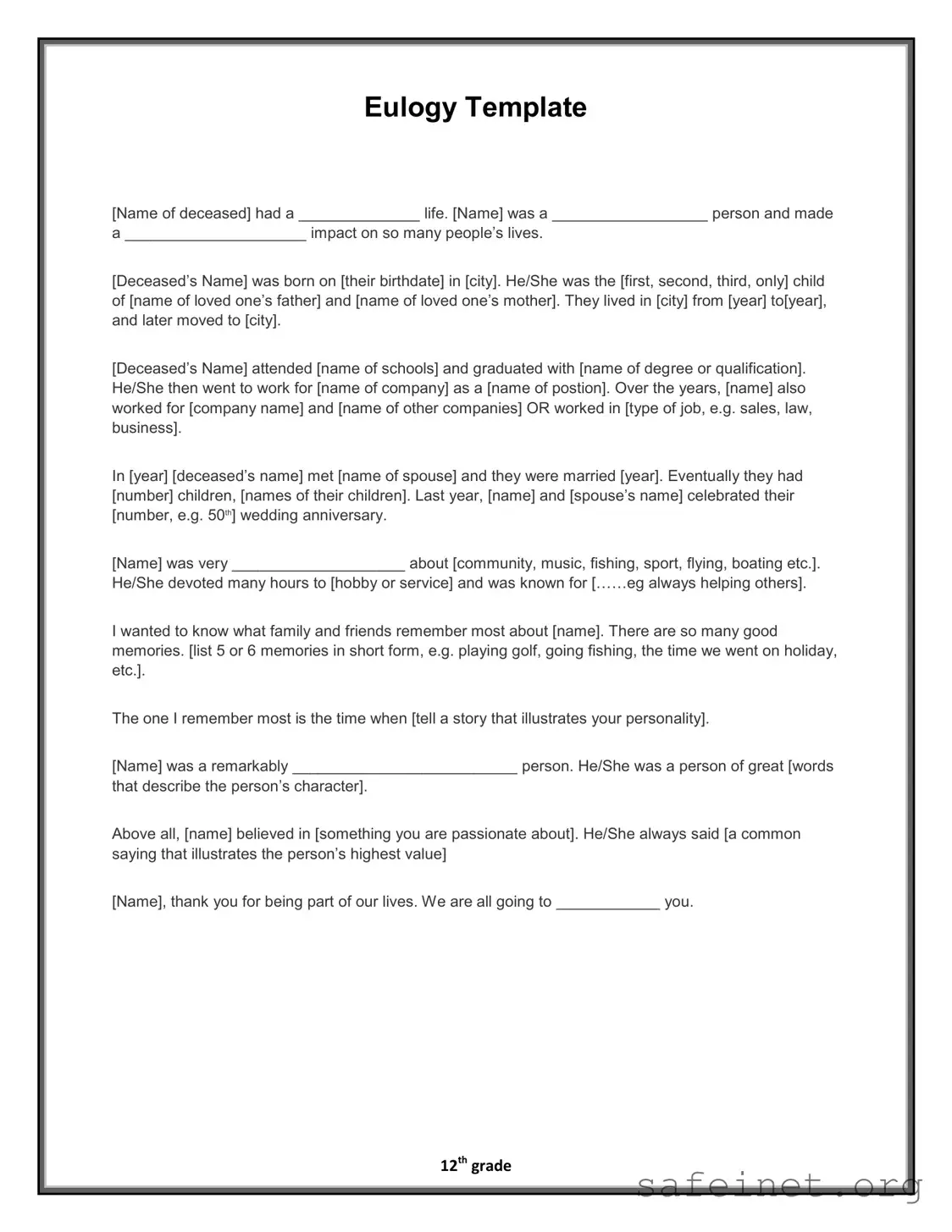
Crafting a eulogy is a deeply personal and meaningful endeavor, allowing individuals to celebrate the life of a loved one while sharing cherished memories with family and friends. This form serves as a structured template that guides the speaker through the essential elements of a eulogy, ensuring that important details are included. It begins by highlighting the deceased's life, character, and the impact they had on those around them. The template encourages the speaker to share personal anecdotes and memorable experiences, painting a vivid picture of the individual’s personality and values. It covers significant milestones, such as birth, education, career, and family life, creating a narrative that honors the legacy left behind. Additionally, the eulogy form invites reflection on the passions and hobbies that defined the deceased, allowing the audience to connect on a deeper level. By incorporating heartfelt memories and personal stories, the eulogy becomes a tribute that resonates with everyone present, celebrating not just the life that was lived but the love and joy shared with others. Ultimately, this form aims to capture the essence of the person being remembered, ensuring their spirit continues to live on in the hearts of those they touched.

| Fact Name | Description |
|---|---|
| Purpose | A eulogy is a speech given to honor and remember someone who has passed away. |
| Structure | The eulogy typically follows a narrative format, sharing memories and qualities of the deceased. |
| Personal Touch | Including personal anecdotes makes the eulogy more heartfelt and relatable. |
| Length | A eulogy usually lasts between 5 to 15 minutes, depending on the setting. |
| Emotional Tone | The tone can be both somber and celebratory, reflecting the life of the deceased. |
| Audience | Family and friends gather to listen, offering support and shared memories. |
| Legal Considerations | There are no specific governing laws for eulogies, but respect for the deceased's wishes is important. |
Filling out the Eulogy form requires thoughtful reflection on the life and impact of the deceased. This process helps capture cherished memories and significant details that honor their legacy. Below are the steps to guide you through completing the form effectively.
What is a eulogy form and how is it used?
A eulogy form serves as a structured template to help individuals craft a heartfelt tribute to a deceased loved one. It guides the writer through important details, such as the person's life achievements, relationships, and memorable moments. By filling in the blanks, the writer can create a personalized eulogy that reflects the essence of the person being honored, making it easier to express emotions and share cherished memories during a memorial service.
What information do I need to fill out the eulogy form?
To effectively complete the eulogy form, gather key details about the deceased. This includes their full name, birthdate, and place of birth. You should also note their family background, such as parents' names and siblings, as well as educational history and professional experiences. Additionally, consider their hobbies, passions, and any significant relationships, like their spouse and children. Collecting these details beforehand will help create a comprehensive and meaningful tribute.
Can I include personal stories in the eulogy?
Absolutely! Personal stories are vital in making a eulogy resonate with those who hear it. The form encourages you to share specific memories that illustrate the character and personality of the deceased. These anecdotes can evoke emotions and bring smiles amidst the sadness. Whether it’s a funny moment, a lesson learned, or a touching experience, including these stories can create a more vivid and relatable portrayal of your loved one.
How long should a eulogy be?
While there is no strict rule for the length of a eulogy, it typically ranges from 5 to 10 minutes when spoken aloud. This usually translates to about one to two pages of written content. The key is to balance brevity with depth; you want to honor the deceased without overwhelming the audience. Focus on the most significant aspects of their life and the memories that truly capture who they were.
What tone should I use when writing a eulogy?
The tone of a eulogy should be respectful and reflective, yet it can also embrace warmth and fondness. It’s important to convey the love and admiration you have for the person being remembered. While it’s natural to feel sadness, incorporating moments of joy and celebration of life can provide comfort to those grieving. Strive for a balance that honors the gravity of the occasion while also celebrating the unique spirit of the individual.
Failing to provide a complete name of the deceased. It's essential to include the full name to avoid confusion.
Leaving out significant life achievements. Highlighting key accomplishments helps paint a fuller picture of the person's impact.
Using vague descriptors. Instead of saying someone was a “good person,” specify what made them good, like “compassionate” or “generous.”
Not including the correct birthdate or place. These details are important for honoring the deceased's life story.
Omitting names of family members. Mentioning loved ones adds a personal touch and acknowledges their role in the deceased's life.
Neglecting to mention educational background. This information can provide context about the deceased's journey and achievements.
Forgetting to include hobbies and passions. Detailing what the deceased enjoyed can help others connect with their memory.
Not sharing memorable stories. Personal anecdotes can make the eulogy more relatable and heartfelt.
Failing to express the emotional impact of their loss. It’s important to convey how much the deceased will be missed by family and friends.
The process of preparing for a memorial service often involves several important documents that help honor the life of the deceased. Among these, the Eulogy form is a key component, but there are other forms and documents that are commonly used in conjunction with it. Each of these documents serves a unique purpose and contributes to the overall remembrance and celebration of the individual’s life.
Each of these documents plays a vital role in the process of honoring a loved one. Together, they create a comprehensive tribute that reflects the life, values, and memories of the deceased, allowing family and friends to celebrate their legacy in a meaningful way.
The obituary is a document that shares the life story of a deceased individual. Similar to the Eulogy form, it provides key details about the person's life, including their birth date, place of residence, and family background. An obituary often highlights the individual's accomplishments, contributions, and the impact they had on their community. While the Eulogy form is more personal and may include anecdotes and emotional reflections, the obituary serves as a formal announcement of death and a summary of the person's life for public notice. Both documents aim to honor the deceased and provide a glimpse into their legacy.
The memorial program is another document that shares similarities with the Eulogy form. This program typically outlines the structure of a memorial service and includes information about the deceased, such as their name, dates of birth and death, and a brief biography. Like the Eulogy, it may also feature personal stories, poems, or quotes that reflect the deceased's personality and values. The memorial program serves as a keepsake for attendees, allowing them to remember the service and the life being celebrated, while the Eulogy provides a more in-depth tribute during the service itself.
A life sketch is a document that provides a narrative of a person's life, much like the Eulogy form. It often includes significant milestones, achievements, and personal anecdotes. While the Eulogy may be delivered in a spoken format during a service, a life sketch is typically written and can be shared with family and friends. Both documents aim to capture the essence of the individual, highlighting their character and contributions to those around them. They serve as a way to reflect on and celebrate the life lived.
The remembrance card is a small document that can accompany a Eulogy or memorial service. It often contains a photo of the deceased, their name, and dates of birth and death, along with a brief message or quote. Similar to the Eulogy form, it serves to honor the individual and provide a lasting memory for attendees. While the Eulogy delves deeper into personal stories and reflections, the remembrance card serves as a concise and tangible memento of the individual’s life, making it a cherished keepsake for family and friends.
The tribute letter is a personal document that expresses feelings and memories about the deceased. It shares similarities with the Eulogy form, as both aim to honor the individual and reflect on their impact. A tribute letter may be addressed to the deceased or to family members, and it often includes personal anecdotes, expressions of love, and reflections on the person's character. While the Eulogy is typically delivered publicly, a tribute letter is often more intimate, allowing the writer to convey their thoughts and emotions in a private manner.
The condolence letter is another document that shares a connection with the Eulogy form. It is written to express sympathy and support to the family of the deceased. While the Eulogy celebrates the life of the individual, a condolence letter acknowledges the loss and offers comfort to those grieving. Both documents serve to honor the deceased, but the condolence letter focuses more on the emotional support for the bereaved, providing a space for shared memories and expressions of love during a difficult time.
The legacy statement is a document that outlines the values, beliefs, and lessons a person wishes to leave behind. It shares similarities with the Eulogy form in that both aim to encapsulate the essence of an individual’s life. A legacy statement often includes reflections on what the person stood for and the impact they hope to have on future generations. While the Eulogy may recount specific memories and experiences, the legacy statement focuses on the broader themes of a person's life, serving as a guide for how they wish to be remembered.
When filling out the Eulogy form, there are some important dos and don'ts to keep in mind. This will help ensure that the eulogy reflects the life and legacy of the deceased in a meaningful way.
Here are five common misconceptions about the Eulogy form:
Here are key takeaways for filling out and using the Eulogy form:
Using this template can help ensure that the eulogy is comprehensive and meaningful. It serves as a guide to celebrate the life of a loved one.