Creating an Employee Handbook is a vital step for any organization, serving as a cornerstone for establishing workplace policies and procedures. This document provides clarity on expectations, rights, and responsibilities for both employees and employers. It typically encompasses key areas such as company culture, code of conduct, attendance policies, and benefits information. Additionally, the handbook outlines procedures for addressing grievances and disciplinary actions, ensuring that all employees are aware of the processes in place to maintain a fair and respectful work environment. By addressing topics such as workplace safety, anti-discrimination policies, and leave entitlements, the Employee Handbook becomes an essential resource for navigating the complexities of employment. Ultimately, a well-structured handbook not only fosters transparency but also contributes to a positive workplace atmosphere, where employees feel informed and empowered.
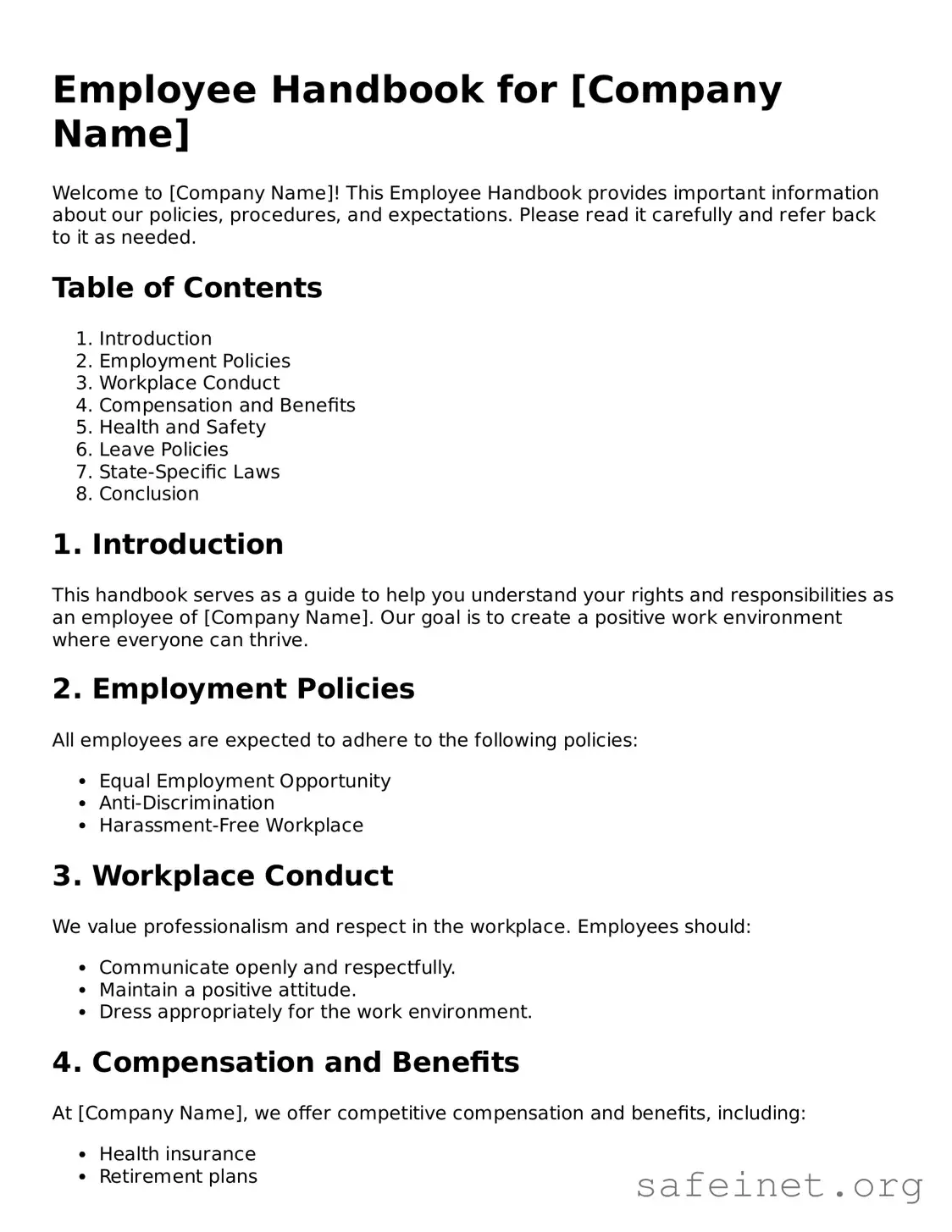
Employee Handbook for [Company Name]
Welcome to [Company Name]! This Employee Handbook provides important information about our policies, procedures, and expectations. Please read it carefully and refer back to it as needed.
Table of Contents
1. Introduction
This handbook serves as a guide to help you understand your rights and responsibilities as an employee of [Company Name]. Our goal is to create a positive work environment where everyone can thrive.
2. Employment Policies
All employees are expected to adhere to the following policies:
3. Workplace Conduct
We value professionalism and respect in the workplace. Employees should:
4. Compensation and Benefits
At [Company Name], we offer competitive compensation and benefits, including:
5. Health and Safety
Your safety is our priority. We adhere to all relevant health and safety regulations to ensure a safe workplace. Employees are encouraged to report any hazards immediately.
6. Leave Policies
[Company Name] provides various leave options, including:
7. State-Specific Laws
This section outlines laws specific to [State Name]. It is important to understand how these laws may affect your employment:
8. Conclusion
We are excited to have you as part of the [Company Name] team. Your contributions are valued, and we look forward to working together to achieve our goals. If you have any questions about this handbook or our policies, please reach out to your supervisor or the HR department.
| Fact Name | Description |
|---|---|
| Purpose | An Employee Handbook serves as a comprehensive guide for employees, outlining company policies, procedures, and expectations. |
| Legal Compliance | It helps ensure compliance with federal and state laws, reducing the risk of legal disputes. |
| State-Specific Requirements | Each state may have specific requirements for employee handbooks, governed by state labor laws. |
| Employee Rights | The handbook should clearly outline employee rights, including anti-discrimination policies and workplace safety protocols. |
| Updates and Revisions | Regular updates are necessary to reflect changes in laws and company policies, ensuring that the handbook remains relevant and accurate. |
Completing the Employee Handbook form is an important step in ensuring you have all the necessary information about your workplace policies and expectations. Follow these steps carefully to fill out the form accurately.
What is the purpose of the Employee Handbook form?
The Employee Handbook form serves as a crucial document that outlines the policies, procedures, and expectations within the workplace. It provides employees with essential information about their rights and responsibilities, workplace conduct, benefits, and company culture. By having this form, both employees and employers can ensure a clear understanding of the workplace environment and minimize misunderstandings.
How do I fill out the Employee Handbook form?
Filling out the Employee Handbook form is straightforward. Begin by carefully reading through the handbook provided. After that, you will typically need to acknowledge that you have received, read, and understood the contents. This may involve signing the form and providing your name and date. Ensure that you take your time to understand each section, as it covers important aspects of your employment.
What should I do if I have questions about the Employee Handbook?
If you have questions or need clarification regarding any part of the Employee Handbook, it is important to reach out. You can contact your supervisor or the Human Resources department for assistance. They can provide you with the necessary information and help you understand any policies that may seem unclear. Open communication is encouraged to ensure everyone is on the same page.
Is the Employee Handbook form mandatory for all employees?
Failing to read the entire Employee Handbook before filling out the form. Understanding the policies is crucial.
Not providing accurate personal information. Double-checking your name, address, and contact details can prevent future issues.
Overlooking the section on emergency contacts. It's important to list someone who can be reached in case of an emergency.
Ignoring the acknowledgment section. Signing this confirms that you have read and understood the handbook.
Using abbreviations or nicknames instead of full legal names. This can lead to confusion in official records.
Not updating the form when personal information changes. Keeping your details current is essential for effective communication.
Neglecting to ask questions about unclear policies. If something is not understood, seeking clarification is important.
Submitting the form without a thorough review. Errors can easily be overlooked, so take a moment to check your work.
Forgetting to include any required documentation. Make sure to attach any necessary files or forms as instructed.
Rushing through the form. Taking your time can help ensure that all information is complete and accurate.
When developing an Employee Handbook, several other forms and documents may be necessary to ensure clarity and compliance within the workplace. These documents serve various purposes, from outlining company policies to ensuring that employees understand their rights and responsibilities. Below is a list of common forms and documents often used alongside the Employee Handbook.
These documents work together to create a comprehensive framework for managing employee relations and ensuring compliance with workplace regulations. Having these forms readily available can streamline processes and foster a positive work environment.
The Employee Handbook is similar to the Policy Manual, which outlines the rules and regulations that govern employee behavior in the workplace. Both documents serve as essential resources for employees to understand company expectations. The Policy Manual often includes specific policies on attendance, dress code, and workplace conduct, while the Employee Handbook provides broader context and may also cover company culture and values.
Another related document is the Code of Conduct. This document specifically details the ethical standards and professional behavior expected from employees. Like the Employee Handbook, the Code of Conduct aims to foster a positive work environment. However, it focuses more on ethical dilemmas and the consequences of unethical behavior, whereas the Employee Handbook encompasses a wider range of topics, including benefits and procedures.
The Onboarding Guide is also akin to the Employee Handbook. This document is designed for new hires, providing them with essential information about the company, their roles, and the resources available to them. While the Employee Handbook serves as a comprehensive resource for all employees, the Onboarding Guide is tailored to help new employees acclimate quickly and effectively.
Similar to the Employee Handbook is the Training Manual, which provides detailed instructions and guidelines for specific tasks and responsibilities. The Training Manual is often more technical and task-oriented, whereas the Employee Handbook covers broader policies and cultural aspects of the workplace. Both documents are crucial for ensuring employees understand their roles and the expectations placed upon them.
The Safety Manual shares similarities with the Employee Handbook in that it outlines the safety protocols and procedures employees must follow to maintain a safe work environment. Both documents aim to protect employees and the organization. However, the Safety Manual is more focused on compliance with safety regulations and emergency procedures, while the Employee Handbook encompasses a wider array of workplace policies.
The Benefits Guide is another document that parallels the Employee Handbook. This guide provides detailed information about employee benefits, such as health insurance, retirement plans, and paid time off. While the Employee Handbook may touch on benefits, the Benefits Guide offers a more in-depth look, helping employees understand their options and the processes for enrollment.
The Performance Review Policy is also similar to the Employee Handbook. This document outlines the criteria and procedures for employee evaluations. Both documents are essential for clarifying expectations and fostering a culture of feedback. However, the Performance Review Policy is more focused on the evaluation process, while the Employee Handbook encompasses various aspects of employee engagement and company policies.
The Leave of Absence Policy is akin to the Employee Handbook as well. This policy outlines the types of leave available to employees, including medical leave, family leave, and vacation time. While the Employee Handbook may provide a general overview of leave policies, the Leave of Absence Policy offers specific guidelines and eligibility requirements, ensuring employees are informed about their rights and responsibilities.
Finally, the Grievance Procedure document is similar to the Employee Handbook. This document outlines the steps employees can take if they have concerns or complaints about their work environment. Both documents are designed to promote transparency and fairness in the workplace. However, the Grievance Procedure focuses specifically on conflict resolution, while the Employee Handbook covers a broader range of topics related to employee rights and responsibilities.
When filling out the Employee Handbook form, it's essential to approach the task with care. Here are six important do's and don'ts to keep in mind:
Employee handbooks serve as essential resources for both employers and employees. However, several misconceptions about these documents can lead to misunderstandings. Below are five common misconceptions regarding the Employee Handbook form, along with clarifications.
While an employee handbook provides guidelines and policies, it typically does not constitute a legally binding contract unless explicitly stated. Most handbooks include disclaimers indicating that they are not contracts.
Each employee handbook should be tailored to fit the specific needs and culture of a company. Variations exist based on industry, company size, and organizational values.
Employee handbooks require regular reviews and updates to reflect changes in laws, company policies, or organizational structure. Failing to update can lead to confusion and potential legal issues.
Employees are encouraged to read the handbook thoroughly. Understanding the policies and procedures outlined can help prevent misunderstandings and ensure compliance with company expectations.
While the handbook does outline workplace policies, it can also include information on benefits, employee rights, and company culture, making it a comprehensive resource for employees.
When filling out and using the Employee Handbook form, keep these key takeaways in mind: