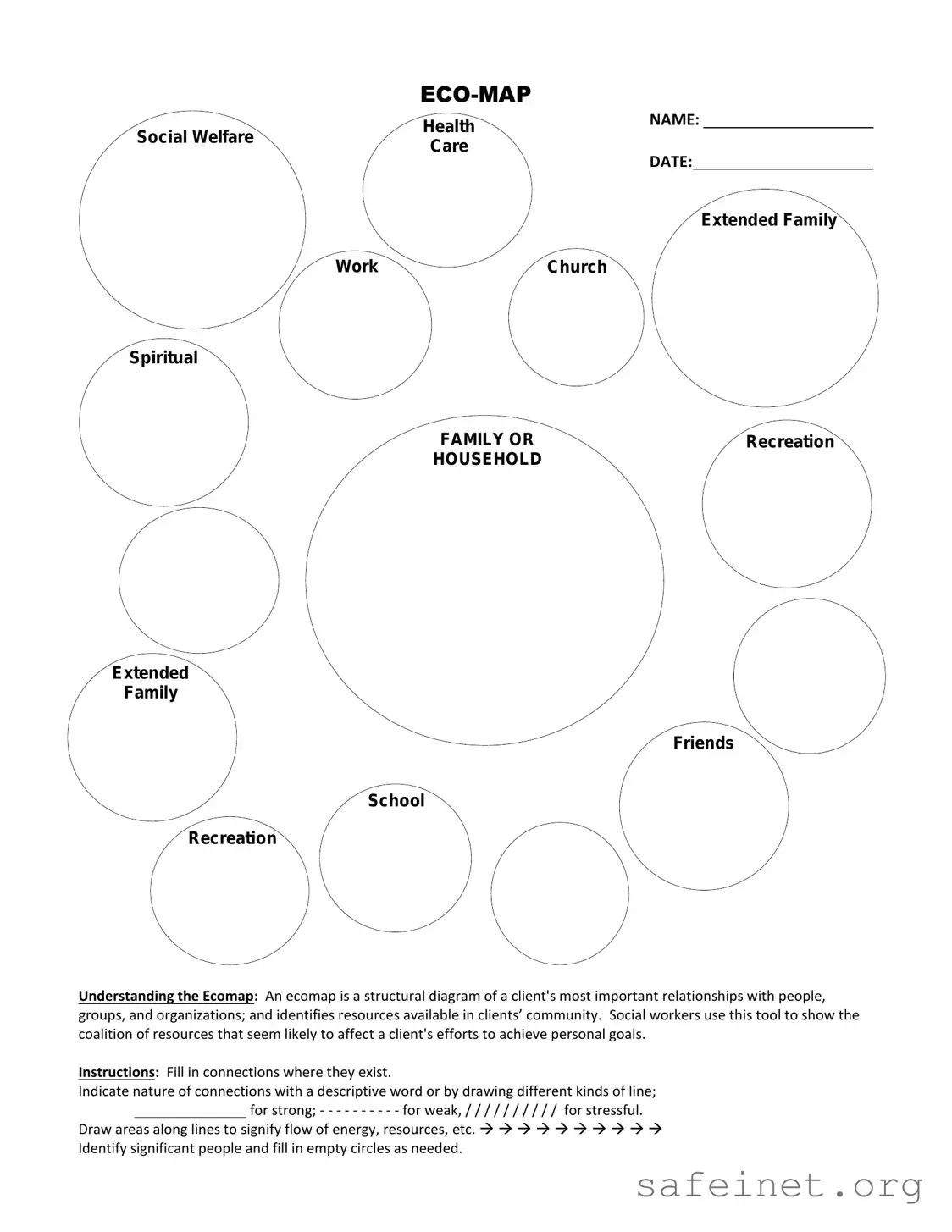
The Eco Map form serves as a vital tool in understanding the intricate web of relationships and resources surrounding an individual or family. By visually mapping out connections with various entities—such as family members, friends, community organizations, and social services—the Eco Map provides a comprehensive snapshot of one's support network. This form not only highlights positive influences and resources but also identifies potential stressors or areas of isolation. Each connection is represented with specific symbols and lines, illustrating the strength and nature of these relationships. As users engage with the Eco Map, they can gain insights into their social environment, facilitating discussions about support systems and identifying opportunities for growth or intervention. Ultimately, this form plays a crucial role in fostering awareness and promoting well-being by encouraging individuals to reflect on their social connections and the resources available to them.

| Fact Name | Description |
|---|---|
| Definition | An Eco Map form is a visual tool used to represent the relationships and resources surrounding an individual or family. |
| Purpose | It helps identify strengths and areas of support in a person's environment, aiding in social work and counseling. |
| Components | The form typically includes circles representing the individual, family, and various support systems like friends, community services, and institutions. |
| Usage | Social workers and counselors use Eco Maps to facilitate discussions about relationships and resources. |
| Benefits | It promotes awareness of social networks and can highlight areas needing improvement or additional support. |
| Customization | Users can adapt the Eco Map to fit specific needs, adding or removing elements based on individual circumstances. |
| State-Specific Forms | Some states may have specific guidelines or templates for Eco Maps, governed by local social services laws. |
| Legal Considerations | While Eco Maps are not legally binding, they may be used in assessments that inform service provision under state welfare laws. |
Filling out the Eco Map form is straightforward. Follow these steps to ensure you complete it correctly. Once you have filled out the form, it will be reviewed for any necessary follow-up actions.
What is the Eco Map form?
The Eco Map form is a visual tool used to represent the relationships and resources surrounding an individual or family. It helps in identifying support systems, community connections, and areas that may need improvement. This form is often used in social work, counseling, and community assessments.
Who should fill out the Eco Map form?
The Eco Map form can be filled out by individuals, families, or professionals working with clients. It is particularly useful for social workers, therapists, and educators who want to understand the environment and relationships of those they serve.
How do I start filling out the Eco Map form?
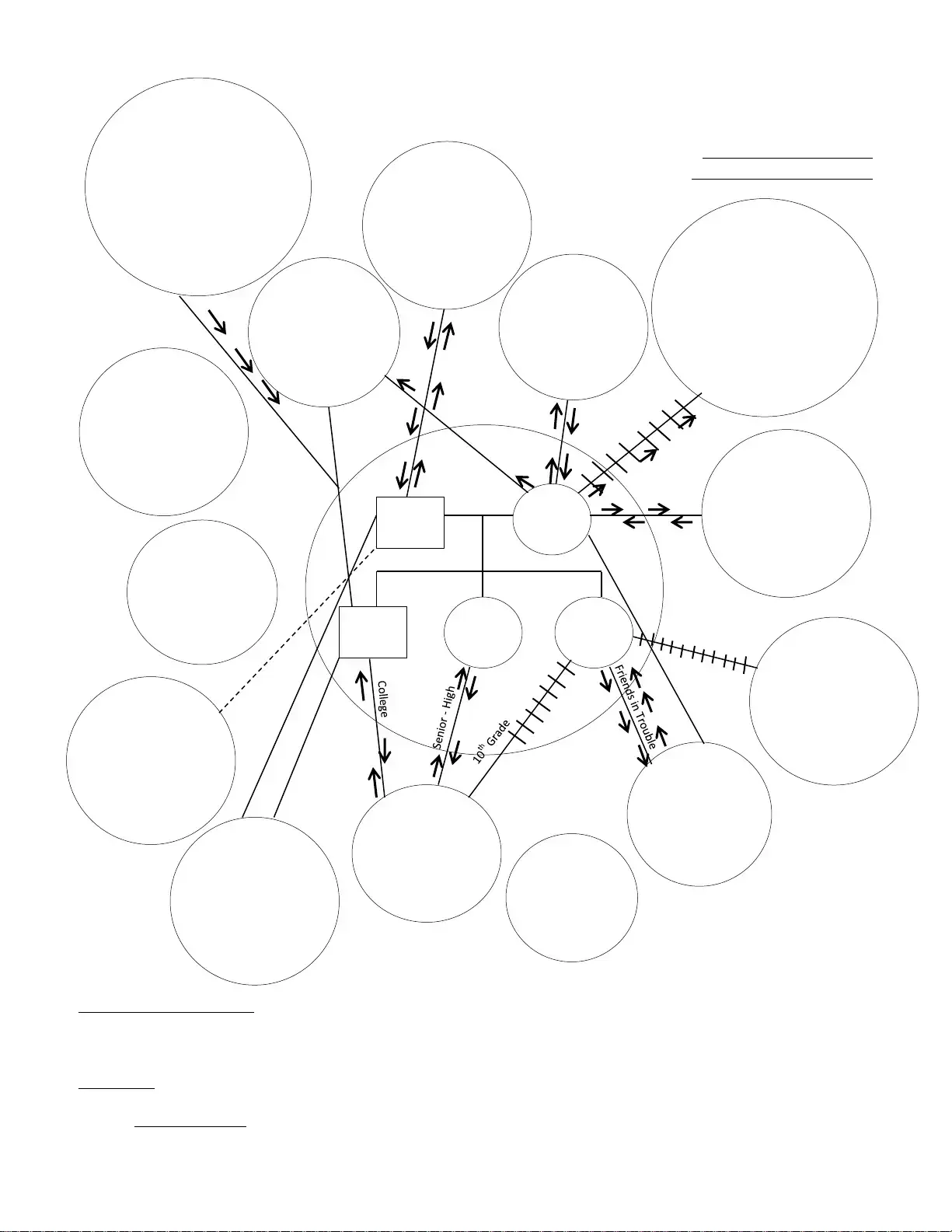
Begin by placing the individual or family at the center of the map. From there, draw circles around them to represent different people, groups, and resources in their lives. Use lines to indicate the nature of these relationships, such as strong, weak, or stressful connections.
What types of relationships should be included in the Eco Map?
Include relationships with family members, friends, neighbors, coworkers, and community organizations. Also, consider professional connections like therapists, doctors, and schools. The goal is to capture a comprehensive view of the support network.
How can the Eco Map form benefit individuals or families?
The Eco Map can highlight strengths and areas for growth. By visualizing connections, individuals and families can better understand their support systems. This awareness can lead to improved communication and help identify resources that may not have been previously considered.
Is there a specific format for the Eco Map form?
There is no strict format for the Eco Map. It can be created on paper or digitally, using circles and lines to represent relationships. The key is clarity and ease of understanding. Feel free to customize it to suit individual needs.
How often should I update the Eco Map?
It is advisable to update the Eco Map regularly, especially after significant life changes, such as moving, starting a new job, or changes in relationships. Regular updates can help maintain an accurate view of support systems and resources.
Can I use the Eco Map form for group settings?
Yes, the Eco Map can be adapted for group settings. In this case, it may represent the relationships and resources of the entire group. This approach can facilitate discussions about group dynamics and collective resources.
Where can I find a template for the Eco Map form?
Templates for the Eco Map form can often be found online. Many organizations provide free downloadable versions. Additionally, you can create your own template using drawing software or even simple pen and paper.
Inaccurate Information: One common mistake is providing incorrect details about relationships and resources. Individuals may forget to include important connections or misrepresent the nature of their interactions.
Neglecting to Update: Some people fail to update their Eco Map regularly. Relationships and resources can change over time, and an outdated map may not accurately reflect current support systems.
Overlooking Key Relationships: It is easy to overlook significant relationships. Individuals may focus on immediate family and friends while neglecting to include coworkers, mentors, or community resources that play vital roles in their lives.
Misunderstanding the Purpose: Some individuals do not fully grasp the purpose of the Eco Map. They may treat it as just a formality rather than a tool for understanding their social environment and support systems.
Inconsistent Symbols: Using different symbols or colors inconsistently can lead to confusion. A clear and consistent legend is essential for anyone reviewing the Eco Map to understand the relationships and resources depicted.
The Eco Map form is a valuable tool used to visualize the relationships and resources surrounding an individual or family. It often accompanies other documents that provide additional context or support in various situations. Below is a list of related forms and documents that may be utilized alongside the Eco Map form.
Using these documents in conjunction with the Eco Map form can enhance understanding and support for individuals and families, ensuring a comprehensive approach to their needs and resources.
The Genogram is a visual representation of family relationships and dynamics. It illustrates connections between family members across generations. Like the Eco Map, it helps individuals understand their social environment, but it focuses more on familial ties rather than community and external resources. Both tools serve to clarify relationships and can be used in therapeutic or counseling settings to promote understanding and communication.
The Social Network Map similarly outlines an individual's connections with friends, family, and community members. It provides a snapshot of social support systems. While the Eco Map emphasizes resources and services, the Social Network Map focuses on personal relationships. Both are valuable for assessing support systems and identifying areas for improvement in social interactions.
The SWOT Analysis (Strengths, Weaknesses, Opportunities, Threats) is a strategic planning tool that helps individuals or organizations identify internal and external factors affecting their situation. While the Eco Map visually represents community resources, the SWOT Analysis breaks down strengths and weaknesses in a more structured format. Both documents encourage reflection and strategic thinking about one’s environment.
The Life Map offers a chronological view of significant life events and transitions. It highlights personal growth and changes over time. Similar to the Eco Map, it provides insight into how various experiences shape an individual’s current situation. Both tools can foster self-awareness and help individuals identify patterns in their lives.
The Resource Inventory lists available resources, services, and support systems in a specific area. It serves as a practical guide for individuals seeking assistance. The Eco Map incorporates these resources into a visual format, making it easier to see how they connect to the individual’s life. Both documents aim to empower users by making resources accessible.
The Community Assessment evaluates the strengths and needs of a community. It gathers information about resources, demographics, and services available. While the Eco Map focuses on an individual’s connections within their community, the Community Assessment provides a broader view. Both documents are essential for identifying gaps in services and opportunities for improvement.
The Personal Development Plan outlines an individual’s goals and the steps needed to achieve them. It focuses on personal growth and skill development. The Eco Map can complement this by showing how community resources can support those goals. Both documents encourage proactive planning for future success.
The Action Plan details specific steps to address a problem or achieve a goal. It often includes timelines and responsibilities. The Eco Map can provide context for the resources needed to implement the Action Plan. Both documents aim to create a structured approach to achieving desired outcomes.
The Family Support Plan outlines the resources and strategies available to support families in need. It includes services, programs, and community connections. The Eco Map serves a similar purpose by visually representing these connections, making it easier for families to navigate available support. Both documents are essential for enhancing family well-being.
The Needs Assessment identifies gaps in services and resources for individuals or communities. It helps prioritize needs and allocate resources effectively. The Eco Map can be used in conjunction with a Needs Assessment to visualize how available resources align with identified needs. Both documents are crucial for informed decision-making and effective resource allocation.
When filling out the Eco Map form, it's important to approach the task thoughtfully. Here are ten essential dos and don'ts to keep in mind:
There are several misconceptions about the Eco Map form that can lead to confusion. Below are six common misunderstandings, along with explanations to clarify them.
This is not true. While social workers often use Eco Maps, anyone involved in a support role, including educators and healthcare providers, can benefit from using this tool.
In reality, the Eco Map is designed to be user-friendly. It visually represents relationships and resources, making it easier to understand connections.
This is incorrect. The Eco Map highlights both positive and negative relationships, providing a balanced view of a person's support system.
Anyone can create an Eco Map. It simply requires a willingness to explore and document relationships and resources in one's life.
Actually, the Eco Map can be updated regularly. As relationships and resources change, the map can evolve to reflect those changes.
This is false. Families, groups, and organizations can also use Eco Maps to visualize their networks and support systems.
Filling out and using the Eco Map form can provide valuable insights into an individual's or family's social environment. Here are some key takeaways to keep in mind: