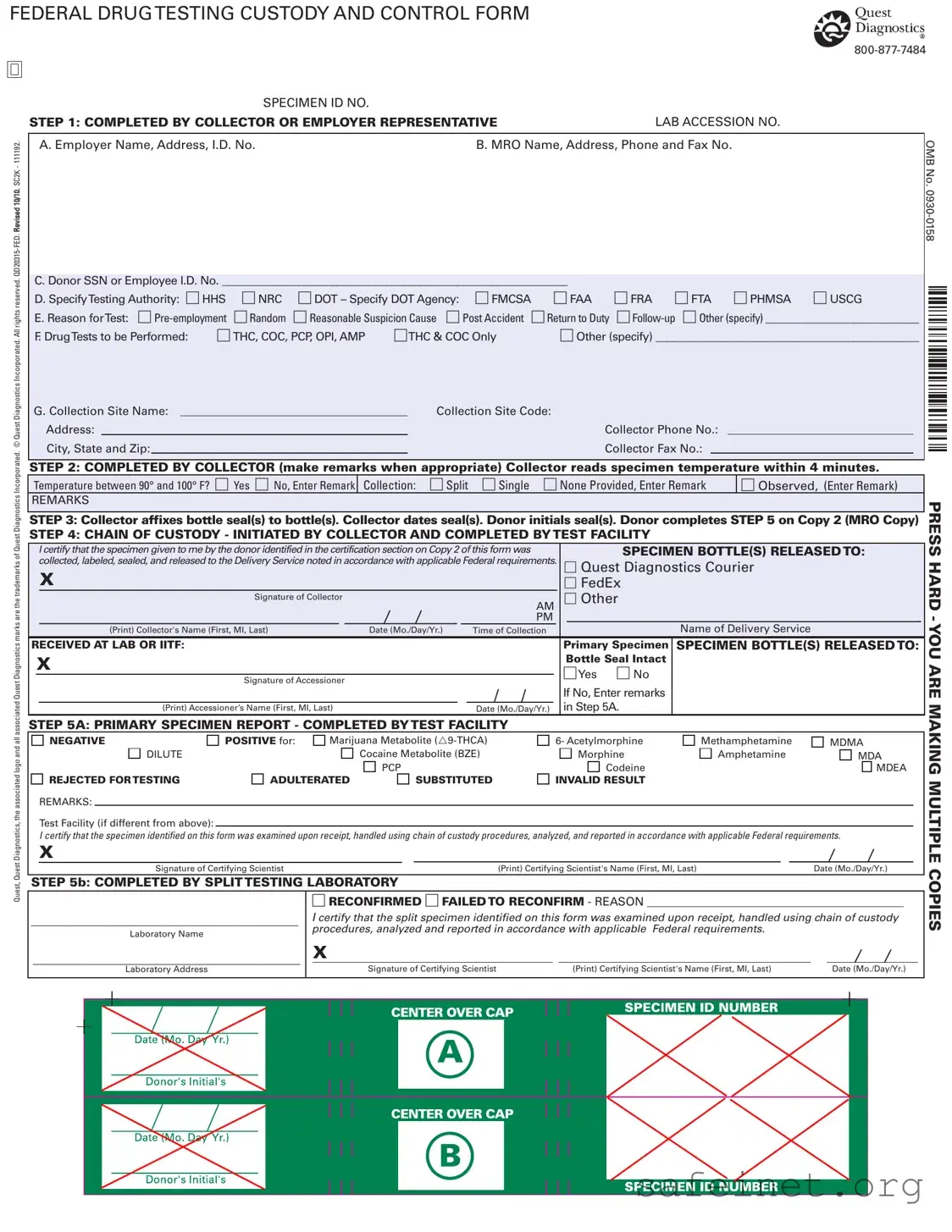
The Drug Screen form is an essential tool used in various contexts, primarily to ensure compliance with federal regulations regarding substance testing. It captures critical information such as the employer's details, the donor's identification, and the specific reasons for testing. This form is particularly important for employers in safety-sensitive industries, where drug testing is mandated by law. It includes sections for specifying the testing authority, the type of drug tests to be performed, and the collection site details. The process involves multiple steps, beginning with the collector or employer representative filling out necessary information, followed by the collection of the specimen. The form also ensures that a chain of custody is maintained throughout the testing process, which is crucial for the integrity of the results. After the specimen is analyzed, the test facility reports the findings, indicating whether the results are negative or positive for various substances. This comprehensive approach not only helps in maintaining workplace safety but also protects the rights of employees undergoing testing.
| Fact Name | Details |
|---|---|
| Form Title | Federal Drug Testing Custody and Control Form |
| Contact Number | 800-877-7484 |
| Specimen ID Requirement | A unique Specimen ID No. must be assigned for each test. |
| Testing Authorities | Testing can be conducted under HHS, NRC, or DOT regulations. |
| Collection Site Information | The form requires details about the collection site, including name and address. |
| Temperature Check | The collector must read the specimen temperature within 4 minutes. |
| Chain of Custody | Chain of custody procedures must be followed to ensure specimen integrity. |
| Reporting Results | Test results can be negative, positive, or rejected for testing. |
Filling out the Drug Screen form is a straightforward process. This form is essential for maintaining compliance with federal regulations regarding drug testing. Ensure you have all necessary information ready before you begin. Follow these steps carefully to complete the form correctly.
After filling out the form, it is crucial to review all entries for accuracy. Ensure that all required signatures are in place before submission. This will help avoid any potential issues with the testing process.
What is the purpose of the Drug Screen form?
The Drug Screen form is designed to document the process of collecting and testing urine samples for drugs. It ensures that all procedures are followed according to federal regulations. The form captures essential information such as the employer's details, testing authority, reason for the test, and the specific drugs being tested. This documentation is crucial for maintaining the integrity of the testing process and ensuring compliance with legal standards.
Who is responsible for completing the Drug Screen form?
The Drug Screen form is primarily completed by the collector or employer representative. They are responsible for filling out the initial sections of the form, which include details about the donor, testing authority, and collection site. After the collection, the collector ensures that the specimen is handled correctly and that all necessary information is accurately recorded to maintain a proper chain of custody.
What information is required on the Drug Screen form?
Several key pieces of information are required on the Drug Screen form. This includes the employer's name and address, the Medical Review Officer's (MRO) contact details, the donor's Social Security Number or employee ID, the testing authority, the reason for the test, and the specific drugs to be tested. Additionally, the form captures details about the collection site and the collector's information, ensuring all aspects of the testing process are documented.
What happens if a specimen is found to be adulterated or invalid?
If a specimen is found to be adulterated, substituted, or invalid, this will be noted on the Drug Screen form. The testing facility will follow specific procedures to address these issues, which may include retesting the donor's split specimen. The results will be documented, and the donor may be required to provide a new sample under supervision to ensure compliance with testing protocols.
How is the chain of custody maintained during the testing process?
The chain of custody is maintained through careful documentation and handling of the specimen. The collector records the collection details on the Drug Screen form, including the time and date of collection, and seals the specimen bottle. Each person who handles the specimen must sign off on the form, ensuring that there is a clear record of who has accessed the sample. This rigorous process helps prevent tampering and ensures the reliability of the test results.
What should a donor do if they have questions about the Drug Screen process?
If a donor has questions regarding the Drug Screen process, they should contact the employer or the designated Medical Review Officer (MRO) listed on the form. The MRO can provide detailed information about the testing process, the substances being tested for, and any implications of the test results. It is important for donors to understand their rights and responsibilities throughout the testing process.
Incomplete Information: One of the most common mistakes is failing to fill out all required fields. Each section of the form must be completed to ensure proper processing.
Incorrect Identification Numbers: Providing the wrong Social Security Number or Employee ID can lead to significant delays or issues with test results.
Missing Testing Authority: Not specifying the testing authority can cause confusion and may result in the form being rejected.
Unclear Reason for Testing: Choosing "Other" without specifying the reason can create ambiguity. Always provide a clear explanation if the reason is not listed.
Failure to Document Temperature: The collector must read and document the specimen temperature within four minutes. Neglecting this step can raise questions about the validity of the sample.
Not Following Chain of Custody: Skipping steps in the chain of custody can lead to legal complications. Each step must be properly documented and signed.
Collector's Signature Missing: Without the collector's signature, the form is incomplete. This signature verifies that the collection process was conducted properly.
Improper Handling of Specimen: Failing to seal the specimen bottle correctly or not dating the seal can compromise the sample's integrity.
Not Following Up on Results: After submitting the form, it's crucial to follow up on test results. Ignoring this can lead to missed opportunities or unresolved issues.
The Drug Screen form is an essential document used in the process of drug testing. It serves to maintain a clear record of the collection and testing of specimens. Several other forms and documents are often utilized alongside the Drug Screen form to ensure compliance with regulations and to facilitate the testing process. Below is a list of these documents, along with brief descriptions of their purposes.
These forms and documents work together to create a comprehensive framework for managing drug testing in a workplace setting. Proper use and understanding of these documents are crucial for maintaining compliance and ensuring the safety and well-being of all employees.
The Chain of Custody form is essential in maintaining the integrity of evidence collected during legal proceedings. It documents the handling of evidence from the moment it is collected until it is presented in court. Similar to the Drug Screen form, it includes information about the collector, the conditions of collection, and any transfers of the evidence. Both forms require signatures from individuals involved in the collection and handling process, ensuring accountability and traceability throughout the procedure.
The Medical Release form is used to obtain consent from patients for the release of their medical records. Like the Drug Screen form, it collects identifying information about the individual and specifies the purpose of the release. Both documents emphasize confidentiality and the importance of proper authorization, ensuring that sensitive information is shared only with authorized parties. This similarity highlights the need for clear communication and consent in managing personal health information.
The Consent for Drug Testing form is a document that individuals sign to agree to undergo drug testing. It shares similarities with the Drug Screen form in that it outlines the purpose of the testing and the substances that will be screened. Both forms require the individual's identification details and often include a section for the individual to acknowledge their understanding of the testing process. This ensures that individuals are informed and consenting participants in the testing procedure.
The Incident Report form is utilized to document specific events that may require further investigation or action. This document, like the Drug Screen form, includes details about the individuals involved, the circumstances surrounding the incident, and any relevant observations. Both forms serve as official records that can be referenced later, ensuring that accurate information is preserved for future review or legal considerations.
The Laboratory Test Order form is used by healthcare providers to request specific tests for patients. It is similar to the Drug Screen form in that it includes patient identification, the type of tests requested, and the reason for testing. Both documents facilitate communication between healthcare providers and laboratories, ensuring that accurate testing is performed according to the needs of the patient or the requirements of the testing authority.
The Employment Application form often contains questions related to drug use and testing policies. This document is similar to the Drug Screen form in that it aims to gather information pertinent to employment eligibility. Both forms address the implications of drug use in the workplace, and they emphasize the importance of maintaining a safe and compliant work environment. This connection highlights the proactive measures employers take to ensure a drug-free workplace.
The Release of Liability form is designed to protect organizations from legal claims related to participation in certain activities. Like the Drug Screen form, it requires individuals to provide personal information and to acknowledge their understanding of the risks involved. Both documents serve to inform individuals of their rights and responsibilities while also protecting the entities conducting the testing or activities, ensuring that all parties are aware of potential consequences.
When filling out the Drug Screen form, it's essential to ensure accuracy and compliance. Here are some important do's and don'ts to keep in mind:
Understanding the Drug Screen form can be challenging, and several misconceptions often arise. Here are nine common misunderstandings about this important document:
By addressing these misconceptions, individuals can better understand the Drug Screen form and its significance in the workplace.
When filling out and utilizing the Drug Screen form, it is essential to follow specific guidelines to ensure accuracy and compliance. Here are four key takeaways to consider: