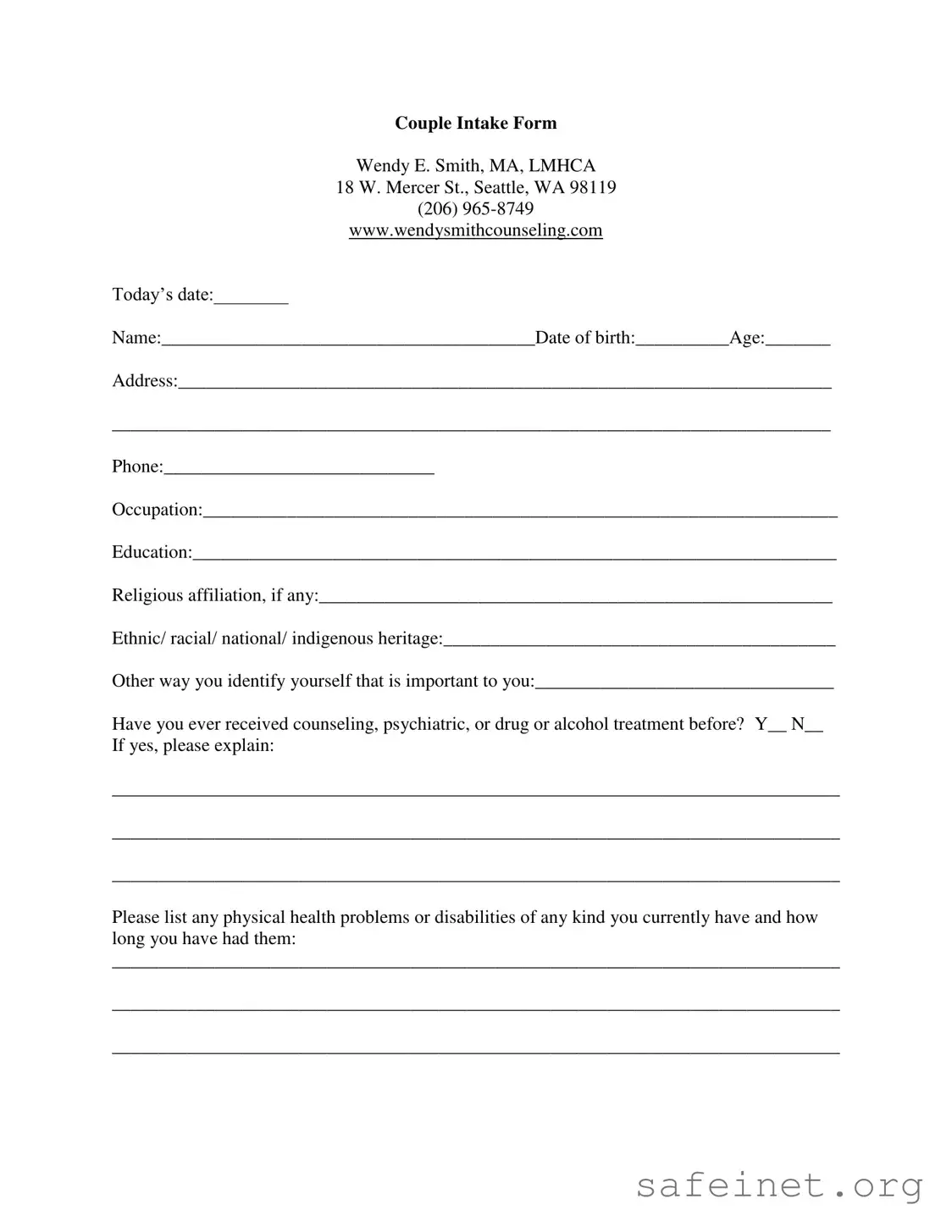
The Drug Rehabilitation Admission form serves as a crucial tool for gathering essential information about individuals seeking treatment for substance use disorders. This comprehensive form captures personal details, including the applicant's name, date of birth, and contact information. It also inquires about the individual’s educational background and occupation, which can provide context for their current situation. The form addresses important aspects of the applicant's personal history, such as previous counseling or treatment experiences, and any existing physical health issues. Additionally, it seeks to understand the individual's family dynamics by asking about partners, children, and previous marriages. By collecting this information, the form aims to create a complete picture of the applicant's life, helping treatment providers tailor their approach to meet specific needs. Understanding the applicant's ethnic and cultural background, as well as any significant identifiers, is also essential in fostering an inclusive and supportive treatment environment. Ultimately, this form is a first step toward recovery, allowing professionals to better assist individuals on their journey to healing.







| Fact Name | Description |
|---|---|
| Form Title | This is the Couple Intake Form, designed for individuals seeking drug rehabilitation services. |
| Provider Information | The form is provided by Wendy E. Smith, MA, LMHCA, located in Seattle, WA. |
| Date of Admission | The form requires the date of completion, ensuring accurate record-keeping for admissions. |
| Personal Details | Clients must provide their name, date of birth, age, address, and phone number. |
| Previous Treatment | Clients are asked if they have received any prior counseling or treatment for substance use. |
| Health Information | Individuals must disclose any physical health problems or disabilities they currently have. |
| Family Details | The form collects information about partners, children, and siblings, fostering a holistic view of the client’s support system. |
| Parental Background | Information about the client's parents, including education and occupation, is also required. |
| Governing Laws | In Washington State, the governing laws for drug rehabilitation admission forms include RCW 70.96A and WAC 388-877. |
Completing the Drug Rehabilitation Admission form is a crucial step in the admission process. Make sure to provide accurate information to ensure the best possible care and support. Follow these steps carefully to fill out the form correctly.
What is the purpose of the Drug Rehabilitation Admission form?
The Drug Rehabilitation Admission form is designed to gather essential information about individuals seeking treatment for substance use issues. It helps counselors and treatment providers understand the unique backgrounds and needs of each client. By collecting details about personal history, health status, and family dynamics, the form facilitates a tailored approach to rehabilitation, ensuring that individuals receive the support they require for recovery.
What kind of information is required on the form?
The form requires a variety of information, including personal details such as name, date of birth, and contact information. It also asks about previous counseling or treatment experiences, physical health issues, and family background. Additionally, the form includes sections for information about partners, children, and parents, which can provide valuable context for treatment providers. This comprehensive approach allows for a better understanding of each client’s situation.
How is confidentiality maintained when filling out the form?
Confidentiality is a critical aspect of the treatment process. The information provided on the Drug Rehabilitation Admission form is kept secure and is only shared with authorized personnel involved in the client's care. Treatment providers adhere to strict privacy policies to protect clients' information. Clients can feel confident that their personal details will be handled with care and respect throughout their treatment journey.
Can I fill out the form if I have never received treatment before?
Yes, individuals can complete the Drug Rehabilitation Admission form regardless of their prior treatment history. The form is designed to accommodate both those who have received treatment in the past and those who are seeking help for the first time. Providing as much information as possible will assist counselors in understanding your situation and developing an appropriate treatment plan.
What should I do if I have questions while filling out the form?
If questions arise while completing the Drug Rehabilitation Admission form, it is advisable to reach out to the treatment provider for assistance. Counselors or administrative staff can provide clarification on any section of the form. They are there to help ensure that you feel comfortable and confident in sharing your information.
Is it necessary to disclose all family information on the form?
While it is important to provide accurate information about family dynamics, clients should disclose only what they feel comfortable sharing. The family background section is intended to provide insight into potential influences on substance use and recovery. However, clients are encouraged to focus on what they believe is relevant to their treatment. Open communication with the treatment provider can help determine what information is necessary for effective care.
Inaccurate Personal Information: Many individuals fail to provide accurate details such as their name, date of birth, or address. This can lead to complications in processing their admission.
Omitting Previous Treatment History: Some people neglect to disclose past counseling or treatment experiences. This omission can hinder the development of an effective treatment plan.
Ignoring Health Issues: It is common for applicants to overlook listing physical health problems or disabilities. Providing this information is crucial for comprehensive care.
Incomplete Partner and Family Information: Failing to provide details about partners, children, or previous marriages can create gaps in understanding the applicant's support system.
Neglecting Parental Background: Some applicants do not include information about their parents’ marital history or educational background. This information can be relevant for understanding familial influences on addiction.
When entering a drug rehabilitation program, several documents may accompany the Drug Rehabilitation Admission form. Each of these forms plays a crucial role in ensuring that the treatment process is tailored to the individual’s needs. Below is a list of commonly used forms and documents that may be required during the admission process.
Completing these forms accurately and thoroughly is essential for the success of the rehabilitation process. Each document contributes to a comprehensive understanding of the individual’s needs, facilitating a more personalized and effective treatment experience.
The Couple Intake Form shares similarities with the Drug Rehabilitation Admission form, primarily in its focus on gathering comprehensive information about individuals seeking support. Both documents require personal details, such as names, dates of birth, and contact information. They also inquire about previous treatment experiences, allowing healthcare providers to understand the client's history and tailor their approach accordingly. This holistic view helps in forming a complete picture of the client's background, which is essential for effective treatment planning.
The Client Information Form is another document that parallels the Drug Rehabilitation Admission form. Like the admission form, it collects essential demographic information, including age, gender, and occupation. It also often includes questions about mental health history and any prior counseling experiences. This data is crucial for practitioners to assess the client’s needs and develop a personalized treatment strategy that addresses both mental and physical health concerns.
Similar to the Drug Rehabilitation Admission form, the Medical History Questionnaire serves to compile an individual’s health background. This document typically asks about past medical conditions, surgeries, and medications. Understanding a client’s medical history is vital, as it informs treatment decisions and helps identify any potential complications that may arise during the rehabilitation process.
The Family Background Form is akin to the Drug Rehabilitation Admission form in its emphasis on familial relationships. It gathers information about family dynamics, such as marital status and children, which can significantly impact a person’s recovery journey. By understanding family structures and histories, counselors can better address the support systems available to clients and the potential challenges they may face.
The Substance Use Assessment is another document that aligns with the Drug Rehabilitation Admission form. It specifically focuses on an individual's history of substance use, including types of substances used, frequency, and duration of use. This assessment is crucial for determining the severity of the addiction and developing an appropriate treatment plan tailored to the individual’s specific needs.
The Psychological Evaluation Form is similar in its goal of understanding the mental health status of the individual. It often includes questions about mood, anxiety, and any previous psychological treatments. This information is essential for identifying co-occurring disorders and ensuring that clients receive comprehensive care that addresses both their mental health and substance use issues.
The Consent for Treatment Form also shares common ground with the Drug Rehabilitation Admission form. While the admission form collects personal and medical information, the consent form ensures that clients understand and agree to the treatment process. This agreement is crucial for establishing a trusting relationship between the client and the treatment provider, laying the foundation for effective rehabilitation.
The Release of Information Form is another document that complements the Drug Rehabilitation Admission form. It allows clients to authorize the sharing of their medical and treatment information with other professionals involved in their care. This coordination is vital for providing a seamless treatment experience, ensuring that all parties are informed and working together to support the client's recovery.
Lastly, the Treatment Plan Outline mirrors the Drug Rehabilitation Admission form in its focus on the individual’s specific needs and goals. While the admission form gathers initial information, the treatment plan outlines the strategies and interventions that will be employed to address the identified issues. This document serves as a roadmap for both the client and the treatment team, ensuring that everyone is aligned in their efforts to achieve successful outcomes.
Filling out the Drug Rehabilitation Admission form can be a crucial step toward recovery. To ensure you provide the best information possible, here are some helpful dos and don'ts:
By following these guidelines, you can make the admission process smoother and set the stage for a successful rehabilitation journey.
Misconceptions about the Drug Rehabilitation Admission form can lead to misunderstandings and hesitations in seeking help. Here are ten common misconceptions, along with clarifications to help individuals navigate the process more comfortably.
Many believe that the form asks for too much personal information. In reality, this information is essential for tailoring the treatment to the individual’s specific needs and background.
Some think that the form is only for individuals facing extreme addiction issues. However, it is designed for anyone seeking help, regardless of the severity of their situation.
Many fear that sharing their history will result in judgment. Treatment professionals are trained to approach each case with empathy and without bias, focusing instead on support and recovery.
Some individuals think that their past treatment experiences do not matter. However, understanding previous interventions helps professionals create a more effective treatment plan.
People often feel pressured to provide extensive answers. While detailed responses can be helpful, individuals should only share what they are comfortable with, and professionals can guide them through the process.
Many assume that the form is exclusively for adults. In fact, it can also accommodate minors, with appropriate sections for parental or guardian information.
Some believe that filling out the form is a one-time requirement. In reality, updates may be necessary as treatment progresses or if new issues arise.
There is a misconception that personal information is not kept confidential. In fact, confidentiality is a cornerstone of treatment, and professionals are obligated to protect client privacy.
Many individuals think that only their medical history matters. However, emotional and social backgrounds are equally important for a holistic approach to treatment.
Some believe that filling out the form automatically secures a spot in the program. While it is an important step, admission also depends on availability and assessment of individual needs.
Understanding these misconceptions can empower individuals to approach the Drug Rehabilitation Admission form with clarity and confidence, ultimately aiding in their journey toward recovery.
Filling out the Drug Rehabilitation Admission form is an important step in seeking help. Here are some key takeaways to keep in mind:
Completing this form thoroughly will contribute to a better understanding of your situation and needs. Remember, you are taking a positive step toward recovery.