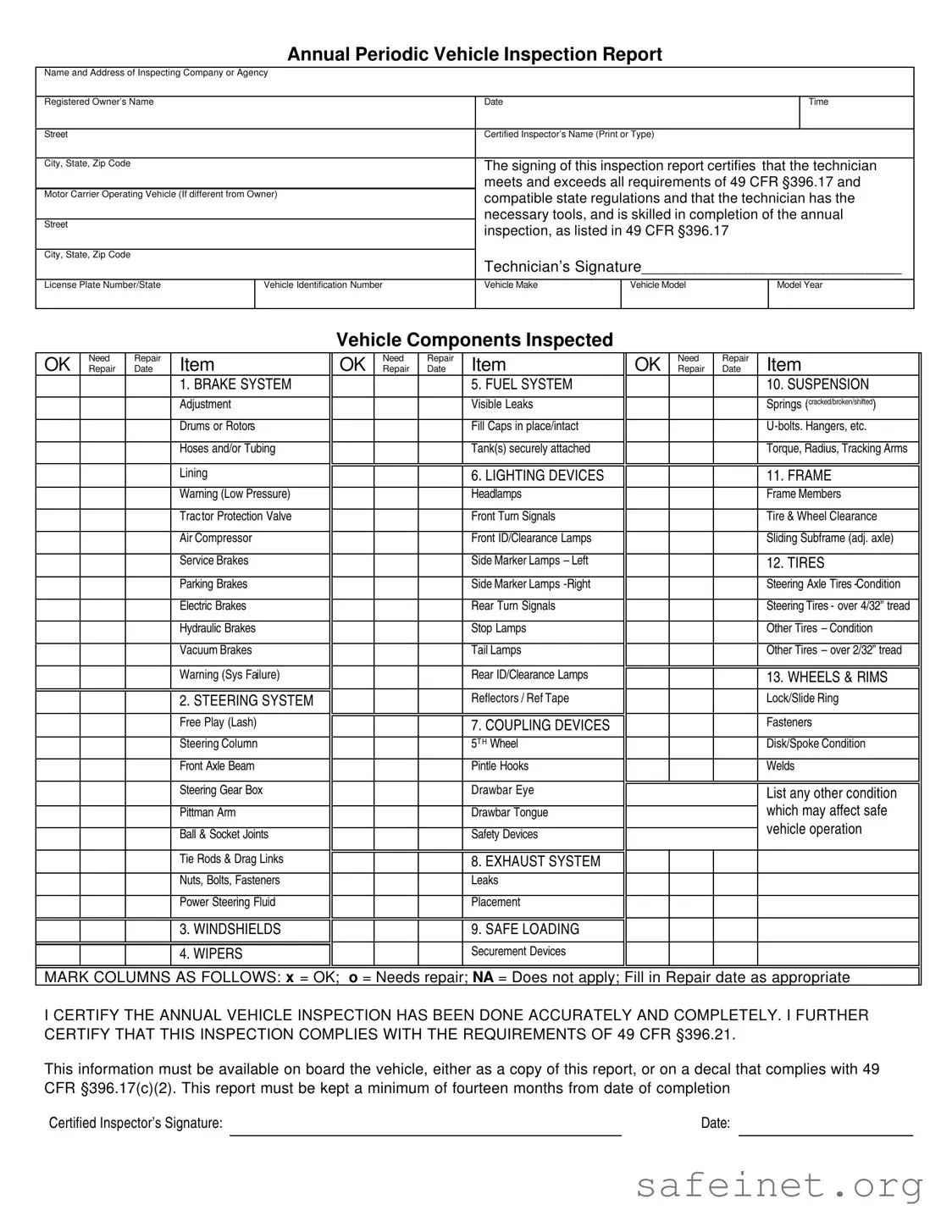
The DOT Vehicle Inspection form serves as a crucial tool for ensuring the safety and reliability of commercial vehicles on the road. This comprehensive report encompasses a variety of essential components, starting with the identification of the inspecting company and the registered owner's details, including their name and address. The form captures the date and time of inspection, along with the certified inspector's name, confirming their qualifications under federal regulations. Each vehicle undergoes a meticulous examination, covering critical systems such as brakes, steering, lighting, and tires. Inspectors mark each component as either satisfactory or in need of repair, ensuring that any issues are promptly addressed. Moreover, the form requires the inspector to certify that the inspection adheres to the standards set forth by 49 CFR §396.21, making it a legally binding document. It is imperative for this report to be readily accessible on board the vehicle, either as a physical copy or a decal, reinforcing the commitment to safety and compliance. The inspection process is not just a formality; it is a safeguard designed to protect drivers, passengers, and the public alike, emphasizing the importance of regular maintenance and oversight in the transportation industry.


| Fact Name | Details |
|---|---|
| Purpose of the Form | The Dot Vehicle Inspection form is used to document the annual inspection of commercial vehicles, ensuring they meet safety standards. |
| Governing Laws | This inspection complies with 49 CFR §396.17 and other applicable state regulations. |
| Inspector Qualifications | Inspectors must understand inspection criteria and have the necessary training or experience, as outlined in 49 CFR §396.19. |
| Inspection Components | The form covers various vehicle systems, including brakes, steering, lighting, and tires, to ensure comprehensive checks. |
| Repair Documentation | Inspectors must mark items as OK or needing repair and provide repair dates for any components that require attention. |
| Record Keeping | The inspection report must be kept on file for at least fourteen months from the date of completion. |
| Certification Requirement | Inspectors must certify that the inspection has been completed accurately and complies with federal requirements. |
| Availability of Information | The inspection report must be accessible on board the vehicle, either as a physical copy or a compliant decal. |
| Brake Inspector Qualifications | Brake inspectors have specific qualifications under 49 CFR §396.25, ensuring they meet safety standards for brake inspections. |
Completing the DOT Vehicle Inspection form is a crucial step in ensuring that your vehicle meets safety standards. This form helps document the condition of various vehicle components and certifies that a qualified technician has performed the inspection. Follow these steps to fill out the form accurately.
After completing the form, make sure to keep a copy on board the vehicle or display a compliant decal. This documentation must be retained for at least fourteen months from the date of completion. Proper record-keeping is essential for compliance and safety assurance.
What is the purpose of the DOT Vehicle Inspection form?
The DOT Vehicle Inspection form serves to document the annual inspection of commercial motor vehicles. It ensures that vehicles comply with federal safety regulations and state laws. This form is essential for maintaining the safety of the vehicle, protecting the driver, passengers, and other road users. It also provides a record that can be referenced in case of any future inspections or audits.
Who is qualified to conduct the inspections documented on this form?
Only certified inspectors who meet the qualifications outlined in 49 CFR §396.19 can perform these inspections. They must understand inspection criteria, be knowledgeable about inspection methods, and have relevant experience or training. This ensures that the inspection is thorough and compliant with safety standards.
What components of the vehicle are inspected using this form?
The form covers various critical components, including the brake system, steering system, lighting devices, tires, wheels, and more. Each component is assessed for functionality and safety, with options to indicate if an item is in good condition or requires repair.
How long must the inspection report be retained?
The inspection report must be kept for a minimum of fourteen months from the date of completion. This retention period ensures that the documentation is available for review by regulatory authorities and serves as a record of compliance with safety standards.
What should be done if a vehicle needs repairs after inspection?
If any components are marked as needing repair, it is crucial to address these issues promptly. The inspection form allows for the recording of repair dates, ensuring that any necessary maintenance is documented. This not only enhances safety but also helps maintain compliance with regulations.
Is the inspection report required to be on board the vehicle?
Yes, the inspection report or a compliant decal must be available on board the vehicle. This requirement ensures that the vehicle's inspection history is accessible for review by enforcement officers or other relevant parties during roadside checks.
What happens if the vehicle does not pass the inspection?
If a vehicle does not pass the inspection, it cannot be operated until all necessary repairs are made and the vehicle is re-inspected. This policy is in place to ensure that all vehicles on the road meet safety standards, thereby protecting everyone involved.
Can the inspection be performed by anyone other than a certified inspector?
No, the inspection must be performed by a certified inspector who meets the qualifications established by federal regulations. This requirement helps guarantee that the inspection is conducted properly and that safety standards are upheld.
Missing Information: Failing to fill in all required fields can lead to delays. Ensure that every section, from the inspector's name to the vehicle identification number, is completed.
Incorrect Dates: Entering the wrong date can cause confusion. Always double-check the date of the inspection and the repair dates.
Inaccurate Condition Markings: Mislabeling vehicle components as "OK" or "Needs Repair" can result in serious safety issues. Be diligent when assessing each item.
Neglecting to Sign: Forgetting to sign the form can invalidate the inspection. Ensure that both the inspector and the mechanic sign where required.
Omitting Repair Dates: Leaving repair dates blank can create ambiguity about when issues were addressed. Fill in the dates for any repairs completed.
Not Keeping a Copy: Failing to keep a copy of the inspection report on board the vehicle is a common mistake. This document must be readily available for compliance.
Ignoring Qualifications: Not verifying the inspector's qualifications can lead to non-compliance. Always ensure that the inspector meets the necessary criteria.
Overlooking Additional Notes: Not using the space for additional comments can be a missed opportunity. Document any conditions that could affect vehicle safety.
The DOT Vehicle Inspection form is essential for ensuring that commercial vehicles meet safety standards. However, several other forms and documents often accompany it to provide a comprehensive overview of vehicle safety and compliance. Here’s a list of those documents:
Having these documents readily available not only supports compliance with regulations but also enhances safety on the road. Proper documentation can make a significant difference in the event of inspections or legal inquiries.
The DOT Vehicle Inspection Form shares similarities with the Pre-Trip Inspection Checklist, a document used by drivers to assess the condition of their vehicle before embarking on a journey. Both documents focus on ensuring that critical vehicle components are functioning properly, thereby enhancing safety on the road. The Pre-Trip Inspection Checklist typically includes items such as brakes, lights, tires, and fluid levels, mirroring the DOT form's emphasis on vital systems. Both documents require the driver or inspector to note any issues and ensure that repairs are made before the vehicle is deemed roadworthy.
Another document akin to the DOT Vehicle Inspection Form is the Annual Safety Inspection Report. This report is mandated by state laws and serves to evaluate the overall safety and compliance of a vehicle. Like the DOT form, it requires a thorough inspection of various components, including brakes, steering, and lights. The Annual Safety Inspection Report is often conducted by certified inspectors, ensuring that both documents uphold high standards of vehicle safety and regulatory compliance. Both forms also necessitate signatures from qualified inspectors, confirming that the inspections were completed accurately.
The Vehicle Maintenance Log is another document that complements the DOT Vehicle Inspection Form. This log tracks routine maintenance and repairs performed on a vehicle over time. While the DOT form provides a snapshot of a vehicle's condition at a specific point, the Maintenance Log offers a historical record that can help identify recurring issues. Both documents emphasize the importance of proper vehicle upkeep and can be used to demonstrate compliance with safety regulations during audits or inspections.
Similarly, the Brake Inspection Report aligns closely with the DOT Vehicle Inspection Form, particularly in its focus on the braking system. This report details the condition of brake components and any necessary repairs. Like the DOT form, it requires a certified inspector to assess the brakes and certify their functionality. Both documents aim to ensure that vehicles are safe to operate, highlighting the critical role of brakes in overall vehicle safety.
Lastly, the Equipment Inspection Checklist is comparable to the DOT Vehicle Inspection Form in that it addresses the inspection of specialized equipment, such as trailers and cargo handling devices. Both documents require a systematic evaluation of essential components, ensuring that all equipment meets safety standards. The Equipment Inspection Checklist often includes specific items tailored to the type of equipment being inspected, while the DOT form covers a broader range of vehicle systems. Both documents serve to protect drivers and the public by ensuring that all equipment is in safe working order.
When filling out the DOT Vehicle Inspection form, it’s essential to approach the task with care and attention to detail. Below are some important dos and don’ts to keep in mind.
Following these guidelines will help ensure that the inspection process is thorough and compliant with federal regulations.
Misconception 1: The DOT Vehicle Inspection form is only necessary for large commercial vehicles.
This form applies to all commercial motor vehicles, regardless of size. Whether you drive a large truck or a smaller commercial vehicle, the inspection is required to ensure safety on the road.
Misconception 2: Completing the DOT Vehicle Inspection form is optional.
It is not optional. The inspection must be conducted annually, and the completed form must be available on board the vehicle. Compliance is essential for safety and legal reasons.
Misconception 3: Any technician can perform the inspection without specific qualifications.
Only certified inspectors can perform these inspections. They must meet specific qualifications and demonstrate knowledge of inspection criteria and procedures.
Misconception 4: The inspection only checks for visible damages.
The inspection covers various systems, including brakes, steering, and lighting. It assesses functionality and safety, not just visible damages.
Misconception 5: Once the inspection is completed, there is no need for follow-up actions.
If repairs are needed, they must be documented and addressed promptly. Keeping the vehicle in safe operating condition is crucial.
Misconception 6: The inspection report can be discarded after a short period.
The report must be kept for a minimum of fourteen months. This is important for accountability and compliance with regulations.
Misconception 7: The DOT Vehicle Inspection form is the same for every state.
While there are federal requirements, some states may have additional regulations. It is essential to be aware of state-specific requirements to ensure compliance.
Filling out and using the DOT Vehicle Inspection form is critical for ensuring vehicle safety and compliance. Here are key takeaways to consider:
Act promptly to ensure compliance and vehicle safety. Delays in inspections or repairs can lead to serious consequences.