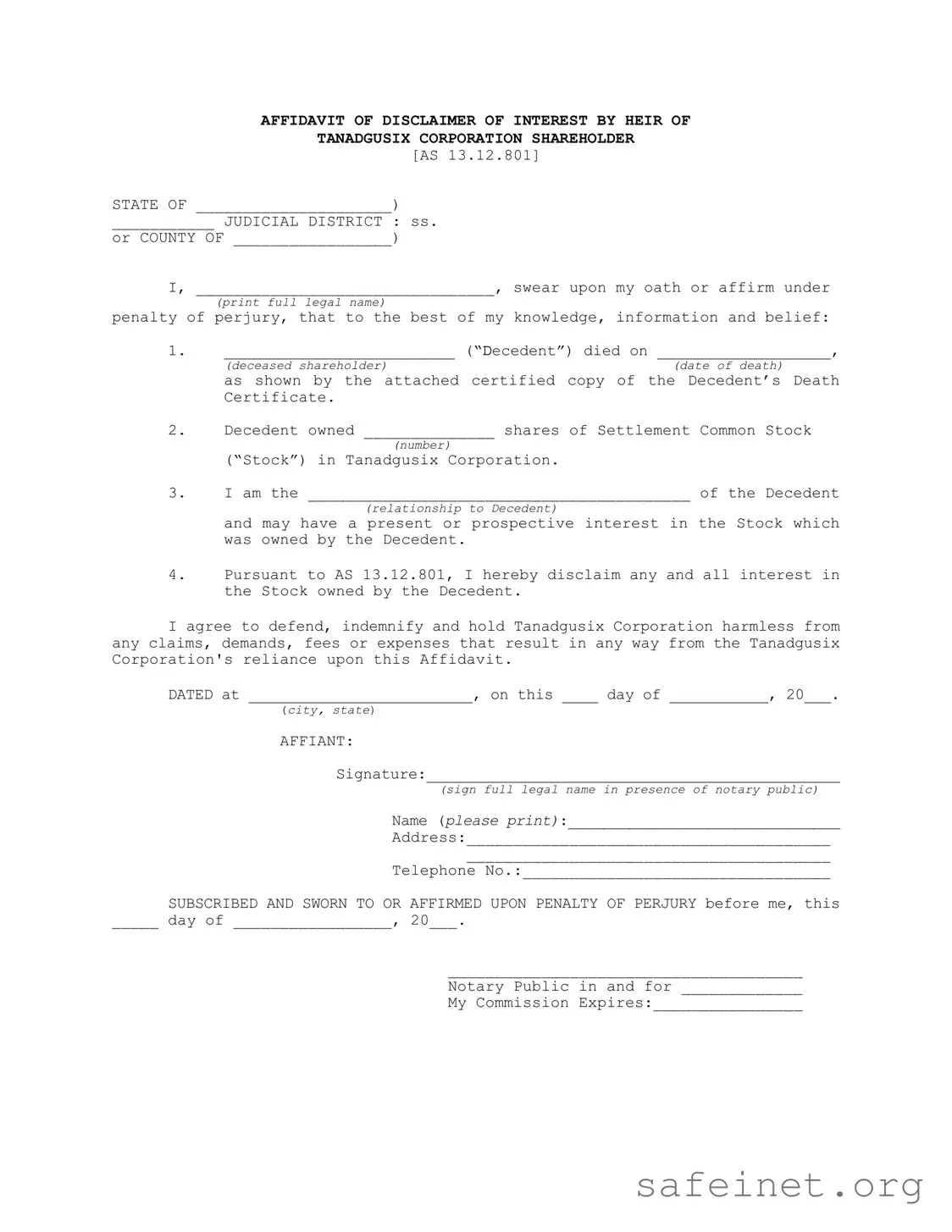
The Disclaimer Inheritance form serves a crucial role for heirs of shareholders in the Tanadgusix Corporation. This document allows an heir to formally reject any interest in shares that belonged to a deceased shareholder. When someone passes away, their ownership of stock can lead to complex inheritance issues. This form simplifies the process by enabling heirs to disclaim their rights to the shares, thereby avoiding potential tax implications or disputes over ownership. The form requires specific information, including the name of the deceased, the number of shares owned, and the relationship of the affiant to the deceased. Additionally, it includes a statement affirming the heir's decision to relinquish any claims to the stock and protects the corporation from future claims related to the disclaimed shares. By signing this affidavit in the presence of a notary public, the heir provides legal assurance that they are making an informed choice, free from coercion. Ultimately, the Disclaimer Inheritance form is designed to clarify ownership and protect both the corporation and the heir from future complications.

| Fact Name | Details |
|---|---|
| Purpose | The Disclaimer Inheritance form allows an heir to formally renounce any interest in the shares of a deceased shareholder. |
| Governing Law | This form is governed by Alaska Statutes, specifically AS 13.12.801. |
| Affidavit Requirement | The form must be sworn or affirmed under penalty of perjury, ensuring the truthfulness of the information provided. |
| Decedent Information | It requires the full name and date of death of the deceased shareholder, along with a certified copy of the death certificate. |
| Share Ownership | The form must specify the number of shares of Settlement Common Stock owned by the decedent. |
| Relationship Disclosure | The affiant must disclose their relationship to the decedent, which establishes their standing to disclaim the shares. |
| Indemnification Clause | The affiant agrees to defend and indemnify Tanadgusix Corporation from any claims arising from their disclaimer. |
Completing the Disclaimer Inheritance form is a straightforward process that requires accurate information about the deceased and your relationship to them. Follow these steps carefully to ensure that the form is filled out correctly.
What is the purpose of the Disclaimer Inheritance form?
The Disclaimer Inheritance form serves as a legal document that allows an heir to formally refuse any interest in the shares of stock owned by a deceased individual. This is particularly relevant in cases where the heir does not wish to accept the inheritance, whether for personal, financial, or other reasons. By completing this form, the heir ensures that they are not held liable for any associated obligations or responsibilities linked to the stock.
Who needs to fill out this form?
This form is typically filled out by an heir of a deceased shareholder of Tanadgusix Corporation. If you are related to the deceased and may have a potential interest in their shares but do not wish to accept them, this form is necessary to formally document your decision.
What information is required on the form?
The form requires several key pieces of information. You will need to provide the name of the deceased shareholder, the date of their death, the number of shares they owned, your relationship to the deceased, and your contact information. Additionally, you must sign the form in the presence of a notary public to validate your declaration.
What does it mean to disclaim an interest in the stock?
To disclaim an interest means that you are choosing not to accept any rights or responsibilities associated with the shares of stock. By doing so, you are effectively relinquishing any claims to the stock and any potential financial obligations that may arise from it. This action can help prevent complications in your personal finances and legal standing.
Is there a deadline for submitting the Disclaimer Inheritance form?
While specific deadlines can vary depending on state laws and individual circumstances, it is generally advisable to submit the form as soon as possible after the death of the shareholder. Delaying submission may complicate matters or lead to unintended acceptance of the inheritance.
What happens after I submit the form?
Once you submit the Disclaimer Inheritance form, Tanadgusix Corporation will acknowledge your decision to disclaim the stock. This means you will not have any rights or responsibilities regarding the shares. It’s important to keep a copy of the submitted form for your records, as it serves as proof of your decision.
Can I revoke my disclaimer after submitting the form?
Generally, a disclaimer is irrevocable once it has been submitted and accepted. If you have concerns about your decision, it is advisable to consult with a legal professional before submitting the form. They can provide guidance based on your specific situation and help you understand any implications of your decision.
What are the potential consequences of not filing the form?
If you do not file the Disclaimer Inheritance form, you may inadvertently accept the inheritance, which could lead to various financial and legal obligations. This might include tax liabilities or responsibilities related to the management of the shares. Filing the form protects you from these potential complications.
Do I need legal assistance to complete the form?
While it is not mandatory to seek legal assistance to complete the Disclaimer Inheritance form, it can be beneficial. A legal professional can help ensure that the form is filled out correctly and that you fully understand the implications of your disclaimer. This can provide peace of mind as you navigate the inheritance process.
When completing the Disclaimer Inheritance form, individuals often make several common mistakes. Being aware of these can help ensure the process goes smoothly. Here is a list of eight mistakes to avoid:
Leaving out essential details, such as the Decedent's full name or date of death, can lead to delays or rejection of the form.
Misstating the relationship to the Decedent can create confusion and may invalidate the disclaimer.
Not including the certified copy of the Decedent’s Death Certificate is a frequent oversight that can hinder the process.
Not signing the form in the presence of a notary public can render the affidavit unenforceable.
Forgetting to fill in the notary public’s information or commission expiration date can lead to complications.
Providing the wrong number of shares owned by the Decedent can result in legal disputes later on.
Failing to fully understand the implications of disclaiming interest in the stock can lead to regret or unintended consequences.
Submitting the form after any applicable deadlines can result in the loss of the right to disclaim.
By being mindful of these common mistakes, individuals can better navigate the process of filling out the Disclaimer Inheritance form. Taking the time to ensure accuracy and completeness is crucial for a successful outcome.
The Disclaimer Inheritance form is often accompanied by several other important documents that facilitate the inheritance process and clarify the intentions of the parties involved. Below are some commonly used forms that may be relevant in such situations.
Understanding these documents can help streamline the inheritance process and ensure that all parties are aware of their rights and responsibilities. It is advisable to review each document carefully and seek guidance if any questions arise.
The Affidavit of Heirship serves a similar purpose to the Disclaimer Inheritance form by establishing the identity of heirs following a decedent's death. It outlines the relationship between the heirs and the deceased, thereby providing clarity regarding who is entitled to inherit the decedent's assets. This document is often used in probate cases to confirm the heirs' status, ensuring that the distribution of the estate is conducted fairly and according to the law.
The Last Will and Testament is another important document that shares similarities with the Disclaimer Inheritance form. A will outlines the wishes of the decedent regarding the distribution of their property and assets after death. While the Disclaimer form allows an heir to renounce their interest in an estate, a will provides the framework for how assets should be divided among heirs. Both documents play a critical role in estate planning and probate proceedings.
The Living Trust document also bears resemblance to the Disclaimer Inheritance form, particularly in how it manages the distribution of assets upon death. A living trust allows individuals to place their assets in a trust during their lifetime, which then transfers to beneficiaries upon their death. If a beneficiary wishes to disclaim their interest in the trust, they may use a form similar to the Disclaimer Inheritance form to formally renounce their rights.
The Renunciation of Inheritance form is closely related to the Disclaimer Inheritance form. This document is specifically designed for heirs who wish to reject their right to inherit property or assets from a decedent. Much like the Disclaimer form, it requires the heir to formally state their intention to renounce any claim to the inheritance, ensuring that the estate can be distributed according to the decedent's wishes without their involvement.
The Release of Claims document is another similar legal instrument. This form is used when an heir or beneficiary agrees to relinquish any claims they may have against an estate or specific assets within it. By signing this document, the individual effectively acknowledges that they will not pursue any legal action regarding the inheritance, much like the way the Disclaimer Inheritance form disclaims interest in the decedent's assets.
The Power of Attorney (POA) can also be compared to the Disclaimer Inheritance form, although it serves a different function. A POA allows an individual to designate someone else to make decisions on their behalf, including matters related to estate management. If an heir wishes to disclaim their interest, they may need to provide a POA to another party to handle the estate's affairs, illustrating the interconnectedness of these legal documents in estate planning.
Finally, the Estate Inventory form is another document that is relevant in the context of disclaiming inheritance. This form lists all assets and liabilities of the decedent's estate. While the Disclaimer Inheritance form focuses on the renunciation of interest, the Estate Inventory provides a comprehensive overview of what is available for distribution. Both documents contribute to the overall understanding of the estate and the rights of those involved.
When filling out the Disclaimer Inheritance form, it is important to follow certain guidelines to ensure accuracy and compliance. Here are four things you should and shouldn't do:
There are several misconceptions surrounding the Disclaimer Inheritance form. Understanding these can help clarify its purpose and importance. Here are four common misconceptions:
This is not true. The Disclaimer Inheritance form can be used by anyone who is an heir to a deceased person's estate, regardless of the value of the assets involved. It is about the heir's choice to disclaim their interest.
While the form allows you to disclaim a specific interest, it does not mean you lose all rights to the estate. You may still have rights to other assets or interests that are not included in the disclaimer.
Once the Disclaimer Inheritance form is submitted, it is generally considered final. However, it is crucial to understand the implications before signing. Consulting a legal professional can help clarify your options.
This form is often associated with stock, but it can apply to various types of assets. If you are an heir and wish to disclaim any interest in other forms of property, the process may be similar.
Here are key takeaways about filling out and using the Disclaimer Inheritance form: