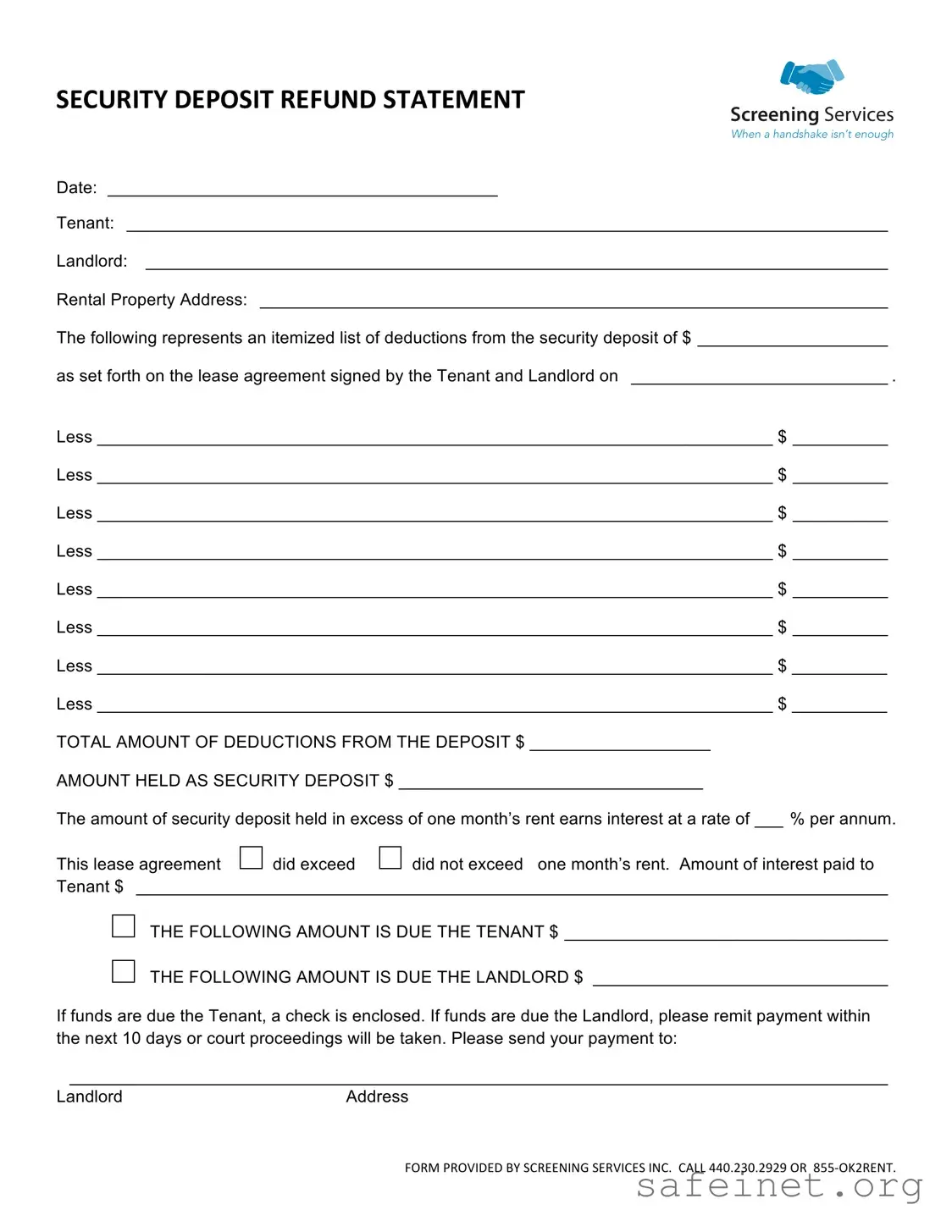
The Deposit Refund form serves as a crucial document in the rental process, ensuring clarity and accountability between landlords and tenants regarding the return of security deposits. This form outlines essential information, including the names of the tenant and landlord, the rental property address, and the date of the transaction. It provides a detailed itemized list of deductions from the security deposit, allowing both parties to understand the reasons for any withheld amounts. The form also specifies the total deductions and the remaining balance owed to the tenant or landlord. Additionally, it addresses interest accrued on security deposits held beyond one month’s rent, ensuring tenants are informed about their rights to potential earnings. Clear instructions for payment, whether due to the tenant or landlord, are included to facilitate prompt resolution. This structured approach helps prevent disputes and fosters a transparent rental relationship.

| Fact Name | Description |
|---|---|
| Purpose of the Form | The Deposit Refund form is used to itemize deductions from a tenant's security deposit after the lease ends. |
| Governing Laws | Each state has specific laws regulating security deposit refunds, such as the California Civil Code Section 1950.5. |
| Interest on Deposits | If the security deposit exceeds one month’s rent, it earns interest at a specified annual rate. |
| Payment Due Dates | Funds owed to the landlord must be paid within 10 days to avoid potential court proceedings. |
| Itemized Deductions | The form requires a detailed list of deductions from the security deposit, ensuring transparency for both parties. |
| Contact Information | The form includes contact details for Screening Services Inc., providing assistance if needed. |
Completing the Deposit Refund form is a straightforward process that ensures both tenants and landlords have a clear understanding of any deductions from the security deposit. After filling out the form, it will be submitted to the relevant parties for processing. Follow these steps carefully to ensure accuracy.
What is the purpose of the Deposit Refund form?
The Deposit Refund form serves as an official document that outlines the deductions made from a tenant's security deposit. It provides transparency between the landlord and tenant regarding any charges incurred during the rental period, ensuring both parties are aware of the financial transactions related to the security deposit.
How do I fill out the Deposit Refund form?
To complete the Deposit Refund form, begin by entering the date at the top. Next, fill in the names of both the tenant and landlord, along with the rental property address. You will then itemize any deductions from the security deposit, specifying the amount for each deduction. Finally, calculate the total deductions and the amount due to the tenant or landlord, as applicable.
What information is required on the form?
The form requires several key pieces of information. This includes the date, names of the tenant and landlord, rental property address, the total amount of the security deposit, itemized deductions, and the final amounts due to either party. It also notes whether the lease agreement exceeded one month's rent and the interest accrued on the deposit.
What if there are no deductions from the security deposit?
If there are no deductions, simply indicate that the full amount of the security deposit is due to the tenant. Ensure that the form clearly states this to avoid any confusion. Transparency is vital in maintaining a good relationship between the landlord and tenant.
How is the interest on the security deposit calculated?
The interest on the security deposit is calculated based on the amount held in excess of one month's rent. The interest rate is specified in the form. To determine the interest earned, multiply the excess amount by the interest rate and the time period the deposit was held.
What happens if funds are due to the landlord?
If funds are due to the landlord, the form specifies that payment should be remitted within the next 10 days. If payment is not received within this timeframe, the landlord may pursue court proceedings. It is essential to follow through on this to avoid legal complications.
Can a tenant dispute the deductions listed on the form?
Yes, a tenant has the right to dispute any deductions they believe are unfair or unjustified. Open communication with the landlord is encouraged. If an agreement cannot be reached, tenants may consider seeking legal advice or mediation to resolve the issue.
How should I submit the Deposit Refund form?
The completed Deposit Refund form should be sent to the appropriate party, either the tenant or landlord, as indicated on the form. If a check is enclosed for the tenant, ensure that it is properly signed and dated. If payment is due to the landlord, follow the instructions provided for remittance.
What should I do if I have questions about the form?
If you have questions regarding the Deposit Refund form, you can contact the company that provided the form, Screening Services Inc., at the numbers listed on the document. They can offer assistance and clarify any uncertainties you may have.
Is the Deposit Refund form legally binding?
Yes, the Deposit Refund form is a legally binding document once it is completed and signed by both parties. It serves as evidence of the agreed-upon deductions and the final amounts due. Both tenants and landlords should keep a copy for their records to ensure compliance with the terms outlined.
Incomplete Tenant and Landlord Information: Failing to fill in the names and contact details of both the tenant and landlord can lead to confusion and delays. Ensure all fields are accurately completed.
Missing Rental Property Address: Not providing the complete address of the rental property can cause issues in identifying the correct lease agreement. Double-check that the address is clear and complete.
Incorrect Calculation of Deductions: Errors in calculating the total deductions from the security deposit can result in disputes. Review each deduction carefully and ensure that the totals are accurate.
Omitting Interest Information: Forgetting to indicate whether the security deposit exceeded one month’s rent and the corresponding interest rate can lead to misunderstandings. Always include this information if applicable.
Failure to Specify Amounts Due: Not clearly stating the amounts due to the tenant and landlord can create confusion. Clearly list these amounts to avoid any miscommunication.
Neglecting to Sign the Form: A missing signature from either party invalidates the form. Ensure that both the tenant and landlord sign the document before submission.
Not Providing a Return Address: Failing to include a return address for the landlord can complicate the payment process. Always provide a clear address to facilitate timely payments.
When dealing with the return of a security deposit, several forms and documents may accompany the Deposit Refund form. Each serves a specific purpose in ensuring clarity and legality in the transaction. Below is a list of commonly used documents.
Understanding these documents can help both tenants and landlords navigate the process of security deposit refunds more effectively. Clear communication and documentation are key to avoiding disputes and ensuring a smooth transition at the end of a lease.
The Move-Out Inspection Checklist is a document that helps tenants and landlords assess the condition of a rental property before the tenant moves out. Similar to the Deposit Refund form, it includes an itemized list of potential deductions based on the property's condition. Both documents aim to ensure transparency regarding any damages or necessary repairs, allowing for a fair assessment of the security deposit. The checklist serves as a guide for both parties to agree on the state of the property and any associated costs.
The Lease Termination Agreement outlines the terms under which a rental agreement is concluded. Like the Deposit Refund form, it requires signatures from both the tenant and landlord, confirming mutual consent to end the lease. This document often includes details about the return of the security deposit, making it crucial for both parties to understand their financial obligations. It promotes clarity and helps prevent disputes regarding the lease's conclusion and any financial settlements.
The Security Deposit Itemization Form is directly related to the Deposit Refund form. It provides a detailed breakdown of the deductions taken from the security deposit, similar to the itemized deductions listed in the Deposit Refund form. This document is essential for ensuring that tenants understand the reasons behind any withheld funds. Both forms serve to clarify financial transactions related to the security deposit, fostering transparency in the landlord-tenant relationship.
The Rent Payment History Record is another relevant document. It tracks all rent payments made by the tenant throughout the lease term. While it does not directly address the security deposit, it can impact the amount returned to the tenant. A history of late payments or missed rent could justify deductions from the security deposit, similar to how the Deposit Refund form itemizes such deductions. Both documents contribute to a comprehensive understanding of the tenant's financial standing during the rental period.
The Tenant's Notice to Vacate is a formal communication from the tenant to the landlord indicating their intention to move out. This document is similar to the Deposit Refund form in that it marks a significant transition in the rental relationship. It often triggers the process for the return of the security deposit and may include timelines for inspections and final payments. Clarity in this notice can facilitate a smoother transition and help prevent misunderstandings regarding the deposit return.
The Rental Agreement serves as the foundational document for the landlord-tenant relationship. It outlines the terms of the lease, including the amount of the security deposit and conditions for its return. Like the Deposit Refund form, it establishes the rights and responsibilities of both parties. When disputes arise regarding the deposit, the Rental Agreement can be referenced to resolve issues, ensuring both parties are aware of their obligations.
The Dispute Resolution Agreement provides a framework for resolving conflicts between landlords and tenants. It can be invoked when disagreements occur over the return of the security deposit, similar to the issues addressed in the Deposit Refund form. This document outlines the process for mediation or arbitration, helping both parties reach a resolution without resorting to litigation. It emphasizes the importance of clear communication and agreed-upon procedures in managing disputes.
The Payment Receipt for Security Deposit serves as proof of the deposit made by the tenant at the beginning of the lease. This document is similar to the Deposit Refund form as it confirms the financial transaction between the tenant and landlord. Both documents are crucial for maintaining accurate records of financial exchanges. The Payment Receipt ensures that both parties have a reference point for the original deposit amount, which is essential when calculating any deductions at the end of the lease.
When filling out the Deposit Refund form, it’s important to be thorough and accurate. Here’s a list of things to do and avoid:
Understanding the Deposit Refund form can be challenging, and several misconceptions often arise. Here are seven common misunderstandings about this important document:
By understanding these misconceptions, tenants can better navigate the deposit refund process and ensure their rights are protected.
Here are some key takeaways about filling out and using the Deposit Refund form: