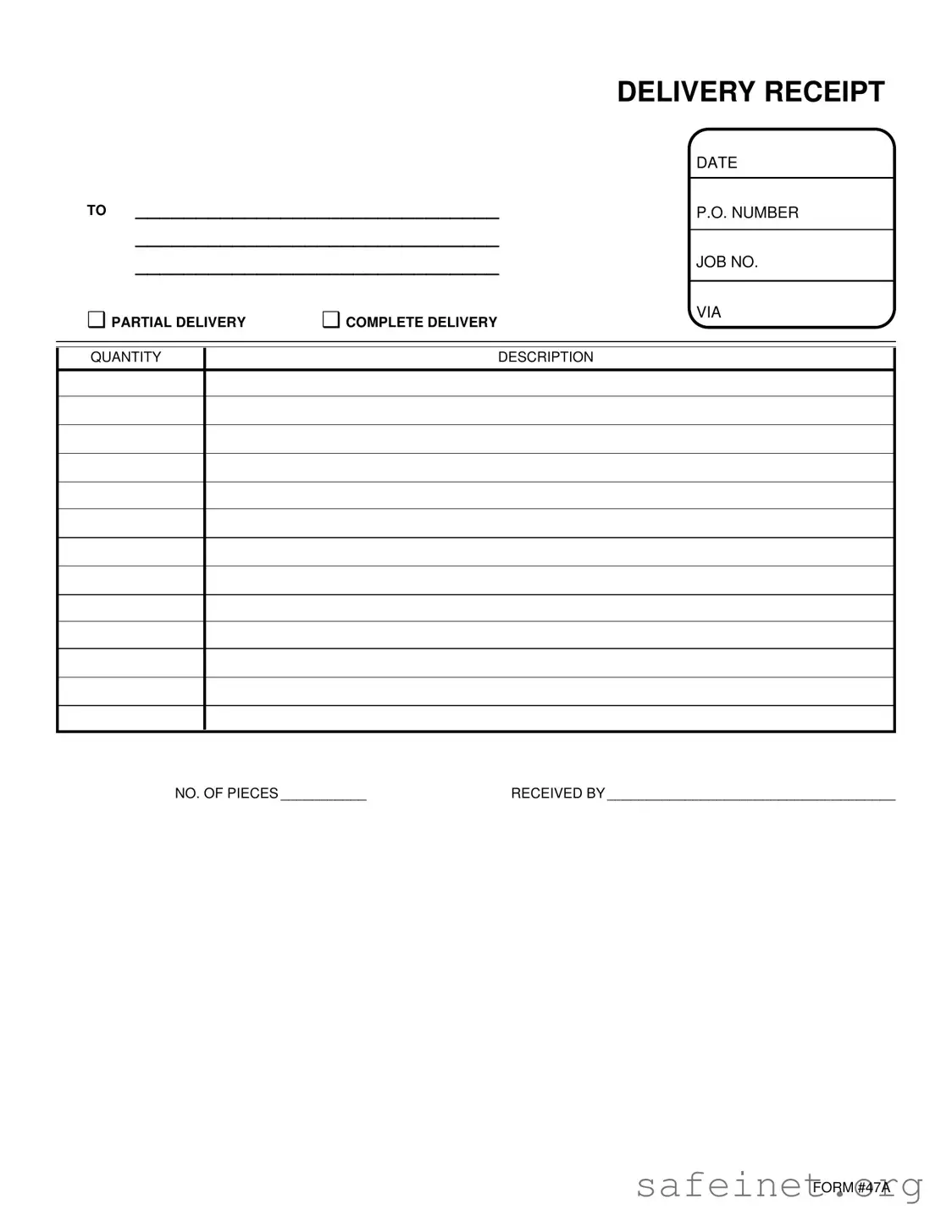
The Delivery Receipt form plays a crucial role in the logistics and supply chain process, serving as a vital document for both senders and receivers. This form is designed to provide clear and organized information about the delivery, ensuring that all parties are on the same page regarding what has been sent and received. Key elements of the form include the date of delivery, the recipient's details, and the purchase order number, which helps track the transaction. Additionally, it specifies whether the delivery is partial or complete, allowing for easy identification of any outstanding items. The form also captures the quantity and description of the goods delivered, along with the number of pieces received. Finally, it requires the signature of the individual who received the items, providing a formal acknowledgment of receipt. Overall, the Delivery Receipt form is essential for maintaining accurate records and facilitating smooth communication between parties involved in the delivery process.
| Fact Name | Details |
|---|---|
| Purpose | A Delivery Receipt form serves as proof of delivery for goods or services received. |
| Date | The date of delivery must be clearly indicated on the form. |
| P.O. Number | A Purchase Order (P.O.) number helps track the order and ensures accurate record-keeping. |
| Job Number | The job number identifies the specific project related to the delivery. |
| Delivery Status | Checkboxes indicate whether the delivery is partial or complete. |
| Quantity | The quantity of items delivered should be specified to confirm receipt. |
| Description | A brief description of the items being delivered provides clarity. |
| No. of Pieces | Documenting the number of pieces ensures all items are accounted for. |
| Received By | The name of the person receiving the items must be recorded for accountability. |
| Governing Law | Delivery receipts are subject to state-specific commercial laws, such as the Uniform Commercial Code (UCC). |
Once you have your Delivery Receipt form ready, it's time to fill it out accurately. This form serves as a record of the items received, ensuring that both the sender and recipient have a clear understanding of what was delivered. Follow these steps to complete the form correctly.
What is a Delivery Receipt form?
A Delivery Receipt form is a document used to confirm the receipt of goods. It includes important details such as the date of delivery, purchase order number, job number, and the quantity of items delivered. This form serves as proof that the recipient has received the items listed and can be used for record-keeping or dispute resolution.
What information is required on the Delivery Receipt form?
The Delivery Receipt form requires several key pieces of information. You need to fill in the date of delivery, purchase order number, and job number. Additionally, you must indicate whether the delivery is partial or complete. The quantity and description of the items delivered should also be included, along with the name of the person who received the items. This comprehensive information helps ensure clarity and accountability in the delivery process.
Why is it important to keep a copy of the Delivery Receipt?
Keeping a copy of the Delivery Receipt is crucial for several reasons. It serves as evidence of what was delivered and when, which can be vital in case of discrepancies or disputes. This document can help track inventory and manage orders effectively. Additionally, having a record can assist in financial audits and ensure that all transactions are accounted for accurately.
What should I do if there is a discrepancy on the Delivery Receipt?
If you notice a discrepancy on the Delivery Receipt, such as missing items or incorrect quantities, address it immediately. Contact the supplier or delivery service as soon as possible to report the issue. Document the discrepancy and keep a record of all communications. Resolving these issues promptly can help prevent further complications and ensure that you receive the correct items.
Failing to include the date of the delivery. This information is essential for tracking and record-keeping.
Not specifying the purchase order number. This detail helps to match the delivery with the corresponding order.
Neglecting to indicate whether the delivery is partial or complete. This distinction is crucial for inventory management and planning.
Omitting the signature of the person receiving the items. A signature provides proof of receipt and can prevent disputes.
When managing deliveries, several documents often accompany the Delivery Receipt form to ensure accurate tracking and accountability. Each of these forms serves a specific purpose in the delivery process, enhancing communication between parties involved.
Utilizing these forms alongside the Delivery Receipt can streamline the delivery process and help maintain accurate records. Ensuring all necessary documentation is completed can prevent misunderstandings and facilitate smooth transactions.
The Bill of Lading serves a similar purpose to the Delivery Receipt form. It acts as a contract between the shipper and the carrier, outlining the details of the goods being transported. Both documents confirm the receipt of goods, but the Bill of Lading also includes information about the shipping terms and conditions, making it crucial for freight transport.
A Packing List is another document closely related to the Delivery Receipt. It details the contents of a shipment, including descriptions and quantities of items. While the Delivery Receipt confirms that items were received, the Packing List provides a comprehensive breakdown of what should be included, aiding in inventory management and verification.
An Invoice is also comparable to the Delivery Receipt, as it serves as a record of a transaction. The Invoice outlines the products or services provided and the total amount due. While the Delivery Receipt confirms receipt, the Invoice indicates what the buyer is obligated to pay, making both essential for accounting purposes.
The Purchase Order (PO) is a document that initiates the transaction process. It is created by the buyer and sent to the seller, specifying the types and quantities of goods or services desired. Similar to the Delivery Receipt, the PO is a key part of the transaction, ensuring that both parties agree on the terms before delivery occurs.
The Waybill is another document similar to the Delivery Receipt. It provides details about the shipment, including the sender, recipient, and the nature of the goods. The Waybill often accompanies the goods during transport, serving as a guide for carriers, whereas the Delivery Receipt is signed upon receipt of those goods.
An Acknowledgment of Receipt is often used in business transactions to confirm that a party has received goods or documents. This document is akin to the Delivery Receipt, as it serves to provide formal recognition of receipt. However, it may not include details about the condition or quantity of the items received.
Finally, a Transfer Receipt is used when goods are transferred from one party to another, often within a company or between locations. It confirms that the items have been handed over and received. Similar to the Delivery Receipt, it provides a record of the transaction but is typically used in internal transfers rather than external deliveries.
When filling out the Delivery Receipt form, attention to detail is essential. Below are some guidelines to ensure accuracy and clarity.
Understanding the Delivery Receipt form is crucial for both senders and recipients. However, several misconceptions often cloud its purpose and use. Here are six common misunderstandings:
By understanding these misconceptions, individuals can better navigate the delivery process and ensure that their transactions are smooth and well-documented.
Here are some key takeaways for filling out and using the Delivery Receipt form: