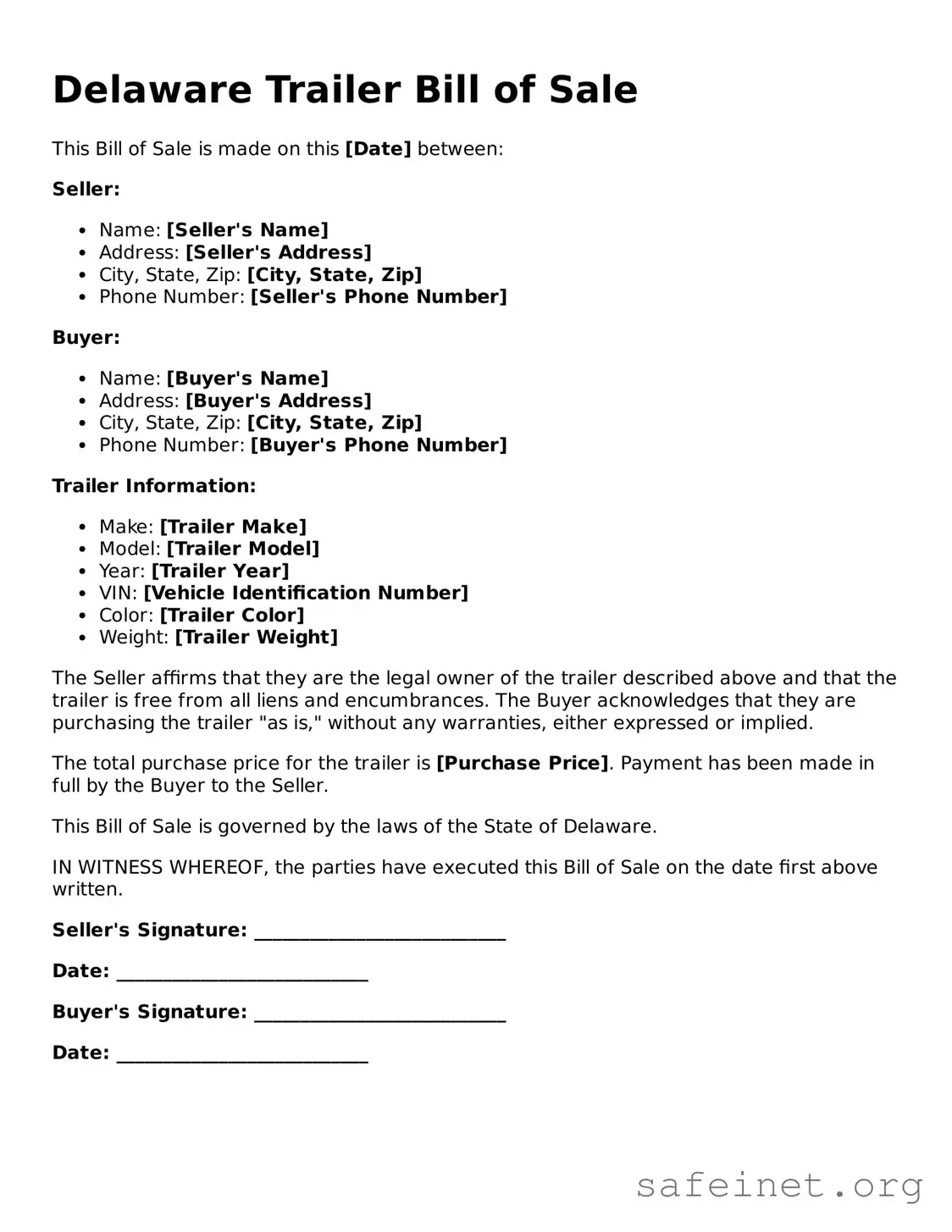
The Delaware Trailer Bill of Sale form serves as a crucial document in the transfer of ownership for trailers within the state. This form provides essential details about the transaction, including the names and addresses of both the buyer and seller, as well as the trailer's description, including its make, model, year, and Vehicle Identification Number (VIN). Additionally, it outlines the purchase price and any terms of sale, ensuring that both parties have a clear understanding of the agreement. By documenting the transaction, this form not only protects the interests of both the buyer and seller but also facilitates the registration process with the Delaware Division of Motor Vehicles. Properly completing and signing the Trailer Bill of Sale can help prevent future disputes and establish a legal record of ownership transfer. Understanding the key components and requirements of this form is essential for anyone involved in buying or selling a trailer in Delaware.
Delaware Trailer Bill of Sale
This Bill of Sale is made on this [Date] between:
Seller:
Buyer:
Trailer Information:
The Seller affirms that they are the legal owner of the trailer described above and that the trailer is free from all liens and encumbrances. The Buyer acknowledges that they are purchasing the trailer "as is," without any warranties, either expressed or implied.
The total purchase price for the trailer is [Purchase Price]. Payment has been made in full by the Buyer to the Seller.
This Bill of Sale is governed by the laws of the State of Delaware.
IN WITNESS WHEREOF, the parties have executed this Bill of Sale on the date first above written.
Seller's Signature: ___________________________
Date: ___________________________
Buyer's Signature: ___________________________
Date: ___________________________
| Fact Name | Description |
|---|---|
| Purpose | The Delaware Trailer Bill of Sale form is used to document the sale or transfer of ownership of a trailer in the state of Delaware. |
| Governing Law | This form is governed by Delaware state laws, specifically Title 21 of the Delaware Code, which pertains to vehicles. |
| Required Information | The form typically requires details such as the seller's and buyer's names, trailer identification number (VIN), sale price, and date of sale. |
| Usage | It is recommended to complete this form during the sale process to ensure proper transfer of ownership and to avoid future disputes. |
After obtaining the Delaware Trailer Bill of Sale form, you will need to complete it accurately to ensure a smooth transfer of ownership. Once filled out, both the buyer and seller should retain copies for their records. This document serves as proof of the transaction.
What is a Delaware Trailer Bill of Sale form?
The Delaware Trailer Bill of Sale form is a legal document used to record the sale of a trailer in the state of Delaware. This form serves as proof of ownership transfer from the seller to the buyer. It includes essential details such as the trailer's identification, the sale price, and the names and addresses of both parties involved in the transaction.
Why is a Bill of Sale important for a trailer transaction?
A Bill of Sale is crucial because it provides legal protection for both the buyer and the seller. For the buyer, it serves as evidence of ownership and can be used to register the trailer with the state. For the seller, it protects against future claims of ownership or liability related to the trailer after the sale has been completed.
What information is required on the Delaware Trailer Bill of Sale form?
The form typically requires the following information: the names and addresses of the buyer and seller, a detailed description of the trailer (including make, model, year, and Vehicle Identification Number), the sale price, and the date of the transaction. Both parties should sign the document to validate the sale.
Do I need to have the Bill of Sale notarized?
While notarization is not strictly required in Delaware, having the Bill of Sale notarized can add an extra layer of security and authenticity to the document. It may also be beneficial if there are any disputes in the future regarding the sale.
Can I use a generic Bill of Sale form for my trailer?
Yes, you can use a generic Bill of Sale form, but it is advisable to use the specific Delaware Trailer Bill of Sale form. This ensures that all necessary information is included and meets state requirements, making the transaction smoother and legally sound.
Is there a fee associated with the Bill of Sale?
There is no fee for creating a Bill of Sale itself. However, when registering the trailer with the state after the sale, there may be fees associated with title transfer and registration. It's important to check with the Delaware Division of Motor Vehicles for specific costs.
What should I do after completing the Bill of Sale?
After completing the Bill of Sale, both the buyer and seller should keep a copy for their records. The buyer should take the completed form to the Delaware Division of Motor Vehicles to register the trailer and obtain a new title in their name.
Can I sell a trailer without a Bill of Sale?
Technically, you can sell a trailer without a Bill of Sale, but it is not recommended. Without this document, the buyer may face difficulties in proving ownership or registering the trailer. It is in the best interest of both parties to complete a Bill of Sale to ensure a clear transfer of ownership.
What if the trailer has a lien on it?
If the trailer has a lien, it is essential to resolve this before selling. The seller should contact the lienholder to understand the payoff amount and obtain a lien release. The Bill of Sale should indicate that the trailer is sold free of any liens if that is the case, ensuring a smooth transaction for the buyer.
Where can I obtain a Delaware Trailer Bill of Sale form?
You can obtain a Delaware Trailer Bill of Sale form from various sources, including online legal document providers, local DMV offices, or by creating one based on the required elements. Ensure that the form you use complies with Delaware state laws for it to be valid.
Failing to provide complete information about the trailer. It is essential to include details such as the make, model, year, and Vehicle Identification Number (VIN). Incomplete information can lead to confusion or disputes later on.
Not including the purchase price. The sale price must be clearly stated on the form. Omitting this detail can create issues with registration and taxes.
Forgetting to sign the form. Both the buyer and seller must sign the document to make it legally binding. A missing signature can invalidate the sale.
Neglecting to date the form. A date is crucial as it indicates when the transaction took place. Without a date, it may be challenging to establish the timeline of ownership.
Not providing accurate contact information. Both parties should ensure their names, addresses, and phone numbers are correct. This information is vital for future communication regarding the trailer.
Ignoring any liens on the trailer. If there are outstanding loans or liens, they must be disclosed. Failing to do so can result in legal complications for the buyer.
Using incorrect or outdated forms. It is important to use the most current version of the Delaware Trailer Bill of Sale. Using an outdated form can lead to issues with the state’s registration process.
Not retaining a copy of the completed form. Both parties should keep a copy for their records. This can serve as proof of the transaction and help resolve any future disputes.
When completing a transaction involving a trailer in Delaware, several forms and documents may be necessary in addition to the Trailer Bill of Sale. Each of these documents serves a specific purpose in ensuring that the sale is legally recognized and that both parties are protected. Below is a list of commonly used documents.
These documents are important for ensuring a smooth and legally compliant transaction when buying or selling a trailer in Delaware. It is advisable to have all necessary paperwork in order to avoid any complications in the future.
The Delaware Trailer Bill of Sale form is similar to the Vehicle Bill of Sale, which serves a similar purpose for automobiles. Like the trailer bill of sale, the vehicle bill of sale documents the transfer of ownership from one party to another. Both forms require essential information such as the buyer's and seller's names, addresses, and signatures. Additionally, they typically include details about the vehicle, such as the make, model, year, and vehicle identification number (VIN). This ensures that both parties have a clear record of the transaction.
Another related document is the Boat Bill of Sale. This form is used when transferring ownership of a boat, much like the trailer bill of sale does for trailers. Both documents provide a legal record of the sale, outlining the terms and conditions agreed upon by the buyer and seller. They also include identifying details about the boat or trailer, ensuring clarity in ownership. In both cases, the bill of sale acts as proof of purchase and can be vital for future registration or legal matters.
The Motorcycle Bill of Sale is also comparable to the Delaware Trailer Bill of Sale. This document is specifically designed for the sale of motorcycles, capturing the same essential information as the trailer bill. Both forms require the buyer's and seller's information, a description of the item being sold, and the sale price. The motorcycle bill of sale, like its trailer counterpart, serves as a legal document that protects both parties in the transaction and may be necessary for registration purposes.
In addition, the RV Bill of Sale shares similarities with the Delaware Trailer Bill of Sale. Recreational vehicles, or RVs, often require a bill of sale to finalize a transaction. Both documents outline the details of the sale, including the parties involved and specifics about the vehicle. The RV bill of sale also serves as proof of ownership transfer, which can be crucial when registering the vehicle with the state or for insurance purposes.
The Mobile Home Bill of Sale is another document that resembles the trailer bill of sale. This form is used for the sale of mobile homes, capturing the necessary details about the buyer, seller, and the mobile home itself. Just like the trailer bill of sale, it acts as a legal record of the transaction and provides essential information for future ownership verification and registration. Both documents help protect the interests of both parties involved in the sale.
Lastly, the Equipment Bill of Sale is akin to the Delaware Trailer Bill of Sale, particularly when it comes to the sale of trailers used for commercial purposes. This document outlines the terms of the sale, including the buyer's and seller's information, and describes the equipment being sold. Both forms serve to document the transfer of ownership, ensuring that both parties have a clear understanding of the transaction and providing legal protection should any disputes arise later on.
When filling out the Delaware Trailer Bill of Sale form, it is important to follow certain guidelines to ensure accuracy and compliance. Here is a list of things you should and shouldn't do:
When it comes to the Delaware Trailer Bill of Sale form, several misconceptions can lead to confusion. Here are nine common misunderstandings:
Understanding these misconceptions can help ensure a smoother transaction when buying or selling a trailer in Delaware.
When filling out and using the Delaware Trailer Bill of Sale form, there are several important points to keep in mind. Understanding these key takeaways can help ensure a smooth transaction.