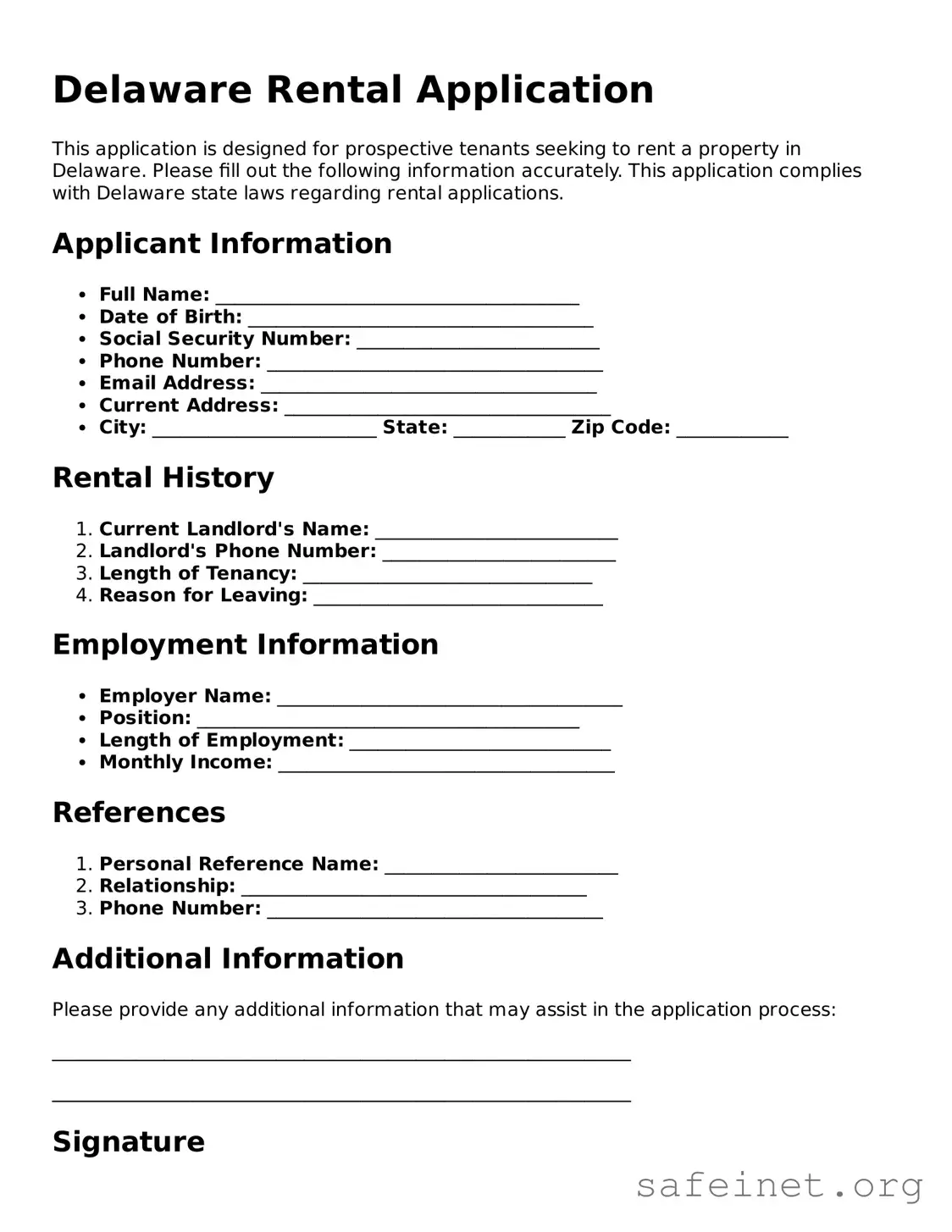
The Delaware Rental Application form serves as a crucial document in the tenant screening process, providing landlords with essential information about prospective renters. This form typically includes sections for personal details, employment history, and rental history, allowing landlords to assess the suitability of applicants. It often requires individuals to disclose their income, credit history, and references, which helps landlords gauge financial stability and reliability. Additionally, the application may include a consent section for background checks, ensuring that landlords comply with legal requirements while protecting their property. By gathering this information, the Delaware Rental Application form not only facilitates informed decision-making but also fosters transparency between landlords and tenants, laying the groundwork for a successful rental relationship.
Delaware Rental Application
This application is designed for prospective tenants seeking to rent a property in Delaware. Please fill out the following information accurately. This application complies with Delaware state laws regarding rental applications.
Applicant Information
Rental History
Employment Information
References
Additional Information
Please provide any additional information that may assist in the application process:
______________________________________________________________
______________________________________________________________
Signature
By signing below, you confirm that the information provided is accurate and complete to the best of your knowledge.
Applicant's Signature: ________________________________
Date: _______________________________________________
| Fact Name | Details |
|---|---|
| Purpose | The Delaware Rental Application form is used by landlords to screen potential tenants. |
| Information Required | Applicants typically provide personal information, rental history, and employment details. |
| Application Fee | Landlords may charge a fee for processing the application, which is regulated under Delaware law. |
| Fair Housing Compliance | The application process must comply with the Fair Housing Act, prohibiting discrimination. |
| Governing Laws | The Delaware Code Title 25, Chapter 510 governs rental agreements and tenant screening processes. |
After obtaining the Delaware Rental Application form, you will need to provide accurate information about yourself and your rental history. Completing this form is essential for the landlord to evaluate your application. Follow the steps below to ensure that you fill out the form correctly.
Once you have completed the application, review it for any errors or omissions. After confirming the accuracy of your information, submit the form to the landlord or property management company as instructed.
What is a Delaware Rental Application form?
A Delaware Rental Application form is a document that potential tenants fill out when applying to rent a property in Delaware. It collects important information about the applicant, such as their employment history, rental history, and financial status. Landlords use this information to evaluate whether the applicant is a suitable tenant.
Who needs to fill out the rental application?
Anyone who wants to rent a property in Delaware typically needs to complete a rental application. This includes individuals, couples, or groups looking to lease a home or apartment. Each adult intending to live in the property usually must submit their own application.
What information is required on the application?
The application generally asks for personal details like your name, contact information, and social security number. It also requests employment details, income information, rental history, and references. Some applications may ask for consent to conduct background checks or credit checks.
Is there a fee to submit the rental application?
Many landlords charge a fee to process the rental application. This fee helps cover the costs of background checks and credit reports. The amount can vary, so it’s best to ask the landlord or property manager about any application fees upfront.
How long does it take to process a rental application?
The processing time for a rental application can vary. Typically, it takes anywhere from a few hours to a few days. Factors that influence the timeline include the landlord’s workload and how quickly they can verify your information. Following up with the landlord can provide clarity on your application status.
What happens if my application is denied?
If your application is denied, the landlord is required to inform you. They should provide a reason for the denial, often related to credit history, income, or rental history. If you believe the decision was unfair, you can ask for further details or seek advice on how to improve your chances in the future.
Can I appeal a denied application?
While there is no formal appeal process for a denied rental application, you can communicate with the landlord. Express your concerns and ask if there’s anything you can do to improve your standing. Sometimes, providing additional documentation or references may help your case.
What should I do if I find errors on my application?
If you discover errors on your application, it’s important to address them immediately. Contact the landlord or property manager to correct the information. Clear communication can help prevent misunderstandings and ensure your application is processed accurately.
Can I withdraw my application after submitting it?
Yes, you can withdraw your application at any time before the lease is signed. It’s best to inform the landlord or property manager in writing. They may have specific policies regarding withdrawals, but open communication is key.
Incomplete Information: Many applicants fail to provide all required personal details, such as full names, addresses, or contact numbers. This can delay the processing of their application.
Incorrect Social Security Number: Entering an incorrect Social Security number can lead to issues during background checks, potentially resulting in application denial.
Missing Employment History: Some individuals overlook the section that requests employment history. Providing this information is essential for landlords to assess financial stability.
Failure to Disclose Previous Evictions: Not mentioning any past evictions can be seen as a red flag. Honesty is crucial, as landlords often conduct thorough background checks.
Insufficient References: Applicants sometimes provide too few references or choose individuals who cannot vouch for their rental history or character. It is important to select appropriate and reliable references.
Omitting Pet Information: Many rental applications require disclosure of pets. Failing to mention pets can lead to misunderstandings and potential lease violations.
Not Signing the Application: Some individuals forget to sign the application. A signature is often necessary for the application to be considered valid.
Providing Inaccurate Financial Information: Misrepresenting income or financial status can have serious consequences. Landlords rely on accurate information to determine eligibility.
When applying for a rental property in Delaware, several important documents often accompany the rental application. These documents help landlords assess potential tenants and ensure a smooth leasing process. Below is a list of commonly used forms and documents that can enhance your rental application.
Having these documents prepared can streamline the application process and increase your chances of securing the rental property you desire. Being organized and thorough reflects positively on you as a prospective tenant.
The Delaware Rental Application form shares similarities with the standard Tenant Application form used in many states. Both documents collect essential information from potential tenants, such as personal details, rental history, and employment information. This helps landlords assess the suitability of applicants for their rental properties. The format is typically straightforward, allowing landlords to make quick evaluations based on the provided data.
Another comparable document is the Rental History Verification form. This form is often used by landlords to confirm the rental history provided by applicants. It includes sections for previous landlords to fill out, ensuring that the information given in the rental application is accurate. Both documents emphasize the importance of verifying a tenant's past behavior in rental situations.
The Credit Check Authorization form is also similar to the Delaware Rental Application. This document allows landlords to obtain a credit report on potential tenants. It typically requires the applicant's consent, ensuring that the landlord can make informed decisions based on the tenant's financial history. The emphasis on financial responsibility is a common theme in both documents.
The Employment Verification form complements the Rental Application by confirming an applicant's employment status and income. Landlords often require proof of stable income to ensure that tenants can meet their rental obligations. Both forms work together to paint a complete picture of the applicant's financial stability.
The Guarantor Application form is another document that aligns with the Delaware Rental Application. This form is used when a tenant requires a guarantor to co-sign the lease due to insufficient income or credit history. Similar to the rental application, it gathers personal and financial information about the guarantor, helping landlords assess the overall risk associated with the lease agreement.
The Lease Agreement itself has parallels with the Rental Application. While the application is about gathering information, the lease solidifies the terms of the rental arrangement. Both documents are crucial in establishing the rights and responsibilities of tenants and landlords. They ensure that both parties are clear on expectations from the outset.
The Move-In Checklist is another document that relates closely to the Rental Application. This checklist is typically completed once a tenant is approved and is used to document the condition of the property at the time of move-in. While the rental application assesses tenant suitability, the move-in checklist protects both parties by providing a record of the property’s condition.
The Pet Application form is similar in that it addresses a specific aspect of rental agreements—pet ownership. Many landlords require additional information about pets when tenants apply to rent a property. This form collects details about the pet, including breed and size, allowing landlords to make informed decisions regarding pet policies in their rental properties.
Lastly, the Background Check Authorization form aligns with the Delaware Rental Application by allowing landlords to conduct background checks on potential tenants. This document typically requires the applicant's permission to investigate criminal history and other relevant background information. Both forms are essential in ensuring that landlords make informed choices about who they allow to occupy their properties.
When filling out the Delaware Rental Application form, it's essential to approach the task with care. Here are seven important do's and don'ts to keep in mind:
Completing the application accurately can significantly impact your rental experience. Take your time to ensure everything is correct and complete.
Understanding the Delaware Rental Application form is crucial for both landlords and tenants. However, several misconceptions can lead to confusion. Here are five common misconceptions:
This is not true. While many rental applications may follow a similar format, each landlord or property management company may have their own specific requirements and questions. It is important to review the application provided by each landlord carefully.
Submitting a rental application does not guarantee that a tenant will be approved for a lease. Landlords evaluate applications based on various factors, including credit history, income verification, and rental history.
In Delaware, landlords are allowed to charge an application fee to cover the costs of background checks and processing. However, this fee must be reasonable and disclosed upfront.
While applicants may feel uncomfortable providing certain personal information, most landlords require this information to assess the applicant’s suitability. Failing to provide required information can lead to application denial.
Applicants can often update or correct information after submission, but it is best to communicate any changes directly with the landlord or property manager. Clear communication can help avoid misunderstandings.
Being aware of these misconceptions can help tenants navigate the rental application process more effectively and ensure they are well-prepared when seeking housing in Delaware.
When it comes to renting a property in Delaware, understanding the rental application process is essential. Here are some key takeaways that can help you navigate the Delaware Rental Application form effectively:
By keeping these points in mind, you can approach the rental application process with confidence and increase your chances of securing your desired property.