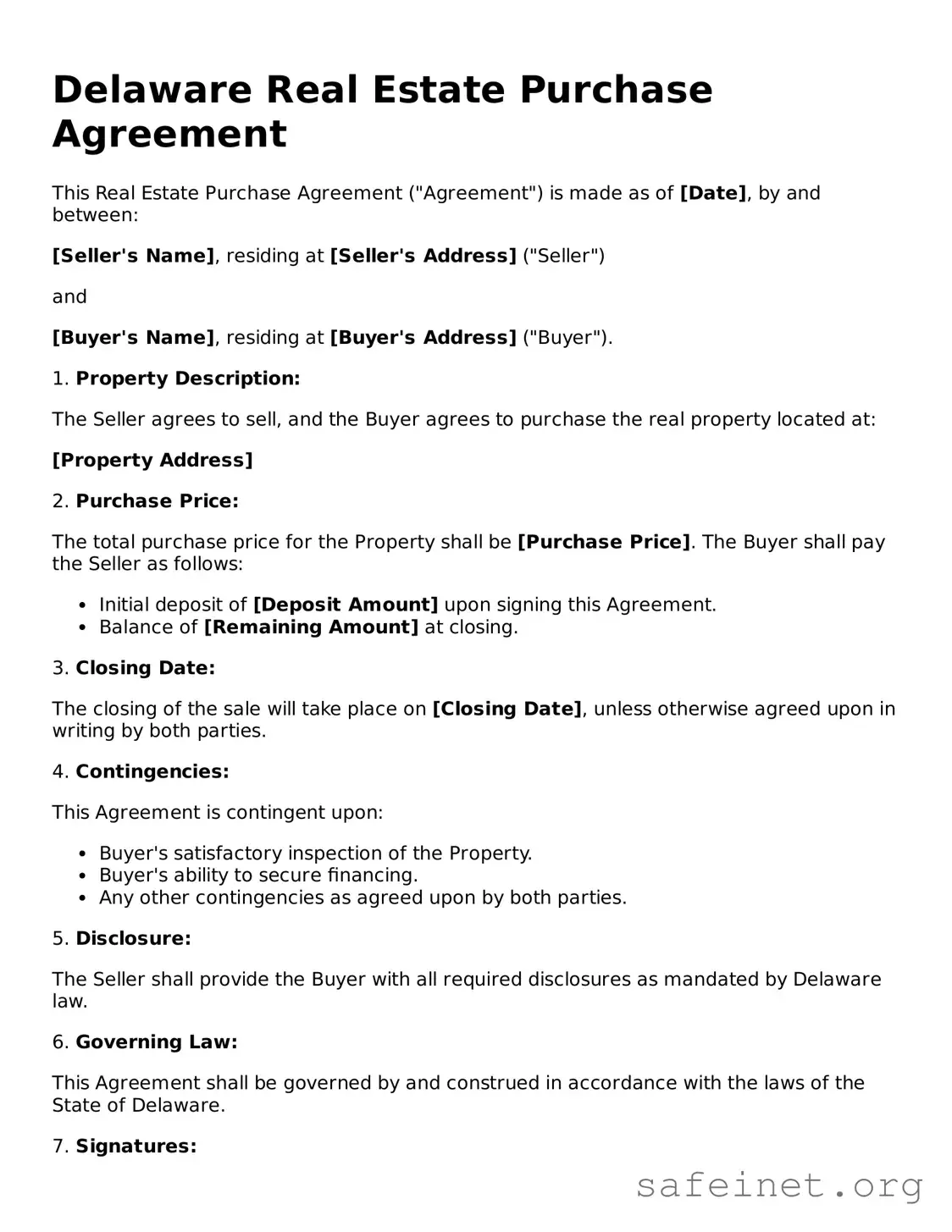
When navigating the world of real estate transactions in Delaware, understanding the Real Estate Purchase Agreement form is crucial. This document serves as the foundation for any property sale, outlining the terms and conditions agreed upon by both the buyer and the seller. Essential elements of the agreement include the purchase price, the property description, and the timeline for closing the sale. Additionally, the form addresses contingencies that may affect the transaction, such as financing and inspections, ensuring that both parties are protected throughout the process. It also specifies the responsibilities of each party, including any disclosures required by law. By familiarizing yourself with this agreement, you can approach your real estate dealings with greater confidence and clarity, paving the way for a smoother transaction experience.
Delaware Real Estate Purchase Agreement
This Real Estate Purchase Agreement ("Agreement") is made as of [Date], by and between:
[Seller's Name], residing at [Seller's Address] ("Seller")
and
[Buyer's Name], residing at [Buyer's Address] ("Buyer").
1. Property Description:
The Seller agrees to sell, and the Buyer agrees to purchase the real property located at:
[Property Address]
2. Purchase Price:
The total purchase price for the Property shall be [Purchase Price]. The Buyer shall pay the Seller as follows:
3. Closing Date:
The closing of the sale will take place on [Closing Date], unless otherwise agreed upon in writing by both parties.
4. Contingencies:
This Agreement is contingent upon:
5. Disclosure:
The Seller shall provide the Buyer with all required disclosures as mandated by Delaware law.
6. Governing Law:
This Agreement shall be governed by and construed in accordance with the laws of the State of Delaware.
7. Signatures:
By signing below, both parties agree to the terms outlined in this Agreement:
______________________________
Seller's Signature
Date: [Date]
______________________________
Buyer's Signature
Date: [Date]
| Fact Name | Description |
|---|---|
| Governing Law | The Delaware Real Estate Purchase Agreement is governed by the laws of the State of Delaware. |
| Purpose | This form outlines the terms and conditions for the sale of real estate in Delaware. |
| Parties Involved | The agreement typically involves a buyer and a seller, both of whom must be clearly identified. |
| Property Description | A detailed description of the property being sold is required, including the address and any relevant legal descriptions. |
| Purchase Price | The total purchase price must be clearly stated, along with any deposits or earnest money required. |
| Contingencies | Common contingencies may include financing, inspections, and the sale of the buyer's current home. |
| Closing Date | The agreement should specify the expected closing date and any conditions that may affect this timeline. |
| Signatures | Both parties must sign the agreement to make it legally binding, often requiring witnesses or notarization. |
Completing the Delaware Real Estate Purchase Agreement form is an important step in the process of buying or selling property. Once the form is filled out, it will need to be reviewed and signed by both the buyer and the seller to move forward with the transaction.
What is a Delaware Real Estate Purchase Agreement?
A Delaware Real Estate Purchase Agreement is a legally binding document that outlines the terms and conditions under which a property is bought and sold in the state of Delaware. This agreement serves as a roadmap for both the buyer and the seller, detailing key aspects such as the purchase price, closing date, and any contingencies that may apply. It is essential for protecting the interests of both parties involved in the transaction.
What key elements should be included in the agreement?
The agreement should include several critical components. These typically encompass the names of the buyer and seller, a detailed description of the property, the purchase price, earnest money deposit details, contingencies (such as financing or inspection), closing date, and any additional terms or conditions specific to the sale. Clarity in these elements helps prevent misunderstandings and disputes later on.
Is the agreement required to be in writing?
Yes, in Delaware, a Real Estate Purchase Agreement must be in writing to be enforceable. This requirement stems from the Statute of Frauds, which mandates that contracts for the sale of real estate be documented in writing. An oral agreement, while it may be discussed, will not hold up in a court of law.
What contingencies can be included in the agreement?
Contingencies are conditions that must be met for the sale to proceed. Common contingencies in a Delaware Real Estate Purchase Agreement include financing contingencies, which allow the buyer to secure a mortgage; inspection contingencies, which enable the buyer to have the property inspected; and appraisal contingencies, ensuring the property is valued at or above the purchase price. Including these contingencies protects buyers from unforeseen issues.
How is earnest money handled in the agreement?
Earnest money is a deposit made by the buyer to demonstrate their commitment to purchasing the property. In the agreement, the amount of earnest money should be specified, along with the conditions under which it may be forfeited or refunded. Typically, if the sale goes through, this deposit is applied to the purchase price at closing. If the buyer backs out without a valid reason, the seller may keep the earnest money.
What happens if one party breaches the agreement?
If either party fails to fulfill their obligations under the agreement, it is considered a breach. The non-breaching party may have several options, including seeking specific performance (forcing the other party to complete the transaction) or claiming damages for any losses incurred. The specific remedies available can depend on the terms outlined in the agreement and the nature of the breach.
Can the agreement be modified after it is signed?
Yes, a Real Estate Purchase Agreement can be modified after it has been signed, but any changes must be documented in writing and signed by both parties. Verbal agreements to modify the contract are generally not enforceable. It is crucial to ensure that all modifications are clear and agreed upon to avoid confusion or disputes later on.
Is it advisable to have legal representation when signing this agreement?
While it is not legally required to have an attorney when entering into a Real Estate Purchase Agreement, it is highly advisable. Legal representation can provide valuable insights, help navigate complex terms, and ensure that your rights and interests are adequately protected. An attorney can also assist in negotiating terms that may be more favorable to you.
What should I do if I have questions about the agreement?
If you have questions or concerns about a Delaware Real Estate Purchase Agreement, it is wise to seek professional advice. Consulting with a real estate attorney or a qualified real estate agent can provide clarity and guidance. They can help you understand the terms of the agreement and ensure that you are making informed decisions throughout the process.
Incomplete Information: Many buyers and sellers forget to fill out all required sections. Omitting details such as the property address, purchase price, or the names of the parties involved can lead to confusion and delays. Ensure every section is completed to avoid complications down the line.
Incorrect Dates: It's crucial to pay attention to dates in the agreement. Entering the wrong closing date or failing to specify important deadlines can create misunderstandings. Double-check all dates to ensure they align with your expectations and timelines.
Not Understanding Contingencies: Some individuals overlook the importance of contingencies, such as financing or inspection clauses. Failing to include these can leave buyers vulnerable if the deal doesn't go as planned. Always consider what protections you need before finalizing the agreement.
Ignoring Local Laws: Real estate transactions are subject to state-specific laws. Some people neglect to familiarize themselves with Delaware’s regulations. This oversight can lead to legal issues. Researching local laws or consulting with a professional can save time and trouble.
When engaging in real estate transactions in Delaware, several documents are essential to ensure a smooth process. These forms work in tandem with the Real Estate Purchase Agreement, providing clarity and protection for all parties involved. Below is a list of commonly used documents that may accompany the purchase agreement.
Each of these documents plays a crucial role in the real estate transaction process. They help protect the interests of both buyers and sellers, ensuring a clear understanding of the terms and conditions involved in the sale. By being informed about these documents, parties can navigate the process with confidence and ease.
The Delaware Real Estate Purchase Agreement is a vital document in the home-buying process, but it shares similarities with several other important documents in real estate transactions. One such document is the Purchase and Sale Agreement (PSA). Like the Delaware Real Estate Purchase Agreement, the PSA outlines the terms and conditions under which a buyer agrees to purchase a property. Both documents specify the purchase price, contingencies, and the responsibilities of each party, creating a clear framework for the transaction.
Another related document is the Letter of Intent (LOI). While the LOI is often less formal, it serves as a preliminary agreement that outlines the basic terms of a potential real estate deal. Both the LOI and the Delaware Real Estate Purchase Agreement express the intent of the buyer and seller to engage in a transaction, although the LOI typically lacks the binding nature of the Purchase Agreement.
The Option Agreement is also comparable to the Delaware Real Estate Purchase Agreement. This document grants a buyer the right, but not the obligation, to purchase a property at a predetermined price within a specified timeframe. Like the Real Estate Purchase Agreement, it includes essential terms, but it focuses more on the buyer’s option rather than an outright commitment to purchase.
Similarly, the Lease with Option to Purchase Agreement combines elements of both leasing and purchasing. This document allows a tenant to lease a property with the option to buy it later. It shares common features with the Delaware Real Estate Purchase Agreement, such as price and conditions, but it also incorporates terms related to the lease, making it unique in its structure.
The Real Estate Listing Agreement is another document that bears resemblance to the Delaware Real Estate Purchase Agreement. This agreement is between a property owner and a real estate agent, detailing the terms under which the agent will market and sell the property. Both agreements establish clear expectations and responsibilities, although the Listing Agreement focuses on the sale process rather than the sale itself.
The Seller's Disclosure Statement is also relevant in this context. While it does not serve as a purchase agreement, it is often provided alongside the Delaware Real Estate Purchase Agreement. This document discloses known issues with the property, ensuring that buyers are fully informed before making a purchase. Transparency is a key element shared by both documents.
In addition, the Closing Disclosure is an essential document that parallels the Delaware Real Estate Purchase Agreement. This document outlines the final terms of the loan, closing costs, and the details of the transaction. While it is used later in the process, it is built upon the terms established in the Purchase Agreement, ensuring that both parties are aware of their financial obligations.
The Escrow Agreement is another document that functions alongside the Delaware Real Estate Purchase Agreement. This agreement establishes the terms under which a neutral third party holds funds or documents until the transaction is completed. It ensures that both parties fulfill their obligations before the transfer of ownership, reflecting the mutual trust established in the Purchase Agreement.
Furthermore, the Home Inspection Contingency adds another layer of similarity. This document outlines the conditions under which a buyer can have the property inspected before finalizing the purchase. It is often included as a clause within the Delaware Real Estate Purchase Agreement, ensuring that buyers can back out if significant issues are discovered during the inspection process.
Finally, the Title Insurance Policy is a crucial document that relates to the Delaware Real Estate Purchase Agreement. While it does not govern the sale itself, it protects the buyer against potential defects in the property’s title. Both documents aim to safeguard the buyer’s investment, highlighting the importance of clear ownership in real estate transactions.
When filling out the Delaware Real Estate Purchase Agreement form, it's important to keep a few things in mind. Here’s a helpful list of what you should and shouldn’t do:
Following these guidelines can help ensure that your real estate transaction goes smoothly.
When dealing with real estate transactions in Delaware, it's important to understand the Real Estate Purchase Agreement (REPA) form. However, several misconceptions can lead to confusion. Here are six common misunderstandings:
By dispelling these misconceptions, you can approach your real estate transaction in Delaware with greater confidence and clarity.
When dealing with the Delaware Real Estate Purchase Agreement form, it’s essential to understand its components and implications. Here are some key takeaways to consider:
Taking the time to understand these aspects can lead to a smoother transaction and better outcomes for all parties involved.