When entering into a rental arrangement in Delaware, a well-structured lease agreement is essential for both landlords and tenants. This document serves as a binding contract that outlines the rights and responsibilities of each party, ensuring clarity and protection throughout the leasing period. Key elements typically included in a Delaware lease agreement are the duration of the lease, the amount of rent due, and the specific terms regarding security deposits. Additionally, it addresses maintenance responsibilities, rules regarding pets, and procedures for handling disputes. Understanding these components is vital, as they help prevent misunderstandings and foster a harmonious landlord-tenant relationship. Furthermore, Delaware law provides certain protections and obligations that both parties must adhere to, making it crucial to have a comprehensive lease agreement that aligns with state regulations. By carefully reviewing and negotiating the terms of the lease, both landlords and tenants can create a solid foundation for their rental experience.
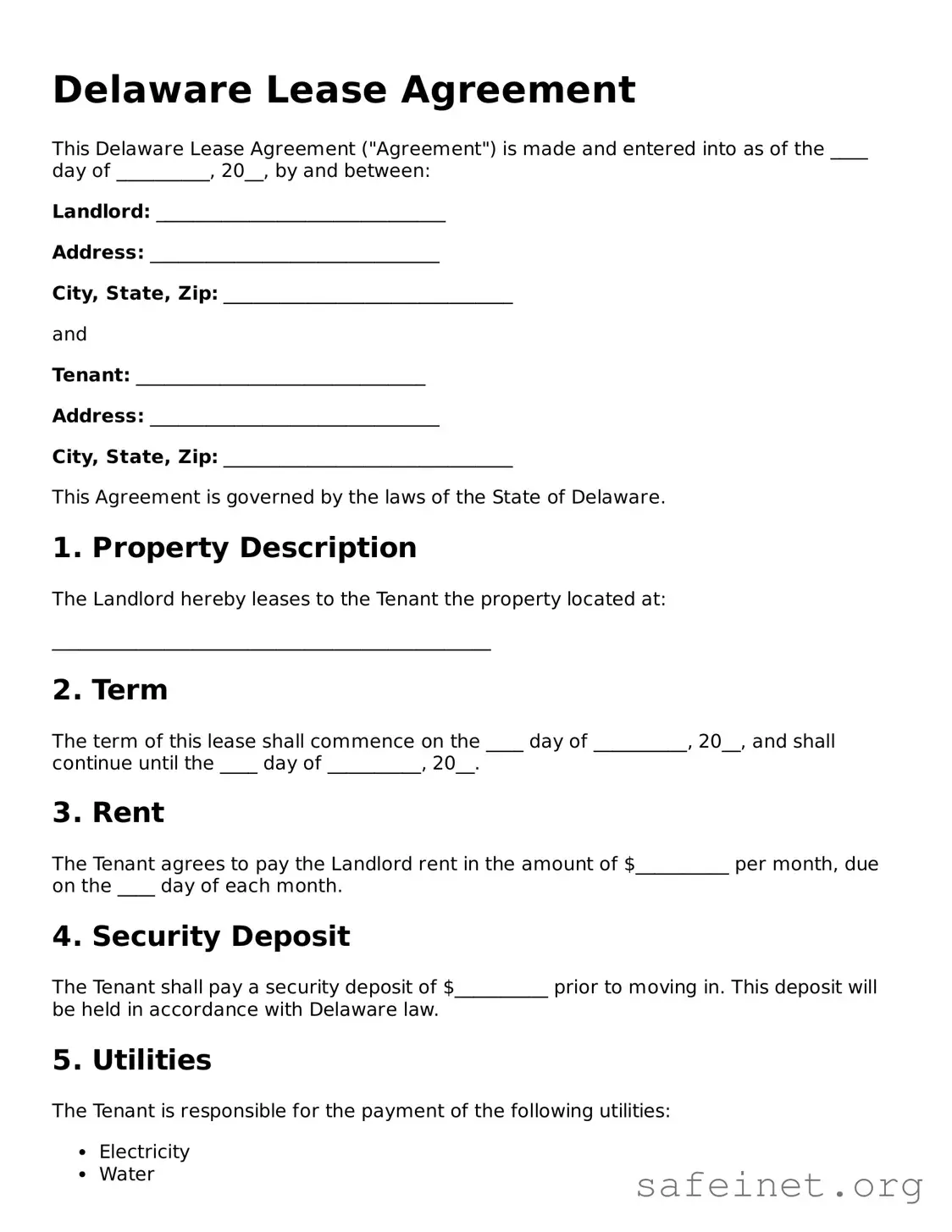
Delaware Lease Agreement
This Delaware Lease Agreement ("Agreement") is made and entered into as of the ____ day of __________, 20__, by and between:
Landlord: _______________________________
Address: _______________________________
City, State, Zip: _______________________________
and
Tenant: _______________________________
Address: _______________________________
City, State, Zip: _______________________________
This Agreement is governed by the laws of the State of Delaware.
1. Property Description
The Landlord hereby leases to the Tenant the property located at:
_______________________________________________
2. Term
The term of this lease shall commence on the ____ day of __________, 20__, and shall continue until the ____ day of __________, 20__.
3. Rent
The Tenant agrees to pay the Landlord rent in the amount of $__________ per month, due on the ____ day of each month.
4. Security Deposit
The Tenant shall pay a security deposit of $__________ prior to moving in. This deposit will be held in accordance with Delaware law.
5. Utilities
The Tenant is responsible for the payment of the following utilities:
6. Maintenance and Repairs
The Tenant agrees to keep the property in good condition. The Landlord is responsible for major repairs unless caused by the Tenant's negligence.
7. Termination
Either party may terminate this Agreement by providing a written notice of ____ days prior to the desired termination date.
8. Governing Law
This Agreement shall be governed by the laws of the State of Delaware.
9. Signatures
IN WITNESS WHEREOF, the parties have executed this Agreement as of the date first above written.
Landlord Signature: _______________________________
Date: _______________________________
Tenant Signature: _______________________________
Date: _______________________________
| Fact Name | Description |
|---|---|
| Governing Law | The Delaware Lease Agreement is governed by the Delaware Code, Title 25, Chapter 510. |
| Types of Leases | This form can be used for both residential and commercial leases in the state of Delaware. |
| Security Deposit | Delaware law allows landlords to collect a security deposit, typically not exceeding one month's rent. |
| Termination Notice | For month-to-month leases, either party must provide a written notice of at least 60 days to terminate the agreement. |
Completing the Delaware Lease Agreement form requires careful attention to detail. This document outlines the terms and conditions of the rental arrangement between the landlord and tenant. Once the form is filled out accurately, it can be signed by both parties to formalize the agreement.
What is a Delaware Lease Agreement form?
A Delaware Lease Agreement form is a legal document that outlines the terms and conditions under which a landlord rents property to a tenant. This agreement specifies important details such as the rental amount, duration of the lease, responsibilities of both parties, and any rules regarding the use of the property. It serves to protect the rights of both landlords and tenants, ensuring that both parties understand their obligations and expectations throughout the rental period.
What are the key components of a Delaware Lease Agreement?
Key components of a Delaware Lease Agreement typically include the names of the landlord and tenant, the property address, the lease term, the rental amount, and payment due dates. Additionally, the agreement may outline security deposit requirements, maintenance responsibilities, and rules regarding pets or alterations to the property. It's crucial for both parties to review these components carefully to avoid misunderstandings later on.
How can I modify a Delaware Lease Agreement?
Modifying a Delaware Lease Agreement requires mutual consent from both the landlord and tenant. Any changes should be documented in writing to ensure clarity and prevent disputes. Common modifications might include adjustments to the rental amount or lease duration. Both parties should sign the amended agreement to confirm their acceptance of the changes. It is advisable to keep a copy of the original and modified agreements for future reference.
What should I do if there is a dispute regarding the Lease Agreement?
If a dispute arises regarding the Lease Agreement, the first step is to communicate openly with the other party. Many issues can be resolved through discussion. If that does not lead to a resolution, reviewing the terms of the lease can provide guidance on how to proceed. In some cases, mediation may be a helpful option. If the dispute escalates, seeking legal advice or pursuing action in small claims court may be necessary, depending on the nature of the disagreement.
Incomplete Information: Many individuals fail to provide all required details, such as the names of all tenants or the property address. This can lead to confusion and potential disputes later.
Incorrect Dates: Entering the wrong start or end dates for the lease can cause complications. Ensure that the lease term is clearly defined and accurate.
Neglecting Signatures: All parties must sign the agreement. Forgetting a signature can render the lease invalid.
Ignoring Local Laws: Some people overlook specific regulations that may apply in Delaware. Familiarity with local rental laws is essential to avoid legal issues.
Not Specifying Terms: Failing to clearly outline terms such as rent amount, payment due dates, and maintenance responsibilities can lead to misunderstandings.
Overlooking Additional Clauses: Important clauses regarding pets, subletting, or early termination are often missed. These should be included to protect both parties.
When entering into a lease agreement in Delaware, several other forms and documents may be necessary to ensure all parties are protected and informed. Each of these documents serves a specific purpose and can help facilitate a smooth leasing process.
Utilizing these documents in conjunction with the Delaware Lease Agreement can help ensure that both landlords and tenants have a clear understanding of their rights and responsibilities. This comprehensive approach can lead to a more positive rental experience for all parties involved.
The Delaware Rental Agreement is similar to a standard Lease Agreement but often includes specific clauses tailored to the unique rental laws of Delaware. Both documents outline the rights and responsibilities of landlords and tenants, including rent payment terms, maintenance obligations, and rules regarding property use. However, the Delaware Rental Agreement may also contain provisions that comply with state regulations, making it essential for landlords and tenants in Delaware to understand these nuances.
A Commercial Lease Agreement shares similarities with a residential Lease Agreement in that both establish a legal framework for renting property. They detail terms such as rent amount, lease duration, and maintenance responsibilities. The key difference lies in the nature of the property being leased; a Commercial Lease is tailored for business use, often including additional clauses related to business operations, zoning laws, and liability insurance, reflecting the complexities of commercial real estate transactions.
The Sublease Agreement resembles a standard Lease Agreement as it allows a tenant to rent out their leased property to another party. It includes terms about rent payment, duration, and responsibilities, similar to a primary lease. However, it typically requires the original landlord's consent and may have different conditions, particularly regarding liability and property use, which must be clearly outlined to avoid misunderstandings.
The Month-to-Month Rental Agreement is akin to a Lease Agreement but offers more flexibility. While a traditional Lease Agreement usually spans a fixed term, a Month-to-Month Rental Agreement allows tenants to rent on a monthly basis with shorter notice periods for termination. This type of agreement still defines rental terms, responsibilities, and property use, but it provides both landlords and tenants the ability to adjust their living arrangements more easily as circumstances change.
When filling out the Delaware Lease Agreement form, there are important guidelines to follow. Here are five things you should and shouldn't do:
Following these simple steps can help ensure that your lease agreement is completed correctly and protects your rights as a tenant or landlord.
There are several misconceptions about the Delaware Lease Agreement form that can lead to confusion for both landlords and tenants. Understanding these misconceptions can help ensure a smoother rental experience.
By addressing these misconceptions, both landlords and tenants can navigate the leasing process more effectively and avoid potential disputes.
When filling out and using the Delaware Lease Agreement form, keep the following key takeaways in mind: