The Delaware Bill of Sale form serves as a crucial document in the transfer of ownership for personal property, ensuring that both the seller and buyer have a clear record of the transaction. This form typically includes essential details such as the names and addresses of both parties, a description of the item being sold, and the sale price. Additionally, it may outline any warranties or conditions related to the sale, providing protection for both the buyer and seller. By documenting the transaction, the Bill of Sale helps to prevent disputes and offers proof of ownership. Whether it involves vehicles, boats, or other personal property, understanding the components of the Delaware Bill of Sale is vital for anyone engaging in a sale or purchase within the state. The form not only facilitates a smooth transaction but also serves as an important legal safeguard for both parties involved.
Delaware Bill of Sale
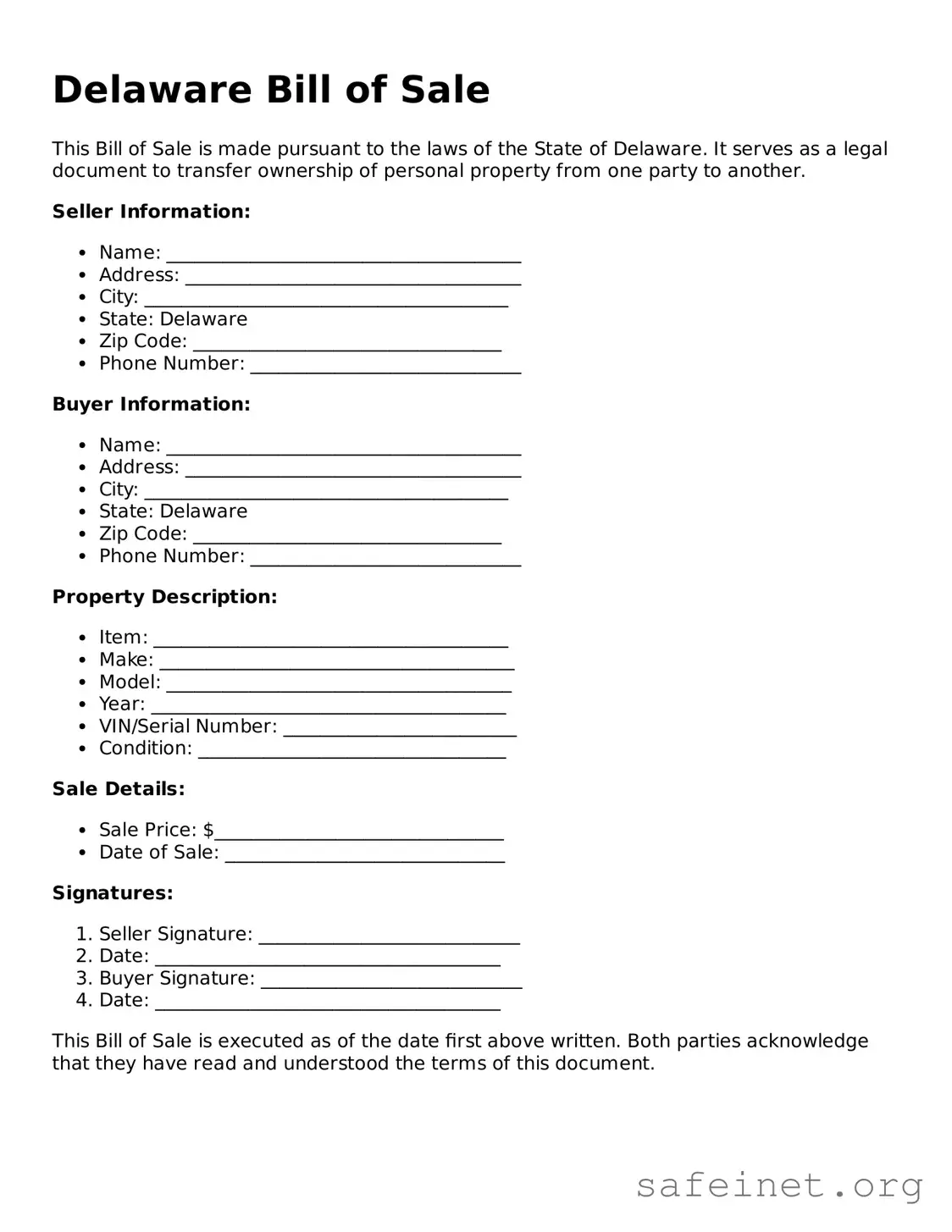
This Bill of Sale is made pursuant to the laws of the State of Delaware. It serves as a legal document to transfer ownership of personal property from one party to another.
Seller Information:
Buyer Information:
Property Description:
Sale Details:
Signatures:
This Bill of Sale is executed as of the date first above written. Both parties acknowledge that they have read and understood the terms of this document.
| Fact Name | Description |
|---|---|
| Purpose | The Delaware Bill of Sale form is used to document the transfer of ownership of personal property from one party to another. |
| Governing Law | This form is governed by Delaware state laws, specifically Title 6, Chapter 8 of the Delaware Code. |
| Requirements | Both the buyer and seller must sign the Bill of Sale for it to be legally binding. |
| Use Cases | Commonly used for the sale of vehicles, boats, and other valuable items, ensuring a clear record of the transaction. |
Once you have the Delaware Bill of Sale form ready, you will need to complete it accurately to ensure a smooth transaction. This document serves as proof of the sale and outlines the details of the item being sold. Follow the steps below to fill out the form correctly.
What is a Delaware Bill of Sale?
A Delaware Bill of Sale is a legal document that serves as proof of the transfer of ownership of personal property from one individual to another. This document is essential for transactions involving vehicles, boats, and other tangible assets. It provides a record of the sale and details such as the purchase price, date of sale, and the identities of both the buyer and seller.
What information is required on the Delaware Bill of Sale?
The Delaware Bill of Sale should include several key pieces of information. This includes the names and addresses of both the buyer and the seller, a description of the item being sold (including make, model, and VIN for vehicles), the sale price, and the date of the transaction. Additionally, both parties should sign the document to confirm the agreement.
Is a Bill of Sale required in Delaware?
While a Bill of Sale is not legally required for every transaction in Delaware, it is highly recommended. This document provides legal protection for both the buyer and seller. In cases involving vehicles, the Bill of Sale is often necessary for registration and title transfer with the Delaware Division of Motor Vehicles.
Can I create my own Bill of Sale in Delaware?
Yes, individuals can create their own Bill of Sale in Delaware. However, it is important to ensure that all necessary information is included and that the document is clear and accurate. Templates are available online, but they should be tailored to meet the specific details of the transaction to avoid any potential disputes.
Do I need a notary for a Delaware Bill of Sale?
In Delaware, notarization is not typically required for a Bill of Sale. However, having the document notarized can add an extra layer of authenticity and may be beneficial if the transaction is questioned in the future. It is advisable to check with local authorities or legal counsel if there are specific requirements for your situation.
What should I do after completing a Bill of Sale?
After completing a Bill of Sale, both the buyer and seller should keep a copy for their records. The seller should also ensure that the buyer registers the item, particularly in the case of vehicles. If the item sold is a vehicle, the seller may want to notify the DMV of the sale to avoid any future liabilities.
What happens if there is a dispute regarding the Bill of Sale?
If a dispute arises concerning the Bill of Sale, the document can serve as evidence in resolving the issue. It is crucial that both parties retain their copies of the Bill of Sale, as it outlines the terms of the agreement. In some cases, mediation or legal action may be necessary to settle the dispute.
Incomplete Information: Failing to provide all required details can lead to issues. Ensure that names, addresses, and descriptions of the item being sold are fully filled out.
Incorrect Item Description: Providing an inaccurate or vague description of the item can create confusion. Clearly state the make, model, year, and condition of the item.
Omitting Signatures: Both the seller and buyer must sign the document. Without signatures, the Bill of Sale is not valid.
Not Including Sale Price: Forgetting to list the sale price can lead to disputes later. Clearly state the agreed amount to avoid misunderstandings.
Failure to Date the Document: Not adding a date can complicate matters if there are questions about when the transaction occurred. Always include the date of sale.
Ignoring State Requirements: Each state has specific rules regarding Bill of Sale forms. Not adhering to Delaware’s requirements can invalidate the document.
When engaging in a sale or transfer of property in Delaware, several documents may accompany the Bill of Sale form to ensure a smooth transaction. Each document serves a specific purpose and helps protect the interests of both the buyer and the seller.
Using these documents in conjunction with the Delaware Bill of Sale form can help ensure a clear and legally binding transaction. It is always wise to consult with a legal professional to ensure all necessary paperwork is completed accurately and thoroughly.
The Delaware Bill of Sale form serves a specific purpose in documenting the transfer of ownership of personal property, but it shares similarities with several other important documents. One such document is the Vehicle Bill of Sale. This form is specifically used for the sale of vehicles, including cars, motorcycles, and boats. It details the buyer and seller's information, vehicle identification number (VIN), and purchase price. Like the Delaware Bill of Sale, it provides legal proof of the transaction and can be used for registration purposes with state authorities.
Another related document is the General Bill of Sale. This form is broader in scope and can be used for various types of personal property, such as furniture, electronics, or collectibles. It outlines the terms of the sale, including the description of the items, the sale price, and the date of the transaction. Both the General Bill of Sale and the Delaware Bill of Sale serve to protect the interests of both parties by creating a written record of the exchange.
The Equipment Bill of Sale is similar in nature, specifically for transactions involving business equipment or machinery. This document details the specifics of the equipment being sold, including its condition and any warranties. Just as with the Delaware Bill of Sale, it provides a clear record of ownership transfer, which can be crucial for tax and accounting purposes.
When it comes to real estate, the Real Estate Purchase Agreement shares similarities with the Delaware Bill of Sale. While it typically involves a more complex transaction, both documents serve to formalize the transfer of ownership. The Real Estate Purchase Agreement includes details about the property, financing terms, and contingencies, while the Delaware Bill of Sale focuses on personal property.
The Personal Property Receipt is another document that resembles the Delaware Bill of Sale. This receipt serves as proof of payment for personal property and can be used in conjunction with a Bill of Sale. It includes details about the transaction and may also serve as a record for tax purposes, similar to how the Delaware Bill of Sale functions.
A Lease Agreement also shares some characteristics with the Delaware Bill of Sale, particularly in its function of documenting the transfer of rights. While a Lease Agreement typically outlines terms for renting property rather than selling it, both documents establish the rights and responsibilities of the parties involved. Each serves to protect the interests of the parties by providing a written record of the agreement.
The Assignment of Ownership document is closely related to the Delaware Bill of Sale, particularly in its role of transferring ownership rights. This document is often used in business transactions to formally assign ownership of intellectual property or other assets. Both documents ensure clarity and provide legal backing for the transfer of ownership.
Lastly, the Gift Receipt can be likened to the Delaware Bill of Sale in that it documents the transfer of property without a sale. While the Bill of Sale typically involves a monetary transaction, a Gift Receipt serves to confirm that ownership has been transferred as a gift. Both documents provide a record of the transaction, which can be important for personal records and potential tax implications.
When filling out the Delaware Bill of Sale form, it’s essential to get it right. Here’s a quick guide to help you navigate the process effectively.
Things You Should Do:
Things You Shouldn't Do:
Following these guidelines will help ensure a smooth transaction. Act promptly to avoid any potential complications.
When it comes to the Delaware Bill of Sale form, there are several misconceptions that can lead to confusion. Here are five common misunderstandings:
Many people believe that a Bill of Sale is exclusively for selling vehicles. However, this form can be used for a variety of transactions, including the sale of personal property, equipment, and even livestock.
Some think that a Bill of Sale is valid without notarization. While it is not always required, having a notary public sign the document can add an extra layer of authenticity and may be necessary for certain types of sales.
A Bill of Sale and a receipt serve different purposes. A receipt is proof of payment, while a Bill of Sale serves as a legal document that transfers ownership from one party to another.
Some individuals think they only need a Bill of Sale for high-value items. In reality, it’s wise to use this document for any significant transaction, regardless of the item's price, to protect both the buyer and the seller.
While verbal agreements can be made, they are not legally binding in the same way that a written Bill of Sale is. Having a written document helps clarify the terms and protects the rights of both parties involved.
When it comes to buying or selling personal property in Delaware, using a Bill of Sale is a crucial step. Here are some key takeaways to keep in mind:
Understanding these key points can help ensure a smooth transaction when using the Delaware Bill of Sale form.